城市矿山

Search documents
再生铝行业深度报告:资源保供+双碳目标推动,再生铝迎来发展机遇
Shenwan Hongyuan Securities· 2025-10-16 11:15
Investment Rating - The report maintains a positive outlook on the aluminum recycling industry, driven by resource supply security and dual carbon goals, indicating a favorable investment environment for recycled aluminum [1]. Core Insights - The recycled aluminum industry is becoming a significant growth area in China's aluminum supply, with an expected production of approximately 10.5 million tons in 2024, accounting for about 19% of total aluminum supply. The target is to exceed 15 million tons by 2027, reflecting a CAGR of 13% from 2024 to 2027 [2][11]. - The demand for resource supply security is increasing, with recycled aluminum seen as a key solution to reduce reliance on imported bauxite, which had a dependency rate of over 77.6% in the first eight months of 2025. The domestic supply of recycled aluminum is primarily sourced from social waste aluminum, which is expected to exceed 80% in 2024 [2][4]. - The dual carbon constraints and the establishment of a carbon market are accelerating the visibility of the green premium associated with recycled aluminum. The carbon emissions from producing one ton of electrolytic aluminum are approximately 11.2 tons, while recycled aluminum only emits 0.23 tons, making it a significantly lower carbon option [2][4]. - The potential of urban mining is substantial, with accelerated development of recycling systems. Policies are being implemented to support small recycling enterprises, and a national recycling platform is being established to enhance the recycling infrastructure [2][5]. Summary by Sections 1. Recycled Aluminum as a Key Supply Source - Recycled aluminum, derived from waste aluminum through melting and refining, is a crucial component of the aluminum supply chain, with a short industrial chain and high recovery value [2][11]. - The industry is expected to grow significantly, with a target of 15 million tons by 2027, supported by government policies promoting high-quality development in the aluminum sector [2][11]. 2. Resource Supply Security and Dual Carbon Goals - The increasing demand for resource supply security positions recycled aluminum as a critical strategy to mitigate reliance on foreign bauxite, especially as domestic bauxite reserves are limited [2][4]. - The green value of recycled aluminum is becoming more apparent, with the anticipated tightening of carbon quotas in the national carbon market expected to drive up carbon prices and enhance the green premium for recycled products [2][4]. 3. Urban Mining Potential and Recycling System Development - The recycling system is being rapidly developed, with policies favoring small recycling enterprises and the establishment of a national recycling platform to improve the efficiency of aluminum recovery [2][5]. - The peak of automobile scrappage is expected to occur around 2026, which will significantly increase the supply of waste aluminum, alleviating raw material bottlenecks [2][5]. 4. Investment Recommendations - The report suggests focusing on companies with high raw material security, advanced recycling technologies, and the ability to produce high-premium products, such as Ming Tai Aluminum, Shunbo Alloy, Yiqiu Resources, Lizhong Group, and Yongmaotai [2][3].



中国锂电回收“抢滩”欧洲
高工锂电· 2025-09-20 10:15
Core Viewpoint - The article discusses the strategic partnership between Chinese recycling giant Greeenme and American technology innovator Ascend Elements to explore the European lithium battery recycling market, highlighting the implications of the new EU Battery Regulation and the geopolitical context surrounding this collaboration [2][3][4]. Group 1: Importance of Entering Europe - Understanding the significance of entering the European market requires recognizing the ambitious battery circular economy blueprint established by the EU [3]. - The new EU Battery Regulation, effective from August 2023, sets unprecedented mandatory targets for battery recycling, creating a high-value market centered on sustainability [4][5]. Group 2: EU Battery Regulation Details - The regulation mandates aggressive recycling targets: 73% for portable batteries by 2030, 61% for light-duty vehicle batteries by 2031, and effective 100% responsibility for electric vehicle battery manufacturers [5]. - It establishes clear minimum recovery rates for materials, requiring 90% recovery for cobalt, nickel, and copper, and 50% for lithium by the end of 2027, with further increases by 2031 [5][6]. - A groundbreaking requirement for minimum recycled content in new electric vehicle batteries will take effect from August 2028, mandating at least 16% recycled cobalt, 6% recycled lithium, and 6% recycled nickel [6]. Group 3: Geopolitical and Economic Context - The EU currently produces only 1% of the key battery raw materials it needs, creating a significant resource gap, with lithium demand projected to reach 550,000 tons annually by 2030 [7][8]. - The EU aims for 89-90% self-sufficiency in strategic raw materials by 2030, with the Critical Raw Materials Act requiring at least 15% of annual consumption to come from recycling [8]. Group 4: Strategic Implications of the Partnership - The partnership between Greeenme and Ascend Elements is a strategic move to leverage advanced technology and scale to meet the EU's stringent sustainability standards [9][10]. - Greeenme's extensive production capabilities and cost control experience complement Ascend Elements' innovative Hydro-to-Cathode® technology, which significantly reduces costs and carbon emissions [10][11]. Group 5: Resource Security and Supply Chain Resilience - The collaboration aims to establish a "Europe-Indonesia-Europe" transnational recycling model, with Greeenme's nickel resource base in Indonesia providing a strategic hedge against short-term raw material shortages in Europe [12][13]. - This dual resource strategy enhances the alliance's supply chain resilience, positioning it favorably against local competitors [14]. Group 6: Trends in the Recycling Industry - A trend of Chinese companies expanding into the European recycling market is emerging, driven by the EU's regulatory environment and the anticipated surge in retired batteries [16][17]. - Major players like Huayou Cobalt and CATL are actively pursuing investments and partnerships in Europe to secure raw material supplies and establish local recycling capabilities [17][18]. Group 7: Challenges and Future Outlook - The competition for high-purity production waste from European super factories will intensify as companies vie for limited resources before 2030 [19]. - The shift towards lower-cost lithium iron phosphate batteries poses economic challenges for recycling due to the lack of high-value cobalt and nickel [19]. - A significant shortage of skilled technical personnel in Europe may hinder the industry's growth, while the second-life battery market is projected to reach $19 billion by 2033, indicating potential future opportunities [20].



【财经分析】“城市矿山”潜力几何?政策与市场共促再生金属产业升级
Xin Hua Cai Jing· 2025-09-11 07:50
Group 1: Industry Overview - The Chinese government has introduced multiple policies to support the development of the recycled metals industry, predicting that the proportion of metal raw materials from recycling will continue to rise, potentially becoming dominant in sectors like new energy [1][2] - The concept of "urban mining" refers to recyclable resources embedded in various waste carriers, including steel, non-ferrous metals, precious metals, plastics, and rubber, which are increasingly recognized for their resource security and low-carbon properties [2][3] Group 2: Policy Support - In June, the Ministry of Ecology and Environment and the General Administration of Customs announced that from August 1, compliant recycled black powder for lithium-ion batteries would no longer be classified as solid waste and could be freely imported [3] - The "reverse invoicing" policy allows qualified recycling enterprises to issue invoices to individuals selling scrap products, addressing long-standing issues related to the lack of documentation in the recycling sector [3] Group 3: Company Performance - Leading companies in the recycled metals sector, such as GEM Co., Ltd., are focusing on key metal recovery, with projected recoveries of 20,000 tons of nickel, 10,000 tons of cobalt, and 6,500 tons of tungsten in 2024 [2][4] - GEM Co., Ltd. reported a revenue of 17.561 billion yuan in the first half of 2024, with key metal resource recycling contributing 6.467 billion yuan, accounting for 41.76% of total revenue [4] Group 4: Supply Chain and Raw Material Sourcing - Stable raw material supply is crucial for the development of recycled metal enterprises, with companies like Yiqiu Metal Resource Recycling focusing on building a global aluminum procurement network [5] - Camel Group Co., Ltd. has established a nationwide network for the recycling of waste lead-acid batteries, ensuring a stable supply of lead for battery manufacturing [6] Group 5: Industry Challenges and Recommendations - The recycling market faces challenges from informal operations that undercut larger, compliant enterprises, prompting calls for stricter regulation and the establishment of a "white list" of qualified companies [7] - Companies advocate for enhanced international cooperation to expand resource acquisition, suggesting that the government refine import standards for high-value, low-pollution metal waste [8]
稀土只是序章,有36种“风险元素”
3 6 Ke· 2025-09-05 03:44
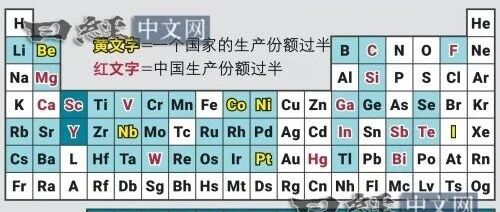
Core Points - The US, Japan, and Europe are urgently seeking stable supplies of rare metals due to potential risks in the production of elements essential for smartphones and electric vehicles (EVs) [1] - Japan is focusing on seabed resources to secure rare metals, particularly in the waters around Minami-Torishima, with plans for experimental mining starting in January 2026 [5][6] - The concentration of production in a few countries poses significant risks, with 36 out of 65 elements classified as "risk elements," primarily rare metals [1][2] Group 1 - 80% of risk elements are produced by China, which has restricted rare earth exports as a countermeasure to US tariffs, impacting companies like Suzuki and Ford [2] - China controls over half of the production of 30 elements, including indium and bismuth, and uses its mineral resources as political leverage [3] - Emerging and developing countries, referred to as the "Global South," hold significant shares of risk elements, with Brazil producing 91% of niobium [3] Group 2 - The production share of iodine used in next-generation perovskite solar cells is nearly 70% controlled by Chile, indicating a trend of resource control beyond China [4] - Indonesia has banned the export of nickel, which accounts for 60% of its production, reflecting a global trend of regulating risk elements [4] - Japan is enhancing technology to extract risk elements from urban mines, particularly from discarded EVs and electronic devices, as a response to the anticipated increase in waste by 2030 [7] Group 3 - The project led by Japan aims to contribute to the supply chain beyond economic benefits, with large-scale mining trials planned for 2027 to recover 350 tons of seabed material daily [6] - Companies like Sumitomo Metal Mining and Nissan are working on recycling technologies for lithium-ion batteries and motors from hybrid and electric vehicles, targeting practical applications by around 2030 [7] - The challenges of high costs and insufficient recycling of resources highlight the need for a mechanism to retain resources within Japan, fostering competition and technological advancement [7]
稀土只是序章,有36种“风险元素”
日经中文网· 2025-09-05 02:52
Core Viewpoint - The article highlights the dominance of China in the production of rare metals, with significant implications for global supply chains and potential risks for industries reliant on these materials [1][5][9]. Group 1: Risk Elements and Production - There are 118 elements that constitute materials, with 65 elements having calculable production shares by country. Among these, 36 are classified as "risk elements," with 30 of them being predominantly produced by China [3][4]. - China is the largest producer of 80% of the identified risk elements, which include critical materials for electronics and electric vehicles (EVs) [5][7]. - The production of certain elements, such as indium (In) and bismuth (Bi), is heavily concentrated in China, with over 70% of the refining share controlled by the country [5]. Group 2: Global Supply Chain Concerns - The article discusses the urgent search by Japan, the US, and Europe for stable supplies of rare metals due to potential supply risks, particularly for materials essential in smartphones and EVs [1][5]. - The geopolitical landscape is shifting, with countries like Indonesia imposing export bans on nickel (Ni), which could further complicate the supply chain for risk elements [7]. Group 3: Japan's Response and Initiatives - Japan is exploring seabed resources around Minami-Torishima Island to secure rare earth elements, aiming to reduce reliance on Chinese supplies [8]. - The country is also focusing on urban mining, targeting waste from old appliances and EVs to recover valuable materials like cobalt (Co) and nickel [9]. - A commercial plant for lithium-ion battery recycling is set to be completed by Sumitomo Metal Mining in June 2026, indicating a proactive approach to resource recovery [9].
从“城市矿山”掘金 武汉博士实现废旧锂电池高品质利用
Chang Jiang Ri Bao· 2025-08-11 00:43
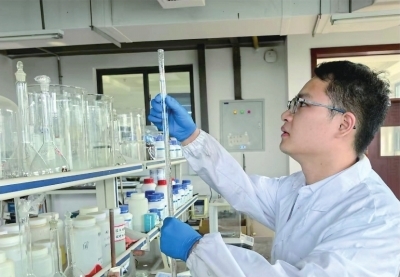
Core Viewpoint - The article highlights the innovative research by a PhD graduate focused on recycling waste lithium batteries, emphasizing the potential for resource recovery and environmental benefits in the context of limited mineral resources and increasing demand for lithium in electric vehicle production [1][2]. Group 1: Research and Innovation - The researcher employs electrochemical techniques to process waste lithium batteries, allowing lithium to be reintroduced into the battery production chain [1]. - The innovative selective acid leaching process extracts lithium, nickel, cobalt, and manganese from mixed electrode materials, transforming them into high-quality battery materials [2]. - The technology has been recognized by the company, which sees it as a significant advancement in the recycling of waste lithium batteries, optimizing processes and reducing production costs [2]. Group 2: Industry Context - The article discusses the growing reliance on lithium batteries in electric vehicles and the challenges posed by the dependence on imported materials like cobalt and nickel [1]. - It emphasizes the importance of recycling electronic waste, which can be viewed as "urban mines," to alleviate resource shortages and environmental pressures [1]. - The rising prices of lithium carbonate in 2022 highlighted the urgency of developing technologies to recycle and recover lithium from waste sources [1].
从“城市矿山”掘金,武汉博士唤醒废旧锂电池“二次生命”
Chang Jiang Ri Bao· 2025-08-08 02:54
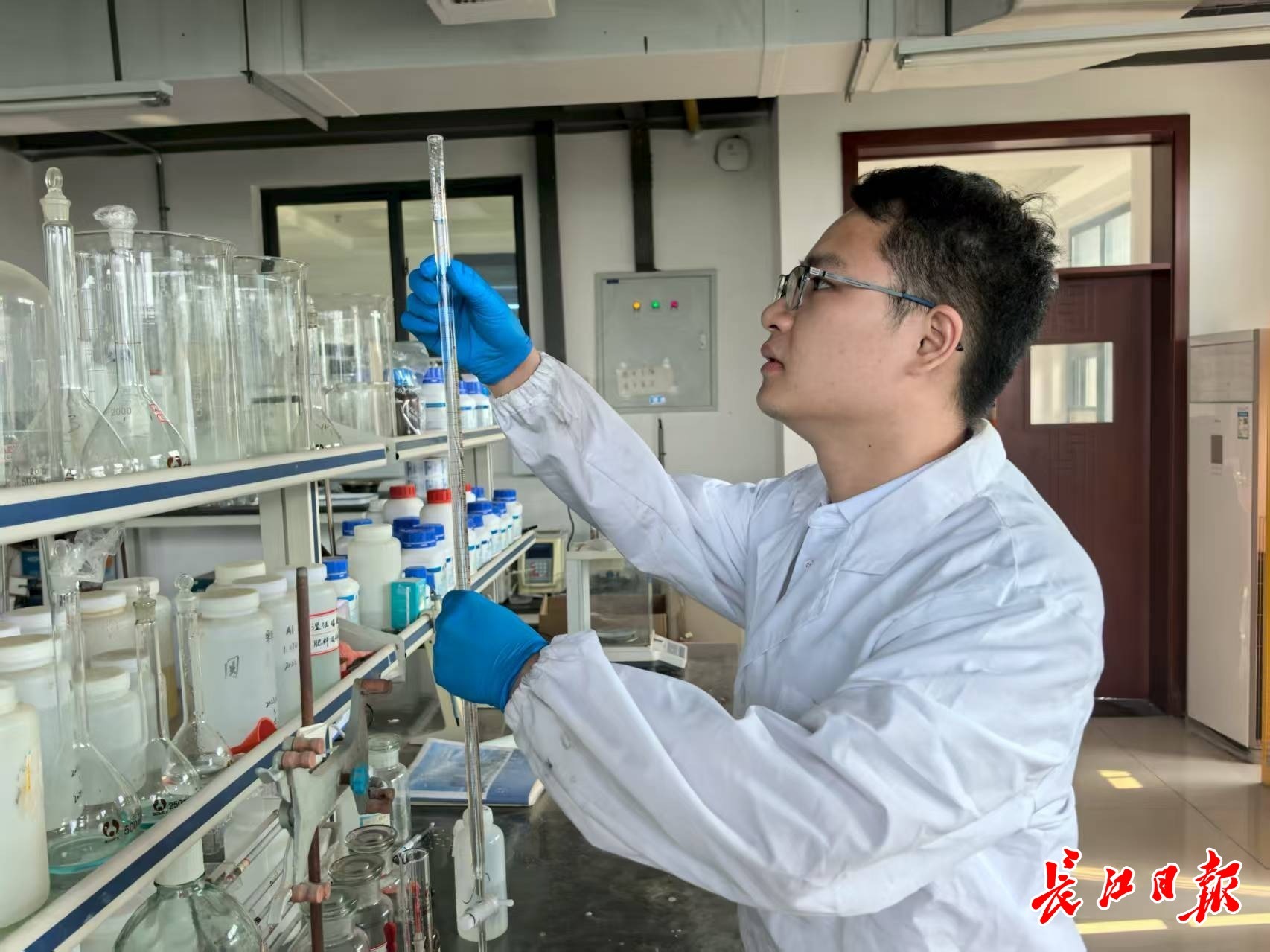
Core Viewpoint - The article highlights the innovative research of Ding Weigang, a PhD graduate from Wuhan University of Technology, focusing on the recycling of waste lithium batteries to alleviate resource shortages and environmental pressures in the context of the growing demand for lithium batteries in electric vehicles [1][3]. Group 1: Research and Innovation - Ding Weigang is conducting research on the recycling of waste lithium batteries, utilizing electrochemical technology to recover lithium and other valuable materials from discarded batteries [1][3]. - The research addresses the limited availability of mineral resources and the environmental impact of mining by extracting metals from electronic waste, which is referred to as "urban mining" [3]. - The technology developed by Ding involves selective acid leaching to extract lithium, nickel, cobalt, and manganese from mixed electrode materials, transforming them into high-quality products suitable for battery production [4]. Group 2: Industry Context - The increasing use of lithium batteries in electric vehicles has led to a surge in lithium prices, highlighting the urgency of developing recycling technologies to mitigate resource scarcity [3]. - The research aligns with the industry's need to reduce reliance on imported materials such as cobalt and nickel, thereby enhancing resource security through domestic recycling efforts [3]. - The technology has been recognized by Greeenmei, with the company's Wuhan Research Institute director praising its ability to optimize processes and reduce production costs, marking it as a significant technological advancement for the company [4].
焦作回收铑块价格全解析:2025年最新行情与避坑指南
Sou Hu Cai Jing· 2025-07-08 04:16
Core Value of Rhodium Recovery - Rhodium is one of the rarest precious metals globally, with market prices exceeding 1445 RMB per gram by 2025, and its recovery value is significantly higher [1] - Companies like Hede Recycling Technology Co., Ltd. in Jiaozuo have improved rhodium recovery purity to over 99.95%, establishing a closed-loop economy model [1] - Leading companies such as Fuxin Precious Metals have adopted a full industry chain model of "recovery-refining-sales," increasing profit margins by 20% compared to single recovery models [1] Application Scenarios Driving Rhodium Recovery Demand - **Automotive Industry**: Each National VI standard vehicle requires 5-8 grams of rhodium for catalytic converters, with companies in Jiaozuo enhancing recovery rates by 2%-3% through vacuum drying methods [1] - **Chemical Industry**: A chemical company in Jiaozuo has achieved a stable recovery rate of 85%-90% for 5% palladium-carbon waste using innovative extraction techniques [3] - **New Energy Sector**: Rhodium-based catalysts in fuel cells show a 41% improvement in catalytic activity compared to traditional platinum-based materials, with a pilot production base being established in Jiaozuo [5] Technological Breakthroughs in Recovery Methods - **Physical Methods**: High-temperature melting at 1200-1500°C has improved recovery rates to 95%, with a processing capacity of 500 tons annually [6] - **Chemical Methods**: Advanced techniques have reduced processing costs by 30% for rhodium-iridium alloy waste [8] - **Biological Methods**: Innovative microbial metallurgy techniques have achieved over 99% recovery rates while reducing energy consumption by 60% [8] Policy Empowerment and Financial Innovations - **Fiscal Subsidies**: Companies recovering over 50 tons annually receive a 15% VAT rebate, increasing profits by 12% for compliant firms [9] - **Smart Platforms**: IoT-driven waste recovery platforms in Jiaozuo enhance response times by 50% and reduce logistics costs by 15% [10] - **Futures Hedging**: The Shanghai Futures Exchange plans to launch palladium-carbon futures contracts in 2025, allowing companies to hedge against price fluctuations [11] Future Trends in the Industry - **EU Carbon Certification**: Companies obtaining international sustainability certifications can access premium pricing, generating an additional 5000-8000 RMB per ton [14] - **Microbial Technology**: The integration of ultrasonic-assisted extraction with microbial metallurgy is expected to lead to fully automated production processes [14] - **Urban Mining**: The Jiaozuo model demonstrates that through technological innovation and policy collaboration, urban mining can unlock trillion-level resource values [14]
格林美:“城市矿山+新能源材料“双轨驱动业绩创新高,海外园区+技术创新打开增量新通道
Quan Jing Wang· 2025-05-07 02:04
Core Insights - The company held its 2024 annual and Q1 2025 performance briefing on May 6, 2025, showcasing its core competitiveness and understanding of future industry dynamics, technological innovation, and ESG values [1][6][10] Financial Performance - In 2024, the company achieved a record revenue of 33.2 billion yuan, an increase of 8.75% year-on-year, with a net profit of 1.02 billion yuan, up 9.19% [1][6] - The Q1 2025 report indicated a revenue of 9.496 billion yuan, reflecting a year-on-year growth of 13.67%, and a net profit of 511 million yuan, up 12.10% [1][6] Operational Strategy - The company operates on a dual-track model focusing on "urban mining + new energy materials manufacturing," which has led to significant growth in revenue, net profit, and operating cash flow [6][9] - The utilization rate of the core new energy business exceeds 95%, significantly higher than the industry average, with an average shipment growth rate of 65% [6][7] Innovation and Technology - The company has over 5,000 patent applications, holding the largest number of patents in the waste recycling sector globally [9] - Key innovations include breakthroughs in nickel core-shell precursor production and advancements in hydrometallurgical technology for nickel ore [9][10] ESG and Sustainability - The company emphasizes green and circular economy principles, maintaining a top 10% rating in ESG dimensions and initiating a carbon disclosure project [10] - Plans for 2025-2027 include maintaining a 20% growth rate in sales revenue and a 36% growth rate in core product shipments [10] Capital Strategy - The company has outlined three capital market plans, including mergers and acquisitions in domestic resource businesses and a potential secondary listing in Hong Kong [10]