
电池回收

Search documents
南都电源终止转让全资孙公司华铂再生资源100%股权
鑫椤锂电· 2026-03-26 14:05
Group 1 - The article discusses the termination of the equity transfer of Anhui Huabo Recycling Resources Co., Ltd. by Nandu Power, which was originally intended to be sold for 1.415 billion yuan [2][3] - The decision to terminate the transfer was influenced by recent changes in market conditions and funding preparations, and the company will return the initial payment of 15 million yuan to the buyer [3] - The termination of this transaction is not expected to have a significant adverse impact on the company's existing production operations or financial status [3] Group 2 - The article mentions a comprehensive report on the global lithium battery application market trends and competitive strategies from 2025 to 2029 [4]


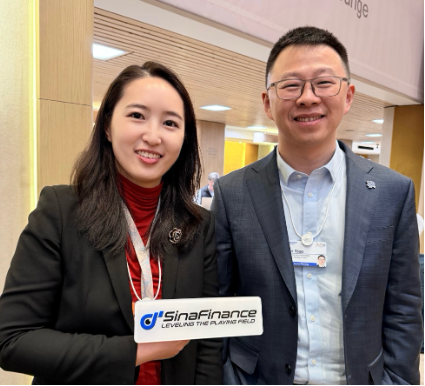
直击达沃斯|对话博萃循环林晓:电池退役将重塑新能源产业的成本与责任结构
Xin Lang Cai Jing· 2026-02-10 14:36
Core Viewpoint - The recycling of batteries is emerging as a critical link between technological innovation, resource security, and economic transformation in the context of global energy transition [3][17]. Group 1: Industry Challenges - The real challenge in the battery recycling industry lies not in the scale of retired batteries but in the complexity of differences across legal definitions, regulatory systems, battery material routes, and varying industrial structures and social conditions in different countries [3][19]. - The concept of a "retirement wave" is misleading; battery retirement is a continuous process that will steadily increase over time, creating pressure on industry and policy systems [6][19]. - Differences in legal definitions of "waste batteries" across countries lead to varied management methods, transportation requirements, and recycling responsibility mechanisms [7][19][20]. Group 2: European Policy Environment - The implementation of the EU Battery Regulation introduces a mandatory framework for battery recycling that encompasses the entire lifecycle, making compliance a clear obligation rather than a business choice [4][18]. - The regulation requires all entities selling batteries or electric vehicles in the EU to adhere to stringent standards, including extended producer responsibility, recycled material usage ratios, carbon footprint reporting, and battery passport systems [8][22]. - These requirements create high compliance barriers for Chinese companies, reshaping industry structures and altering the dynamics of competition and business models [9][22]. Group 3: Business Model Differentiation - Different recycling companies are increasingly differentiating their business models, choosing between heavy asset investments in self-built factories or embedding technology and operational capabilities within local systems [4][18]. - The choice between light asset and heavy asset models reflects a deeper understanding of the industry's core attributes, with many companies opting for heavy asset models to directly convert technology into capacity and revenue [12][24]. - The light asset approach, which involves deep collaboration with local enterprises, is seen as more suitable for navigating the complexities of international markets [12][24]. Group 4: Future Role of Recycling - Battery recycling is expected to become the most crucial technical link in the new energy system within the next five years, as batteries evolve from products to integral components of energy infrastructure [13][25]. - Efficient recycling is essential for the sustainability of renewable energy, as it prevents reliance on raw mineral resources, thereby supporting the logic of "renewable energy" [13][25]. - Once recycling achieves a closed-loop system, it will redefine battery design logic, promote green and standardized designs, and potentially lead to the financialization of standardized batteries as public assets [13][25].
晋景新能与天齐锂业达成战略合作:以股权为纽带,深化锂电池循环产业协同
Ge Long Hui· 2026-02-06 07:52
Core Viewpoint - The strategic partnership between JinJing New Energy Holdings and Tianqi Lithium's subsidiary focuses on the recycling and regeneration of retired lithium batteries in Hong Kong, aiming to establish a green circular industry chain from battery recycling to material regeneration [1] Group 1: Strategic Value of the Partnership - The collaboration aims to deepen the strategic bond through capital links, providing certainty and strong driving force for JinJing New Energy's long-term development [2] - The mutual equity investment signifies a shift from traditional supply-demand relationships to a shared interest community, enhancing trust and long-term collaboration [2] - This capital connection serves as a buffer against industry uncertainties, allowing both companies to align on long-term strategies rather than short-term price competition [2] Group 2: Industry Context and Trends - The capital intensity in the battery recycling sector is increasing, with significant investments being made, as evidenced by Redwood Materials' recent $425 million funding round [3] - The partnership with Tianqi Lithium, a leader in global lithium resources, positions JinJing New Energy to explore resource recycling in various global markets, creating a complementary resource-market-technology dynamic [3] Group 3: Global Network and Market Integration - JinJing New Energy has established over 70 service nodes in 28 countries, and the partnership with Tianqi Lithium enhances this network's quality and depth [4] - The collaboration allows JinJing New Energy to transition from providing single recycling services to offering comprehensive solutions that integrate recycling, resource recovery, and industry pathways [4] Group 4: Strengthening Resource Value Chain - Prior to this partnership, JinJing New Energy had already formed collaborations with companies like Huayou Cobalt and Bangpu Recycling, indicating a trend where battery recycling attracts attention from upstream resource giants [5] - The partnership with Tianqi Lithium opens a direct channel for high-value lithium resource recovery, enhancing JinJing New Energy's ability to meet the growing demand for recycled lithium materials [6] Group 5: Research and Development Collaboration - The companies plan to establish joint laboratories and collaborative R&D projects to enhance lithium battery recycling technology, ensuring that JinJing New Energy meets high-quality standards required by Tianqi Lithium [7] - This interaction between demand-driven R&D and supply assurance is expected to keep JinJing New Energy's technological advancements aligned with market needs [7] Group 6: Conclusion - The partnership represents a significant integration of industry and capital in response to the global energy transition and the emerging wave of retired batteries [8] - By establishing equity ties, the collaboration elevates the strategic partnership to a new level of shared interests, providing a robust foundation for sustainable development [8] - This alliance positions JinJing New Energy to showcase a model of circular economy that combines stable capital relationships, environmental benefits, and sound business logic [8]

欲通过交叉持股战略投资晋景新能(01783),天齐锂业(09696)加速挖掘“城市矿山”产业红利
智通财经网· 2026-02-03 11:46
Core Viewpoint - Tianqi Lithium's recent strategic moves indicate a shift in resource allocation and a focus on enhancing its position in the lithium battery recycling sector, particularly following a legal setback in Chile [1][2]. Group 1: Legal Setback - Tianqi Lithium's subsidiary Tianqi Chile lost a final ruling in the Chilean Supreme Court, potentially diminishing its governance influence and future revenue certainty in SQM, a key company in its portfolio [1]. - Despite the announcement stating no immediate significant impact on profits, the long-term investment return potential in the Atacama Salt Flat is perceived to be under substantial challenge [1]. Group 2: Strategic Partnership - On the same day as the court ruling, Tianqi Lithium signed a strategic cooperation agreement with JinJing New Energy to develop a green recycling industry chain for lithium batteries [1][2]. - The partnership encompasses multiple dimensions, including core R&D, overseas expansion, black powder materials, and cross-equity investment, indicating a deep collaboration beyond simple business cooperation [2]. Group 3: R&D and Market Expansion - The agreement includes establishing joint laboratories and projects to tackle key challenges in lithium-ion battery recycling and refining high-value materials [2]. - The collaboration aims to expand overseas battery recycling operations, starting from Hong Kong and gradually extending to other regions [2]. Group 4: Industry Context and Strategic Importance - The partnership aligns with Tianqi Lithium's need to enhance supply chain resilience amid uncertainties regarding control over core resources and regulatory pressures from the EU's new battery laws [3]. - The global peak in battery retirements is approaching, making the establishment of a dual assurance system of "primary mines + urban mines" a critical strategic choice for Tianqi Lithium [3]. Group 5: JinJing New Energy's Capabilities - JinJing New Energy has developed a global recycling network covering 28 countries, with three pre-treatment plants and 74 collection and dismantling points, making it a preferred service provider for new energy companies [4]. - The strategic value of JinJing New Energy's Hong Kong hub is emphasized, as it serves as a critical node for building a strategic recycling resource supply chain [4]. Group 6: Future Implications - The collaboration with JinJing New Energy is expected to provide Tianqi Lithium with access to a comprehensive international infrastructure, facilitating the establishment of a green recycling channel for battery materials [5]. - The trend towards battery recycling is becoming essential for internationalization in the new energy sector, suggesting that more upstream lithium resource companies will seek partnerships with JinJing New Energy [5].
欲通过交叉持股战略投资晋景新能,天齐锂业加速挖掘“城市矿山”产业红利
Zhi Tong Cai Jing· 2026-02-03 11:45
Core Viewpoint - Tianqi Lithium's recent strategic moves indicate a shift in its resource layout, particularly following a court ruling that may impact its governance and returns from key investments [1][2]. Group 1: Legal and Strategic Developments - Tianqi Lithium's subsidiary Tianqi Chile lost a final ruling in the Chilean Supreme Court, potentially diminishing its governance power and future revenue certainty in SQM [1]. - Despite the ruling's immediate financial impact being negligible, long-term investment return potential in the Atacama salt flat is seen as facing significant challenges [1][2]. Group 2: Strategic Cooperation with JinJing New Energy - On the same day as the court ruling, Tianqi Lithium signed a strategic cooperation agreement with JinJing New Energy to develop a green recycling industry chain for lithium batteries [1][2]. - The cooperation encompasses multiple dimensions, including core R&D, overseas expansion, black powder materials, and cross-equity investment [2]. Group 3: Long-term Strategic Goals - The partnership aims to integrate upstream resource advantages with downstream recycling operations, enhancing supply chain resilience amid regulatory pressures and the upcoming peak of battery retirements [3]. - The collaboration with JinJing New Energy is seen as a strategic move to leverage its established global recycling network and local operational capabilities [3][4]. Group 4: JinJing New Energy's Infrastructure - JinJing New Energy has developed a global recycling network covering 28 countries, with processing facilities and collection points strategically located [4]. - The establishment of a battery processing facility in Hong Kong, set to commence operations in 2026, will serve as a core hub for regional and global battery recycling efforts [5]. Group 5: Industry Trends and Future Outlook - The collaboration between Tianqi Lithium and JinJing New Energy is expected to set a precedent for more upstream lithium resource companies seeking partnerships in battery recycling [5]. - Tianqi Lithium's proactive approach in forming deep cooperative relationships positions it favorably in the evolving landscape of supply chain security and green trade regulations [5].
晋景新能与Tianqi Grand就香港锂电池回收、拆解及黑粉处理,以及提取贵金属订立战略框架协议
Zhi Tong Cai Jing· 2026-01-30 14:19
Core Viewpoint - The strategic framework agreement between the company and Tianqi Grand Vision Energy Limited aims to enhance collaboration in lithium-ion battery recycling technology and related areas, creating operational and industrial synergies that will improve resource allocation and overall recycling efficiency [1][2]. Group 1: Core R&D Cooperation - The agreement includes joint development of lithium-ion battery recycling technology, focusing on both battery recycling techniques and downstream processing of black powder [1]. - A joint laboratory or project will be established to address key challenges in the full-process recycling technology, with plans to apply for research funding in Hong Kong and internationally [1]. Group 2: Equity Investment Cooperation - Following a feasibility study, the parties plan to establish a capital cooperation relationship through cross-equity investments, aimed at completing the development of closed-loop battery recycling technology [1]. - The collaboration will enhance battery recycling capabilities in Hong Kong and expand overseas operations, starting with Hong Kong and gradually extending to other regional centers [1]. Group 3: Black Powder Material Cooperation - The company will supply Tianqi Grand with battery black powder materials that meet specified requirements [1]. Group 4: Operational and Industrial Synergies - The board believes that the agreement will create strong operational and industrial synergies, optimizing resource allocation and enhancing overall recycling efficiency [2]. - The collaboration is expected to generate higher value throughout the lithium battery lifecycle, thereby strengthening the competitiveness and profitability of the parties involved in the evolving battery materials industry [2]. Group 5: Sustainability and Market Position - The agreement will deepen the company's involvement in the circular economy and green energy value chain, reinforcing its market position in Hong Kong [2]. - Leveraging each party's technical advantages and industry experience, the agreement is anticipated to support the establishment of a compliant and scalable recycling platform, enhancing the company's environmental, social, and governance performance [2].
晋景新能(01783)与Tianqi Grand就香港锂电池回收、拆解及黑粉处理,以及提取贵金属订立战略框架协议
智通财经网· 2026-01-30 14:16
Core Viewpoint - The strategic framework agreement between the company and Tianqi Grand Vision Energy Limited aims to enhance collaboration in lithium-ion battery recycling technology and related areas, creating operational and industrial synergies that will improve resource allocation and overall recycling efficiency [1][2]. Group 1: Core R&D Cooperation - The parties will collaborate on core R&D areas, including the joint development of lithium-ion battery recycling technology and downstream processing of black mass, establishing a joint laboratory or project to address key challenges in the recycling process [1]. - The collaboration will also involve applying for research funding in Hong Kong and internationally to support these initiatives [1]. Group 2: Equity Investment Cooperation - Following the completion of investment feasibility studies, the parties plan to establish a capital cooperation relationship through cross-equity investments, aimed at developing closed-loop battery recycling technology and enhancing processing capabilities in Hong Kong [1]. - The collaboration will also focus on expanding overseas battery recycling operations, starting in Hong Kong and gradually extending to other regional centers based on progress [1]. Group 3: Black Mass Material Cooperation - The company will supply Tianqi Grand with battery black mass materials that meet specified requirements, facilitating the recycling process [1]. Group 4: Strategic Benefits - The agreement is expected to create strong operational and industrial synergies, optimizing resource allocation and enhancing overall recycling efficiency, thereby increasing competitiveness and profitability in the evolving battery materials industry [2]. - The collaboration will deepen the company's involvement in the circular economy and green energy value chain, reinforcing its market position in Hong Kong [2]. - By leveraging each party's technological advantages and industry experience, the agreement aims to establish a compliant and scalable recycling platform, enhancing the company's environmental, social, and governance performance, ultimately creating sustainable value for the company and its shareholders [2].
晋景新能(01783.HK)与Tianqi Grand战略合作 发力锂电池回收及交叉股权投资
Ge Long Hui· 2026-01-30 14:13
Group 1 - The company, JinJing New Energy, has entered into a strategic framework agreement with Tianqi GrandVision Energy Limited to enhance collaboration in core R&D areas, particularly in lithium-ion battery recycling technology [1][2] - The agreement includes the establishment of a joint laboratory or project to address key challenges in the full-cycle recycling technology and to jointly apply for research funding in Hong Kong and internationally [1] - The partnership aims to create a capital cooperation relationship through cross-equity investment after completing feasibility studies, focusing on developing closed-loop battery recycling technology and enhancing processing capabilities in Hong Kong [1] Group 2 - The board believes that the agreement will generate strong operational and industrial synergies for both parties, optimizing resource allocation and improving overall recycling efficiency [2] - The collaboration is expected to create higher value throughout the lithium battery lifecycle, thereby enhancing competitiveness and profitability in the evolving battery materials industry [2]
Redwood获谷歌4.25亿美元E轮投资布局AI电力市场
Sou Hu Cai Jing· 2026-01-29 14:28
Group 1 - Google has become the latest investor in Redwood Materials, a startup focused on battery recycling and cathode production, as it expands its energy storage business to support AI data centers and other industrial sites [2] - Redwood Materials, founded by former Tesla CTO JB Straubel, completed a $350 million Series E funding round led by venture capital firm Eclipse, which has now increased to $425 million with additional investments from Google and others [2] - The post-money valuation of Redwood Materials has exceeded $6 billion, reflecting an increase of over $1 billion from previous valuations, bringing its total private capital raised to $2.3 billion [2] Group 2 - Redwood Materials aims to create a circular supply chain for batteries, initially focusing on recycling battery production waste and consumer electronics batteries, extracting materials like nickel and lithium [3] - The company has expanded its operations beyond recycling to include cathode production and launched an energy storage business that repurposes used electric vehicle batteries into microgrids for AI data centers and large industrial sites [3] - Redwood has recycled over 70% of used or discarded battery packs in North America and currently has a stockpile of over 1 GWh, with plans to deploy 20 GWh of grid-scale storage by 2028 [3][4]

82万吨“退役”锂电池何去何从?
Xin Lang Cai Jing· 2026-01-28 04:17
Core Viewpoint - The article discusses a new technology developed by researchers at the Hefei Institute of Physical Science, which utilizes tea polyphenols to effectively recycle and restore used lithium iron phosphate batteries, presenting a more sustainable and cost-effective alternative to traditional recycling methods [1][2][3]. Group 1: Industry Context - The rapid growth of the electric vehicle industry has led to a significant increase in lithium-ion battery consumption, with an estimated 820,000 tons of retired batteries expected in China by 2025, and this number could reach 3.5 million tons in five years [1]. - Traditional recycling methods, such as hydrometallurgy and pyrometallurgy, are energy-intensive and environmentally harmful, often resulting in secondary pollution [1]. Group 2: Technological Innovation - The core of the new technology is tea polyphenols, which serve as a natural electron donor to reduce trivalent iron back to divalent iron, effectively reversing the aging process of the battery [2]. - The research team has developed a targeted surface repair technique using aluminum phosphate/lithium phosphate composite materials as a "nano-bandage" to precisely repair damaged carbon coatings on battery materials, enhancing performance without introducing excessive inactive substances [2]. Group 3: Advantages of the New Technology - This direct regeneration technology significantly reduces energy consumption, as it operates at lower temperatures without the need for high-temperature roasting or strong acid leaching [3]. - The use of natural tea polyphenols as a reducing agent makes the process environmentally friendly and avoids secondary pollution [3]. - The cost of recycling is lower due to a shortened process and reduced equipment investment, while the performance of regenerated materials is comparable to new materials, making them suitable for new battery production [3]. Group 4: Future Implications - The advancement of this technology suggests that battery recycling could evolve into a truly sustainable green industry, moving away from being a costly and polluting sector [4].