多模态数据融合

Search documents
最后抢位!第二届全球医疗科技大会招商
思宇MedTech· 2025-07-04 13:34
Core Viewpoint - The second Global Medical Technology Conference will be held on July 17, 2025, in Beijing, focusing on "Cutting-edge Technology: From R&D to Clinical Application" [1][6]. Group 1: Conference Overview - The conference will take place at the Zhongguancun Exhibition Center in Haidian District, Beijing [6]. - The expected attendance is approximately 500 participants, including representatives from government, hospitals, leading enterprises, startups, investment institutions, and research institutes [8]. - The agenda will include discussions on product innovation, technology implementation, and medical-engineering collaboration [6][8]. Group 2: Key Topics of Discussion - The conference will explore challenges in the implementation of medical AI and large models, including multi-modal data integration and embedding into physician workflows [9]. - Topics will also cover advancements in imaging equipment and platform upgrades, high-value consumables, energy systems, and material innovations [10][11][12][13]. - A roundtable discussion will focus on how innovative products can effectively enter clinical settings and be utilized [14]. Group 3: Participation and Opportunities - Companies are encouraged to participate for brand exposure and business collaboration opportunities [1]. - Registration can be completed via a provided link or QR code [15].

当下自动驾驶的技术发展,重建还有哪些应用?
自动驾驶之心· 2025-06-29 08:19
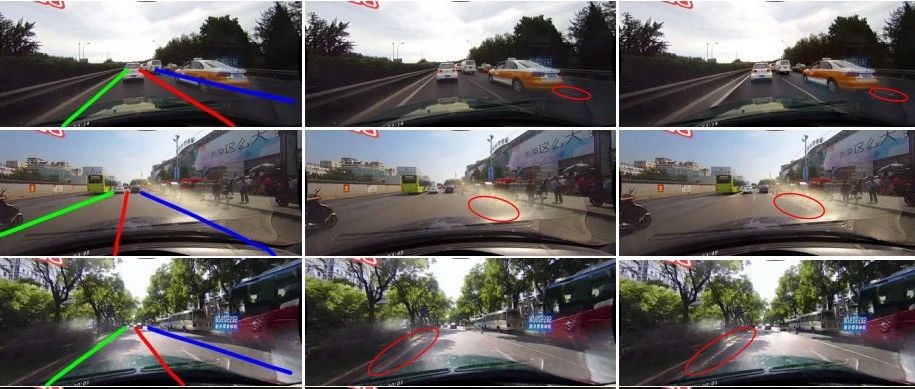
Core Viewpoint - The article discusses the evolving landscape of 4D annotation in autonomous driving, emphasizing the shift from traditional SLAM techniques to more advanced methods for static element reconstruction and automatic labeling [1][4]. Group 1: Purpose and Applications of Reconstruction - The primary purposes of reconstruction are to create 3D maps from lidar or multiple cameras and to output vector lane lines and categories [5][6]. - The application of 4D annotation in static elements remains broad, with a focus on lane markings and static obstacles, which require 2D spatial annotations at each timestamp [1][6]. Group 2: Challenges in Automatic Annotation - The challenges in 4D automatic annotation include high temporal consistency requirements, complex multi-modal data fusion, difficulties in generalizing dynamic scenes, conflicts between annotation efficiency and cost, and high demands for scene generalization in production [8][9]. - These challenges hinder the iterative efficiency of data loops in autonomous driving, impacting the system's generalization capabilities and safety [8]. Group 3: Course Structure and Content - The course on 4D automatic annotation covers a comprehensive curriculum, including dynamic obstacle detection, SLAM reconstruction principles, static element annotation based on reconstruction graphs, and the end-to-end truth generation process [9][10][17]. - Each chapter includes practical exercises to enhance understanding and application of the algorithms discussed [9][10]. Group 4: Instructor and Target Audience - The course is led by an industry expert with extensive experience in multi-modal 3D perception and data loop algorithms, having participated in multiple production delivery projects [21]. - The target audience includes researchers, students, and professionals looking to transition into the data loop field, requiring a foundational understanding of deep learning and autonomous driving perception algorithms [24][25].
最后机会~招商:第二届全球医疗科技大会
思宇MedTech· 2025-06-28 11:40
Core Viewpoint - The second Global Medical Technology Conference will be held on July 17, 2025, in Beijing, focusing on "Cutting-edge Technology: From R&D to Clinical Application" [1][6]. Group 1: Conference Overview - The conference will take place at the Zhongguancun Exhibition Center in Haidian District, Beijing [6]. - The expected attendance is approximately 500 participants, including representatives from government, hospitals, leading enterprises, startups, investment institutions, and research institutes [8]. - The agenda will include discussions on product innovation, technology implementation, and medical-engineering collaboration [6][8]. Group 2: Key Topics of Discussion - The conference will explore challenges in the implementation of medical AI and large models, including multi-modal data integration and embedding solutions into doctors' workflows [9]. - Topics will also cover advancements in imaging equipment and platform upgrades, high-value consumables, energy systems, and material innovations [10][11][12][13]. - A roundtable discussion will focus on how innovative products can effectively enter clinical settings and be utilized [14]. Group 3: Awards and Recognition - The conference will feature a significant awards ceremony to showcase and honor global medical technology innovations [8]. Group 4: Registration Information - Interested parties can register via a provided link or by scanning a QR code [15].
展位有限!第二届全球医疗科技大会招商进行中
思宇MedTech· 2025-06-20 11:17
Core Viewpoint - The article highlights the upcoming Second Global Medical Technology Conference organized by Suyu MedTech, scheduled for July 17, 2025, in Beijing, focusing on "Cutting-edge Technology: From R&D to Clinical Application" [1][6]. Conference Overview - The conference will take place at the Zhongguancun Exhibition Center in Haidian District, Beijing [6]. - The event is expected to attract approximately 500 participants from various sectors, including government, hospitals, leading enterprises, startups, investment institutions, and research institutes [8]. - A significant awards ceremony will showcase and honor global medical technology innovations on the main stage [8]. Key Topics of Discussion - The conference will address several critical topics, including: - AI and intelligent systems [7] - Challenges in the implementation of medical AI and large models [9] - Upgrades in imaging equipment and platforms [10] - Innovations in high-value consumables and interventional techniques [11] - Energy platforms and intraoperative devices [12] - Innovations in materials and structural optimization [13] Roundtable Discussions - A roundtable discussion will focus on how innovative products can effectively enter clinical settings and be utilized [14]. Registration Information - Interested parties can register for the conference by copying the provided link or scanning the QR code [15].
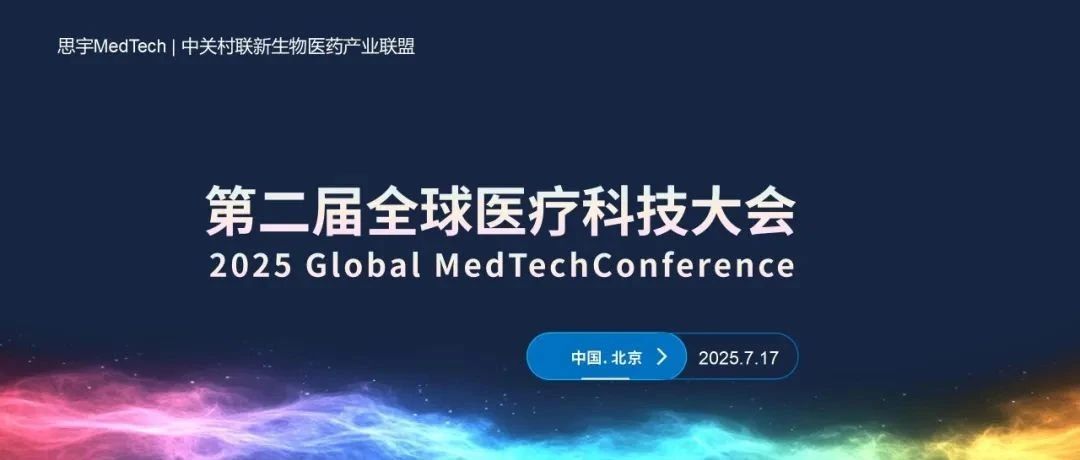
特斯联邵岭:以多模态统一空间模型打造空间智能
Zhong Guo Ji Jin Bao· 2025-06-20 08:05
Core Insights - The article discusses the transformative potential of spatial intelligence in AI, emphasizing its ability to interact with the three-dimensional world through perception, navigation, operation, reasoning, and environment generation [4][6][8] - The integration of various algorithms and technologies, such as computer vision, deep learning, and multimodal learning, is crucial for the development of spatial intelligence [6][7] Group 1: Spatial Intelligence Development - Spatial intelligence is defined as the capability of AI to interact with the three-dimensional world, relying on multiple forms of algorithms and technologies [4][6] - The development of spatial intelligence involves challenges such as integrating diverse data types and executing complex tasks [2][4] - The company is focusing on creating a multimodal fusion spatial intelligence model that aligns with user scenarios, utilizing pre-trained large models and reinforcement learning techniques [6][7] Group 2: Technological Foundations - Key technologies for spatial intelligence include computer vision, deep learning, 3D representation learning, and visual-language models [6][7] - The company has extensive experience in various technical fields, which has been applied to multiple projects and solutions [6][7] - The ability to process and analyze diverse data types, including text, images, sounds, and environmental data, enhances the robustness and generalization of spatial intelligence models [7][8] Group 3: Future Plans and Market Strategy - The company aims to develop specialized AI agents for mobile terminals and smart environments, enhancing the value and competitiveness of Chinese products in overseas markets [7][8] - Short-term goals include creating AI agents with human-like thinking and long-term memory capabilities for wearable devices and robots [8] - Long-term objectives involve evolving from specialized AI agents to general intelligence agents, exploring advanced spatial intelligence and autonomous learning technologies [8]

特斯联邵岭:以多模态统一空间模型打造空间智能
中国基金报· 2025-06-20 07:55
Core Viewpoint - The article discusses the transformation of spatial intelligence through architectural innovation and multimodal integration, moving from laboratory research to industrial applications, emphasizing the need for advanced algorithms and technologies to handle complex spatial reasoning in the physical world [2][4][5]. Group 1: Spatial Intelligence Definition and Technologies - Spatial intelligence is defined as the ability of artificial intelligence to interact with the three-dimensional world through various forms such as perception, navigation, operation, reasoning, and environment generation, relying on technologies like computer vision, deep learning, 3D representation learning, and multimodal learning [4][5]. - The implementation of spatial intelligence depends on multiple algorithms and technologies, including computer vision for perception, 3D representation learning for understanding geometric and topological structures, and visual-language models for semantic understanding and spatial reasoning [4][5][7]. Group 2: Development and Application - The company is developing a multimodal spatial intelligence model in the AIoT field, integrating heterogeneous data from various edge devices to enhance spatial perception, environmental understanding, and causal reasoning capabilities [7][8]. - The deployment of AIoT edge devices enables the collection of vast, diverse, and fine-grained spatiotemporal data, addressing data insufficiency issues in spatial intelligence development [8]. Group 3: Future Plans and Market Strategy - The next development phase aims to meet the demands of the Middle East and overseas markets by creating specialized AI agents based on accumulated data and experience, enhancing the competitiveness of Chinese products and solutions abroad [9]. - Short-term goals include developing AI agents for mobile terminals, such as smart wearable devices and robots, to improve interaction capabilities and intelligence levels [9]. Long-term objectives focus on evolving from specialized to general AI agents, exploring advanced spatial intelligence and autonomous learning technologies [9].
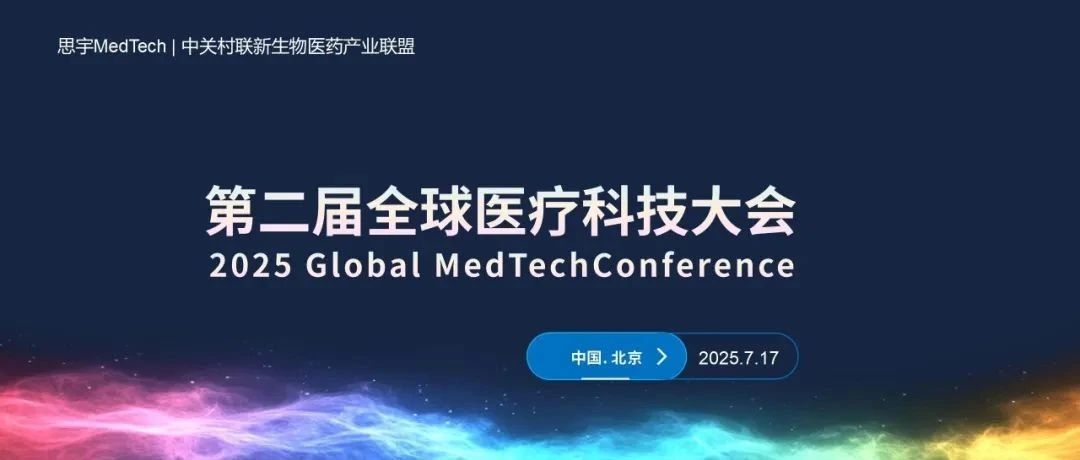
展位有限!第二届全球医疗科技大会招商进行中
思宇MedTech· 2025-06-19 10:19
Core Viewpoint - The second Global Medical Technology Conference organized by Suyu MedTech will take place on July 17, 2025, in Beijing, focusing on "Cutting-edge Technology: From R&D to Clinical Application" [1][6]. Group 1: Conference Overview - The conference will be held at the Zhongguancun Exhibition Center in Haidian District, Beijing [6]. - The expected attendance is approximately 500 participants, including representatives from government, hospitals, leading enterprises, startups, investment institutions, and research institutes [8]. - The agenda will feature discussions on product innovation, technology implementation, and collaboration between medicine and engineering [6][8]. Group 2: Key Topics of Discussion - The conference will emphasize the challenges of implementing medical AI and large models, including multi-modal data integration and embedding solutions into doctors' workflows [9]. - Topics will also cover advancements in imaging equipment, high-value consumables, energy platforms, and material innovations [10][11][12][13]. - A roundtable discussion will focus on how innovative products can effectively enter clinical settings and be utilized [14]. Group 3: Participation and Opportunities - Companies interested in participating can secure exhibition space, which offers branding exposure and business collaboration opportunities [1]. - Registration methods include a link for online registration and a QR code for easy access [15].
万字总结:如何练就适配人形机器人的可靠「灵巧手」?
雷峰网· 2025-06-10 10:30
2025 年 5 月 25 日,雷峰网、AI 科技评论、GAIR Live 品牌举办了一场主题为"具身智能之灵巧手的探索与应用"线上圆桌沙龙。 圆桌主持人为元禾原点合伙人乐金鑫,同时圆桌还邀请了新加坡国立大学助理教授 & RoboScience创始人邵林、上海交通大学副教授 & 千觉机器人创始人马 道林、浙江大学控制科学与工程学院百人计划研究员 & 博士生导师叶琦,共同开展一场深度交流。 VLA 未来有望升级为含触觉的 VTLA,以突破信息融合的技术瓶颈。 作者丨吴华秀 编辑丨 陈彩娴 在具身智能快速崛起的当下,灵巧手作为连接数字智能与物理世界的关键载体,正从传统的执行终端跃升为人工智能落地的核心突破口。 会上,嘉宾们各自分享了与灵巧手的故事,并围绕灵巧手软硬件挑战、数据与模型、落地与应用等多个方面发表独特见解。其中,三位嘉宾围绕如何灵巧手数 据难题,分别给出了意见与想法。 马道林指出,当前灵巧手、夹爪相关的采集数据及其训练出的模型,仍处于整个具身智能领域的初期阶段,而且数据模态更多是视觉和动作方面,还未涵盖触 觉。接下来一方面要采集更多多模态数据,另一方面是解决采集后不同模态数据的处理以及融合等问题。 邵林 ...