工业升级

Search documents
行业报告解析:水冷螺杆式冷水机市场规模约9506百万美元
Sou Hu Cai Jing· 2025-08-19 08:32
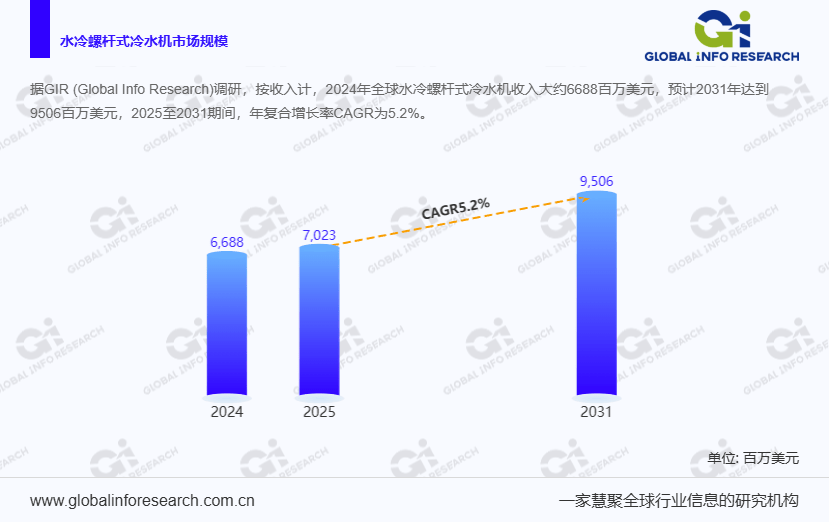
Core Insights - The water-cooled screw chiller market is experiencing unprecedented growth opportunities, with global market revenue projected to reach $6.688 billion in 2024 and soar to $9.506 billion by 2031, reflecting a stable CAGR of 5.2% from 2025 to 2031 [1][3] Market Overview - The report highlights the increasing demand for efficient and stable cooling systems driven by industrial automation and large commercial buildings, particularly in sectors like plastic processing, electronics manufacturing, chemicals, and pharmaceuticals [3] - The expansion of infrastructure such as data centers, hospitals, and shopping malls is boosting the demand for medium to large cooling equipment [3] - Stricter environmental regulations and energy-saving policies are promoting the widespread adoption of high-efficiency water-cooled screw chillers utilizing variable frequency technology and eco-friendly refrigerants [3] Competitive Landscape - The report provides an in-depth analysis of major global manufacturers, detailing product characteristics, technical specifications, revenue scales, profit margins, and market shares, which are crucial for understanding competitive advantages [4] - Tracking industry mergers, threats from new entrants, and expansion trends helps companies anticipate market trends and adjust competitive strategies [4] Regional Analysis - The global market is segmented into North America, Europe, Asia-Pacific, South America, and the Middle East & Africa, with a focus on the performance of key countries within these regions [5] - The explosive demand driven by industrial expansion in the Asia-Pacific region and the preference for energy-efficient equipment in North America and Europe are highlighted, along with the potential of emerging markets [5] Industry Chain Insights - The report analyzes the entire value chain of water-cooled screw chillers, from upstream raw material suppliers to midstream equipment manufacturers and downstream application sectors such as chemicals, food, medical, and construction [6] - It also discusses the impact of policy environments, technological innovations (like the use of eco-friendly refrigerants), and market risks, aiding companies in seizing opportunities and mitigating potential challenges [6] Importance of the Report - This report serves as a comprehensive analytical framework for decision-makers, providing valuable data for long-term strategic planning, customer targeting, and investment opportunities [7] - It emphasizes the importance of data-driven insights in capturing market trends and gaining a competitive edge in the growth wave [7]

中国押注电力无限的未来
3 6 Ke· 2025-07-29 04:15
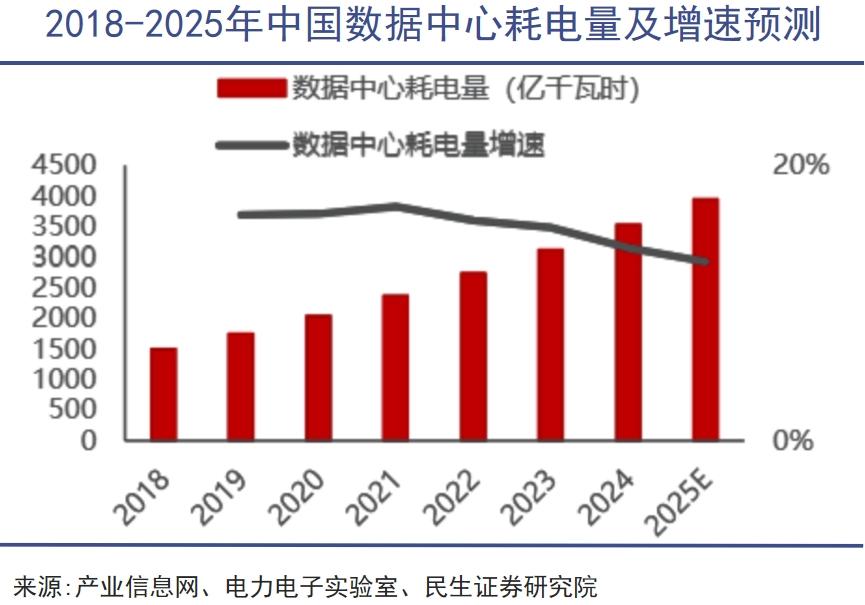
Group 1: Overview of China's Energy Development - The establishment of China Yajiang Group as the 99th central enterprise highlights its strategic position in the energy sector, situated between China Three Gorges Corporation and State Energy Investment Corporation [1] - The Yajiang Hydropower Station is projected to generate an annual output equivalent to three Three Gorges power stations, replacing 90 million tons of standard coal, or the energy released from 150 million tons of oil [1] - The anticipated trillion-level investment is expected to bring significant economic benefits, leading to a surge in related sectors such as infrastructure and construction materials [1] Group 2: Electricity Demand in Emerging Industries - China's strategic emerging industries, particularly data centers, are major electricity consumers, with 2024's projected annual electricity consumption reaching 250 billion kWh, accounting for 2.8% of the national total [2] - The U.S. data center electricity consumption has also surged, from 76 TWh in 2018 to 176 TWh in 2023, with predictions of reaching 325-580 TWh by 2028 [5] - The electricity consumption in sectors like new energy vehicles and chip manufacturing is also significant, with battery production for one vehicle consuming approximately 9,600 kWh [6][7] Group 3: China's Energy Supply and Transition - China's total electricity generation increased from 7.11 trillion kWh in 2018 to 9.42 trillion kWh in 2024, with a compound annual growth rate of 4.8% [12] - The share of coal in electricity generation has decreased from 68% in 2018 to 58.2% in 2024, while wind and solar power capacities have rapidly increased [12] - The implementation of ultra-high voltage transmission technology has enabled China to efficiently transmit large-scale electricity across regions, with 43 lines operational by 2024 [13] Group 4: Environmental Impact and Carbon Emission Reduction - China's carbon emission intensity per unit of electricity generation decreased by 19.7% from 0.61 tons CO₂/MWh in 2018 to 0.49 tons CO₂/MWh in 2024, outperforming reductions in the U.S., Germany, and Japan [14] - The reliability of China's electricity supply has improved, with average annual outage times for urban and rural users meeting high-income economy standards [14] Group 5: Global Energy Dynamics and Future Implications - The potential for unlimited electricity supply in China could lead to industrial breakthroughs and shifts in international energy dependencies, with neighboring countries potentially relying on Chinese electricity [18][19] - The transition from traditional energy sources to electricity could reshape global economic power dynamics, similar to historical shifts from coal to oil [20][21]
蔡司长春质量卓越中心盛大启幕,共筑东北工业升级新支点!
仪器信息网· 2025-05-22 06:25
Core Viewpoint - The establishment of the Zeiss Quality Excellence Center (QEC) in Changchun marks a significant investment in quality services in Northeast China, aimed at enhancing industrial upgrades through advanced measurement technology [2][4]. Group 1: Overview of the QEC - The QEC covers an area of over 650 square meters, making it the largest quality technology investment by Zeiss in Northeast China [4]. - The center is designed as a comprehensive quality service platform focusing on multiple core industries [2]. Group 2: Objectives and Services - The QEC aims to empower regional industrial upgrades by leveraging globally leading measurement technologies [2]. - It features an intelligent detection system that spans the entire industrial chain, supported by a service team led by global experts [4].