常态化退市机制

Search documents
投资股票、债券、黄金等,啥收益最高?咋选才稳赚不赔?快来看
Sou Hu Cai Jing· 2025-08-19 21:00
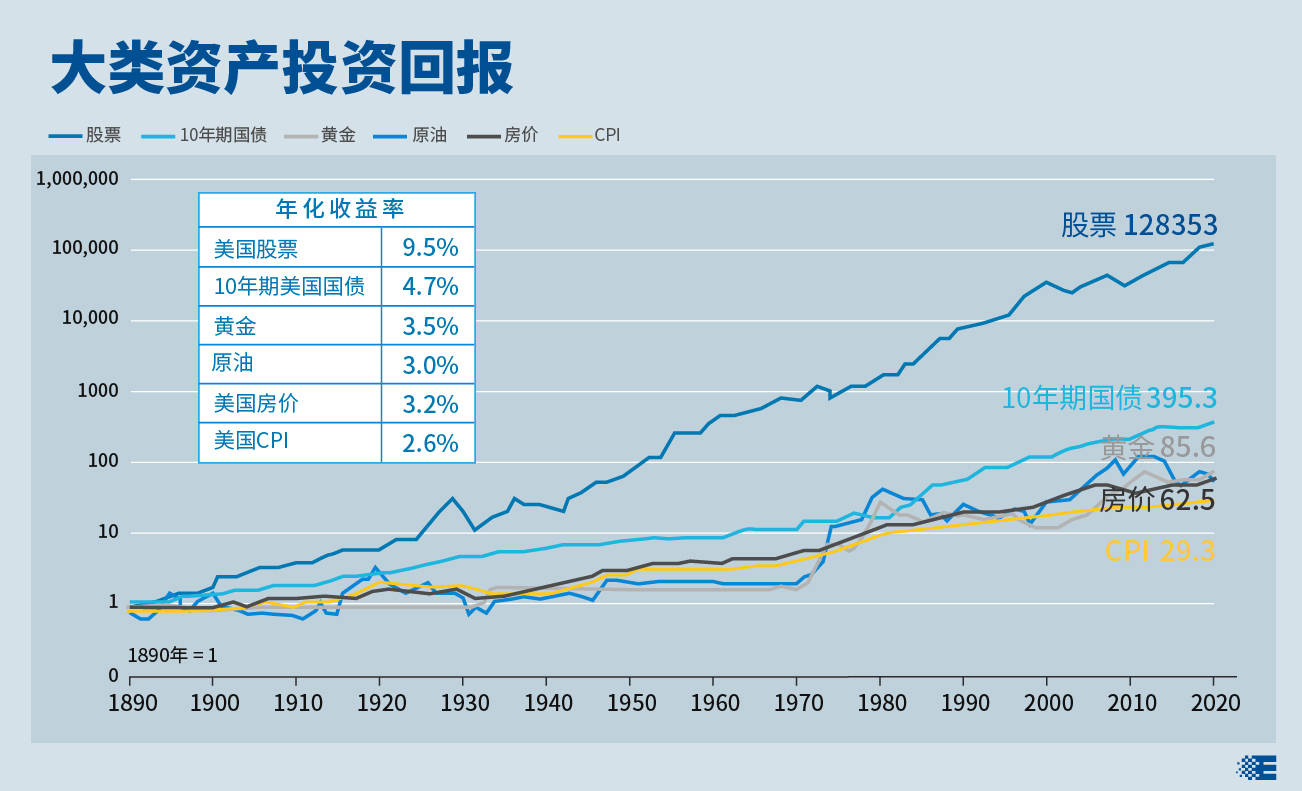
Core Insights - The article emphasizes the importance of investment in various asset classes to enhance wealth, highlighting that stock investments yield the highest long-term returns compared to other assets [1][3]. Group 1: Historical Performance of Assets - From 1890 to 2020, the average annual growth of the Consumer Price Index in the U.S. was 2.6%, while stocks had an annualized return of 9.5%, 10-year Treasury bonds returned 4.7%, gold returned 3.5%, oil returned 3.0%, and real estate returned 3.2% [1]. - A $1 investment in the S&P Composite Index in 1890 would grow to $128,000 by 2020, while the same amount in 10-year Treasury bonds would only be worth $395, gold would be $85, and real estate would be $62 [1]. Group 2: Investment Strategies - Investing in stocks provides the most significant opportunity to benefit from economic growth, with two main methods: direct stock trading and investing through stock mutual funds, which offer professional management and risk diversification [3]. - The annualized return of the CSI 300 Total Return Index from December 31, 2004, to May 12, 2021, was 12.58%, with a cumulative return of 558% [4]. Group 3: Future Outlook - China's economy is expected to achieve high-quality and sustainable growth due to its large market size and domestic demand potential, supported by technological innovation strategies [4]. - The implementation of a registration-based IPO system and a normalized delisting mechanism is anticipated to enhance the vitality and overall quality of the Chinese stock market [4].

多元化退市渠道进一步畅通 年内23家公司退市
Zheng Quan Shi Bao· 2025-08-13 17:39
Core Viewpoint - The A-share market is experiencing an accelerated pace of delisting under the regulatory policy of "delisting as necessary," with a total of 23 companies delisted this year due to various reasons including financial issues, trading violations, and major illegal activities [1][2][3] Group 1: Delisting Trends - A total of 23 A-share listed companies have been delisted this year, with 9 due to trading violations and 9 due to financial issues [2][3] - The delisting types have diversified, leading to an increase in companies choosing voluntary delisting, with *ST Tianmao being the fifth company to do so this year [1][2] - The delisting process is becoming more streamlined and efficient, with a focus on enhancing the market's price mechanism and resource allocation capabilities [1][3] Group 2: Regulatory Changes - The new delisting regulations are aimed at protecting investor interests by reducing "shell speculation" and optimizing the market ecosystem [2] - The standards for mandatory delisting due to major violations have become more detailed, with a significant increase in the proportion of companies delisted for financial issues [3] - The regulatory framework is evolving to include stricter measures against financial fraud and governance issues, enhancing the deterrent effect of delisting rules [3] Group 3: Future Recommendations - There is a need for clearer timelines in the delisting process and a reduction of overlapping functions to prevent companies from remaining inactive [4] - Recommendations include strengthening the accountability and penalty mechanisms for companies post-listing, as well as improving investor compensation mechanisms [4]
四大证券报精华摘要:8月13日
Xin Hua Cai Jing· 2025-08-13 00:23
Group 1: Market Mechanisms and Trends - The regular delisting mechanism in China's capital market is showing effectiveness, with 30 companies announced for delisting this year, indicating a healthy market ecology is forming [1] - The A-share market has seen a significant increase in financing balance, surpassing 2 trillion yuan for the first time since July 2015, reflecting a more mature participant structure and improved regulatory system [5] Group 2: Fund Performance and Investment Strategies - Consumer-themed funds have shown a stark performance divergence, with some funds underperforming due to heavy investments in traditional consumer stocks, while others have excelled by capturing new trends, with returns exceeding 60% [2] - 99% of equity funds have reported positive returns over the past year, with an average return of 34.06%, highlighting the emergence of structural opportunities in the market [7] Group 3: Capital Inflows and Market Dynamics - Southbound capital has seen a net inflow of over 910 billion HKD this year, marking a historical high and contributing to a significant rise in the Hong Kong stock market, with the Hang Seng Index up over 24% [3] - The Hong Kong refinancing market has experienced explosive growth, with over 240 companies raising 183.9 billion HKD, primarily driven by new economy sectors [8] Group 4: Policy and Economic Support - Various measures are being implemented to enhance investment and stimulate private sector activity, with new business registrations increasing by 4.6% for private enterprises in the first half of the year [4] - A new fiscal subsidy policy for personal consumption loans has been introduced, aimed at supporting consumer spending in key areas such as education and healthcare [11] Group 5: IPO Trends - The Hong Kong market is becoming a popular destination for AI companies seeking IPOs, with 213 companies having submitted applications, including around 50 AI firms [13]



年内首家“1元退市”、首家财务类退市公司相继浮现
Xin Hua Wang· 2025-08-12 06:28
Core Viewpoint - The implementation of new delisting regulations in the A-share market has led to an increase in the number of companies facing delisting, indicating a shift towards a more normalized delisting mechanism that enhances market efficiency and resource allocation [1][5][6]. Delisting Events - *ST New Yi became the first company to face mandatory delisting due to major violations, with its stock set to enter a delisting period on March 30, 2022, after two consecutive years of financial fraud [3]. - *ST Aige has been trading below 1 yuan for 16 consecutive days, making it likely to become the first company to be delisted under the "1 yuan delisting" rule if it continues this trend [2]. - *ST Changdong has also triggered financial delisting indicators, with its 2021 annual report showing negative net assets and net profits, leading to a suspension of its stock [2]. Market Response and Trends - The number of delisted companies has increased significantly since the new regulations were implemented, with 10, 16, and 20 companies delisted in 2019, 2020, and 2021 respectively, reflecting a year-on-year growth of 100%, 60%, and 25% [3]. - Experts believe that the new delisting rules have effectively deterred fraudulent activities and reinforced the seriousness of legal regulations in the market [5][6]. Future Implications - The gradual formation of a normalized delisting mechanism is expected to accelerate the turnover of companies in the A-share market, enhancing the overall market environment and ensuring that only qualified companies remain listed [5][6]. - The upcoming full implementation of the registration system is anticipated to further improve market inclusivity, necessitating stricter delisting standards [6].
20只风险警示股披露2023年业绩预告 半数以上续亏
Xin Hua Wang· 2025-08-12 05:47
Core Viewpoint - The number of companies at risk of delisting due to financial indicators is expected to increase as 2023 performance forecasts are disclosed, with a significant number of companies already under risk warning [1][2]. Group 1: Performance Forecasts and Risk Warnings - As of January 29, 2023, 20 companies have disclosed performance forecasts, with 11 continuing to incur losses, 7 turning losses into profits, 1 expecting profit growth, and 1 expecting profit reduction [1]. - Among the 7 *ST stocks, 4 have turned losses into profits, 2 continue to incur losses, and 1 expects profit reduction [1]. - Companies like *ST Dou Shen and *ST Mo Gao may face mandatory delisting due to continuous losses over two years and expected losses in 2023 [1]. Group 2: Potential Delisting and Regulatory Actions - Nine ST stocks, including ST Zhong Zhu and ST Xing Yuan, may face risk warnings due to continued losses, with ST Shen Tian predicting a net asset of -9.956 million to -49.956 million yuan [2]. - Non-ST companies with expected losses and revenue below 100 million yuan may also face delisting warnings, as seen with Wei Di Co. and Han Ma Technology [2]. - The China Securities Regulatory Commission emphasizes the need for a robust delisting mechanism, advocating for a "delist as needed" approach to enhance market efficiency [2]. Group 3: Recommendations for Improvement - Experts suggest that the delisting mechanism requires further refinement, including better investor education and support for quality companies with long-term value [3]. - There is a call for more proactive delisting measures and improved restructuring processes, alongside enhanced investor protection mechanisms [3].

A股常态化退市节奏加快,年内23家公司摘牌
Di Yi Cai Jing Zi Xun· 2025-08-04 12:28
Core Viewpoint - The pace of delisting in A-shares has significantly accelerated in the past month, reflecting a more stringent market mechanism for eliminating underperforming companies and enhancing overall quality [1][6]. Group 1: Delisting Statistics - As of August 4, 2023, a total of 23 A-share companies have been delisted this year, with 10 of those occurring in the last month, accounting for over 40% of the total [1][2]. - The reasons for delisting include major violations and financial issues, with a notable decrease in the number of companies delisted for face value reasons compared to the previous year [4][5]. Group 2: Reasons for Delisting - Companies such as退市锦港 (Jin Gang) were delisted due to major violations related to financial fraud, including inflated profits through false trade activities [2][3]. - Other companies like中程退 (Zhong Cheng) and退市九有 (Jiu You) were delisted for failing to meet financial standards, with negative net assets and adverse audit opinions on their financial reports [2][3]. Group 3: Regulatory Changes - New regulations implemented in April 2023 have made it more difficult for companies to reverse delisting warnings, leading to a more rigorous enforcement of delisting standards [5][6]. - The trend towards a normalized delisting mechanism aligns with the "14th Five-Year Plan" for capital market development, emphasizing timely removal of underperforming companies [6]. Group 4: Future Outlook - Experts suggest that the delisting system needs continuous optimization, including clearer processes and enhanced regulatory oversight to protect investors and ensure compliance [6][7].


股市特别报道丨诺泰生物财务造假将被ST 招商基金等公募或踩雷
Sou Hu Cai Jing· 2025-07-21 11:27
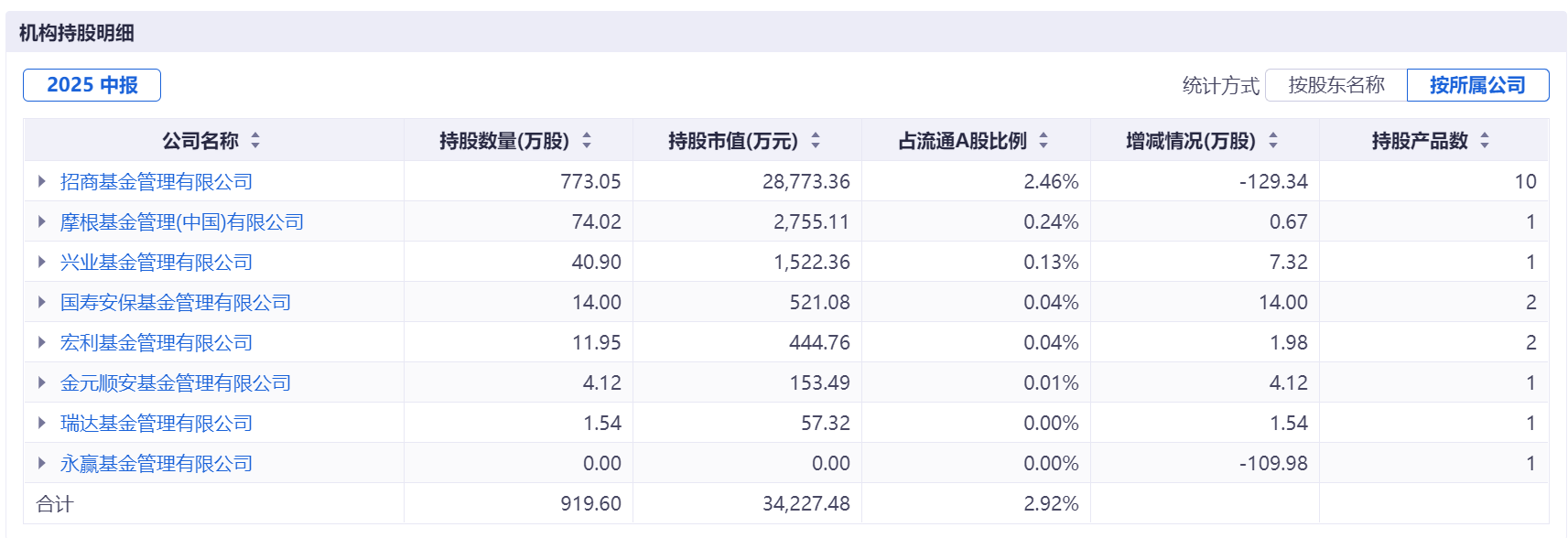
Core Viewpoint - Notai Bio has been suspended from trading due to financial fraud, with its stock being relisted under the risk warning designation "ST Notai" starting July 22, following a one-day suspension on July 21 [1][2]. Company Summary - Notai Bio received an administrative penalty notice from the China Securities Regulatory Commission (CSRC) for false reporting in its 2021 annual report, which inflated revenue by 30 million yuan and net profit by 25.9516 million yuan [1]. - The company faces a fine of 47.4 million yuan and its actual controller, Zhao Dezhong, is fined 13 million yuan, with other responsible parties also facing penalties [1]. - The board of directors is taking the risk warning seriously and plans to implement measures to mitigate the impact of these issues [2]. Shareholding Situation - Major public fund managers, including China Merchants Fund, hold significant shares in Notai Bio, with a total holding value exceeding 340 million yuan as of mid-2023 [4]. - China Merchants Fund alone holds 773.05 million shares, representing 2.46% of Notai Bio's circulating A-shares [3][4]. - Specific funds managed by China Merchants have seen varying degrees of increase in their holdings, indicating potential exposure to losses if the situation worsens [4]. Industry Context - The implementation of new regulations and stricter oversight is accelerating the delisting process for companies, raising the stakes for public funds in managing risks associated with ST stocks [5]. - Public funds are urged to enhance their stock selection capabilities to navigate market changes effectively, especially in light of the increased likelihood of delistings [5].

北交所投教 | 退市板块知识宝典第七期:退市可转债简介和投资者适当性
申万宏源证券上海北京西路营业部· 2025-03-25 01:59
Group 1 - The normalization of the delisting mechanism is crucial for the healthy operation of the capital market [1] - The article aims to enhance investors' understanding of delisted companies during the financial publicity month in 2024 [1] - The series "Delisting Knowledge Handbook" will cover topics such as arrangements for delisted companies, stock transfer rules, and management of convertible bonds after delisting [1] Group 2 - This issue introduces the basic knowledge of delisted convertible bonds and investor suitability [1]

北交所投教 | 退市板块知识宝典第一期:退市板块含义与退市后基本安排
申万宏源证券上海北京西路营业部· 2025-03-14 00:36
Group 1 - The article emphasizes that a normalized delisting mechanism is crucial for the healthy operation of the capital market [2] - It aims to enhance investors' understanding of delisted companies through a series of educational materials during the 2024 Financial Promotion Month [2] - The current issue introduces the meaning of delisted sectors and the arrangements for companies after delisting [2]
北交所投教 | 退市板块知识宝典第十期:退市可转债持续信息披露
申万宏源证券上海北京西路营业部· 2025-03-11 01:56
Core Viewpoint - The article emphasizes the importance of a normalized delisting mechanism for the healthy operation of the capital market, aiming to enhance investors' understanding of delisted companies and related regulations [1]. Group 1: Delisting Mechanism - A normalized delisting mechanism is crucial for ensuring the effective functioning of the capital market [1]. - The article introduces a series of educational content during the 2024 Financial Promotion Month, focusing on delisted companies and their stock transfer rules [1]. Group 2: Information Disclosure - The current issue discusses the continuous information disclosure requirements for convertible bonds after a company is delisted [1].