
心肺复苏

Search documents
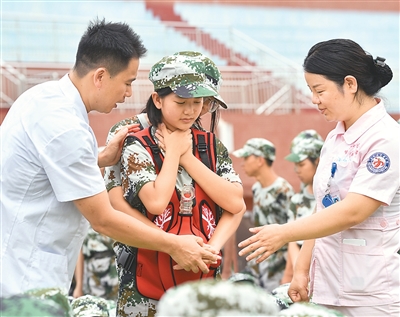
“冷静小孩姐”为何敢出手(有事说事)
Ren Min Ri Bao Hai Wai Ban· 2025-08-25 01:12
Core Viewpoint - The incident involving a young girl successfully using the Heimlich maneuver to save a woman highlights the importance of first aid education and its impact on society [2][3]. Group 1: Importance of First Aid Education - The young girl, Hu Zihan, is a volunteer in a youth first aid training program and recently learned the Heimlich maneuver, which she applied in a real-life situation [2]. - The incident reflects the results of ongoing efforts in China to promote first aid education in schools and communities, emphasizing the value of instilling a sense of responsibility and compassion in children [2][3]. Group 2: Current Challenges in First Aid Skills - Despite the progress, the overall public awareness and skills in first aid remain low, with many individuals feeling helpless or hesitant in emergencies due to a lack of knowledge [3]. - There is a need for systemic changes, such as integrating first aid training into the national education system and improving the availability of first aid equipment in public spaces [3]. Group 3: Broader Implications of First Aid Training - The concept of "everyone learning first aid" reflects a collective value of community responsibility, where individuals are encouraged to care for the safety of others [5]. - The ability to perform first aid can significantly impact survival rates in emergencies, as many cardiac arrests occur outside of hospitals, highlighting the critical role of bystanders [3].

生活观察丨关爱心血管!守护生命通道
Xin Hua Wang· 2025-06-03 10:24
Core Viewpoint - The article emphasizes the increasing prevalence of sudden cardiac death in China, highlighting the importance of awareness, prevention, and timely intervention in saving lives [1][2]. Group 1: Sudden Cardiac Death - The crude incidence rate of acute myocardial infarction among residents aged 18 and above in China is reported to be 79.7 per 100,000 [1]. - Sudden cardiac death is defined as unexpected death due to cardiac causes, typically occurring within one hour of symptom onset, with common triggers including myocardial infarction and arrhythmias [2]. Group 2: Emergency Response - The "golden time" for resuscitation after cardiac arrest is within 4 minutes, as failure to act promptly can lead to irreversible brain damage and multi-organ failure [2]. - Initiatives like the "4-minute rescue circle" in Dongguan and plans to increase AED availability in public places are being implemented to enhance emergency response [3]. Group 3: Risk Factors - Key risk factors for sudden cardiac death include a history of coronary heart disease, hypertension, diabetes, and lifestyle factors such as lack of sleep and high-stress levels [4]. - Individuals with a family history of cardiovascular diseases should undergo regular screenings, including ECG and echocardiograms [4]. Group 4: Prevention Strategies - Lifestyle changes are crucial for heart health, including a balanced diet low in salt, fat, and sugar, regular exercise, and avoiding smoking and excessive alcohol consumption [6]. - External factors like extreme cold weather and high altitudes can increase the risk of sudden cardiac death, particularly for those with pre-existing conditions [6].