快递进村

Search documents
办好快递进村这件民生实事
Jing Ji Ri Bao· 2025-11-16 22:08
Core Insights - The initiative to enhance express delivery services in rural areas is crucial for connecting agricultural products to urban markets and improving the quality of life for millions of farmers [1][2] - The express delivery industry has seen significant growth, with over 1.5 billion packages delivered in China by October 11 this year, indicating a strong demand driven by the potential of lower-tier markets [1] - The expansion of delivery networks, including the use of advanced technologies like drones and autonomous vehicles, is improving the efficiency of last-mile delivery in rural areas [1][2] Group 1 - The express delivery sector is vital for rural revitalization, providing essential services that meet the production and consumption needs of rural communities [1] - As of October 11, 2023, China's express delivery volume surpassed 1.5 billion packages, a milestone reached 37 days earlier than the previous year, highlighting the rapid growth in this sector [1] - The express delivery network now covers over 95% of rural areas in China, with an average of over 100 new service stations established daily [1] Group 2 - The express delivery service has transformed rural consumption patterns, with significant growth in the western regions of China, particularly in Ningxia, Xinjiang, and Qinghai, where the increase exceeded 30% [2] - Rural retail sales of consumer goods grew by 4.6% year-on-year in the first three quarters of the year, driven by improved delivery services [2] - Challenges remain, such as high delivery costs in sparsely populated areas and a noticeable gap in service quality compared to urban areas [2]
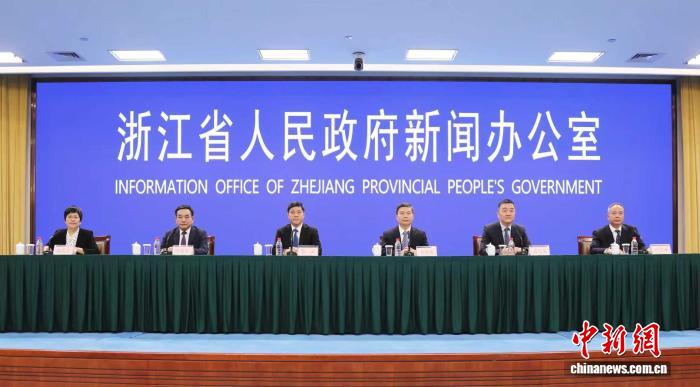
“双十一”期间浙江日均快递业务量已超1亿件
Zhong Guo Xin Wen Wang· 2025-11-11 17:13
Core Insights - The 17th "Double Eleven" event has seen an average daily express delivery volume exceeding 100 million packages in Zhejiang province, with nearly 50 million packages delivered daily from October 20 to November 11 [1] - The express delivery industry in Zhejiang has experienced significant growth, with the total delivery volume projected to rise from 20.38 billion packages in 2020 to 33.57 billion packages by 2024, reflecting an annual growth rate of 13% [3] - The province's express delivery business volume is expected to increase from 17.95 billion packages in 2020 to 32.19 billion packages by 2024, with an annual growth rate of 16% [3] Industry Development - Zhejiang's express delivery sector has become a key player in the Yangtze River Delta region, accounting for 54.2% of the total regional volume and 17.3% of the national total, ranking second in the country [3] - The province has implemented initiatives to enhance service capabilities, including the "Two In One Out" project, which focuses on integrating express delivery into rural areas and optimizing logistics for manufacturing enterprises [3] - The establishment of 1.7 million service stations has been crucial in improving last-mile delivery, utilizing resources such as village postal stations and community service centers [3] Agricultural Support - Zhejiang has facilitated the distribution of agricultural products through innovative models, such as "production processing + online sales + express logistics" and "fresh e-commerce + cold chain delivery," enabling local specialties to reach a national audience [4] - A total of 1.69 billion express deliveries of specialty agricultural products have been sent from the province this year [4]

快递进村:打通“最后一公里” 撬动乡村大市场
Zheng Quan Ri Bao· 2025-11-03 15:45
Core Insights - The "Express Delivery into Villages" initiative is significantly enhancing logistics in remote areas, integrating them into the national market and supporting rural revitalization [1][4][12] Logistics Network Development - The coverage rate of express delivery services in villages has reached 95.22%, indicating substantial progress in rural logistics [1][3] - In Gansu Province, the establishment of a comprehensive service station has led to an average of over 1,800 packages being processed daily [2] Policy and Support - The "Express Delivery into Villages" initiative has been supported by government policies since 2014, with a focus on optimizing resource allocation and enhancing service quality [2][3] - The strategic focus for 2023 includes improving service quality and optimizing logistics station layouts [3] Market Dynamics - The rural market is transitioning from a "potential zone" to a "main battlefield," with express delivery volume expected to reach 1,282 billion packages by mid-2025, a 17.8% increase year-on-year [4][11] - The integration of e-commerce and local products is crucial for unlocking rural market potential [10] Technological Innovations - Digital technologies are pivotal in solving the "last mile" delivery challenges, with innovations like smart delivery vehicles and centralized storage systems improving efficiency [6][7] - The introduction of unmanned delivery vehicles has reduced delivery costs by approximately 20% and improved delivery times by 2 hours [6][7] Challenges and Solutions - Despite advancements, challenges such as complex terrain and high operational costs persist, necessitating further investment in infrastructure and technology [7][8] - Addressing information silos and standardizing data formats is essential for enhancing logistics efficiency [8] Future Outlook - The rural logistics market is projected to reach 1,626 billion yuan in 2024, with a significant increase in cold chain logistics from 18% to 32% by 2025 [11] - Continued investment in logistics infrastructure is expected to drive robust growth in rural logistics, supporting economic development [11][12]
国家邮政局:整治快递业“内卷式”竞争 保障快递员合法权益
智通财经网· 2025-10-22 12:37
Core Viewpoint - The State Post Bureau emphasizes the importance of safety governance and compliance in the postal and express delivery industry, particularly focusing on rural delivery services and the protection of courier rights [2][3]. Group 1: Safety Governance and Compliance - The meeting highlighted the need to enhance the monitoring and command dispatch mechanisms within the industry to maintain stability among couriers [3][4]. - There is a strong emphasis on implementing the "real-name collection, inspection of items, and security checks" system to ensure public safety [3][4]. - The bureau aims to strengthen the management of information security and promote the application of privacy in mail and express delivery [3][4]. Group 2: Rural Delivery Services - The meeting reiterated the need to combat illegal charging practices in rural areas and to strictly enforce the public announcement of service areas [4]. - There is a focus on improving the quality of rural express delivery services and enhancing the layout of logistics service stations in villages [4]. - The bureau aims to address "involution" competition to protect the legitimate rights and interests of couriers [4]. Group 3: Collaboration and Governance - The bureau plans to strengthen collaboration with local governments and relevant departments to enhance governance efforts [4]. - A "zero tolerance" approach will be adopted towards illegal charging practices, ensuring that previous governance achievements are maintained [4]. - The meeting included discussions on the safety management system of major delivery companies, with exchanges of experiences among various provincial bureaus and the China Post Group [4][5].
国家邮政局:要整治“内卷式”竞争,保障快递员合法权益
Zheng Quan Shi Bao Wang· 2025-10-22 12:30
Core Insights - The meeting emphasized the importance of enhancing safety and stability in the postal and express delivery industry, highlighting the urgency and responsibility in addressing major safety risks [1][2] - There is a focus on implementing strict regulations regarding the collection and inspection of parcels, as well as improving information security management [1] - The meeting also addressed the need for better rural delivery services and the elimination of illegal charging practices in rural areas [2] Group 1 - The meeting called for a unified understanding of safety responsibilities and the need to prevent major safety risks in the express delivery sector [1] - It stressed the importance of monitoring industry operations and maintaining stability among delivery personnel [1] - The implementation of three key systems: real-name collection, inspection of parcels, and security checks, was highlighted to enhance delivery safety [1] Group 2 - The meeting reiterated the need for strict enforcement against illegal charging practices in rural areas and the importance of adhering to service area announcements [2] - It emphasized the need for improved quality control in rural delivery services and the establishment of comprehensive service stations [2] - The meeting also addressed the issue of "involution" in competition, aiming to protect the legal rights of delivery personnel [2]
物流业向“智”而行换挡提速
Zheng Quan Ri Bao· 2025-10-12 16:12
Core Viewpoint - The recent implementation opinion by the Ministry of Transport and six other departments aims to accelerate the upgrade of postal and express delivery infrastructure, creating a smart and efficient delivery network, which is essential for developing a modern logistics system characterized by high intelligence and deep collaboration [1] Group 1: Logistics Infrastructure Development - The logistics infrastructure system is rapidly being constructed, with significant improvements in the "last mile" delivery to rural areas, enhancing the reach of express services [2][4] - In Gansu province, a three-tier logistics distribution system has been established, covering over 90% of villages and towns, which has led to a substantial increase in daily package volumes at local delivery stations [2][3] Group 2: Economic Impact and Agricultural Support - The "express delivery into villages" initiative not only facilitates consumer access but also helps local agricultural products reach broader markets, significantly boosting sales and farmer incomes [4][5] - Gansu province's logistics system is projected to assist in the sale of over 70 million agricultural products, contributing to a notable increase in farmers' income [4][6] Group 3: Technological Advancements - The introduction of automated sorting systems and unmanned delivery vehicles has significantly improved logistics efficiency, reducing delivery times and costs [7][8] - The application of smart delivery solutions, such as intelligent lockers, addresses the challenges of rural delivery, enhancing customer experience and operational efficiency [8][10] Group 4: Policy Support and Future Outlook - Government policies are actively supporting the adoption of smart logistics technologies, with financial incentives for companies investing in automation and unmanned delivery systems [9][10] - There is a strong expectation for further policy improvements to facilitate the broader application of unmanned delivery vehicles and enhance the overall logistics infrastructure in western regions [11][12]
新疆整合资源打通物流“末梢” “小包裹”串起民生“大幸福”(砥砺奋进七十载 天山南北谱华章)
Ren Min Ri Bao· 2025-10-07 21:58
Core Viewpoint - The implementation of the "Express Delivery into Villages" initiative in Xinjiang has significantly improved logistics accessibility for rural residents, enhancing their online shopping experience and overall quality of life [1][2]. Group 1: Logistics Development - Xinjiang has achieved over 96% coverage of village-level express delivery services through a three-tier logistics system [1] - The logistics cost in Xinjiang has been steadily decreasing, with the ratio of total social logistics costs to regional GDP at 14.7%, down 7.8 percentage points since 2012 [2] - The introduction of a new logistics model involving national collection and distribution centers has streamlined operations and reduced costs [2] Group 2: E-commerce and Consumer Experience - The establishment of JD Logistics' Kashgar warehouse has enabled same-day delivery for orders, significantly enhancing consumer shopping experiences in southern Xinjiang [3] - The automation of sorting processes at the Kashgar warehouse has improved processing efficiency by 30% and achieved a sorting accuracy rate of 99.8% [3] - The logistics network has facilitated the rapid delivery of perishable agricultural products from Xinjiang to consumers nationwide, reducing delivery times and costs [3][5] Group 3: Economic Impact - Local farmers have benefited from e-commerce, with one farmer reporting sales of 101 sheep and revenue exceeding 70,000 yuan in 2024 [4] - The branding of local products, such as "Tuyun Soda Lamb" and "Congling Shepherd" beef, has led to significant sales growth and increased recognition of Xinjiang's agricultural products [5]
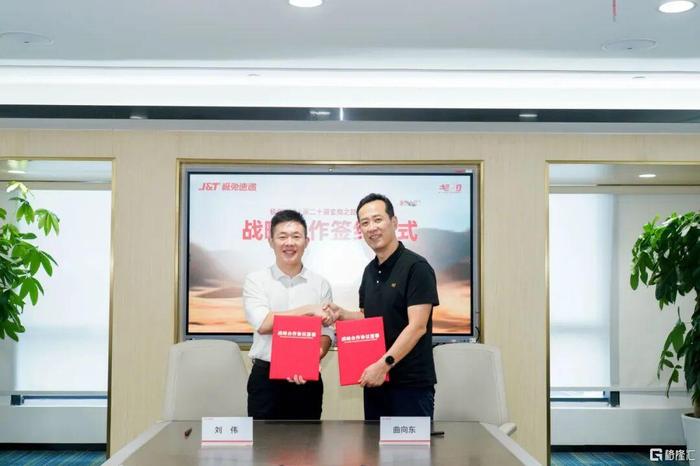
极兔速递与戈20正式签署战略合作协议,以全链路物流护航戈壁挑战赛
Ge Long Hui A P P· 2025-09-15 08:46
Core Points - Jitu Express signed a strategic cooperation agreement with the 20th Xuanzang Road Gobi Challenge (G20) to become the official logistics partner for the event [1][3] - The partnership aims to leverage Jitu's extensive logistics network and intelligent management system to ensure efficient logistics support in extreme environments [1][5] Group 1: Event Overview - The G20 event is scheduled to take place from September 28 to October 4, 2025, in Dunhuang and Guazhou, Gansu, with 5,000 participants trekking 121 kilometers across the Gobi Desert [3] - The event emphasizes the spirit of "ideal, action, persistence, and transcendence," and presents significant logistical challenges due to harsh natural conditions [3][5] Group 2: Logistics Support - Jitu Express will deploy logistics resources in advance to transport tents, medical equipment, and other supplies across regions [3][6] - During the event, Jitu will utilize its intelligent management system for real-time monitoring and employ unmanned vehicles for precise delivery of supplies to various checkpoints [3][6] - A 24-hour emergency response team will be established to address extreme weather and unexpected demands [3][6] Group 3: Company Background and Capabilities - Jitu Express has been operational in China since 2020, focusing on rural logistics and has established a network covering 230,000 administrative villages with over 99% coverage in counties [5][6] - The company has built over 7,000 collection points in Xinjiang and implemented a centralized shipping model to reduce logistics costs [6] - Jitu has invested in infrastructure, with 83 transit centers and over 5,900 vehicles, ensuring a robust logistics system capable of meeting the high standards required for the G20 event [6][8]
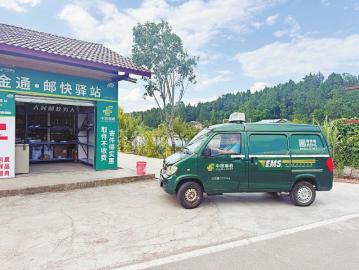
快递进村 门口收件
Si Chuan Ri Bao· 2025-09-11 22:11
Core Viewpoint - The establishment of village-level logistics service stations by China Post in Nanchong, Sichuan, has significantly improved the delivery of packages to rural areas, facilitating cooperation with private express companies to enhance service efficiency and coverage [3]. Group 1: Logistics Service Stations - China Post has created the first batch of village-level logistics service stations in Nanchong, which has enabled unified delivery of packages from various express companies to rural areas [3]. - The Datan Village logistics service station has delivered nearly 10,000 packages in one year, covering over 10,000 people across three administrative villages and one construction site [3]. - As of August this year, 43 standardized logistics service stations have been established across 26 administrative towns in Yingshan County [3]. Group 2: Collaboration with Express Companies - China Post collaborates with private express companies to address the challenges of delivering packages to remote villages, leveraging its extensive delivery network [3]. - The partnership allows for the separate sorting of packages that are difficult to deliver, with China Post handling the final delivery to rural areas [3]. - The cooperation has led to a significant increase in package volume, with the number of packages received at the service station rising from less than 100 to 879 in one year [3]. Group 3: Cost Efficiency and Revenue Generation - The cost for villagers to receive packages through the service station is lower than traditional storage fees, eliminating the need for additional charges [3]. - The logistics service stations also provide a source of income for local businesses, with the owner of a small shop reporting earnings of 400 to 500 yuan per month from package services [3]. - To alleviate delivery pressure, China Post has coordinated with local passenger transport services to utilize excess capacity for package delivery [3].
深化“快递进村”“快递进厂”,韵达差异化战略破局内卷
Tai Mei Ti A P P· 2025-09-11 03:19
Core Insights - The express delivery industry is facing a "volume increase and price decrease" dilemma, with a projected 19.3% year-on-year growth in business volume for the first half of 2025, while competitive pricing pressures continue to rise [2] - Yunda's differentiated strategy focuses on "express delivery into villages" and "express delivery into factories," which is seen as a key initiative for supporting national rural revitalization and upgrading the manufacturing supply chain [2][8] Group 1: Express Delivery into Villages - Yunda aims to activate rural economic growth by implementing a "network sinking + customized services" dual approach, facilitating the last mile for consumer goods and the first mile for agricultural products [2] - As of the first half of 2025, Yunda's service network covers all 31 provinces, with over 99.8% coverage in county-level areas, and has added more than 1,300 township outlets [3] - Customized solutions for rural specialty industries include optimized packaging and logistics for local products, such as a cold chain logistics system in Sichuan that significantly extends the shelf life of mushrooms [5] Group 2: Express Delivery into Factories - Yunda is transforming from a mere "transport service provider" to a "supply chain partner" by leveraging technology and focusing on industry-specific needs, thus creating a new ecosystem for manufacturing logistics [6] - The company has established 468 package collection warehouses to enhance efficiency through automation, with significant improvements in daily collection volumes in manufacturing hubs [6][7] - Yunda's tailored services for different industries, such as specialized packaging for fragile items, have led to a reduction in damage rates and improved logistics efficiency [8] Group 3: Future Outlook - Yunda's strategies of "express delivery into villages" and "express delivery into factories" allow it to avoid homogeneous price wars while capitalizing on policy benefits related to rural revitalization and industrial integration [8] - The company plans to strengthen its core competitiveness through the continued operation of package collection and grid warehouses, as well as the implementation of technologies like "Yunda Intelligent Body" and "unmanned delivery" [8]