
无人配送技术

Search documents
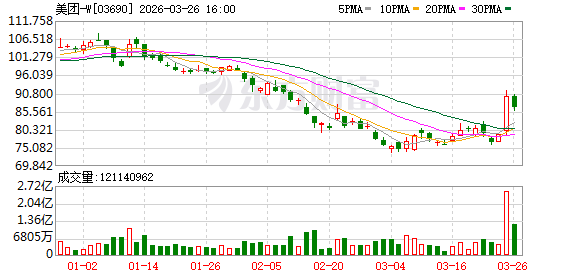
亏损234亿元!“外卖大战”后,美团公布成绩单
Zhong Guo Zheng Quan Bao· 2026-03-26 15:58
Core Insights - Meituan reported a revenue of 364.9 billion yuan for 2025, reflecting an 8.1% year-on-year growth, but faced a loss of 23.4 billion yuan compared to a profit of 35.8 billion yuan in 2024 [2] Group 1: Financial Performance - The core local business segment of Meituan turned from profit to loss, generating 260.8 billion yuan in revenue, a 4.2% increase, but incurring an operating loss of 6.9 billion yuan [4] - The adjusted EBITDA and adjusted net profit for Meituan fell to -13.8 billion yuan and -18.6 billion yuan, respectively, in 2025 [4] - Sales and marketing expenses surged by 60.9% from 64 billion yuan in 2024 to 102.9 billion yuan in 2025, accounting for 28.2% of revenue, up 9.2 percentage points year-on-year [4] Group 2: Strategic Initiatives - Meituan is actively adjusting its operational strategies, focusing on AI and unmanned delivery technology, product and business model innovation, and enhancing operational efficiency [5] - The company aims to strengthen its core advantages and improve service quality to gain consumer trust while opposing irrational competition [5] Group 3: Business Expansion - Meituan's grocery retail and overseas businesses showed strong growth, with new business segment revenue reaching 104 billion yuan, a 19% increase [7] - The acquisition of Dingdong Maicai's China business for approximately 7.17 billion yuan is part of Meituan's strategy to expand its front warehouse business [7] - Meituan's international business, particularly through Keeta, is expanding in the Middle East and Brazil, with a focus on consolidating market positions rather than broad expansion [8] Group 4: AI Integration - Meituan is committed to embracing AI, launching the independent app "Xiao Mei" and integrating an AI assistant "Xiao Tuan" within its main app [8] - The company plans to develop a comprehensive local life AI assistant by leveraging its extensive data on local businesses and consumer reviews [8]


华东首家!“小黄蜂”上岗南京禄口机场,春运旅客在登机口也能“点外卖”
Yang Zi Wan Bao Wang· 2026-02-09 13:39
Core Insights - The introduction of delivery robots at Nanjing Lukou International Airport marks a significant step in the airport's "smart airport" initiative, enhancing passenger convenience and operational efficiency [2][6]. Group 1: Robot Delivery Service - The robots, named "Little Bumblebee," are designed to deliver food from vendors like KFC and Starbucks directly to passengers at their boarding gates, improving the overall travel experience [1][2]. - The delivery process is efficient, taking less than 30 seconds, and includes features such as polite communication and obstacle avoidance [3][6]. - The robots are equipped with advanced sensors and algorithms to ensure safe navigation in a high-traffic environment, with a speed limit of 2 meters per second and a safety distance of 1.5 meters [6][4]. Group 2: Passenger Experience - Passengers can place orders through the Meituan app or by scanning QR codes at boarding gates, which streamlines the ordering process and saves an average of 20 minutes for travelers [4][5]. - The service is particularly beneficial for travelers with children or heavy luggage, as it alleviates the need to rush to food outlets [4][7]. - The introduction of this service has led to increased sales for airport vendors, as passengers can now order food without needing to locate the restaurants [5][6]. Group 3: Future Expansion - There are plans to integrate more food brands into the delivery system, with potential expansion into other retail categories, aiming to enhance passenger comfort and convenience further [7][5]. - The successful implementation of this technology at Nanjing Airport indicates a high level of maturity in unmanned delivery technology, with previous successful deployments at other major airports [6][4].
温暖守护160万“赶时间的人”
Xin Hua Ri Bao· 2026-02-05 22:14
Core Viewpoint - The article highlights the growing importance of new employment groups, particularly in the logistics and delivery sectors, and discusses the need for better support and protection for these workers in terms of labor rights and safety measures [1][2][3] Group 1: Employment and Labor Rights - Jiangsu currently has over 1.6 million active new employment groups, emphasizing the need for improved labor safety and retirement suggestions for these workers [1] - Zhang Xin, a representative from the delivery sector, has successfully pushed for legislative changes to enhance labor rights and safety for new employment groups [1] - The provincial government is encouraging flexible employment personnel to participate in employee insurance, indicating a shift towards better social security for these workers [2] Group 2: Technological Integration and Innovation - The introduction of unmanned delivery vehicles has shown significant cost-saving potential but also presents challenges such as operational instability in adverse weather conditions [1] - There is a call for the development of a rural logistics system that leverages technology and innovative models to improve delivery services in underserved areas [2] Group 3: Policy and Support Initiatives - The government is working on a basic rights protection framework for new employment groups, which will clarify the responsibilities of platform companies in labor protection [3] - Various representatives at the provincial conference are advocating for a multi-faceted approach to improve the employment environment for new employment groups, focusing on creating a sense of belonging and happiness for these workers [3]
超低价机票概率变低:民航深入整治“内卷式”竞争丨消费参考
2 1 Shi Ji Jing Ji Bao Dao· 2026-01-08 03:21
Group 1: Industry Overview - The Civil Aviation Administration of China (CAAC) has outlined seven key tasks for the aviation industry in 2026, focusing on improving quality and efficiency, enhancing core competitiveness, and addressing "involution" competition [1] - The CAAC plans to develop a passenger transport cost survey method and establish a price monitoring and early warning mechanism to prevent unhealthy competition based on below-cost pricing [1][2] Group 2: Pricing Trends - Domestic ticket prices have been declining, with an average bare ticket price of 704 yuan in the first 50 weeks of 2025, down 1.8% from 2024 and 11.3% from 2019 [3] - In the fourth quarter of 2025, the average full ticket price rose to 628 yuan, an increase of 2.5% year-on-year, although still down 10.7% compared to 2019 [3] Group 3: Profitability and Market Performance - The aviation market saw overall profitability improvement in the first three quarters of 2025, with all listed airlines reporting profits except Spring Airlines and Juneyao Airlines, which faced specific challenges [4] - The CAAC reported that in 2025, the total transport turnover reached 1,640.8 billion ton-kilometers, with passenger transport volume at 770 million, and cargo/mail transport volume at 10.17 million tons, representing year-on-year growth of 10.5%, 5.5%, and 13.3% respectively [4] Group 4: International Demand Growth - The implementation of visa-free policies has contributed to increased demand for international flights, with 40.6 million inbound foreign visitors recorded by December 16, 2025, a year-on-year increase of 27.2% [5]
国家邮政局:2025年快递业务量达1990亿件
Bei Jing Qing Nian Bao· 2026-01-07 23:37
Core Insights - The 2026 National Postal Work Conference was held in Beijing, summarizing the postal work of 2025 and the "14th Five-Year Plan" period, while analyzing the situation and planning for the "15th Five-Year Plan" [2] Group 1: Industry Performance - In 2025, the postal industry achieved a business revenue of 1.8 trillion yuan and a delivery volume of 216.5 billion items, representing year-on-year growth of 6.4% and 11.5% respectively [2] - The express delivery business generated a revenue of 1.5 trillion yuan and a volume of 199 billion items, with year-on-year growth of 6.5% and 13.7% respectively [2] - During the "14th Five-Year Plan" period, the postal industry's business revenue increased to 1.8 trillion yuan, with an average annual growth rate exceeding 10%, placing it among the fastest-growing sectors in modern services [2] Group 2: Technological Advancements - Over the past five years, the postal industry's service capabilities have significantly improved, with major sorting centers achieving automation and the scale of unmanned warehouse operations expanding [3] - The industry has seen positive results from pilot programs using unmanned vehicles and drones, with cloud computing and large models accelerating applications in demand forecasting, intelligent warehouse management, and route planning [3] - In 2026, the postal industry plans to introduce policies to promote the application of unmanned delivery technologies, deepen the trial use of unmanned vehicles and drones, and accelerate the adoption of intelligent sorting and cloud warehouse technologies [3]
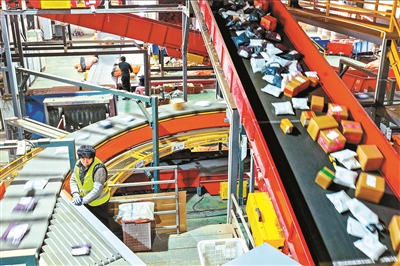
“十四五”时期我国快递业务量达千亿级
Xin Lang Cai Jing· 2026-01-07 22:25
Core Insights - During the "14th Five-Year Plan" period, China's express delivery business volume reached nearly 200 billion pieces, contributing over 60% to global growth [1] - The postal industry's revenue increased to 1.8 trillion yuan, with an average annual growth rate exceeding 10%, ranking among the top in modern service industries [1] - The number of express deliveries per capita rose to 141 pieces annually, with a peak daily volume of 777 million pieces [1] Group 1 - The postal service's reach in rural and border areas has significantly improved, with the number of service outlets increasing by nearly 1.5 times compared to five years ago [1] - All border natural villages have achieved postal service access, and regions like Xinjiang and Tibet have ended the history of e-commerce packages not being "free shipping" [1] - The share of express delivery revenue and volume from central and western regions has increased by 5.4 and 7.5 percentage points, respectively, promoting better integration into the national market [1] Group 2 - The postal industry has enhanced its service capabilities, with sorting centers achieving automation and the scale of unmanned warehouse operations expanding [1] - Pilot applications of unmanned vehicles and drones have shown positive results, with cloud computing and large models accelerating in demand forecasting and intelligent logistics [1] - The overall efficiency, informatization, service range, and cost-effectiveness of postal and express services remain among the best in the world [1] Group 3 - In 2026, the postal industry will introduce policies to accelerate the application of unmanned delivery technologies, including unmanned vehicles and drones [2] - The promotion of smart sorting, intelligent cloud warehouses, and automated facilities will be prioritized, along with the application of green technologies such as circular packaging and new energy vehicles [2] - The construction of overseas air cargo stations and warehouses will be accelerated to enhance international logistics service capabilities [2]
影响市场重大事件:日本欲打造本土版“星链”系统;国资委主任张玉卓:央企要大力发展战略性新兴产业,开辟增长的“第二曲线”
Mei Ri Jing Ji Xin Wen· 2026-01-07 22:11
Group 1 - Japan is working on developing a domestic version of the "Starlink" system to enhance communication services through low Earth orbit satellite constellations [1] - The Chinese government emphasizes the importance of state-owned enterprises (SOEs) in developing strategic emerging industries to create a "second curve" of growth [2] - Shandong Province is drafting policies to upgrade its aerospace industry, aiming to become a leading hub in aerospace manufacturing [3] Group 2 - The Ministry of Industry and Information Technology (MIIT) is promoting the integration of industrial internet and artificial intelligence to enhance computing power supply and encourage the deployment of edge computing devices [4] - By 2028, MIIT aims to have at least 50,000 enterprises implement new industrial network upgrades, enhancing the integration of industrial data and governance [5] - The postal industry is set to introduce policies to accelerate the application of unmanned delivery technologies by 2026, focusing on automation and green technologies [6] Group 3 - MIIT is fostering the development of specialized service providers in industrial data and models, encouraging the transformation of industrial internet solution providers into intelligent solution suppliers [7] - The ministry is also promoting collaboration between AI and industrial internet companies to advance the smart upgrade of industrial systems [8] Group 4 - Goldman Sachs recommends an overweight position in A-shares and H-shares for 2026, predicting a 20% increase in the MSCI China Index driven by double-digit earnings growth and moderate valuations [9] - The Chinese space station's survey telescope has released significant scientific simulation research results, which are crucial for achieving its scientific objectives [10]
邮政无人配送政策有望出台,落地场景快速迭代
Xuan Gu Bao· 2026-01-07 15:15
Industry Overview - The National Postal Administration plans to introduce policies by 2026 to accelerate the application of unmanned delivery technologies, including drones and unmanned vehicles, in the postal industry [1] - The focus will be on promoting smart sorting, intelligent cloud warehouses, and automated facilities to enhance efficiency and reduce costs [1] - The industry aims to adopt green technologies such as circular packaging, electric vehicles, and solar power to support low-carbon development [1] Company Insights - Zhongyou Technology has initiated pilot programs for unmanned delivery vehicle scheduling platforms in major urban areas like the Yangtze River Delta and the Pearl River Delta, covering end delivery and transfer scenarios [1] - Kejie Intelligent, a company specializing in smart logistics equipment, offers comprehensive solutions for intelligent logistics and manufacturing systems, including smart handling equipment and fully automated warehouses [1] - The application of related technologies and products supports the use of unmanned logistics vehicles in various logistics scenarios [1]

中国国家邮政局:2026年将综合整治“内卷式”竞争
Xin Lang Cai Jing· 2026-01-07 13:07
Core Insights - The China National Postal Administration has set eight key focus areas to promote high-quality development in the postal industry by 2026, including addressing "involution" competition [1][2] - The postal industry is projected to maintain steady growth, with delivery volumes expected to reach 230 billion items in 2026, a year-on-year increase of approximately 6% [1] - The integration of artificial intelligence in postal and express services will be deepened, with policies to promote the application of unmanned delivery technologies and automated facilities [1] Financial Performance - In 2025, the postal industry achieved a business revenue of 1.8 trillion yuan and a delivery volume of 216.5 billion items, reflecting year-on-year growth of 6.4% and 11.5% respectively [1] - The express delivery sector generated a revenue of 1.5 trillion yuan and handled 199 billion items, with year-on-year increases of 6.5% and 13.7% [1] Regulatory and Compliance Measures - The meeting emphasized strong regulatory oversight and improved service, aiming to enhance compliance levels among delivery companies and optimize algorithms for better profit distribution among headquarters, franchisees, and couriers [2] - Implementation of "penetrating" regulation to address unreasonable management practices, such as differentiated delivery fees and immediate penalties for complaints, was also highlighted [2] - Continued efforts to rectify illegal charges for mail and package collection in rural areas were noted as a key focus [2]

“十四五”时期我国快递业务量达到千亿级
Xin Hua Wang· 2026-01-07 07:09
Core Insights - During the "14th Five-Year Plan" period, China's express delivery business volume reached nearly 200 billion pieces, contributing over 60% to global growth [1] - The postal industry revenue in China increased to 1.8 trillion yuan, with an average annual growth rate exceeding 10%, ranking among the top in modern service industries [1] - The number of express deliveries per capita rose to 141 pieces annually, with a peak daily volume of 777 million pieces [1] Industry Developments - The postal service's reach in rural and border areas has significantly improved, with the number of service points increasing by nearly 1.5 times compared to five years ago [1] - All border natural villages in China have achieved postal service access, and regions like Xinjiang and Tibet have ended the history of e-commerce packages not being "free shipping" [1] - The share of express delivery revenue and volume from central and western regions increased by 5.4 and 7.5 percentage points, respectively, enhancing their integration into the national market [1] Technological Advancements - The postal industry has seen continuous improvement in service capabilities, with automated operations in sorting centers and expanded use of unmanned warehouses and vehicles [1] - Drones have achieved regular operations in some areas, and technologies like cloud computing and large models are accelerating applications in demand forecasting, intelligent warehouse management, and route planning [1] - The overall efficiency of postal and express delivery, along with the level of information organization, service range, and cost-effectiveness, remains among the best in the world [1] Future Initiatives - In 2026, the postal industry plans to introduce policies to accelerate the application of unmanned delivery technologies, including unmanned vehicles and drones [2] - There will be a push for smart sorting, intelligent cloud warehouses, and automated facilities, as well as the promotion of green technologies like circular packaging and new energy vehicles [2] - The industry aims to enhance international logistics capabilities through the construction of overseas air cargo stations and warehouses [2]