文明传承

Search documents
河声 | 黄河不语处 文明自轰鸣
He Nan Ri Bao· 2025-09-25 05:53
Core Insights - The "What Makes China" Yellow River Peaceful online theme promotion event concluded in Henan, focusing on the cultural heritage, water management wisdom, and contemporary significance of the Yellow River, which garnered widespread social attention and positive feedback [1][2] Cultural Heritage - The event highlighted the Yellow River as a cultural conduit, connecting various civilizations and showcasing the historical significance of artifacts such as pottery and jade, which reflect the reverence of ancient peoples for water and the heavens [1] - The findings from archaeological sites, such as the Kaifeng Ming and Qing riverbank ruins, illustrate the collective wisdom in water management, showcasing a continuous exploration of techniques from ancient to modern times [1] Genetic and Environmental Insights - Modern biology reveals that the genetic markers of populations along the Yellow River reflect a blend of influences from the Tibetan Plateau and the North China Plain, emphasizing the river's role as a cultural and biological melting pot [2] - Geological evidence, including pollen and charcoal found in sediment cores, documents how climate changes have historically influenced agricultural and nomadic civilizations, underscoring the importance of understanding natural rhythms rather than attempting to conquer them [2] Philosophical Reflections - The Yellow River embodies a complex interplay of chaos and order, where seemingly insignificant elements like pottery shards and sediment tell a profound story of civilization's essence—merging differences, fostering innovation, and accumulating wisdom over time [2] - The event may have concluded, but the interpretation of the Yellow River's significance continues, emphasizing the need to recognize the deeper wisdom embedded in its history as a foundation for the future [2]
南大发布“中华古城数字图谱集成” 数智科技破解老城保护难题
Zhong Guo Jing Ji Wang· 2025-09-24 05:28
Core Insights - The article discusses the importance of protecting and utilizing ancient cities in China, highlighting the challenges in preserving their traditional features and historical context [1][2] - A significant initiative, the "Digital Atlas Integration of Chinese Ancient Cities," was launched by Nanjing University to leverage interdisciplinary digital technologies for the protection of ancient cities [1][2] Group 1: Project Overview - The project aims to create a digital platform for nearly 3,000 ancient cities, providing a historical geographic information system that illustrates the spatial changes of cities over the past century [1] - It includes a historical image compilation for about 500 ancient cities across four provinces, identifying the outlines of historical urban areas and analyzing urban features such as ancient streets and waterways [2] Group 2: Technological Integration - The initiative employs satellite imagery, GIS, image enhancement, and AI methods to address traditional preservation challenges systematically [2] - A digital restoration platform is being developed to reconstruct the appearance of typical ancient cities using drones, laser radar, and AI technology, generating multidimensional cultural maps [2] Group 3: Community Engagement - The project has launched the "Guardians of Ancient Cities" initiative to encourage public participation in cultural heritage preservation through mobile applications and QR code promotions [2] - The goal is to explore a "Chinese paradigm" for cultural transmission, contributing to the global heritage protection efforts with Eastern wisdom [2]
痴心一片“考古匠”(中国道路中国梦·每一个人都是主角)
Ren Min Ri Bao· 2025-07-03 22:08
Core Insights - The article emphasizes the dedication and passion for archaeology, highlighting the importance of preserving cultural heritage and the responsibility of passing on knowledge to future generations [1][3]. Group 1: Archaeological Practices - The implementation of "green excavation" methods in archaeological sites, such as in the Sand River site in Anhui, aims to maintain the spatial relationship of burial pits while preserving the site's topographical features [2]. - The "minimal intervention" excavation method used in the Dongyang East Wu tomb allows for the preservation of structural information, enhancing future protection and display efforts [2]. Group 2: Education and Public Engagement - The organization has initiated public outreach programs, such as "Archaeology into Primary and Secondary Schools," to educate the younger generation about archaeology in an engaging manner [3]. - The use of modern communication methods, including short videos, is being explored to disseminate archaeological discoveries and foster a greater appreciation for cultural heritage among the public [3]. Group 3: Personal Commitment and Future Aspirations - Despite the challenges of the archaeological profession, there is a strong commitment to continue contributing to the field and exploring historical depths even as retirement approaches [3].
“书架上的博物馆”丛书(第二辑)首发
Hang Zhou Ri Bao· 2025-04-29 01:53
Core Viewpoint - The "Museum on the Shelf" series (Volume II) was launched, featuring four books that explore archaeological findings and their historical significance, aiming to engage readers, especially youth, in cultural heritage [1][2]. Group 1: Series Overview - The series includes four titles: "The Mystery of the Tomb of Qin Shi Huang," "Mysterious Patterns on Bronze Ware," "The Mystery of Liangzhu Jade," and "Secrets of the Mountain in the Ten Thousand-Year Rice Seed" [1]. - The series aims to track the latest archaeological discoveries and reveal the historical stories and cultural connotations behind artifacts, making it both informative and engaging for readers [1]. Group 2: Expert Involvement - The Zhejiang Photography Publishing House has appointed nine renowned experts in archaeology, history, and cultural heritage as advisors to ensure the accuracy and rigor of the archaeological knowledge presented in the series [2]. Group 3: Educational Impact - The series is designed to break down barriers of time, discipline, and generational gaps, presenting civilization stories in a way that resonates with children, thereby fostering their humanistic feelings and scientific literacy [1].
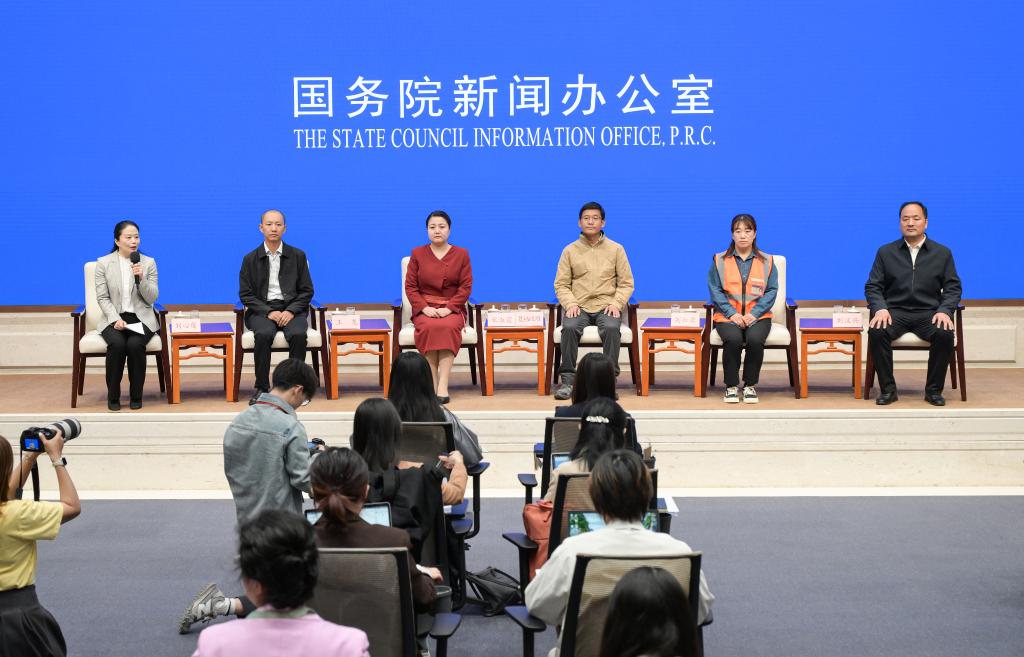
致敬守护!5位文保领域代表谈文明传承
Xin Hua Wang· 2025-04-29 00:37
Group 1 - The event "New Journey's Strivers" was held by the State Council Information Office, highlighting the dedication of cultural heritage workers in China [3][4] - The fourth national cultural relics census has commenced, with significant achievements including the successful application for UNESCO World Heritage status for the Beijing Central Axis and the return of 211 cultural relics [3][6] - The number of visitors to museums in China exceeded 1.4 billion in a year, showcasing the growing public interest in cultural heritage [3] Group 2 - Wang Long, a representative from the Turpan Research Institute, reported on the discovery of 74 ancient sites during a comprehensive survey of the Tianshan region [3][6] - Song Shuxia from the Dunhuang Research Institute emphasized the importance of cultural interpretation in bridging ancient and modern civilizations [4][6] - Xia Gewangdui, a deputy director from the Tibet Autonomous Region, announced the inclusion of the Konma Manzhuo site in the top ten archaeological discoveries of 2024 [6][7] Group 3 - Liu Hanxing from the China Cultural Heritage Research Institute highlighted the role of cultural relics protection in facilitating international cultural exchanges [6][8] - The efforts of local guardians, such as Liu Hongyan, in preserving the Great Wall reflect a collective commitment to cultural heritage among communities [9][10] - The narrative of cultural heritage preservation is portrayed as a continuous journey, with each generation contributing to the safeguarding of civilization [8][10]