新能源汽车电动化

Search documents
多地数量不足体验不佳,欧洲充电桩建设为何推进难?
Zhong Guo Qi Che Bao Wang· 2025-06-30 02:50
Core Viewpoint - The construction of charging stations in Europe is lagging behind the rapid growth of electric vehicles, leading to a potential "charging station crisis" by 2030 if current trends continue [3][4]. Group 1: Current Status of Charging Infrastructure - Norway leads Europe with over 27,000 public charging stations, equating to nearly 500 stations per 100,000 people, while the UK has only 89 stations per 100,000 people despite having a population 12 times larger [2]. - The overall car-to-charging station ratio in Europe is over 15:1, while China's ratio is approximately 3:1 [2]. - The European Automobile Manufacturers Association (ACEA) warns that by 2030, the EU will need about 8.8 million charging stations, but only 1.6 million are expected to be built at the current pace [3][4]. Group 2: Challenges in Charging Station Development - The slow progress in charging station construction is attributed to complex policies, outdated electrical grid infrastructure, and uneven investment distribution [5][6][7]. - Different countries and regions have their own regulations and approval processes, leading to lengthy delays in project implementation [5]. - Many areas face outdated electrical grids that cannot support the demand for charging stations, necessitating costly and time-consuming upgrades [6]. Group 3: Investment and Infrastructure Disparities - Investment in charging infrastructure is currently fragmented, lacking sufficient funding for large-scale development [7]. - Approximately 70% of public charging stations in the EU are concentrated in a few countries like the Netherlands, Germany, and France, leaving other regions underserved [7]. Group 4: Efforts to Address the Challenges - European governments are increasing policy support and funding for charging station construction, with initiatives like the Alternative Fuels Infrastructure Regulation (AFIR) [8]. - Germany plans to increase its number of charging stations fourteenfold within three years, while the UK aims to expand its network tenfold by 2030 [8]. - Technological advancements in fast charging and the exploration of wireless charging are being pursued to enhance user experience and reduce charging times [9]. Group 5: Future Outlook - The ongoing policy support and innovative business models are expected to attract more private investment, potentially accelerating the construction of charging stations [10]. - Industry experts believe that despite current challenges, the future of charging station development in Europe remains promising as various strategies are implemented [10].


15分钟快充、座舱功能升级……来上海车展体验智能化新能源汽车
Yang Shi Xin Wen Ke Hu Duan· 2025-04-26 23:17
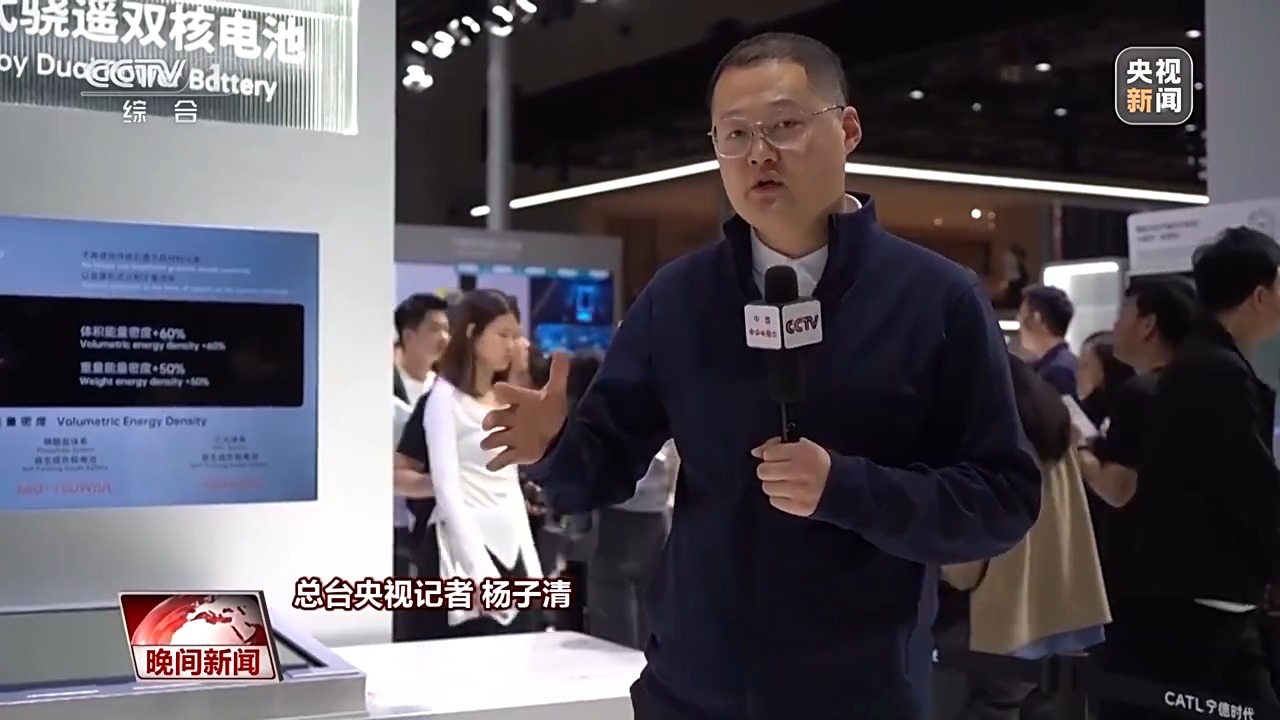
Core Insights - The Shanghai International Auto Show has seen an average of over 100,000 visitors daily since its opening on April 23, highlighting the event's significance in the automotive industry [1] Group 1: Electric Vehicle Innovations - The rapid iteration and upgrade of power batteries are focused on achieving greater range and enhanced safety [3] - A new battery design features a dual-core structure, dividing the battery into two independent energy zones, which helps alleviate range anxiety [5][7] - Another company's battery has reduced length by half while increasing energy density, maintaining safety under extreme conditions such as gunfire and fire [7] - The introduction of the world's first "2400A" all-liquid-cooled megawatt supercharger has significantly reduced charging time from 1-2 hours to just 15 minutes, improving efficiency for electric heavy trucks [10] Group 2: Smart Technology Advancements - The automotive industry is witnessing significant advancements in smart technology, with the introduction of a domestically developed 5nm automotive-grade smart chip, enhancing vehicle intelligence [14] - The integration of AI models allows vehicles to function more like large mobile smart devices, capable of recognizing various dialects and accents, thus improving user interaction [17] - New concept cars are incorporating electronic rearview mirrors that offer low latency and a wider field of view, enhancing driving safety [19] Group 3: Safety and Practicality - The focus on safety remains paramount in the automotive industry, with companies shifting from promoting fully autonomous driving to emphasizing driver assistance systems [22]