
智慧水利

Search documents
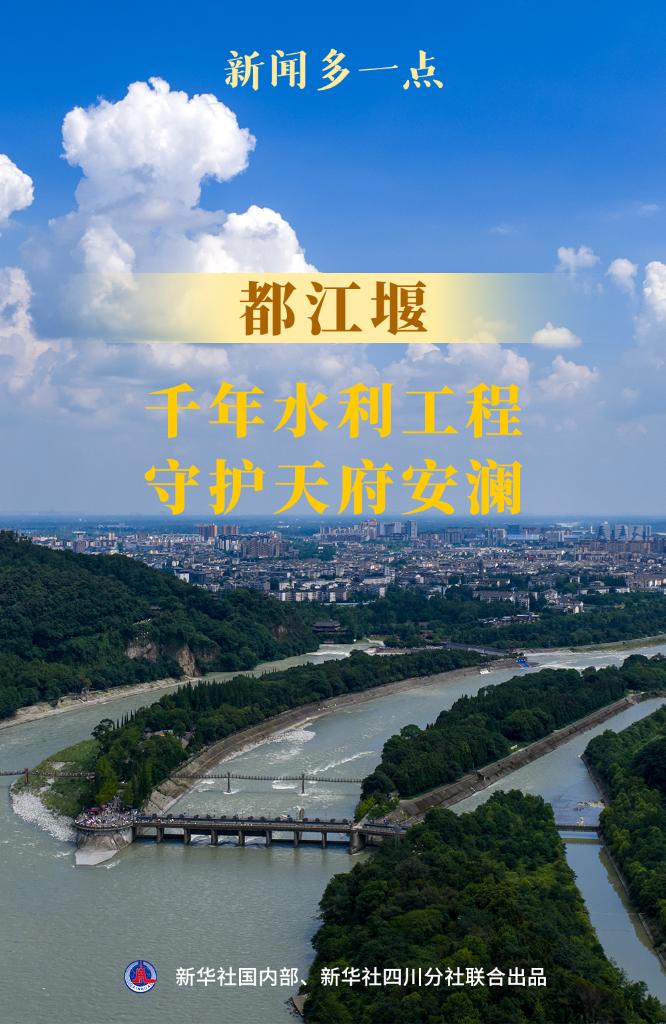
新闻多一点丨都江堰:千年水利工程守护天府安澜
Xin Hua She· 2025-12-05 07:32
Core Viewpoint - The news highlights the significance of the Dujiangyan irrigation system, emphasizing its historical importance, innovative design, and ongoing relevance in modern water management and tourism development in China [2][9]. Group 1: Historical Significance - The Dujiangyan irrigation system, built over 2,200 years ago during the late Warring States period, was designed by Li Bing to control the flooding of the Min River and create a fertile agricultural region known as the "Land of Abundance" [3][11]. - It is recognized as one of the oldest, largest, and best-preserved irrigation projects in the world, and was designated a UNESCO World Heritage Site in 2000 [9]. Group 2: Engineering Innovation - The system employs a unique design philosophy that respects natural processes rather than opposing them, utilizing the natural terrain and sediment transport principles to create a dam-free water diversion and regulation system [3][6]. - Key components of the system include the Fish Mouth Water Dividing Weir, the Flying Sand Spillway, and the Bottle Neck Inlet, which work together to facilitate irrigation, flood control, and sediment management [6][11]. Group 3: Modern Applications and Tourism - The Dujiangyan irrigation area currently has an effective annual water diversion capacity of 10.6 billion cubic meters, supplying 8 billion cubic meters of water annually and irrigating 11.647 million acres, benefiting approximately 30 million people [11]. - The city of Dujiangyan is actively developing into a world heritage tourism destination, with significant visitor numbers, such as 2.0851 million during the 2025 National Day and Mid-Autumn Festival holiday [16].

四川引大济岷工程:“智慧+生态”谱写现代化水网建设新篇章
Zhong Guo Jing Ji Wang· 2025-11-07 14:11
Core Insights - The Yindaji Min Project, the largest inter-basin water diversion project in Sichuan's history, has officially commenced construction, benefiting 34.13 million people across 8 cities and 43 counties [1][3] Group 1: Project Overview - The project will take water from the Dadu River Luding Hydropower Station and create a water delivery system with a total length of 261 kilometers, including a main line of 133 kilometers, a southern branch of 103 kilometers, and a northern branch of 25 kilometers [3] - The project features over 58% of its length as tunnels, which are referred to as the "Underground Water Supply Great Wall" [3] Group 2: Technical Challenges - The project faces three core technical challenges: deep-buried long tunnels in complex geological conditions, high flow and high drop energy dissipation, and large-diameter pressurized pipelines [3] - During the preliminary research phase, 48 technical studies were completed, including TBM selection for deep-buried tunnels and groundwater control in complex geological environments [3] Group 3: Ecological Considerations - The project aims to achieve a balance between construction and ecological protection by optimizing routes to avoid core areas, using tunnel boring to minimize surface disturbance, and constructing fish passages [4] - The core strategy includes "avoidance, mitigation, restoration, and compensation" to minimize ecological disruption and enhance environmental restoration [4] Group 4: Smart Management - A digital twin-based lifecycle management system will be established, integrating information technology throughout the project from design to operation, creating a "smart water conservancy" demonstration project [4]

成全国5个拥有三级水网先导区的省区之一
Guang Xi Ri Bao· 2025-10-29 04:21
Core Insights - During the "14th Five-Year Plan" period, Guangxi has prioritized water network construction as a key support for building a beautiful Guangxi, integrating various water networks and achieving recognition as a national pilot area for water networks [1][2] Group 1: Water Network Development - Guangxi has established a leadership group for water network planning and construction, focusing on the collaborative development of five water networks: flood control and drainage, urban and rural water supply, agricultural irrigation, ecological water, and smart water networks [1] - Key projects such as the Pinglu Canal and the Guangxi Water Resource Allocation Project are accelerating, contributing to the construction of the main framework of the water network [2] Group 2: Water Security and Disaster Prevention - The region has improved its flood and drought disaster prevention capabilities, achieving a 74.9% compliance rate for river embankments and successfully managing severe droughts and typhoons this year [2] - The completion of the Datiangxia Water Conservancy Hub has enhanced water resource management and disaster response [2] Group 3: Water Supply and Agricultural Security - Since the beginning of the "14th Five-Year Plan," Guangxi has increased its water supply capacity by 9.5 billion cubic meters, with rural tap water coverage rising to 91.4% [3] - The region has also improved irrigation efficiency, with a significant reduction in water usage per unit of industrial GDP, down 48.4% compared to the end of the "13th Five-Year Plan" [3] Group 4: Ecological Protection and Economic Growth - Guangxi has addressed 2,432 issues related to river and lake management, with a focus on improving water quality and reducing soil erosion [4] - Water conservancy investment has increased annually, with projections for 2025 to exceed 50 billion yuan, reflecting a shift towards diversified financing models [4] - Smart water management technologies are being developed to enhance efficiency in monitoring and managing water resources [4]
数字赋能,智水安澜:山东移动青岛分公司打造智慧水利新标杆
Qi Lu Wan Bao Wang· 2025-10-26 06:54
Core Insights - Digital technology is rapidly integrating into various industries, becoming a core driver for industrial upgrades [1] - Traditional management models in water resources are insufficient for the demands of precision and efficiency, necessitating an information technology transformation [1] Group 1: Technological Implementation - Shandong Mobile Qingdao Branch is taking on the responsibility of a central enterprise by developing a smart water conservancy solution that integrates precise monitoring, intelligent early warning, and efficient scheduling [1] - The company has deployed over 200 IoT sensors in key areas of the Noceng Reservoir to collect real-time data on water levels, water quality, rainfall, and flow speed [1] - AI algorithms are utilized for intelligent analysis of video monitoring, enabling automatic warnings for safety hazards such as exceeding water levels and unauthorized intrusions [1] Group 2: Benefits and Outcomes - The digital upgrade in water resource management has led to the efficient allocation and utilization of water resources, with an expected annual saving of over 5 million cubic meters of irrigation water and a reduction in agricultural water costs by over 8 million yuan [2] - The safety compliance rate of water conservancy facilities has reached 100%, effectively safeguarding the lives and property of over 300,000 residents in 15 towns and streets [2] - The company plans to continue leveraging its technological advantages to promote smart water conservancy construction and enhance water resource protection and safety [2]

数字赋能,智慧兴水 山东移动绘就齐鲁水利现代化新画卷
Qi Lu Wan Bao· 2025-09-19 05:25
Core Insights - Shandong Province is focusing on modern water network construction and precise water management to address water scarcity and agricultural challenges, leveraging advanced technologies like 5G, AI, IoT, and big data [1] Group 1: Intelligent Flood Prevention - Shandong Mobile has developed an intelligent flood prevention system that integrates AI and digital twin technology, improving flood response efficiency by 40% and achieving over 90% accuracy in flood forecasting [2] Group 2: Smart Reservoir Management - The deployment of a 5G 700M low-latency network allows for real-time monitoring of key parameters in reservoirs, reducing manual inspection frequency by 50% and achieving over 92% accuracy in fault prediction [3] Group 3: Intelligent Irrigation Systems - In the Penglou irrigation area, Shandong Mobile has implemented a smart water management system that saves 20% of irrigation water and increases crop yield by approximately 10% through precise water usage and automated control [5] Group 4: Urban and Rural Water Quality Management - The OneNET IoT platform has been established to monitor water quality throughout the supply chain, resulting in a 98% compliance rate for water quality standards and a 30% improvement in sewage treatment efficiency [8] Group 5: Commitment to Digital Transformation - Shandong Mobile is committed to integrating digital technologies with water management to enhance the quality of water resources and contribute to the modernization of water governance in the province [10]
绘就人水和谐新画卷(砥砺奋进七十载 天山南北谱华章)
Ren Min Ri Bao· 2025-09-18 03:35
Core Viewpoint - The water conservancy projects in Xinjiang have significantly improved agricultural irrigation, flood control, and ecological sustainability, contributing to the region's high-quality economic and social development over the past 70 years [1]. Group 1: Water Conservancy Projects - The construction of the Altash Water Conservancy Hub began in 2011, addressing challenges such as high seismic intensity and deep riverbed coverage, and has since improved flood control standards and expanded irrigated areas from 6.51 million acres to over 10 million acres [2]. - The Dashi Gorge Water Conservancy Hub, part of a national initiative, is expected to provide ecological water for over 8 million acres of farmland upon completion in 2026, with a total reservoir capacity of 1.17 billion cubic meters [3]. Group 2: Economic and Social Impact - The Altash project has created approximately 12,000 job opportunities during its construction, with over 3,000 technical workers trained, leading to an expected per capita annual income of 24,000 yuan in the village by 2024 [2]. - The Uruvat Water Conservancy Hub has supplied 23.9 billion cubic meters of water, increasing irrigated areas to 6.0379 million acres and improving irrigation water utilization efficiency to 0.575 [4]. Group 3: Technological Integration - The introduction of digital technologies in irrigation has reduced water usage from 90 cubic meters per acre to 35 cubic meters per acre, saving significant costs and improving crop yields by 20 kilograms per acre [7]. - The digital agricultural training base has trained over 20,000 individuals, enhancing fertilizer utilization rates by 20% and reducing labor costs by over 70% [7]. Group 4: Infrastructure Development - Xinjiang has constructed 671 reservoirs, 125,400 kilometers of irrigation channels, and over 8,000 kilometers of protective embankments, achieving an irrigation area of 99.17 million acres and a rural tap water coverage rate of 99% [8].
新疆水利事业实现从“人逐水走”到“水为人用”的跨越——绘就人水和谐新画卷
Ren Min Ri Bao· 2025-09-18 00:41
Core Insights - The water management projects in Xinjiang have significantly improved agricultural productivity and ecological sustainability, marking a transition from traditional water usage to modern, efficient systems [1][2][3]. Group 1: Water Infrastructure Development - The construction of the Altash Water Conservancy Project began in 2011, addressing challenges such as high seismic activity and deep riverbed layers, resulting in enhanced flood control and irrigation capacity [2]. - After the project became operational in 2021, the irrigated area increased from 6.51 million acres to over 10 million acres, doubling local grain production [2]. - The Dashi Gorge Water Conservancy Project, part of a national initiative, is expected to provide ecological water for over 8 million acres of farmland upon completion in 2026 [3]. Group 2: Technological Integration in Water Management - The Uruvat Water Conservancy Project has supplied 23.9 billion cubic meters of water, increasing irrigated land to 6.0379 million acres and improving water utilization efficiency to 0.575 [4][5]. - Digital technologies have been integrated into irrigation practices, allowing farmers to manage water usage through mobile applications, significantly reducing costs and increasing crop yields [7]. Group 3: Economic and Employment Impact - The Altash project created approximately 12,000 job opportunities during its construction, with over 3,000 technical workers trained, contributing to local economic growth [2]. - The average annual income in the village is projected to reach 24,000 yuan by 2024, reflecting the positive economic impact of these water management projects [2]. Group 4: Overall Water Resource Management - Xinjiang has constructed 671 reservoirs and over 12,540 kilometers of irrigation channels, achieving a rural tap water coverage rate of 99% [8]. - The region's water management strategy emphasizes water conservation, spatial balance, and systematic governance, aiming to enhance water resource management [8].
科技赋能,北京如何提升防御洪涝能力、构建韧性城市?
Zhong Guo Xin Wen Wang· 2025-09-11 23:35
Core Viewpoint - The construction of resilient cities is essential for enhancing flood defense capabilities and adapting to extreme weather events in large urban areas like Beijing [1][7]. Group 1: Technological Empowerment in Water Management - Beijing prioritizes technological innovation, with R&D investment exceeding 6% annually, positioning it among the leading global innovative cities [2]. - The city is transitioning from experience-driven to data-driven water management, utilizing advanced technologies such as big data, cloud computing, and IoT [2]. - Projects like smart dams and digital twin systems are being implemented to enhance urban water governance [2][3]. Group 2: Flood Defense Strategies - Six major initiatives have been proposed to improve flood defense, including the establishment of flood control systems and the enhancement of water resource management [3]. - The integration of ecological and engineering approaches is recommended for effective water source protection and management [4]. - Short-term forecasting capabilities are crucial for emergency response during extreme rainfall events, with current systems able to predict flooding areas and depths effectively [5][6]. Group 3: Resilient City Framework - The increase in extreme rainfall events is attributed to global warming and local climatic conditions, necessitating the development of resilient urban infrastructures [7]. - A comprehensive drainage and flood prevention system is essential, focusing on reducing emissions at the source and improving emergency response capabilities [7]. - The promotion of sponge city concepts and the establishment of large-scale water retention spaces are vital for urban planning [7].
川渝两地签署水利领域战略协议 将从5方面加强合作
Zhong Guo Chan Ye Jing Ji Xin Xi Wang· 2025-09-11 00:16
Core Viewpoint - The signing of the "Strategic Cooperation Agreement" between the water conservancy departments of Sichuan and Chongqing aims to enhance collaborative development in the water sector, focusing on flood control, water supply security, ecological restoration, digital integration, and modern water governance [1] Group 1: Key Areas of Cooperation - Improvement of flood prevention and disaster reduction systems to ensure flood safety [1] - Acceleration of major regional water network projects to guarantee water supply security [1] - Strengthening of protection and restoration efforts to enhance the quality and stability of water ecosystems [1] - Promotion of smart water conservancy through digital integration [1] - Development of a modern water governance system to coordinate water conservancy efforts between Sichuan and Chongqing [1] Group 2: Future Goals - By 2035, the "Happy Rivers and Lakes Cooperation Agreement" aims for all major rivers flowing through towns in the Sichuan-Chongqing area to be developed into "Happy Rivers and Lakes" [1] - The agreement seeks to enhance the enthusiasm for river protection in adjacent areas and significantly improve the effectiveness of cross-border river governance [1] - The goal includes maintaining a 100% compliance rate for the water quality of cross-border river sections [1]
成渝地区双城经济圈水利领域战略合作协议成功签署
Zhong Guo Jing Ji Wang· 2025-08-27 08:15
Core Viewpoint - The signing of the "Strategic Cooperation Framework Agreement" between Sichuan and Chongqing aims to enhance water resource management and cooperation in the Chengdu-Chongqing economic circle, focusing on high-quality development and regional water security [1][2][3]. Group 1: Strategic Cooperation Agreement - The agreement outlines key areas for collaboration, including improving flood prevention systems, accelerating major water network projects, enhancing ecological protection, advancing digital integration, and fostering innovative governance [1][2]. - The agreement serves as a guiding framework for the future development of water resources in the region, emphasizing a systematic and integrated approach to water management [1][3]. Group 2: Goals and Principles - The cooperation is driven by the principle of "complementary advantages, co-construction and sharing, collaborative linkage, and mutual benefit," aiming to create a unified strategy for water resource management [2][3]. - Key focus areas include collaborative planning, ecological protection, integrated supervision, digital empowerment, and resource sharing to enhance regional water security [2][3]. Group 3: Future Initiatives - The "Happy Rivers and Lakes Cooperation Agreement" aims for the rivers in the region to achieve excellent water quality standards by 2035, with a target of maintaining a 100% compliance rate for cross-border river water quality [4]. - The "Integrated Supervision Framework Agreement" emphasizes comprehensive cooperation in water resource supervision, including shared expert resources and mutual recognition of supervisory outcomes [4].