
气象高质量发展

Search documents
经济日报:全国气象观测工作会议在京举行
Jing Ji Ri Bao· 2025-11-05 07:54
Core Points - The national meteorological observation work conference focused on the "Meteorological High-Quality Development Outline (2022-2035)" and aimed to clarify the direction, goals, paths, and tasks for meteorological observation business reform and development [1][2] - The China Meteorological Administration emphasized that precise monitoring is the strategic foundation for promoting high-quality meteorological development, highlighting the importance of modernizing meteorological technology and social services [1][2] - The conference called for a focus on deepening reforms, emphasizing innovation-driven and technology-prioritized development, and promoting intelligent transformation in meteorological observation [2][3] Group 1 - The conference highlighted the need for a "comprehensive, efficient, and intelligent" observation system, leveraging meteorological satellites and radar to significantly enhance the independent innovation level of observation technology [2] - It was stated that the meteorological departments should scientifically plan and coordinate the industry to achieve high-quality development in meteorological observation during the "14th Five-Year Plan" period [2] - The meeting stressed the importance of a service-oriented approach to enhance the application and governance effectiveness of meteorological observation, supporting national strategies and expanding international cooperation [3] Group 2 - The conference emphasized the need for risk management and improving disaster prevention and reduction capabilities while maintaining a stable work tone and a rigorous work style [3] - The focus on "observation as service" was reiterated, aiming for a balanced and stable foundational support in meteorological observation [2][3] - The meeting called for the exploration of a "system + intelligence" construction path to promote intelligent transformation and expansion into deep-sea and outer space observation [2]
气象工作“十四五”成绩单来了!
Xin Hua She· 2025-10-12 13:43
Core Insights - The article highlights significant achievements in meteorological development during the "14th Five-Year Plan" period, emphasizing improvements in forecast accuracy and breakthroughs in key core technologies [1] - It underscores the collaborative approach in meteorological observation, focusing on "co-planning, co-building, co-sharing, and co-governing" to enhance public welfare [1] Group 1 - The meteorological sector has made notable progress under the strong leadership of the Central Committee and the State Council [1] - There is a commitment to improving forecast prediction accuracy, which is crucial for effective weather management [1] - The advancements in core technologies are pivotal for the high-quality development of meteorology [1]
“十四五”时期气象高质量发展成效显著 气象科技能力现代化和社会服务现代化加快推进
Ren Min Ri Bao· 2025-10-11 23:14
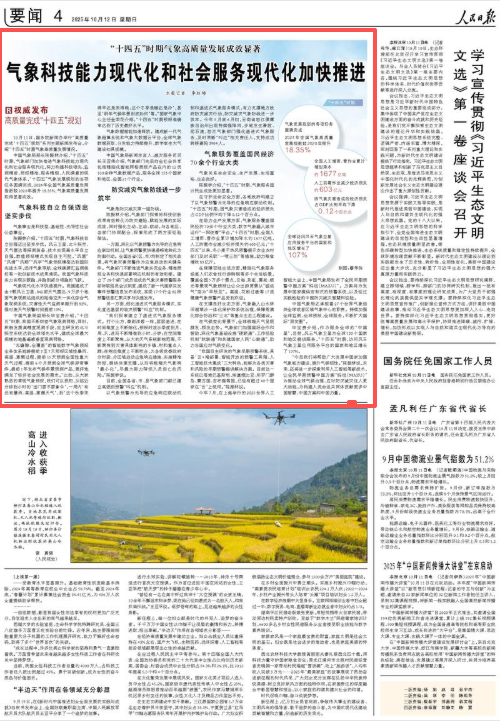
Core Viewpoint - The "14th Five-Year Plan" period has seen significant achievements in the modernization of meteorological technology and social services, with a focus on building a modern meteorological system that is technologically advanced, precise in monitoring and forecasting, and satisfactory to the public [5][14]. Group 1: Meteorological Technology Development - Meteorological technology has made solid progress in self-reliance and strength, with advancements in satellite, radar, and observation systems, achieving a leap from following and catching up to leading in some areas [7]. - A comprehensive meteorological observation system has been established, consisting of 9 meteorological satellites, 842 weather radars, and over 90,000 ground observation stations, with a disaster weather monitoring rate increased to 83% [7]. - The accuracy of meteorological forecasts has reached historical highs, with capabilities to predict regional heavy rain and extreme weather events well in advance [8]. Group 2: Disaster Prevention and Mitigation - Meteorology serves as the first line of defense against disaster prevention and mitigation, with a focus on transforming technological innovations into practical outcomes for disaster risk reduction [9]. - A proactive emergency response mechanism has been established, with meteorological disaster warnings serving as key conditions for emergency actions across provinces [9][11]. - The implementation of a progressive meteorological service model has enhanced the precision of disaster warnings, allowing for timely responses to extreme weather events [10][11]. Group 3: Economic and Social Impact - Meteorological services have significantly contributed to national economic development, covering over 70 major industry categories, and have integrated digital meteorology into urban management platforms [14]. - The cumulative artificial rainfall during the "14th Five-Year Plan" period has increased precipitation by approximately 1,677 billion tons, while hail prevention efforts have reduced economic losses by about 60.3 billion yuan [14]. - Meteorological services have improved public safety and quality of life, with health-related weather warnings gaining popularity among the public [14]. Group 4: International Cooperation and Future Plans - The meteorological department has strengthened international cooperation to assist countries in addressing climate change, with a focus on building meteorological capacity in developing nations [15][16]. - The "MAZU" early warning system has been developed to provide tailored solutions for disaster early warning, already implemented in over 40 countries [15]. - Future plans include leveraging artificial intelligence and new technologies to enhance global climate governance and disaster risk reduction efforts [16].

气象预警为先导的应急响应联动机制已覆盖全国
Yang Shi Wang· 2025-10-11 14:17
Core Insights - The "14th Five-Year Plan" for meteorological development in China has been successfully completed, with the national meteorological high-quality development index expected to increase by 18.35% in 2024 compared to 2020 [2] Group 1: Meteorological Services Impact - Meteorological services now cover over 70 major industries in the national economy, integrating digital meteorology into urban operation platforms [2] - Meteorological data supports 140,000 application scenarios across various sectors, including low-altitude economy, new energy industry, and financial markets [2] - Health-related meteorological warning products, such as pollen allergy forecasts and high-temperature alerts, have gained popularity among the public [2] Group 2: Disaster Response and Economic Impact - An emergency response mechanism based on meteorological warnings has been established nationwide [2] - The average economic loss due to meteorological disasters has decreased by 0.12 percentage points relative to GDP during the "14th Five-Year Plan" period [2] Group 3: Infrastructure Development - China has built a comprehensive meteorological observation system consisting of 9 Fengyun satellites, 842 weather radars, and over 90,000 ground meteorological observation stations [2] - A seamless and comprehensive intelligent digital meteorological forecasting system has been preliminarily established [2]
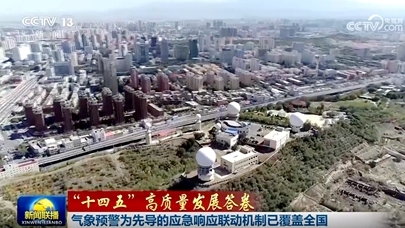
【“十四五”高质量发展答卷】气象预警为先导的应急响应联动机制已覆盖全国
Yang Shi Wang· 2025-10-11 11:55
Core Points - The "14th Five-Year Plan" for meteorological development in China has been successfully completed, with a projected increase of 18.35% in the national meteorological high-quality development index by 2024 compared to 2020 [1] Group 1: Meteorological Services - Meteorological services now cover over 70 major sectors of the national economy, integrating digital meteorology into urban operation platforms [1] - Meteorological data supports 14,000 application scenarios across various industries, including low-altitude economy, new energy, and financial markets [1] - The introduction of 17 types of health meteorological warning products, such as pollen allergy forecasts and high-temperature warnings, has been well received by the public [1] Group 2: Economic Impact - The average economic loss due to meteorological disasters has decreased by 0.12 percentage points relative to GDP during the "14th Five-Year Plan" period [1] Group 3: Observation Systems - China has established a comprehensive meteorological observation system consisting of 9 Fengyun satellites, 842 weather radars, and over 90,000 ground meteorological observation stations [1] - A "seamless and full coverage" intelligent digital meteorological forecasting system has been preliminarily established [1]
“十四五”期间全国人工增雨、雪作业共增加降水1677亿吨
Nan Fang Du Shi Bao· 2025-10-11 10:44
Core Insights - The news highlights the progress and achievements in meteorological services during the "14th Five-Year Plan" period, emphasizing the integration of weather forecasting into various sectors to enhance disaster prevention, agricultural productivity, and public safety [1][2] Group 1: Disaster Prevention and Economic Impact - Local governments have established emergency response mechanisms based on meteorological warnings, integrating disaster prevention into grassroots systems [1] - Economic losses due to meteorological disasters have decreased by an average of 0.12 percentage points of GDP during the "14th Five-Year Plan" period [1] Group 2: Agricultural Support and Food Security - Meteorological services have contributed to an increase in grain production by 8.3 billion jin through timely warnings and agricultural measures [2] - Artificial rainfall and snow operations have added approximately 167.7 billion tons of precipitation, while hail prevention efforts have reduced economic losses by about 60.3 billion yuan [1] Group 3: Energy and Transportation - Meteorological services support the entire energy supply chain, aiding over 2,000 new energy stations in optimizing power generation from wind and solar resources [2] - A joint warning mechanism among meteorology, public security, and transportation departments has led to a 51% reduction in traffic accidents on optimized routes [2] Group 4: Public Services and Health - Detailed meteorological services cover over 50,000 tourist attractions, enhancing public awareness of weather conditions for leisure activities [2] - Health-related meteorological warning products for high temperatures and pollen allergies have gained popularity among the public [2] Group 5: Ecological Protection - Meteorological services are integrated into comprehensive ecological protection efforts, supporting projects aimed at combating desertification and managing key ecological engineering initiatives [2]
2024年全国气象高质量发展指数较2020年提升18.35%
Shang Hai Zheng Quan Bao· 2025-10-11 10:32
Core Viewpoint - The China Meteorological Administration is committed to modernizing meteorological technology and services during the 14th Five-Year Plan period, aiming for a high-quality development index increase of 18.35% by 2024 compared to 2020 [3] Group 1 - The meteorological department is implementing the State Council's "Meteorological High-Quality Development Outline (2022-2035)" [3] - The focus is on building a modern meteorological system that is technologically advanced, precisely monitored, accurately forecasted, finely serviced, and satisfactory to the public [3] - All tasks outlined in the 14th Five-Year meteorological development plan have been successfully completed [3]
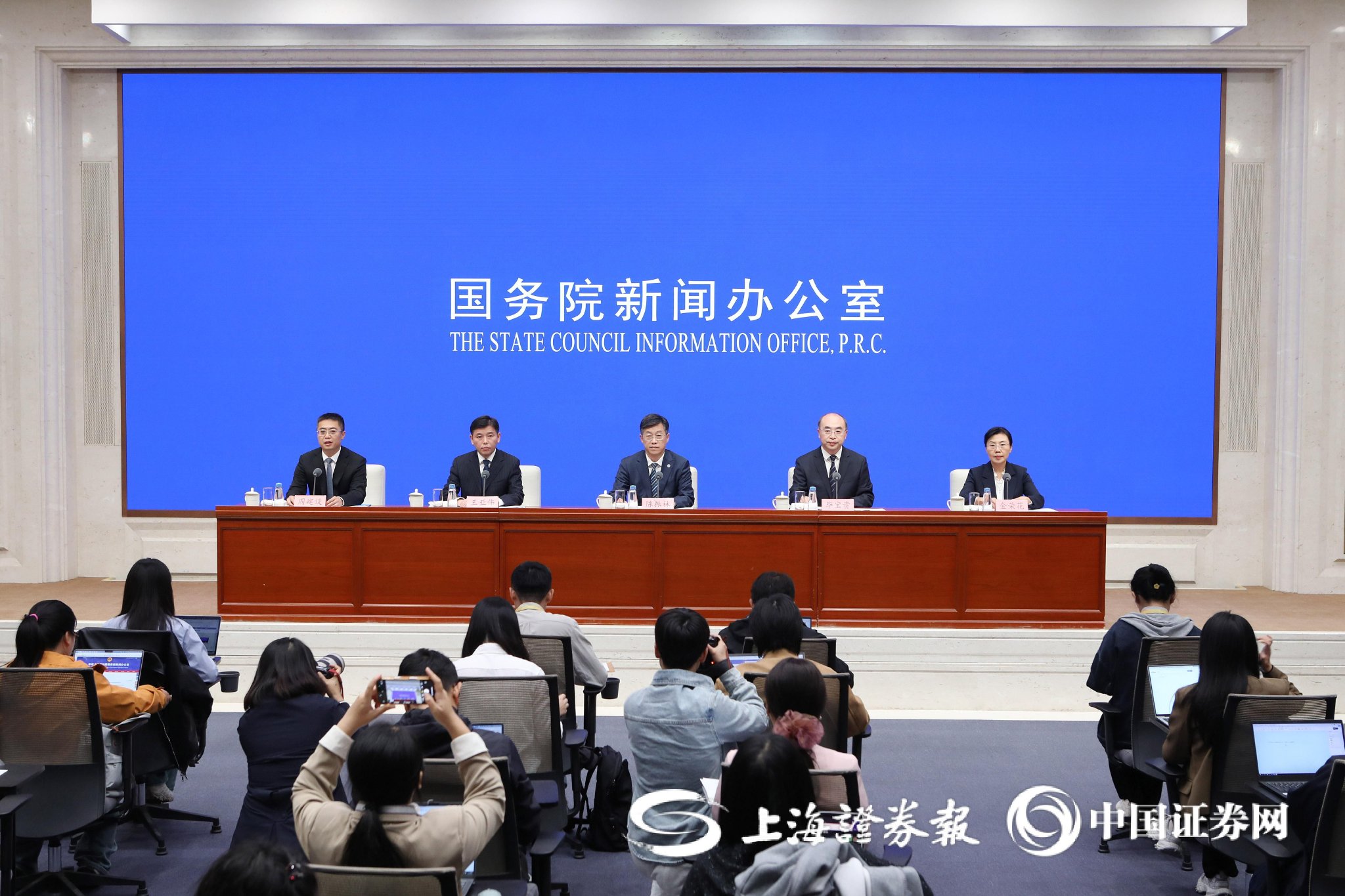
国新办举行新闻发布会 介绍“十四五”时期气象高质量发展情况
2 1 Shi Ji Jing Ji Bao Dao· 2025-10-11 07:09
Group 1 - The State Council Information Office held a press conference on October 11, 2025, focusing on the high-quality completion of the "14th Five-Year Plan" [1] - The director of the China Meteorological Administration, Chen Zhenlin, introduced the high-quality development of meteorology during the "14th Five-Year Plan" period [1] - The press conference included a Q&A session for journalists to inquire about the developments in meteorology [1]
站好“前哨岗”,下好防灾减灾“先手棋”——我国筑牢气象防灾减灾第一道防线
Xin Hua Wang· 2025-05-16 16:21
Core Viewpoint - The article emphasizes the importance of strengthening meteorological disaster prevention and reduction as a primary defense line in China, highlighting the rapid advancement of meteorological high-quality development pilot projects and the integration of smart meteorological services into urban governance [1][2]. Group 1: Meteorological High-Quality Development - A total of 65 national meteorological high-quality development pilot projects have been approved, with 18 units actively planning for pilot cultivation this year [2]. - The pilot projects play a crucial role in enhancing meteorological disaster defense mechanisms and improving meteorological service capabilities [2]. - The "Meteorological High-Quality Development Outline (2022-2035)" aims for significant breakthroughs in key meteorological technology fields by 2035, with a focus on smart meteorology [2]. Group 2: Smart City Meteorological Disaster Prevention - The integration of smart meteorology with smart city and resilient city construction has made significant progress, driven by digitalization [3]. - The emergency response mechanism for meteorological disasters has been improved, with an average distance of 5.3 kilometers between ground meteorological observation stations and radar coverage exceeding 99% [3]. - The number of meteorological disaster risk warning products has reached 45, covering multiple key industries such as water conservancy, natural resources, and transportation [3]. Group 3: Case Study of Chongqing - Chongqing has developed its first digital flood control system, which monitors water levels in real-time and issues warnings for rainfall exceeding alert levels [4]. - The system has improved the lead time for flood risk alerts from one day to seven days, and the time to issue warning orders has been reduced from five hours to two minutes [5]. - The integration of this system into the digital city operation and governance center is expected to enhance overall disaster response capabilities [5].