
汉学

Search documents
东西问·中国学|张西平:“中国学”具有怎样的世界性意义?
Zhong Guo Xin Wen Wang· 2025-10-10 07:04
Core Viewpoint - The interview with Zhang Xiping emphasizes the global significance of "Sinology" and the necessity of understanding contemporary China through its historical context, especially in light of the upcoming Second World Sinology Conference in Shanghai from October 13 to 15, 2025 [3][4]. Group 1: Historical Context of Sinology - Western academic interest in China began due to the need for understanding following the geographical discoveries and the subsequent cultural exchanges during the colonial expansions of Portugal, Spain, and the Netherlands [4]. - The initial approach involved both the study of Confucian culture by Western missionaries and the translation of Chinese classics into European languages, which sparked interest among Enlightenment thinkers like Voltaire and Leibniz [4]. Group 2: Necessity of World Sinology - The emergence of "World Sinology" is deemed essential due to three main factors: China's rapid rise in the late 20th century, its unique and continuous civilization, and its significant role as a major trading partner for over 150 countries [5]. - Historical perspectives on China, as proposed by Liang Qichao, highlight the urgency of understanding China's role in the world, especially in the context of globalization and cultural exchanges [5]. Group 3: Integration with Traditional Sinology - "World Sinology" is positioned within the framework of traditional Sinology, which has historically been part of Western Oriental studies, and aims to create a dialogue rather than a conflict between the two [9]. - The integration respects the historical contributions of Sinology while fostering a comprehensive research system that encompasses both ancient and modern perspectives on China [9]. Group 4: Global Interaction and Civilizational Understanding - The study of "World Sinology" involves a tripartite dialogue among foreign scholars, local Chinese scholars, and those focusing on "overseas Sinology," which helps clarify China's position in the global context [15]. - This interaction is crucial for enhancing the understanding of other civilizations and for building a self-sustaining knowledge system that reflects China's historical and contemporary realities [15]. Group 5: Importance of Historical Reflection - Reflecting on history is vital for establishing a balanced narrative of Sino-Western relations, moving beyond the one-sided views that have dominated discussions since the 1840s [21]. - Understanding historical interactions can help alleviate Western anxieties regarding China's rise and promote a more equitable dialogue between civilizations [21].

经学今古文之争的实质:起于西汉的经学被系统性混入伪学、伪史
Sou Hu Cai Jing· 2025-07-14 03:17
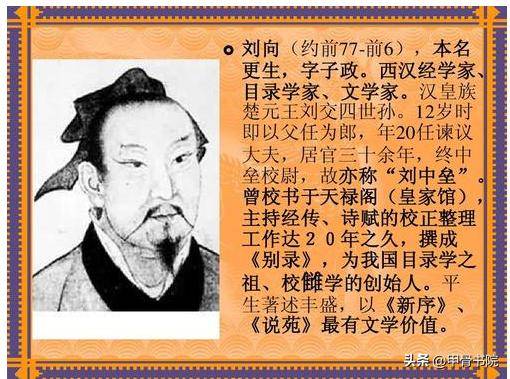
Core Argument - The fundamental issue of the "Jingu" (ancient vs. modern texts) debate originates from the systematic contradictions within the classical studies framework established during the Han Dynasty, particularly the Western Han period, which only became apparent during the Qing Dynasty with the rise of textual criticism [1][6][10] Group 1: Historical Context - The contradictions in the classical studies framework were not fully exposed until the Qing Dynasty, when scholars began to delve into these issues, particularly through the work of Liao Ping, who was the first to systematically summarize these contradictions [1][6] - The classical texts, known as the Five Classics, were not fully compiled until the late Western Han period, relying heavily on oral transmission, which contributed to the authority and reliability of knowledge being determined by the length of the teacher-student relationship [6][8] Group 2: Key Figures and Theories - Liao Ping proposed a conspiracy theory suggesting that Wang Mang, during his usurpation of the Han throne, instructed Liu Xin to forge ancient texts, which he detailed in his book "Jingu Xue Kao" [1][2] - Kang Youwei expanded on Liao Ping's ideas without his consent, leading to the publication of "New Study of Forged Classics," which gained significant attention and contributed to a loss of trust in the Five Classics within the academic community [1][2] - Meng Wentong, a student of Liao Ping, introduced the "Cultural Three Systems Theory," positing that the contradictions stem from the differences among three major cultural groups in China: Confucianism, Legalism, and Daoism [2][4] Group 3: Evolution of Academic Thought - The transition from reliance on oral tradition to a focus on textual evidence laid the groundwork for the emergence of textual criticism, which was initiated by figures like Liu Xin during the Han Dynasty [8][9] - Despite attempts at unification during the Eastern Han period, the deep-seated contradictions within classical studies remained unresolved, leading to a superficial appearance of unity [9] - The Qing scholars' focus on Han studies and textual criticism revealed the contradictions within the Five Classics more clearly, as they sought to return to the original meanings of Confucius and Mencius [10]
斯洛文尼亚汉学家:千年端午已融入现代中国发展“脉动”
Zhong Guo Xin Wen Wang· 2025-06-01 05:07
Core Viewpoint - The article highlights the evolving understanding and significance of the Dragon Boat Festival in modern China, as experienced by a Slovenian sinologist, emphasizing its integration into contemporary cultural and social practices [1][2][3]. Group 1: Cultural Significance - The Dragon Boat Festival, with a history of thousands of years, has transcended its traditional roots and is now intertwined with modern Chinese development [1]. - The festival is celebrated with various activities, including family outings and nature appreciation, reflecting the Chinese values of family, nature, and the concept of "harmony between heaven and humanity" [2]. - The festival's culinary offerings have diversified, with traditional rice dumplings evolving to include Western-style cakes and ice creams shaped like dumplings [2]. Group 2: Global Influence and Development - The upcoming World University Games in Chengdu will feature dragon boat racing as an official event, showcasing the global reach of traditional Chinese sports [2]. - The influence of sinology has expanded beyond traditional Western and East Asian centers, with a growing interest in sinology in countries like Slovenia over the past 30 years [3]. - The article notes that foreign nationals in China often seek opportunities and experiences, acting as bridges between Eastern and Western cultures, similar to the role of sinologists [3].