
深港合作

Search documents
头部资源集聚,上半年前海专业服务四上企业营收增长18.72%
2 1 Shi Ji Jing Ji Bao Dao· 2025-09-17 06:43
Core Insights - The Qianhai region has launched a three-year action plan focusing on "international professional services," aiming to support the development of sectors such as finance, international law, and consulting, while encouraging enterprises to expand their international market presence [1][4] - By 2024, the revenue of Qianhai's professional service enterprises is expected to grow by 14.03% year-on-year, with an increase to 18.72% anticipated in the first half of 2025, indicating a robust growth trajectory for the sector [1][4] Industry Development - Major professional service firms are increasingly establishing a presence in Qianhai, with companies like Northern Asia Affairs and Ernst & Young setting up operations to leverage the region's economic vitality and innovation [3][4] - Qianhai has attracted top consulting firms, including Boston Consulting Group and McKinsey, as well as leading tax service providers and legal institutions, creating a comprehensive high-end service matrix covering various fields [4][5] Economic Contribution - The modern service industry in Qianhai has reached levels comparable to developed regions, contributing 952.6 billion yuan in value-added services in the first half of the year, which accounts for 84% of the service industry and 65.5% of GDP [5][6] - The professional services sector is a key indicator of the modern service industry's development and is crucial for international city rankings [5] Competitive Advantage - The collaboration between Shenzhen and Hong Kong enhances Qianhai's professional services sector, allowing for the integration of Hong Kong's international service network with Qianhai's industrial base [6][7] - Qianhai has facilitated the entry of 26 categories of Hong Kong and Macau professionals, enabling them to practice in the region, thus fostering a mutually beneficial relationship between mainland enterprises and Hong Kong service providers [6][7] Future Initiatives - The Qianhai Management Bureau plans to create an ecosystem that attracts institutions, retains talent, and promotes innovative and differentiated development in the professional services sector [6][7] - Efforts will focus on building platforms for market expansion, enhancing policy support for deep cooperation between Shenzhen and Hong Kong, and exploring relaxed conditions for foreign professionals to practice [7]

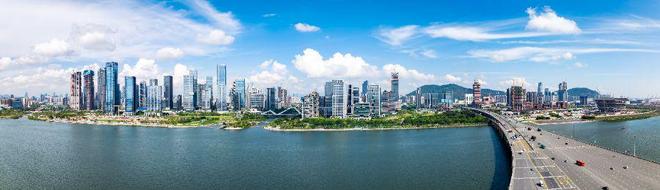
“超级口岸”进化:45年 深圳链动全球
2 1 Shi Ji Jing Ji Bao Dao· 2025-08-25 15:25
Core Viewpoint - The article highlights the evolution and significance of border ports between Shenzhen and Hong Kong, emphasizing their role as vital connectors for trade, travel, and economic integration between the two regions, transforming from mere physical gateways to dynamic hubs of innovation and commerce [1][3][10]. Group 1: Historical Context and Development - The Luohu port has evolved from a simple crossing point to a major hub, with over 30 million travelers passing through in the first seven months of this year [2]. - Shenzhen's port count has increased from two before the reform and opening up to 16, covering all modes of transport and serving as a measure of the city's innovation and development [1][3]. - The establishment of the Qianhai Shenzhen-Hong Kong Modern Service Industry Cooperation Zone in 2010 marked a significant step in deepening cooperation between Shenzhen and Hong Kong [5]. Group 2: Economic Impact and Trade - The daily average of travelers crossing the Shenzhen-Hong Kong land ports is projected to exceed 600,000 by 2024, with a peak of 1.02 million recorded on August 16 this year [3]. - The trade volume between Shenzhen and Hong Kong has surged from 70.17 billion in 1997 to 701.48 billion in 2024, with Hong Kong being Shenzhen's second-largest trading partner, accounting for over 15% of its total foreign trade [3]. - The Qianhai Free Trade Zone's foreign trade value increased from 71.2 billion in 2015 to 537.98 billion in 2024, showcasing a 7.5-fold growth [5]. Group 3: Infrastructure and Connectivity - Shenzhen's ports, including Yantian Port and Shekou Port, are crucial for its foreign trade, with Yantian Port handling over 75.8 million TEUs in the first half of this year, marking a 12.7% increase [10]. - The Shenzhen Bao'an International Airport has expanded its international flight network, covering 31 countries and regions, with over 800 flights weekly [11]. - The ongoing construction of new ports and the enhancement of existing ones are part of Shenzhen's strategy to improve cross-border connectivity and facilitate the flow of goods and people [6][10]. Group 4: Future Prospects and Strategic Goals - The development of the Northern Metropolis plan aims to create a trade and industrial zone around the Luohu area, focusing on commerce, finance, and emerging industries [6][7]. - The establishment of the He Tao Shenzhen-Hong Kong Science and Technology Innovation Cooperation Zone is expected to enhance cross-border collaboration in research and technology [6]. - Shenzhen's strategic goal includes becoming a global resource allocation hub, with a focus on artificial intelligence, life sciences, and low-altitude economy as key industries [7].
集聚多个世界500强企业研发中心!国家战略落子,深圳这区域有新变化
Nan Fang Du Shi Bao· 2025-08-15 03:52
Core Viewpoint - The He Tao Shenzhen-Hong Kong Science and Technology Innovation Cooperation Zone, covering an area of 3.89 square kilometers, is a key national strategic area aimed at fostering technological innovation and collaboration between Shenzhen and Hong Kong, showcasing significant development and vitality in just two years [1][2][3]. Group 1: Strategic Importance - The He Tao Cooperation Zone is designated as a pilot area for open cooperation in technological innovation, an experimental zone for international advanced technology innovation rules, and a hub for technology transformation in the Guangdong-Hong Kong-Macao Greater Bay Area [3]. - The development plan for the Shenzhen Park was issued by the State Council, highlighting the strategic value of the He Tao Cooperation Zone [2]. Group 2: Technological Innovation - The Shenzhen Park has attracted over 200 high-end research projects, 447 technology companies, and more than 15,000 research talents, indicating a strong accumulation of technological innovation resources [4]. - Significant research achievements include the "Boson Coding Error Correction to Extend Quantum Bit Lifetime," a desktop electron microscope with complete independent intellectual property rights, and the first hardware encryption product SPU [5]. Group 3: Infrastructure and Development - The construction of the new Huanggang Port is underway, which will enhance cross-border access for researchers and facilitate international technology services [20]. - The park has established 13 specialized parks and is optimizing industrial space layout to support technological innovation and industrial development [21]. Group 4: Cross-Border Collaboration - The cooperation between Shenzhen and Hong Kong is deepening, with a joint policy package released to support collaboration in human resources, finance, and material aspects [15]. - The establishment of the Guangdong-Hong Kong-Macao Greater Bay Area International Clinical Trial Collaboration Platform is a key initiative to enhance cooperation in the life sciences sector [17]. Group 5: Policy Innovation - The "Kehui Tong" pilot program has been launched to facilitate cross-border funding flows for scientific research, addressing challenges faced by foreign-funded research institutions [11]. - New policies are being implemented to streamline the entry of research personnel and enhance the flow of innovative elements across borders [10].
前海梦工场孵化国高企业79家 “港澳e站通”提供服务事项380项
Shen Zhen Shang Bao· 2025-08-09 21:44
Group 1 - The total value of imports and exports in the Qianhai Shekou Free Trade Zone reached 260.86 billion yuan in the first half of the year, representing a year-on-year increase of 11.5%, accounting for about two-thirds of the total import and export value of Guangdong's free trade zones [1] - The Google Cross-Border E-commerce Acceleration Center (Shenzhen) has commenced operations in Qianhai, providing comprehensive services for cross-border e-commerce enterprises in Shenzhen and surrounding areas, enhancing the potential for overseas brand development [1] - Qianhai has achieved high-level openness in multiple areas such as personnel, finance, goods, and data, driven by institutional innovation, serving as a "vivid sample" for economic development [1] Group 2 - The modern service industry in Qianhai, represented by finance and legal services, has seen significant achievements, with over 400 financial institutions, including HSBC and UBS, establishing a presence in the Qianhai Shenzhen-Hong Kong International Financial City [2] - The QFLP fund scale in Qianhai accounts for over 90% of Shenzhen's total, while the QDIE quota represents 80% of the city's total, indicating a strong financial ecosystem [2] - Qianhai has been ranked first in institutional innovation capability and level among the 57 free trade pilot zones in China for four consecutive years, with 882 institutional innovation achievements, 104 of which have been replicated nationwide [2] Group 3 - The threshold for Hong Kong professionals to practice in Qianhai has been lowered, facilitating the practice of 26 types of professionals, including tax advisors and lawyers, through special mechanisms [3] - Qianhai Dream Factory has become a benchmark for the collaborative development of soft and hard power between Shenzhen and Hong Kong, with 556 teams in the park, including 463 from Hong Kong [3] - The living convenience for Hong Kong youth in Qianhai has been enhanced with services such as free short-term accommodation and direct transportation options to Hong Kong [3]
南财观察|十万亿时代,前海探路中国海洋经济“深港样本”
2 1 Shi Ji Jing Ji Bao Dao· 2025-07-07 02:02
Core Insights - Shenzhen is positioning itself as a global marine center, leveraging its historical ties to marine industries and modern developments in marine economy [1][2][21] - The marine economy in Shenzhen is projected to reach a total output value of 540.9 billion yuan in 2024, accounting for 14.7% of its GDP, with a growth rate of 5.8% [1][2] - The city is focusing on high-end marine tourism, with significant developments in cruise and yacht industries, aiming to attract international tourists [4][5][6] Marine Economy Development - The marine economy in China is expected to exceed 10 trillion yuan in 2024, with Shenzhen's marine economic activities rapidly expanding [1] - Shenzhen has established 86 marine innovation platforms and hosts 110,000 marine-related businesses [1] - The city is developing key marine economic zones along its 68-kilometer coastline, including areas like Shekou International Marine City and Ocean New Town [1] Cruise and Yacht Industry - In 2024, Shenzhen's cruise passenger throughput is projected to reach 89,000, with 36 cruise operations [5] - The city has registered 1,027 yachts, ranking second in the country, and has seen a significant increase in international tourist arrivals [6][8] - The establishment of a passenger international transfer zone at Shekou Cruise Terminal is expected to enhance the efficiency of international cruise operations [7] Marine Services and Logistics - Shenzhen's port is projected to handle 33.39 million TEUs in 2024, maintaining its position as the fourth-largest container port globally [11] - The city is experiencing a surge in high-value exports, particularly in lithium-ion battery storage systems, with significant year-on-year growth [11] - The logistics sector is undergoing digital transformation, with smart management systems being implemented to enhance operational efficiency [12] Marine Technology and Innovation - Shenzhen is focusing on developing marine technology, including autonomous vessels and underwater robotics, with a strong emphasis on green and intelligent marine equipment [17][20] - The city has established partnerships with leading universities to foster marine research and innovation, aiming to create a hub for marine technology [19][21] - The introduction of AI-driven vessels like "Haiqing No. 1" marks a significant step in advancing marine technology applications [16][20] International Collaboration and Arbitration - Shenzhen is enhancing its maritime arbitration capabilities by collaborating with Hong Kong, aiming to establish itself as a leading maritime arbitration center [14][16] - The city is leveraging its geographical advantages to attract international maritime service providers and enhance its legal framework for maritime operations [15][16] - The integration of Hong Kong's maritime expertise into Shenzhen's development strategy is seen as a key factor in achieving its goal of becoming a global maritime center [14][15]
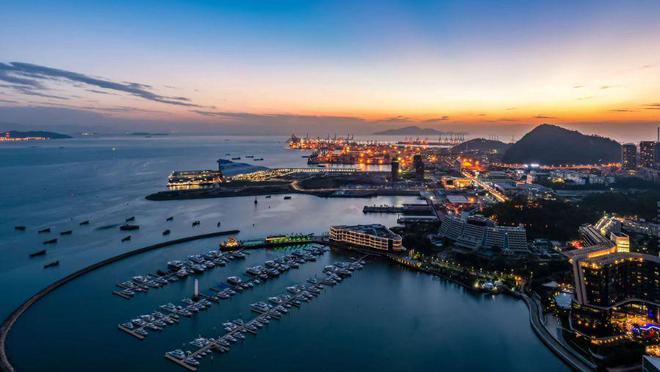
李家超力推香港北都区提速,深圳有何机会|湾区观察
Di Yi Cai Jing· 2025-06-15 13:58
Core Viewpoint - The Northern Metropolis (North Metropolis) is seen as a new engine for Hong Kong's future development and a key node for integrating into the Guangdong-Hong Kong-Macao Greater Bay Area and the national development framework [1][2]. Group 1: Development Plans and Goals - The Northern Metropolis encompasses Yuen Long and North District, covering approximately 300 square kilometers, which is about one-third of Hong Kong's total area, with an expected future residential population also accounting for one-third of Hong Kong [2]. - The Hong Kong government aims to accelerate land development and housing construction in the Northern Metropolis, with around 60,000 housing units expected to be completed in the next five years, and an additional 150,000 units in the following five years, along with over 10 million square meters of floor area for economic use [2][3]. - The Northern Metropolis is expected to contribute approximately HKD 52 billion annually to Hong Kong's economy once fully developed [2]. Group 2: Infrastructure and Connectivity - The Northern Metropolis will feature key infrastructure projects, including the Northern Link, with the first station expected to open in 2027 and the main line projected to be operational by 2034 [3]. - Cross-border railway projects between Hong Kong and Shenzhen are underway, with plans for detailed design and research to commence within the year [3]. Group 3: Strategic Importance and Collaboration - The Northern Metropolis is positioned as a bridge for cooperation between Hong Kong and mainland China, with Shenzhen expected to gain significant development opportunities [6]. - The area is divided into four major zones: high-end professional services and logistics hub, innovation and technology zone, port commerce and industry zone, and a blue-green recreational tourism ecosystem, all of which are strategically connected to Shenzhen's districts [7]. - The government is exploring ways to attract Shenzhen capital for investment in the Northern Metropolis, including the development of a university town and a technology city [8].