空间科学

Search documents
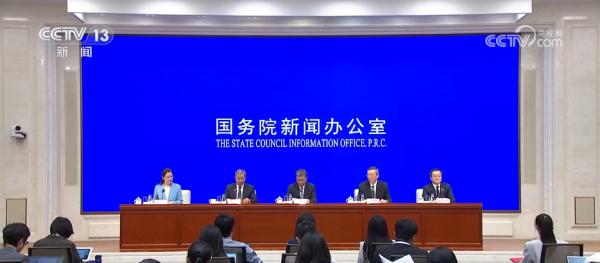
【新华社】多颗卫星刷新宇宙认知!中科院空间科学先导专项发布新成果
Xin Hua She· 2025-11-25 02:47
Core Viewpoint - The Chinese Academy of Sciences' National Space Science Center has announced significant breakthroughs in space science through various satellite missions, marking a rapid advancement in China's space science innovation and research capabilities [6][7]. Group 1: Achievements and Developments - The Space Science Pilot Project, initiated in 2011, has successfully developed and launched eight scientific satellites, achieving numerous original results and setting multiple records in China and globally [7]. - The project has expanded scientific research into four extreme areas: macro, micro, extreme conditions, and interdisciplinary integration, leading to significant advancements in technology and talent development [7]. - The project has established a new task system combining chief scientists and engineering leads, fostering a new generation of innovative researchers [7]. Group 2: International Collaboration - The "Smile" satellite represents the first deep collaboration project between the Chinese Academy of Sciences and the European Space Agency, showcasing a comprehensive partnership in space science [8]. - The "Tian Guan" satellite, led by China, involves participation from the European Space Agency, Germany, and France, marking a significant collaborative effort in Chinese space science missions [8]. Group 3: Scientific Discoveries - The "Tian Guan" satellite has discovered a new type of X-ray transient source, providing crucial insights into mysterious celestial phenomena [10]. - The "Weiyang" satellite has made significant contributions to understanding black hole accretion mechanisms and gamma-ray bursts [10]. - The "Hua Ruo" satellite has identified new subtypes of gamma-ray bursts, enhancing knowledge of gravitational wave counterparts [10]. - The "Wu Kong" satellite achieved the first precise measurement of boron energy spectra in cosmic rays, revealing important propagation effects [11]. - The "Kua Fu" satellite found a lower-than-expected correlation between high-energy solar flares and coronal mass ejections, offering new clues about solar eruption mechanisms [12]. Group 4: Future Plans - The National Space Science Center plans to implement new satellite missions, including the "Hongmeng Plan" and "Kua Fu II," focusing on major issues such as the origins of the universe and space weather [12]. - The center aims to produce more groundbreaking scientific results that will support China's technological independence and contribute to the nation's goals of becoming a leading space and technology power [12].

【科技日报】中国空间科学创新发展进入“快车道”
Ke Ji Ri Bao· 2025-11-25 02:15
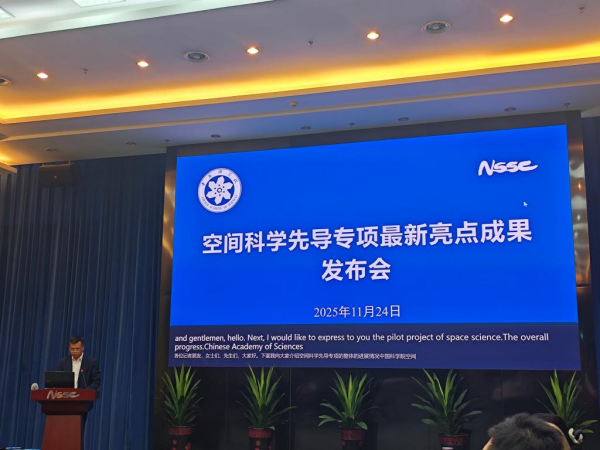
Core Insights - The National Space Science Center of the Chinese Academy of Sciences announced significant scientific breakthroughs in space science, marking a historic leap for China's space science innovation and positioning it as a leader in certain fields [1][5]. Group 1: Achievements and Innovations - Since its launch in 2011, the space science initiative has successfully developed and launched eight scientific satellites, achieving numerous original results and setting multiple records in China and globally [2]. - The "Tian Guan" satellite created the world's first X-ray all-sky map, while the "Wu Kong" satellite provided the most precise cosmic ray energy spectrum to date [2]. - The "Hui Yan" satellite directly measured the universe's strongest magnetic fields and detected high-speed jets near black holes, showcasing advancements in extreme condition measurements [2][3]. Group 2: International Collaboration - The initiative has fostered new paradigms of international cooperation, including the "Tian Guan" satellite project, which involved collaboration with the European Space Agency and other European countries [4]. - The "Wei Xiao" satellite project represents a comprehensive collaboration between China and Europe, covering all phases from design to data analysis [4]. Group 3: Future Plans - The National Space Science Center plans to focus on major frontier issues such as the origins of the universe, space weather, and life, with upcoming projects including the "Hong Meng Plan" and "Kua Fu II" [4]. - The goal is to achieve breakthroughs in areas like the dark ages of the universe and exoplanet detection during the 14th Five-Year Plan period [4].
中国多颗空间科学卫星刷新宇宙认知纪录
Xin Jing Bao· 2025-11-24 12:48
Core Insights - The Chinese Academy of Sciences' Space Science Pilot Project has achieved significant breakthroughs in various fields, including cosmic transient objects, cosmic ray propagation, and solar eruptions, marking a historic leap from "following" to "leading" in space science research [1][2]. Group 1: Project Achievements - Since its launch in 2011, the Space Science Pilot Project has successfully developed and launched eight scientific satellites, including "Wukong," "Shijian-10," "Micius," "Huiyan," "Taiji-1," "Huairou-1," "Kuafu-1," and "Tianguan," resulting in numerous original achievements [1][2]. - The project has led to advancements in key technologies, such as star-ground optical path alignment, and established China's first international standard X-ray calibration beamline [2]. Group 2: Scientific Breakthroughs - The "Tianguan" satellite discovered a new type of X-ray transient source, EP241021a, providing crucial insights into these mysterious celestial objects [4]. - The "Huiyan" satellite has made significant contributions to understanding black hole accretion bursts and neutron star surface nuclear burning [6]. - The "Kuafu-1" satellite has observed over 500 white light flares and identified a lower correlation rate between high-energy C-class flares and coronal mass ejections than previously expected [9]. Group 3: International Collaboration - The project has fostered extensive international cooperation, exemplified by the "Smile" satellite, a collaborative effort between the Chinese Academy of Sciences and the European Space Agency [3]. - The "Tianguan" satellite, led by China, involved participation from the European Space Agency, Germany, and France, marking a significant collaborative milestone [3]. Group 4: Future Plans - During the 14th Five-Year Plan period, the Chinese Academy of Sciences will implement a series of space exploration scientific satellite plans, focusing on major frontier issues such as the origins of the universe, space weather, and life [12]. - The aim is to achieve breakthroughs in areas like the dark ages of the universe and the detection of exoplanets, further solidifying China's leading position in space science [12].
我国空间科学取得新进展 将实施太空探源科学卫星计划
Yang Shi Wang· 2025-11-24 12:26
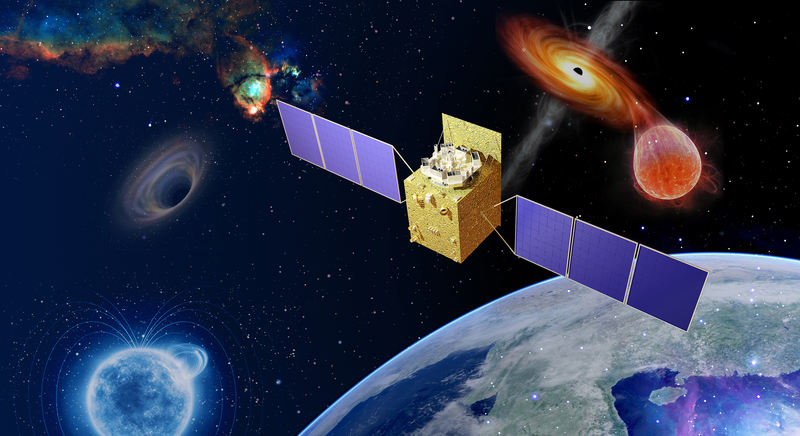
Core Viewpoint - The Chinese Academy of Sciences is set to implement a space exploration satellite program during the 14th Five-Year Plan, focusing on significant scientific breakthroughs in space science [1][3]. Group 1: Space Science Satellite Program - The program will include the development and launch of four space science satellite missions aimed at exploring cosmic mysteries [3]. - The four missions are: 1. "Hongmeng Plan" for detecting the cosmic dark age and dawn 2. "Kuafu-2" for direct imaging of the solar polar regions 3. An exoplanet survey mission to find "Earth 2.0" 4. An enhanced X-ray time-variable and polarization space observatory to study physical laws under extreme cosmic conditions [3]. Group 2: Achievements of Previous Missions - Since its launch in 2011, the space science pilot project has successfully developed and launched eight scientific satellite missions, including "Wukong," "Shijian-10," "Micius," "Huiyan," "Taiji-1," "Huairou-1," "Kuafu-1," and "Tianguan" [5]. - These missions have led to significant achievements, such as creating the world's first all-sky X-ray map, obtaining the most precise cosmic ray electron and proton energy spectrum structures, and directly measuring the strongest magnetic fields in the universe [5]. - The program has also made groundbreaking discoveries in areas like transient celestial bodies and solar eruptions, propelling China's space science innovation into a rapid development phase [5].
多颗卫星刷新宇宙认知!中科院空间科学先导专项发布新成果
Xin Hua She· 2025-11-24 09:20
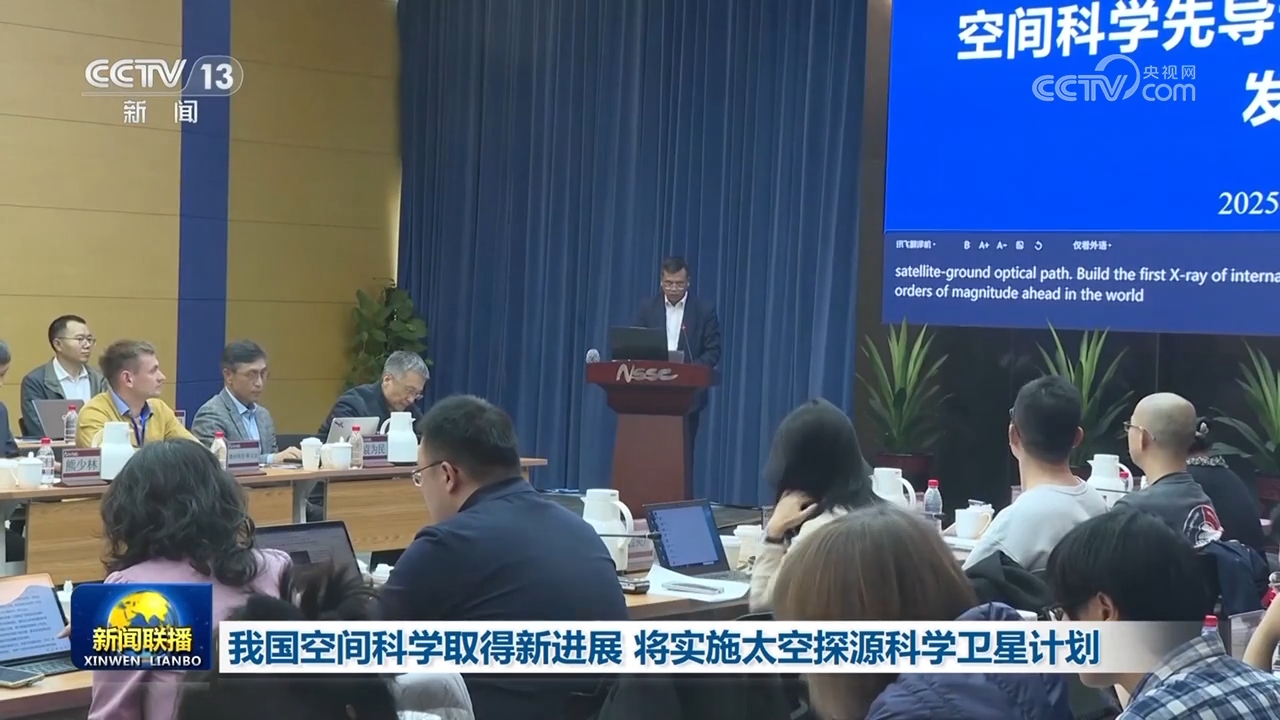
Core Insights - China's space science is experiencing significant breakthroughs, with multiple scientific satellites achieving major original results and creating several firsts in both China and the world [3][4]. Group 1: Satellite Missions and Achievements - The space science pilot project initiated by the Chinese Academy of Sciences in 2011 has successfully developed and launched eight scientific satellites, including "Wukong," "Weiyan," "Huairou," "Kuafu," and "Tianguan," marking a rapid advancement in China's space science innovation [3][4]. - The project has expanded scientific research towards four extremes: macro, micro, extreme conditions, and interdisciplinary integration, achieving notable milestones such as the first global X-ray all-sky map and the most precise cosmic ray energy spectrum measurements [3][4]. Group 2: International Collaboration - The project has actively engaged in comprehensive international cooperation, exemplified by the "Smile" satellite, which represents a deep collaboration between the Chinese Academy of Sciences and the European Space Agency [4]. Group 3: Scientific Discoveries - The "Tianguan" satellite has discovered a new type of X-ray transient source, providing key insights into mysterious transient celestial bodies, and has opened new pathways for discovering stellar black holes [6][7]. - The "Weiyan" satellite has made significant contributions to understanding black hole accretion mechanisms and the radiation mechanisms of millisecond pulsars [6][7]. - The "Huairou" satellite has identified new subtypes of gamma-ray bursts resulting from compact star mergers, enhancing the understanding of gravitational wave electromagnetic counterparts [6][7]. - The "Wukong" satellite has achieved the first precise measurement of the boron energy spectrum of cosmic rays above 1 TeV/n, revealing important insights into cosmic ray propagation mechanisms [7]. - The "Kuafu" satellite has found that the correlation rate between high-energy C-class flares and coronal mass ejections is much lower than expected, providing new clues for understanding solar eruption mechanisms [7]. Group 4: Future Plans - Looking ahead, the Chinese Academy of Sciences plans to implement new space exploration satellite programs, including the "Hongmeng Plan" and "Kuafu II," focusing on major frontier issues such as the origins of the universe, space weather, and life [9].
我国将开展太空探源科学卫星计划 探寻宇宙生命起源
Yang Shi Xin Wen Ke Hu Duan· 2025-11-24 08:32
Core Insights - The Chinese Academy of Sciences' National Space Science Center is implementing a series of space exploration satellite programs during the "14th Five-Year Plan" period, focusing on major frontier issues such as the origins of the universe, space weather, and life [1][2] - The initiative aims to achieve breakthroughs in fields like the cosmic dark age, solar magnetic activity cycles, and exoplanet detection, contributing significantly to China's status as a space and technology powerhouse [2] Group 1: Satellite Programs and Achievements - The space science pilot program, initiated in 2011, has successfully developed and launched eight scientific satellites, including "Wukong," "Shijian-10," "Micius," "Huiyan," "Taiji-1," "Huairou-1," "KuaFu-1," and "Tianguan," marking a historic leap from "following" and "keeping pace" to "leading" in certain areas [2][3] - The program has produced a series of significant original achievements, including the first international-level X-ray calibration beamline in China and a leading large field-of-view X-ray telescope [3] Group 2: Scientific Breakthroughs - The "Tianguan" satellite detected new types of X-ray transient sources, providing critical insights into these mysterious celestial bodies and opening new avenues for discovering stellar black holes [5] - The "Huiyan" satellite has made substantial contributions to understanding black holes, neutron stars, and gamma-ray bursts, including measuring the density of Earth's atmosphere and the mechanisms behind black hole accretion bursts [5][7] - The "Wukong" satellite achieved the first precise measurement of the boron energy spectrum of secondary cosmic rays above 1 TeV/n, revealing significant insights into cosmic ray propagation mechanisms [8] Group 3: International Collaboration and Talent Development - The program has established a new task system combining chief scientists and engineering leads, fostering a high-quality talent pool and innovative teams [3] - International collaborations have been initiated, such as the "Smile" satellite project with the European Space Agency, enhancing the global impact and effectiveness of China's scientific satellites [3]

【中国新闻网】聚焦“一黑两暗三起源五表征” 空间科学前沿主题雁栖湖会议开幕
Zhong Guo Xin Wen Wang· 2025-11-24 05:49
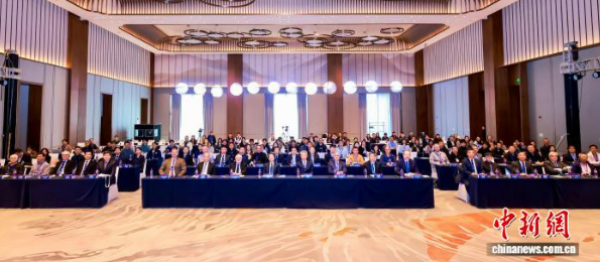
Group 1 - The sixth Yanqi Lake Conference, focusing on "one black, two dark, three origins, five characterizations," has opened in Beijing, aiming to explore the frontiers of space science and promote international cooperation [2][3] - The conference is co-chaired by Academicians Wang Chi and Dou Xiankang, inviting experts to discuss the current research status and development trends in space science [2] - Key topics include black holes, dark matter, dark energy, the origins of the universe, solar system, and life, as well as the characteristics and laws of motion in various space environments [2] Group 2 - The Yanqi Lake Conference is a high-level international academic exchange event initiated by the Chinese Academy of Sciences, focusing on scientific frontiers and international collaboration [4] - The sixth conference is organized by the National Space Science Center of the Chinese Academy of Sciences and will continue until November 25 [4]
《悟空传:暗物质空间探索的中国方案》—— 且看“悟空”续写新传奇(序与跋)
Ren Min Ri Bao· 2025-11-20 21:55
Core Insights - The article highlights the significant advancements in space exploration and technology since the launch of the first artificial satellite in 1957, emphasizing the impact on human understanding of the universe and the emergence of space science [1] Group 1: Development of Dark Matter Particle Detection Satellite - The Dark Matter Particle Detection Satellite project was officially initiated in December 2011, marking the beginning of a new era for China's scientific satellites [2] - The development team, initially consisting of fewer than 10 members, faced challenges due to a lack of experience, but successfully completed the satellite's development in four years, showcasing remarkable efficiency [2] - The satellite's payload was tested at the European Organization for Nuclear Research, validating the performance of the detector [2] Group 2: Launch and Achievements of "Wukong" Satellite - The satellite was named "Wukong" in 2015 and successfully launched on December 17 of the same year, representing a breakthrough for China's astronomical satellites [3] - "Wukong" achieved high-quality performance and received full marks during in-orbit testing, gaining significant public attention and recognition [3] - The satellite's development and subsequent scientific research efforts are documented in a book that reflects the dedication and spirit of Chinese space scientists [3] Group 3: Current Status and Future Expectations - As "Wukong" approaches its 10th anniversary, all detectors are functioning normally and continue to produce high-quality data [4] - The satellite has made notable achievements in measuring electronic and nuclear cosmic rays, contributing to the understanding of dark matter [4] - There is anticipation for "Wukong" to continue its journey in space, further unraveling the mysteries of dark matter [4]
“十四五”期间重大科技成果加速涌现 大国科技跑出“新成绩”
Yang Shi Wang· 2025-10-17 03:39
Core Insights - The "14th Five-Year Plan" marks a significant year for China's technological and industrial innovation, emphasizing the integration of new productive forces and the acceleration of major scientific achievements [1][3] - The plan highlights the importance of innovation as a core element in China's modernization and positions technological self-reliance as a strategic support for national development [1][3] Group 1: Achievements in Technology - Major technological achievements during the "14th Five-Year Plan" include the operational normalization of the "Tiangong" space station, the successful lunar sample return by "Chang'e 6," and the large-scale application of 5G technology [3] - The "China Sky Eye" neutrino experiment facility has commenced operations, and the construction of the new generation nuclear fusion device BEST is fully underway, with expectations to light the first lamp through nuclear fusion by 2030 [3] Group 2: Investment and R&D Growth - In 2024, total R&D investment is projected to exceed 3.6 trillion yuan, representing a 48% increase compared to 2020, with R&D intensity surpassing the average level of EU countries [5] - The total number of R&D personnel in China ranks first globally, indicating a robust workforce dedicated to innovation [5] Group 3: Impact on Society and Youth Involvement - Over the past five years, technology has significantly transformed daily life, with more than half of the world's new energy vehicles operating in China and 60% of global artificial intelligence patents originating from the country [7] - Funding for basic research is expected to grow by over 70% compared to 2020, fostering breakthroughs in quantum technology, life sciences, and space science [7] - The proportion of young scientists under 45 leading national key R&D projects exceeds 40%, with 80% of National Natural Science Foundation projects undertaken by this age group, highlighting the emergence of young talent as a key driver of technological resilience [7] Group 4: Technology Transfer and Economic Impact - The level of technology transfer has reached new heights, with the national technology contract transaction volume maintaining double-digit growth for several years, projected to reach 6.8 trillion yuan in 2024 [10] - The transition of scientific achievements from laboratories to production lines is becoming more efficient, contributing to national strategies and enhancing public welfare [10]
2895个、60.8%……数说我国“十四五”教育强国建设阔步前行
Yang Shi Wang· 2025-09-23 06:48
Group 1 - The core viewpoint is that China's education system has reached the average level of high-income countries, with significant improvements in both basic and higher education [1][4]. - The gross enrollment rate in higher education has increased from 30% in 2012 to 60.8% currently, marking a more than doubling and entering a recognized stage of popularization [3]. - During the "14th Five-Year Plan" period, higher education has provided 55 million talents to society, while vocational education has supplied over 70% of the new high-quality skilled workforce for modern industries [3]. Group 2 - Over the past five years, universities have received over 75% of the National Natural Science Awards and Technology Invention Awards, and over 55% of the Science and Technology Progress Awards, particularly excelling in fields such as life sciences, quantum technology, artificial intelligence, material sciences, and space sciences [3]. - The education system has achieved significant breakthroughs in supporting economic and social development [3]. - The largest and highest-quality education system has been established in China, with free preschool education benefiting over 12 million children this year, and all 2,895 counties in the country achieving basic balance in compulsory education [4].