
载人航天

Search documents
每日市场观察-20260302
Caida Securities· 2026-03-02 05:51
Market Performance - The Shanghai Composite Index rose by 0.39% while the Shenzhen Component Index fell by 0.06% on February 27, 2026[1] - The ChiNext Index and the STAR 50 Index showed weaker performance, with declines of 1.04% and an increase of 0.15%, respectively[1] - The cumulative increase for the Shanghai Composite Index in February was 1.09%, while the Shenzhen Component Index rose by 2.04% and the ChiNext Index fell by 1.08%[2] Capital Flow - On February 27, 2026, net inflows into the Shanghai Stock Exchange were 33.529 billion yuan, and 12.374 billion yuan into the Shenzhen Stock Exchange[4] - The top three sectors for capital inflow were IT Services, Minor Metals, and Electric Power, while the sectors with the highest outflows were Components, Communication Equipment, and Semiconductors[4] Policy and Economic Outlook - The Central Political Bureau emphasized the continuation of a more proactive fiscal policy and moderately loose monetary policy to strengthen reform measures and macro policy coordination[5] - The People's Bank of China announced a reduction of the foreign exchange risk reserve ratio for forward foreign exchange sales from 20% to 0% to support the development of the foreign exchange market[6] Industry Trends - The Ministry of Ecology and Environment plans to complete ultra-low emission transformations for 100 million tons of cement clinker and 50 million tons of coking capacity by 2026[9] - A total of 230 public funds were launched in the first two months of 2026, with a total scale exceeding 210 billion yuan, marking a historical high for the same period in the past four years[14]
中国载人航天取得多项阶段性突破,机构预计市场规模将快速增长
Huan Qiu Wang· 2026-02-28 01:16
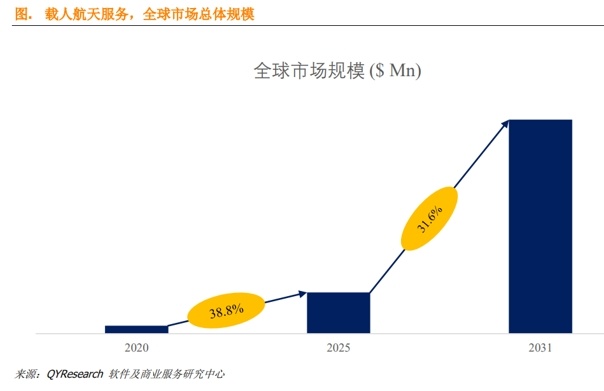
Group 1 - The Chinese space station is currently operating stably and effectively, with significant progress in the crewed lunar exploration program, including plans for two crewed missions and one cargo supply mission in 2026 [1] - Astronauts from Hong Kong and Macau are expected to participate in space station missions as early as this year, with one astronaut from the Shenzhou 23 mission set to conduct a year-long stay [1] - Crewed spaceflight services encompass a range of systems and support functions necessary for human survival in space, increasingly provided by both government agencies and private companies [1] Group 2 - The crewed spaceflight services market is driven by renewed global interest in space exploration, supported by national projects like NASA's Artemis program and China's Tiangong space station, as well as private companies like SpaceX and Blue Origin [2] - The growing interest from wealthy individuals, private researchers, and space tourists is pushing the market towards safe, cost-effective, and scalable crewed mission infrastructure [2] - The global crewed spaceflight services market is projected to reach $7.86 billion by 2031, with a compound annual growth rate (CAGR) of 31.6% over the coming years [4]

中国载人航天深化推进空间站应用和载人探月两大任务
Xin Lang Cai Jing· 2026-02-27 20:32
Group 1 - The core focus of China's manned space program in 2026 is to advance the application and development of the space station and the lunar exploration mission, contributing to the goal of building a strong space nation [1] - The Chinese space station is currently operating stably in orbit, with successful completion of 6 manned flights, 4 cargo resupply missions, and 7 spacecraft return missions, along with multiple extravehicular activities [1] - In 2026, China plans to conduct 2 manned flight missions and 1 cargo resupply mission, with astronauts from Hong Kong and Macau expected to participate in space station missions [1] Group 2 - The lunar exploration program aims for China's first manned moon landing by 2030, with significant progress in the development of key flight products such as the Long March 10 rocket and the Dream Chaser manned spacecraft [2] - Major tests have been successfully completed, including zero-height escape tests for the Dream Chaser spacecraft and landing and takeoff tests for the lunar lander [2]
来自港澳地区的航天员有望执行空间站飞行任务
Xin Lang Cai Jing· 2026-02-27 19:29
Core Viewpoint - In 2026, China plans to implement two manned spaceflight missions and one cargo resupply mission, with astronauts from Hong Kong and Macau expected to participate in space station missions, marking a significant step in the country's space exploration efforts [1] Group 1: Manned Space Missions - China will conduct two manned flight missions in 2026 as part of its space station application and development strategy [1] - The Shenzhou 23 mission will include an astronaut conducting a year-long stay experiment [1] Group 2: Lunar Exploration - The goal is to achieve China's first manned moon landing by 2030, with ongoing development of the lunar exploration program [1] - In 2026, efforts will focus on the construction of supporting facilities for the lunar mission at the Wenchang Space Launch Site, including ground support systems for communication and landing [1]
港澳地区航天员有望执行空间站飞行任务
Xin Lang Cai Jing· 2026-02-27 19:29
Core Viewpoint - China plans to implement two manned spaceflight missions and one cargo resupply mission in 2026 as part of its efforts to advance its space station applications and lunar exploration initiatives, contributing to the goal of becoming a space power [1][2] Group 1: Manned Spaceflight Missions - In 2026, China aims to conduct two manned spaceflight missions and one cargo resupply mission [1] - The Shenzhou-23 mission will include an astronaut from Hong Kong or Macau, who is expected to participate in a year-long stay experiment [1] Group 2: Lunar Exploration - The lunar exploration program is on track to achieve the goal of landing Chinese astronauts on the moon by 2030, with significant progress in the development of key flight products such as the Long March 10 rocket and the Dream Chaser crewed spacecraft [2] - Major tests have been successfully completed, including zero-height escape for the Dream Chaser spacecraft and low-altitude demonstration for the Long March 10 rocket [2] Group 3: International Cooperation - The program emphasizes peaceful use and international cooperation, with a recent agreement signed with Pakistan for astronaut training, allowing a Pakistani astronaut to participate in a short-term mission [2] - China continues to welcome global collaboration in its manned space program, aiming to share advancements and promote the development of space technology for the benefit of humanity [2]
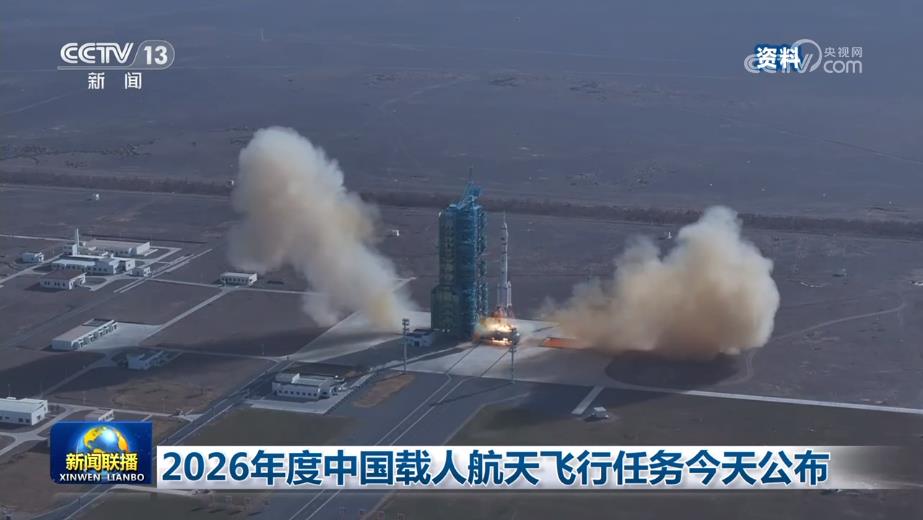
2026年度中国载人航天飞行任务公布
Yang Shi Wang· 2026-02-27 12:23
Core Viewpoint - In 2026, China's manned space program will advance its space station applications and lunar exploration missions, with the space station currently operating stably and effectively [1] Group 1: Manned Space Missions - In 2026, the program plans to implement Shenzhou-23 and Shenzhou-24 manned flight missions, along with the Tianzhou-10 cargo resupply mission [3] - Astronauts from Hong Kong and Macau are expected to participate in space station missions as early as this year, with one astronaut from the Shenzhou-23 crew set to conduct a year-long stay experiment [3] Group 2: Lunar Exploration Goals - The lunar exploration program aims for China's first manned moon landing by 2030, with various development tasks progressing steadily [5] - Key flight products such as the Long March 10 rocket, Mengzhou manned spacecraft, and lunar lander have shown successful development progress, completing significant tests [5] - In 2026, efforts will focus on building supporting facilities for the lunar mission at the Wenchang Space Launch Site, including ground support systems for measurement, control, communication, and landing [5]
2026年度中国载人航天飞行任务今天公布
Yang Shi Wang· 2026-02-27 11:42
Core Viewpoint - In 2026, China's manned space program will advance its space station applications and lunar exploration missions, with stable operations and good performance of the space station currently [1] Group 1: Manned Space Missions - The plan includes the implementation of Shenzhou-23 and Shenzhou-24 manned missions, as well as the Tianzhou-10 cargo resupply mission [1] - Astronauts from Hong Kong and Macau are expected to participate in space station missions as early as this year, with one astronaut from the Shenzhou-23 crew set to conduct a year-long stay [1] Group 2: Lunar Exploration - The goal is to achieve China's first manned lunar landing by 2030, with steady progress in the development of lunar exploration tasks [1] - Key flight products such as the Long March 10 rocket, the Dream Chaser manned spacecraft, and the lunar lander have shown smooth development progress [1] - Major tests completed include zero-height escape for the Dream Chaser, landing and takeoff for the lunar lander, and various demonstrations for the Long March 10 rocket [1] Group 3: Infrastructure Development - In 2026, efforts will focus on the construction of supporting facilities for the lunar mission at the Wenchang Space Launch Site, including ground support systems for measurement, control, communication, and landing [1]
2026年计划实施2次载人飞行任务
Ge Long Hui· 2026-02-27 06:17
Core Viewpoint - In 2026, China's manned space program will focus on advancing the application and development of the space station and lunar exploration, contributing to the goal of building a strong space nation [1] Group 1: Space Station Development - The Chinese space station is currently operating stably and has successfully completed 6 manned flights, 4 cargo resupply missions, and 7 spacecraft return missions [1] - A total of 18 astronauts have participated in long-term stays in orbit, conducting 13 extravehicular activities and multiple maintenance tasks, setting a world record for the duration of a single extravehicular activity [1] - The space station has deployed and implemented 267 scientific and application projects, achieving several internationally leading results in fields such as space life sciences and microgravity physics [1] Group 2: Lunar Exploration - In 2026, two manned flight missions and one cargo resupply mission are planned, with astronauts from Hong Kong and Macau expected to participate [2] - The lunar exploration program aims for China's first manned moon landing by 2030, with significant progress in the development of key flight products such as the Long March 10 rocket and the Dream Chaser spacecraft [2] - Major tests have been successfully completed, including zero-height escape tests for the Dream Chaser and low-altitude demonstration validations for the Long March 10 rocket [2] Group 3: International Cooperation - The program promotes international cooperation in manned spaceflight, with a recent agreement signed between China and Pakistan for astronaut training [3] - A Pakistani astronaut is expected to participate in a short-term mission as a payload expert, conducting scientific experiments on the Chinese space station [3] - China continues to welcome global collaboration in space technology development, aiming to benefit humanity through peaceful space utilization [3]
2026年中国载人航天工程任务公布:深化推进空间站应用与载人登月,计划实施2次载人飞行任务
Jin Rong Jie· 2026-02-27 04:17
Core Insights - In 2026, China's manned space program will focus on advancing space station applications and lunar exploration, contributing to the goal of becoming a space power [1][2] - The Chinese space station has successfully completed multiple missions, including six manned flights and four cargo resupply missions, with significant scientific projects underway [1][2] - International cooperation is emphasized, with agreements in place for astronaut training and collaborative scientific experiments with countries like Pakistan [3] Group 1: Space Station Development - The Chinese space station is currently operational and has completed 267 scientific and application projects, achieving several international advancements in space science [1] - The program has seen 18 astronauts participate in long-term stays, with records set for extravehicular activities [1][2] - Plans for 2026 include two manned flights and one cargo resupply mission, with astronauts from Hong Kong and Macau expected to participate [2] Group 2: Lunar Exploration - The lunar exploration program aims for China's first manned moon landing by 2030, with significant progress in the development of key launch vehicles and spacecraft [2] - Major tests for the Long March 10 rocket and other lunar mission components have been successfully completed [2] - Infrastructure development for the Wenchang Space Launch Site is a priority for upcoming lunar missions [2] Group 3: International Collaboration - The program promotes international cooperation in manned spaceflight, with a recent agreement with Pakistan for astronaut training and collaborative missions [3] - China is open to global partnerships to share advancements in space technology and contribute to peaceful space utilization [3]

2026年中国将深化推进空间站应用与发展和载人月球探测任务
Zhong Guo Xin Wen Wang· 2026-02-27 04:08
Core Insights - In 2026, China will deepen the advancement of space station applications and development, as well as manned lunar exploration tasks [1][2] - The Chinese space station is currently operating stably and effectively, while the lunar exploration program has made significant progress in its development phase [1] Group 1: Space Station Development - Since entering the space station application and development phase, China has successfully completed 6 manned flights, 4 cargo resupply missions, and 7 spacecraft return missions [2] - The country has implemented its first emergency launch, with 6 astronaut crews and 18 individuals having long-term stays in orbit [2] - In 2026, China plans to conduct 2 manned flight missions and 1 cargo spacecraft resupply mission [2] Group 2: Lunar Exploration Program - The lunar exploration program aims for the first Chinese landing on the moon by 2030, with steady progress in various development tasks [1] - Key flight products such as the Long March 10 rocket, the Dream Chaser manned spacecraft, and the lunar lander have seen successful development milestones [1] - In 2026, the lunar exploration program will focus on the construction of supporting facilities at the Wenchang Space Launch Site, as well as ground support systems for measurement and control, communication, and landing sites [1]