
股权融资

Search documents
OSL 集团(863.HK)宣布完成 2 亿美元的股权融资
Xin Lang Cai Jing· 2026-01-29 09:27
Group 1 - OSL Group (863.HK) has completed a $200 million (approximately HKD 1.56 billion) equity financing [1] - The funds will be used to strengthen financial position, capture global growth opportunities, and accelerate strategic expansion in the stablecoin trading and payment sectors [1] - The net proceeds are intended for strategic acquisitions, expanding global operations including payments and stablecoins, developing products and technological infrastructure, and general working capital [1]
天风证券:春季行情有望进入第二阶段
Xin Lang Cai Jing· 2026-01-25 06:37
Group 1 - The core viewpoint of the article highlights the continuation of the upward trend in the stock market since December 2025, with the Shanghai Composite Index approaching 4200 points, marking a new high for the phase [1][11] - China's GDP for the year 2025 reached the target of 140 trillion yuan, supported by various economic data indicating a stabilization and improvement in the domestic macroeconomic fundamentals [1][11] - The trading volume in both stock markets has been increasing, with a notable divergence in fund flows: while the issuance of equity mutual funds has decreased, margin financing has seen significant net inflows [1][11] Group 2 - The overall micro liquidity shows a substantial net inflow of margin financing, alongside a return of net inflows from southbound funds [2][12] - The issuance scale of equity mutual funds has decreased, with new issuance at 20.36 billion units, down 20.58% from the previous period [3][13] - Northbound trading activity has increased, with the proportion of northbound trading volume reaching 12.92%, up from 11.88% in the previous period [4][14] Group 3 - Margin financing has seen a significant net inflow of 189.95 billion yuan, marking a 406.04% increase compared to the previous net inflow of 37.54 billion yuan [5][15] - The net subscription of existing stock ETFs has turned into a net outflow of 143.63 billion yuan, contrasting with a net inflow of 31.23 billion yuan in the previous period [6][16] - The total equity financing scale has risen to 71.88 billion yuan, reflecting a 28.71% increase from the previous period's total of 55.85 billion yuan [7][18] Group 4 - The net reduction in industrial capital has widened to 31.54 billion yuan, compared to a net reduction of 17.44 billion yuan in the previous period [8][19] - The lock-up release scale has decreased to 213.88 billion yuan, down 14.25% from the previous period's 249.43 billion yuan [9][19] - Southbound funds have seen a net inflow of 38.31 billion yuan, reversing from a net outflow of 1.10 billion yuan in the previous period, indicating a positive shift in investor sentiment [10][20]

华泰证券股份有限公司2026年第一次临时股东会完成董事会换届并获股份发行一般性授权
Xin Lang Cai Jing· 2026-01-23 16:48
Core Viewpoint - Huatai Securities successfully held its first extraordinary general meeting of shareholders in 2026, passing several important resolutions, including granting the board general authority to issue shares, which received 89.81% approval [1] Group 1: Shareholder Meeting Outcomes - The extraordinary general meeting was attended by 1,429 shareholders and proxies, representing 5,245,467,179 voting shares, which is 58.11% of the total voting shares [1] - The support rate for the general authority resolution among retail investors was 89.67% [1] - The newly elected seventh board of directors includes both non-independent and independent directors, which will influence the company's governance structure and strategic direction [1] Group 2: Future Implications - The board's general authority to issue shares will provide flexibility for potential equity financing in the future [1] - The decisions made during this meeting are expected to impact the company's future governance and strategic development [1]

通宇通讯:由直接持有鸿擎科技股权转为通过合伙企业间接持有其股权
Xin Lang Cai Jing· 2026-01-23 10:42
通宇通讯(002792.SZ)公告称,公司参与了北京蓝箭鸿擎科技有限公司的A1轮融资。公司以自有资金出 资人民币3,000万元,认缴鸿擎科技新增注册资本51.5597万元,剩余部分计入资本公积,以取得本次增 资完成后鸿擎科技的1.8293%股权。 ...

英洛华:产业基金拟6亿元参与标的公司A轮股权融资
Xin Lang Cai Jing· 2026-01-22 12:51
Core Viewpoint - The company announced that its subsidiary, Yingluohua Fund, plans to lead a Series A equity financing round for BCI, with a total investment of 600 million yuan, including 100 million yuan from Yingluohua Fund [1] Group 1 - Yingluohua Fund, along with Qiushi Fund and Dongci Fund, will act as the lead investors in the financing round [1] - The total investment amount from the three funds is 600 million yuan, with Yingluohua Fund contributing 100 million yuan [1] - The investment constitutes a related party transaction as all funds are managed by Hengdian Capital and controlled by Hengdian Holdings [1] Group 2 - Following the completion of the investment, Yingluohua Fund will hold a 1.05% stake in Shanxi Qineng and a 1.05% stake in Shanxi Qinyun [1] - From January 1 to January 20, 2026, the company and related parties have conducted related party transactions totaling 25.6482 million yuan [1]

【数说江苏】2025年江苏新增A股上市公司29家 均为科技创新企业
Sou Hu Cai Jing· 2026-01-22 06:24
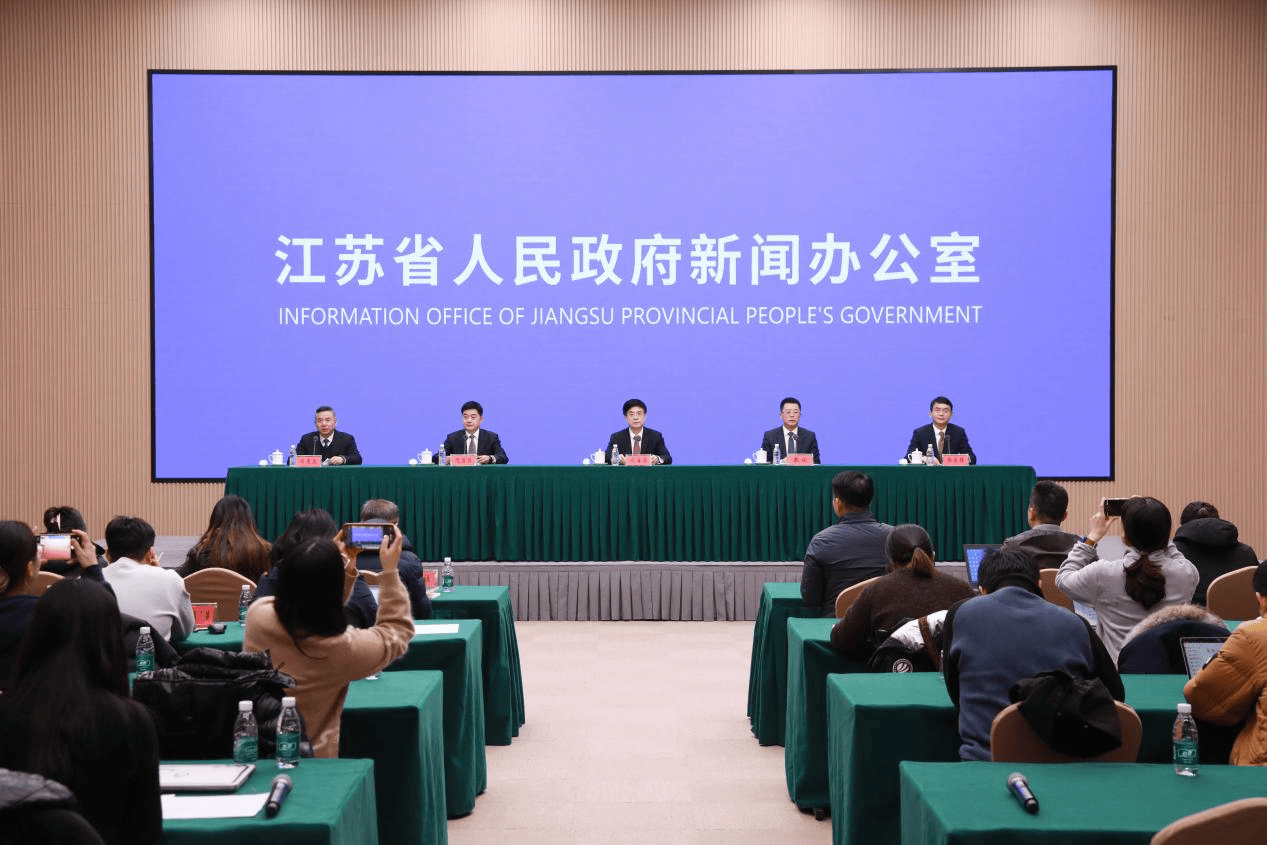
央广网南京1月22日消息(记者栾永胜)1月21日,江苏省政府新闻办召开"十四五"江苏金融发展成就新闻发布会。记者从发布会上获悉,2025年,江苏新增 境内首发上市公司29家,均为科技创新企业。 发布会现场(央广网发 黄磊 摄) 江苏证监局副局长毕庆锋指出,证监会连续推出"科创十六条""科创板八条"等举措,设立科创板科创成长层,启用创业板第三套上市标准,为江苏发展股权 融资带来重大政策机遇。江苏立足产业实际,以"创新思维、专业指导、精准支持、更好服务"为导向,会同沪、深、北交易所强化政策宣导,加大科技创新 企业培育力度,支持优质企业高质量申报。 2025年,江苏新增境内首发上市公司29家,均为科技创新企业,其中28家为战略性新兴产业企业。目前全省科创板上市公司115家、北交所上市公司56家, 均约占全国1/5,位列全国第一;国家级专精特新"小巨人",战略性新兴产业上市公司家数,均约占全国同类公司1/6。上市公司有力带动各地形成了特色鲜 明的先进制造和战略性新兴产业集群,构建了"龙头引领、集群支撑"的产业发展新格局。 江苏上市公司按地域分布情况(央广网发 江苏省上市公司协会制图) 截至2025年12月31日,江苏 ...

精准搭建融资方案——用专业框架撬动资本信任
Sou Hu Cai Jing· 2026-01-21 08:36
Core Viewpoint - The essence of financing is to exchange the future value of a company for current financial support, with a quality financing plan serving as a "trust bridge" between the company and capital, focusing on clear communication of enterprise value and addressing capital concerns [1] Group 1: Financing Plan Structure - A quality financing plan is not merely an information dump but a systematic design based on the company's development stage, financing needs, and capital preferences [1] - The decision-making process in capital investment is fundamentally a trade-off between risk and return, requiring the financing plan to revolve around three core logics: reasonable demand, clear returns, and controllable execution [1] - A standardized financing plan should encompass eight core modules that support each other and form a complete dimension for capital assessment [2] Group 2: Key Components of Financing Plan - **Executive Summary**: The first three pages should condense core information, including company positioning, product/service advantages, market pain points, team strengths, financing needs, fund usage, and return commitments [3] - **Company and Team Overview**: This section should establish initial trust by disclosing registration information, business scope, core qualifications, and key milestones, while highlighting the core team's industry experience and past successes [4] - **Product/Service and Market Analysis**: Focus on what pain points the product addresses, using data to demonstrate unique advantages, and provide third-party data to support market potential [5] Group 3: Financing Needs and Usage - **Financing Needs and Fund Usage**: Clearly state the financing amount, method, and duration, detailing fund allocation to specific projects to avoid vague statements [6] - **Business Model and Profit Forecast**: Clearly explain the sources of profit, customer acquisition channels, and core barriers, providing quantifiable indicators for the next 3-5 years based on historical data and market trends [7] - **Repayment Sources/Exit Mechanisms**: For debt financing, specify repayment sources and plans, while for equity financing, provide clear exit paths and valuation logic to assure investors of reasonable returns [9] Group 4: Risk Management and Supporting Evidence - **Risk Analysis and Mitigation Measures**: Proactively disclose potential risks and provide specific countermeasures to enhance credibility, addressing market, technical, operational, and policy risks [10] - **Supporting Attachments**: Include evidence such as business licenses, patent certificates, financial audit reports, and third-party industry reports to support every claim made in the financing plan [11] Group 5: Tailoring Financing Approach - Different financing methods require tailored approaches, emphasizing safety for bank loans, growth potential for equity financing, transaction authenticity for supply chain finance, and compliance for policy financing [12]
股权融资vs债权融资:企业融资全解析(含实操要点+决策指南)
Sou Hu Cai Jing· 2026-01-15 05:40
Group 1 - Core definition of equity financing involves transferring equity for long-term funding, while debt financing requires repayment [1] - Equity financing is characterized by no repayment pressure and flexible financing scale based on company valuation [2] - Debt financing entails fixed repayment obligations with interest rates typically ranging from 4% to 15% depending on credit and collateral [2] Group 2 - The process of equity financing includes preparing a business plan, organizing financial statements, and identifying potential investors [3] - Debt financing involves determining funding needs, preparing necessary documentation, and undergoing due diligence by lenders [4] - Banks focus on the primary repayment source (operating cash flow) and secondary sources (collateral) when assessing loan applications [4] Group 3 - Equity financing is suitable for startups with no stable cash flow and high growth potential, as well as for companies in transition needing funds for new technology [5] - Debt financing is appropriate for mature companies with stable cash flow and good profitability, allowing them to handle fixed repayment pressures [5] - Companies with valuable collateral can secure low-interest loans through debt financing [5] Group 4 - Risks in equity financing include dilution of control and valuation disputes, which can affect future funding rounds [6] - Debt financing risks involve repayment pressure and potential credit defaults, which can impact future financing costs [6] - A mixed financing model combining equity and debt can balance control, cost, and repayment pressure for growing companies [6]

——流动性周报1月第1期:资金需求端缓和,两融余额创历史新高-20260113
Guohai Securities· 2026-01-13 03:04
Group 1 - The macro liquidity environment has shown marginal convergence, with the central bank conducting a net withdrawal of 16,550 billion yuan through open market operations, resulting in a total net withdrawal of 5,550 billion yuan for the week [7][8] - Short-term interest rates have decreased, while long-term interest rates have increased, leading to a widening of the yield spread [7][8] - The overall structure of equity fund supply has shown significant differentiation, with a notable decline in equity fund issuance and a record high in margin financing balance, which has surpassed 2.6 trillion yuan [2][10] Group 2 - The financing net inflow has been concentrated in the electronics and non-ferrous metals sectors, while the food and beverage and building materials sectors have experienced net outflows [10][14] - The stock ETF has seen a net outflow of 1.81 billion yuan, reversing the previous week's net inflow of 354.41 billion yuan, indicating a shift in investor sentiment [10][12] - The overall pressure on the stock market's funding demand has eased, with equity financing dropping to 43.85 billion yuan, and the scale of restricted stock unlocks decreasing to 1,650.32 billion yuan [13][15] Group 3 - The IPO issuance for the week amounted to 15.55 billion yuan, down from 33.01 billion yuan the previous week, indicating a slowdown in new equity offerings [15][16] - The scale of directed placements has significantly decreased to 28.3 billion yuan from 172.08 billion yuan, reflecting a contraction in capital raising activities [15][16] - The net reduction in industrial capital has also decreased to 126.23 billion yuan from 146.61 billion yuan, suggesting a reduction in selling pressure from major shareholders [15][23]
北美矿企抢占贵金属牛市红利,去年融资创12年新高
Jin Shi Shu Ju· 2026-01-08 01:41
Core Viewpoint - The surge in precious metal prices has led to a record high in equity financing for gold and silver mining companies, particularly among small to mid-cap firms, marking the highest fundraising levels in over a decade [2][3]. Group 1: Fundraising Trends - In the past year, mining companies listed on U.S. and Canadian exchanges raised over $6.2 billion, the highest amount in at least 12 years [3]. - Small-cap mining companies dominated the fundraising activities, with Hemlo Mining Corp. leading the way by raising $489.7 million, followed by Perpetua Resources Corp. at $374 million and Novagold Resources Inc. at $206 million [3]. - The current fundraising environment is characterized by companies seizing opportunities to raise capital only when market conditions are favorable [3]. Group 2: Large Mining Companies' Strategies - Major mining companies like Newmont Corp., Barrick Gold Corp., and Agnico Eagle Mines Ltd. have refrained from issuing new shares despite high stock prices, opting instead to utilize increased cash flows for stock buybacks [4]. - This trend of small-cap companies issuing shares while large-cap companies buy back their own stock sends a positive signal to investors and is expected to continue into 2026 [4][6]. - Analysts note that large mining companies are demonstrating capital discipline, which is a departure from past behaviors where they would issue shares to fund aggressive acquisitions [4][5]. Group 3: Investor Sentiment and Market Dynamics - The majority of fundraising transactions last year were oversubscribed, driven by investor demand for precious metal assets and compelling use-of-proceeds proposals from mining companies [5]. - Mining companies offered attractive pricing for stock subscriptions, often at discounts exceeding 3.5%, which further incentivized investor participation [5]. - The momentum in equity financing for the mining sector is expected to persist into 2026, particularly in the early part of the year [6][7].