
茶饮出海

Search documents
2024茶饮出海篇,国内竞争加剧,海外市场成第二增长曲线
Sou Hu Cai Jing· 2025-06-02 15:04
Core Viewpoint - The Chinese tea beverage industry is facing intensified domestic competition and is increasingly looking to international markets for growth opportunities, particularly in Southeast Asia, while also exploring potential in Europe, America, and Japan [1][2]. Group 1: Domestic Challenges - The new tea beverage market in China has grown from 42.2 billion yuan in 2017 to 193.3 billion yuan in 2023, with a compound annual growth rate (CAGR) of 28.87% [2]. - The industry is entering a "ten-thousand store era," with the chain rate rising from 41.2% in 2020 to 55.2% in 2022, leading to increased market saturation and homogenization [2][3]. - Price wars and innovation fatigue are prevalent, with over 2,000 new products launched from the second half of 2023 to July 2024, but the average shelf life of new products is only about half a month [2][3]. - Major brands are experiencing performance pressure, with companies like Cha Bai Dao reporting a 10% revenue decline and a 59.7% drop in net profit in the first half of 2024 [2][3]. Group 2: Opportunities and Challenges in International Markets - Chinese tea brands face multiple challenges when expanding overseas, including high operational costs due to reliance on domestic supply chains and competition from established coffee brands like Starbucks [3][4]. - Cultural differences in consumer preferences are significant, especially in the U.S. where tea shops account for only 5% of beverage outlets, compared to coffee shops [3][4]. - However, favorable policies such as the Regional Comprehensive Economic Partnership (RCEP) and local government support are creating opportunities for expansion [4][5]. Group 3: Global Strategy and Market Focus - Southeast Asia is identified as the primary market for expansion due to its strong Chinese community and favorable climate for cold beverages, with Indonesia leading with a market size of 1.6 billion USD [5][6]. - Brands like Mixue Ice City are aggressively expanding in Southeast Asia, with nearly 4,000 stores as of September 2023, while facing competition from local brands [5][6]. - The U.S. market presents high costs and significant cultural barriers, but key coastal areas like California and New York are seen as critical entry points for new tea brands [7][8]. - The Japanese and Korean markets are slower to penetrate, dominated by Taiwanese brands, but there is potential due to a young consumer base [8][10]. Group 4: Future Trends - The global trend towards health-conscious consumption is driving demand for transparent ingredient sourcing and healthier options, with 40% of overseas consumers prioritizing food safety [11][12]. - Brands must balance localization and differentiation, adapting products to local tastes while maintaining their unique identity [11][12]. - Digital transformation is essential for reducing operational costs and enhancing efficiency across the supply chain [11][12]. Group 5: Collaborative Expansion and Standards - The industry is exploring a "group expansion" model, where leading companies collaborate with government and associations to facilitate international growth [13]. - The establishment of industry standards, such as food safety guidelines, is crucial for ensuring safe and compliant international operations [13].


蜜雪集团(02097.HK):茶饮下沉与出海标杆 未来成长空间几何?
Ge Long Hui· 2025-05-28 18:27
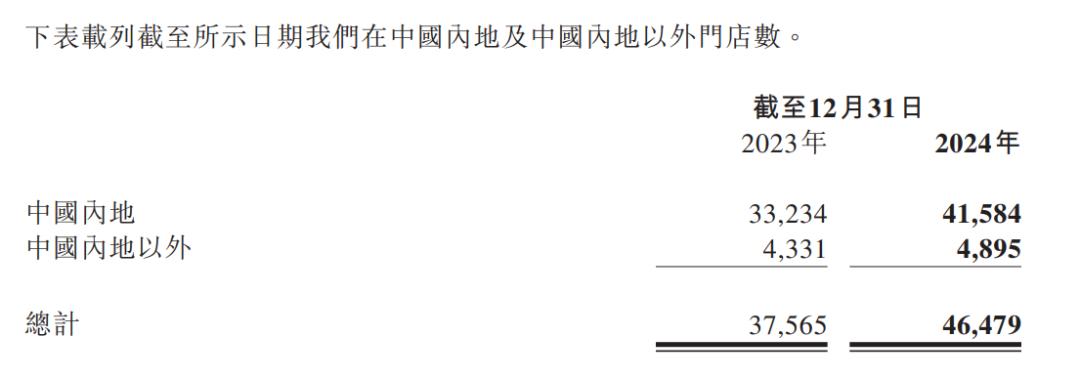
Group 1 - The core viewpoint of the article highlights the rapid growth and market leadership of Mixue Group in the ready-to-drink tea industry, projecting significant revenue and profit increases through 2024 [1] - Mixue Group, founded in 1997, focuses on high-cost performance products priced between 2-8 yuan, and has expanded nationwide since 2015, aiming for 46,479 stores globally by the end of 2024 [1] - The company expects revenue of 24.83 billion yuan in 2024, representing a 22.3% increase, and a net profit of 4.44 billion yuan, reflecting a 41.4% growth [1] Group 2 - The ready-to-drink tea market is projected to reach approximately 310.9 billion yuan by 2025, with a compound annual growth rate (CAGR) of about 19.7% from 2023 to 2028 [1] - Mixue holds a market share of 20.2% in the ready-to-drink tea sector, leading the industry, while the top five companies account for 49% of the market [1] - The company’s revenue composition in 2024 is expected to be 94.5% from product sales, 3.0% from equipment sales, and 2.5% from franchise services, with product sales being the main revenue driver [1] Group 3 - The growth formula for Mixue includes single-store revenue, store scale, and supply chain efficiency, with projected single-store GMV of 1.454 million yuan in 2025, growing at a rate of 4.8% [2] - The company anticipates net store additions of 7,700, 8,855, and 8,930 for the years 2025 to 2027, driven by domestic expansion and international growth [2] - Supply chain improvements are expected to lead to stable gross margin increases, projected at 32.5%, 32.6%, and 32.7% from 2025 to 2027 [2] Group 4 - Mixue Group aims to reach a store count of 100,000 by 2030, with significant contributions from domestic and international expansions [3] - Revenue and net profit projections for 2030 are estimated at 64.5 billion yuan and 11.9 billion yuan, respectively, under optimistic assumptions [3] - The company is also focusing on the commercialization of its "Xue Wang" IP, indicating potential growth beyond its core ready-to-drink tea business [3]
财报会说话:真实的茶饮出海现状
FBIF食品饮料创新· 2025-05-11 16:14
Core Viewpoint - The article discusses the significant trend of Chinese tea brands expanding internationally, particularly in Southeast Asia, highlighting the strategies and challenges faced by various companies in this competitive landscape [5][4]. Group 1: Market Overview - The global ready-to-drink beverage market is projected to exceed $1.1 trillion by 2028, with a compound annual growth rate (CAGR) of 7.2% from 2023 to 2028 [4]. - Southeast Asia's tea beverage market is expected to grow from $20.1 billion in 2023 to $49.5 billion by 2028, achieving a CAGR of 19.8%, making it one of the fastest-growing regions globally [4]. Group 2: Company Strategies - Different Chinese tea brands are at various stages of international expansion: - Mixue Ice City focuses on scaling up [7]. - Nayuki targets high-end markets [7]. - Cha Bai Dao emphasizes differentiation [7]. - Gu Ming concentrates on regional deep cultivation [7]. - Mixue Ice City leverages its supply chain advantages to build a tea empire, with a significant increase in overseas store openings [10][11]. - Nayuki's strategy involves positioning itself as a luxury brand in Southeast Asia, with high average order values and premium pricing compared to local competitors [20][21]. - Cha Bai Dao adopts a localized approach, ensuring product quality and flavor by sourcing local ingredients and adapting to regional tastes [27][28]. - Gu Ming remains cautious about international expansion, focusing on deepening its presence in lower-tier cities within China [31][32]. Group 3: Financial Performance - Mixue Ice City's financial report indicates a substantial increase in overseas store count, with 4,895 stores outside mainland China as of December 31, 2024, up from 4,331 the previous year [10][11]. - Nayuki reported a revenue of 4.921 billion yuan in 2024, a decline of 4.7% year-on-year, and a shift from profit to a net loss of 919 million yuan [21][24]. - Cha Bai Dao has successfully opened multiple stores in Southeast Asia, with plans for continued expansion in 2025 [28][30]. Group 4: Challenges and Market Dynamics - The international expansion of Chinese tea brands faces challenges such as local competition, regulatory changes regarding environmental policies, and the need for effective supply chain management [34][36]. - The capital market's response to these brands is polarized, with some experiencing significant stock price declines while others, like Mixue and Gu Ming, have seen substantial increases in market value [37][39]. - The article emphasizes that the next phase of competition in the Southeast Asian tea market will hinge on innovation and the ability to adapt to local consumer preferences [38][40].
财报会说话:真实的茶饮出海现状
3 6 Ke· 2025-05-09 10:08
Core Insights - The tea beverage industry is experiencing a significant trend of international expansion, with Chinese brands making their presence felt globally, particularly in Southeast Asia and other regions [1][2][3] - The global ready-to-drink beverage market is projected to exceed $1.1 trillion by 2028, with a compound annual growth rate (CAGR) of 7.2% from 2023 to 2028. Southeast Asia's market is expected to grow from $20.1 billion in 2023 to $49.5 billion by 2028, with a CAGR of 19.8% [1] Group 1: Company Strategies - Several new tea beverage companies are at different stages of international expansion: Mixue Ice Cream and Tea (scale), Nayuki (premium), Cha Bai Dao (differentiation), and Gu Ming (regional focus) [3] - Mixue is leveraging its supply chain advantages to build a tea empire, while Nayuki is focusing on high-end urban areas for expansion [3] - Cha Bai Dao is using fruit tea to attract coffee drinkers in Korea, and Gu Ming is relying on a differentiated image and positioning [3] Group 2: Mixue Ice Cream and Tea - As of December 31, 2024, Mixue had 4,895 stores outside mainland China, an increase of 564 stores from the previous year, averaging 10 new openings per week [4][5] - The company maintains a competitive pricing strategy, with prices in Vietnam ranging from 3-6 RMB and in Indonesia from 3.7-4.6 RMB, significantly lower than mid-to-high-end brands [6] - Mixue's gross profit margin increased from 28.8% in 2023 to 31.6% in 2024, surpassing the industry average of 25% [7] Group 3: Nayuki - Nayuki is positioning itself as a luxury tea brand, with average order values in Thailand reaching 26.7 RMB and daily orders per store at 270.5 [13] - Despite its high-end positioning, Nayuki reported a revenue decline of 4.7% year-on-year, with a net loss of 919 million RMB in 2024 [11][16] - The company plans to adjust its strategy to focus on profitability and product line adjustments for 2025 [16] Group 4: Cha Bai Dao and Gu Ming - Cha Bai Dao opened its first store in Malaysia in November 2023, adapting its product offerings to local tastes and establishing a local operational team [17][18] - The company has developed a training system for tea drinkers in Korea and has tailored its product offerings to local preferences [19] - Gu Ming remains focused on domestic markets, with 80% of its stores in lower-tier cities, and is cautious about international expansion [22][23] Group 5: Market Challenges - The tea beverage industry faces challenges from new environmental regulations in various countries, increasing operational costs [25][26] - Local brands in Southeast Asia are responding aggressively to Chinese brands, often undercutting prices [26] - The competition is expected to intensify as companies must establish robust supply chains and adapt to local cultures to succeed in international markets [27][28]
港股迎第五杯“奶茶”:沪上阿姨能否复制“蜜雪”资本盛宴?
3 6 Ke· 2025-05-09 00:40
Core Viewpoint - The IPO of "沪上阿姨" (Hushang Ayi) has generated significant interest, with a strong opening price and high subscription rates, indicating robust market demand for new tea beverage brands in Hong Kong [2][3]. Company Overview - "沪上阿姨" was founded by a couple, inspired by local tea shops, and has evolved from a small business to a significant player in the tea beverage market, with a focus on "五谷茶" (five-grain tea) and a variety of products [4][6]. - The company has expanded aggressively, particularly into lower-tier cities, and has seen rapid growth in store numbers and sales, reaching 7,789 stores by the end of 2023 [6][8]. Financial Performance - The company reported significant revenue growth from 2021 to 2023, with GMV increasing from 41.61 billion yuan to 97.32 billion yuan, and total revenue rising from 16.40 billion yuan to 33.48 billion yuan [6][8]. - However, the company faces challenges with declining average store GMV and profitability, with a net profit margin of only 10.1% [8][9]. Market Position - As of the end of 2023, "沪上阿姨" holds a market share of 4.6%, ranking fifth among tea beverage brands in China, behind "蜜雪冰城" (Mixue), "古茗" (Guming), "茶百道" (Chabaidao), and "霸王茶姬" (Chagee) [10]. - The competitive landscape is intensifying, with many brands vying for market share in the mid-range segment, which is the most competitive area [11][13]. Expansion Strategy - The company has adopted a franchise model for rapid expansion, with a significant portion of its stores located in second-tier and below cities, accounting for 71.85% of its total stores [8][13]. - "沪上阿姨" is also exploring international markets, particularly in Southeast Asia, where the tea beverage market is expected to grow rapidly [14][15]. Challenges and Risks - The company has faced operational challenges, including high closure rates of franchise stores and issues with brand recognition and consumer loyalty [9][13]. - The overall tea beverage market is transitioning from growth to a more competitive environment, necessitating a focus on operational efficiency and capital management [16].

古茗、蜜雪冰城、霸王茶姬,为什么扎堆上市?
3 6 Ke· 2025-04-28 10:23
Group 1 - The recent wave of bubble tea companies going public does not signify the end of intense competition in the industry over the past 20 years, but rather aims to accumulate resources for future overseas expansion [1] - Bawang Chaji's market value soared to over 50 billion RMB on its debut in the US stock market [2] - This year marks the third bubble tea company to go public, following Guming and Mixue Ice City, with the latter achieving a market value approaching 200 billion RMB [3] Group 2 - The surge in bubble tea companies going public is driven by their strong performance in the capital market [5] - The business model of these bubble tea brands primarily revolves around franchising, with a significant portion of their revenue coming from selling equipment and materials to franchisees rather than direct sales to consumers [11][13] - The majority of revenue for brands like Mixue Ice City and Guming comes from franchise fees and sales of raw materials, with franchise stores making up over 99% of their outlets [17] Group 3 - The current wave of listings is essentially the capital market investing in China's supply chain, as many suppliers to these bubble tea brands have already gone public [24][25] - The capital market's interest in these brands is akin to the relationship between Apple and its suppliers, where the brand itself holds the most value in the supply chain [26][30] - The successful listings of these bubble tea brands indicate that the capital market has found an effective way to price the Chinese supply chain [34] Group 4 - The reason for the recent surge in listings is to secure financing for future expansion, particularly in overseas markets, especially Southeast Asia [36][41] - Southeast Asia presents a rapidly growing market for bubble tea, with an expected market size of around 50 billion USD by 2028 and a compound annual growth rate of nearly 20% [41] - Companies like Mixue Ice City and Guming are establishing local supply chains in Southeast Asia to support their expansion efforts [42]
刚刚,霸王茶姬开盘大涨:市值破500亿
投资界· 2025-04-17 16:07
出海。 作者 I 周佳丽 报道 I 投资界PEdaily 中国茶饮赴美第一股诞生了。 投资界-天天IPO获悉,北京时间4月17日晚间,茶姬控股有限公司(简称:霸王茶姬)正式在纳斯达克挂牌上市, 成功筹集4.11亿美 元。此次IPO,霸王茶姬发行价28美元, 开盘大涨至33 .75美元,市值一度冲破7 5亿美元(约超540亿元人民币)。 这是首个登陆美股的中国新茶饮品牌,年仅3 0岁的创始人张俊杰站上敲钟舞台。他来自云南,草根出身却成功逆袭:没上过学,早年 间在奶茶店当学徒,摸爬滚打直到2017年创办霸王茶姬,从云南茶马古道走向世界——目前已在全球开出超64 00家门店,GMV超100 亿元。 左为:霸王茶姬董事会主席、CEO张俊杰 眼前的世界变化不断,此时赴美上市吹响了出海号角,尤其引人注目。 30岁,他IPO敲钟 霸王茶姬开出了6400家 张俊杰称得上是近年商业江湖中让人惊讶的存在。 这位来自云南的年轻创始人鲜少对外谈起自己的早年经历。直到20 24年5月,霸王茶姬在上海开了一场发布会,外界才渐渐知晓张俊杰 和霸王茶姬演绎了一个怎样的逆袭故事。 那天,他回忆起自己的草根出身:没有学历、没有家庭背景。如今则是 ...
晚点独家丨霸王茶姬将在美国开店,茶饮出海的三大难关
晚点LatePost· 2024-11-25 15:05
"再怎么 '卷',短期内也不会改变美国的商业环境。" 文丨陈晶 编辑丨管艺雯 中国的茶饮公司正准备去全球消费能力最强、但挑战也巨大的美国市场扩张。它们不仅要开店做生意,更 希望能在海外建立品牌。 我们了解到,中式茶饮品牌霸王茶姬准备 2025 年春季在美国开店,首批门店将落地加利福尼亚州的尔湾 市和洛杉矶市,尔湾市也将成为霸王茶姬美国的总部所在地。 此前欧美消费者更熟悉的贡茶、一芳、老虎堂等起源于中国台湾的奶茶品牌,更多使用珍珠、植脂末等原 料,在海外采用加盟模式扩张;而以霸王茶姬、喜茶为代表的新式茶饮品牌,主要使用水果、鲜奶等原料, 霸王茶姬在海外先开出自营店,跑通模式后再开放加盟,喜茶则只开放单店、多店加盟,总部在当地设采 购、督导团队,严格把控选址、原料配方等。 新一代茶饮品牌们带着 "降维" 打击的心态,希望以更优质的产品、更长期的品牌投入,真正在海外建立品牌 影响力,但它们落地后才发现,海外市场太过分散,扩张速度远慢于中国这样的统一大市场,如何保障供应 链、在人生地不熟时迅速找到靠谱的合作伙伴、扩大一个陌生品牌的本地影响力,是茶饮品牌出海普遍面临 的三大难关。 | 品牌 | 海外首店 | 海外门店 ...