茶饮出海

Search documents
都是茶饮出海,为什么只有蜜雪赚到钱?
创业邦· 2026-02-05 10:18
Core Insights - The article discusses the rapid expansion of Chinese tea brands, particularly Mixue Ice Cream and Tea, in the U.S. market, highlighting its competitive pricing and innovative marketing strategies [4][11][30]. Group 1: Market Entry and Expansion - Mixue Ice Cream and Tea opened its first store in Hollywood, Los Angeles, followed by two more in New York within a week, maintaining a "high quality, low price" positioning with products priced significantly lower than local competitors [6][7]. - The brand's overseas operations have become its fastest-growing segment, with a net increase of 128 stores in the first half of 2025, bringing the total overseas store count to 4,733 [4][30]. Group 2: Competitive Landscape - Other Chinese tea brands like Heytea, Cha Bai Dao, and Ba Wang Cha Ji are also expanding in the U.S., but they have not reported significant overseas profits in their financial statements [4][30]. - The U.S. tea market is growing rapidly at an annual rate of 9.1%, with potential for 5 to 10 times the current store count, making it one of the fastest-growing markets globally [19]. Group 3: Pricing Strategy - Mixue's pricing strategy includes ice cream at $1.19 and milk tea starting at $3.99, which is significantly lower than local brands, making it attractive to consumers [6][7]. - The average price of drinks from other brands like Cha Bai Dao and Heytea ranges from $5.25 to $7.99, indicating that Mixue's pricing is competitive [19]. Group 4: Operational Challenges - High operational costs in the U.S., including rent and labor, require brands to achieve much higher sales volumes compared to China to break even [20][29]. - The average time to open a store in the U.S. is significantly longer than in China, with estimates ranging from 6 to 12 months [21]. Group 5: Supply Chain and Localization - Mixue has established local supply chains to mitigate high import costs and ensure product quality, which is crucial for maintaining competitive pricing [23][30]. - The brand has adapted its offerings to local tastes, including options for varying sweetness levels to cater to American consumers [9][30]. Group 6: Financial Performance - Mixue's revenue for the first half of 2025 reached 14.87 billion yuan, with 97% coming from sales to franchisees for ingredients and equipment, indicating a strong business model focused on B2B [30]. - Despite rising raw material costs, Mixue has maintained a gross margin of 31.6%, positioning itself favorably within the industry [30]. Group 7: Future Outlook - The article suggests that the future of Chinese tea brands in the U.S. may lead to a bifurcation between efficiency-driven brands like Mixue and value-driven brands like Heytea and Nayuki, which focus on unique experiences [30][31]. - The competitive landscape is shifting towards brands that prioritize supply chain efficiency and product standardization, as exemplified by Mixue's operational model [31].


糖度最高200% 蜜雪冰城开始做美国人的生意
Mei Ri Jing Ji Xin Wen· 2025-12-17 12:05
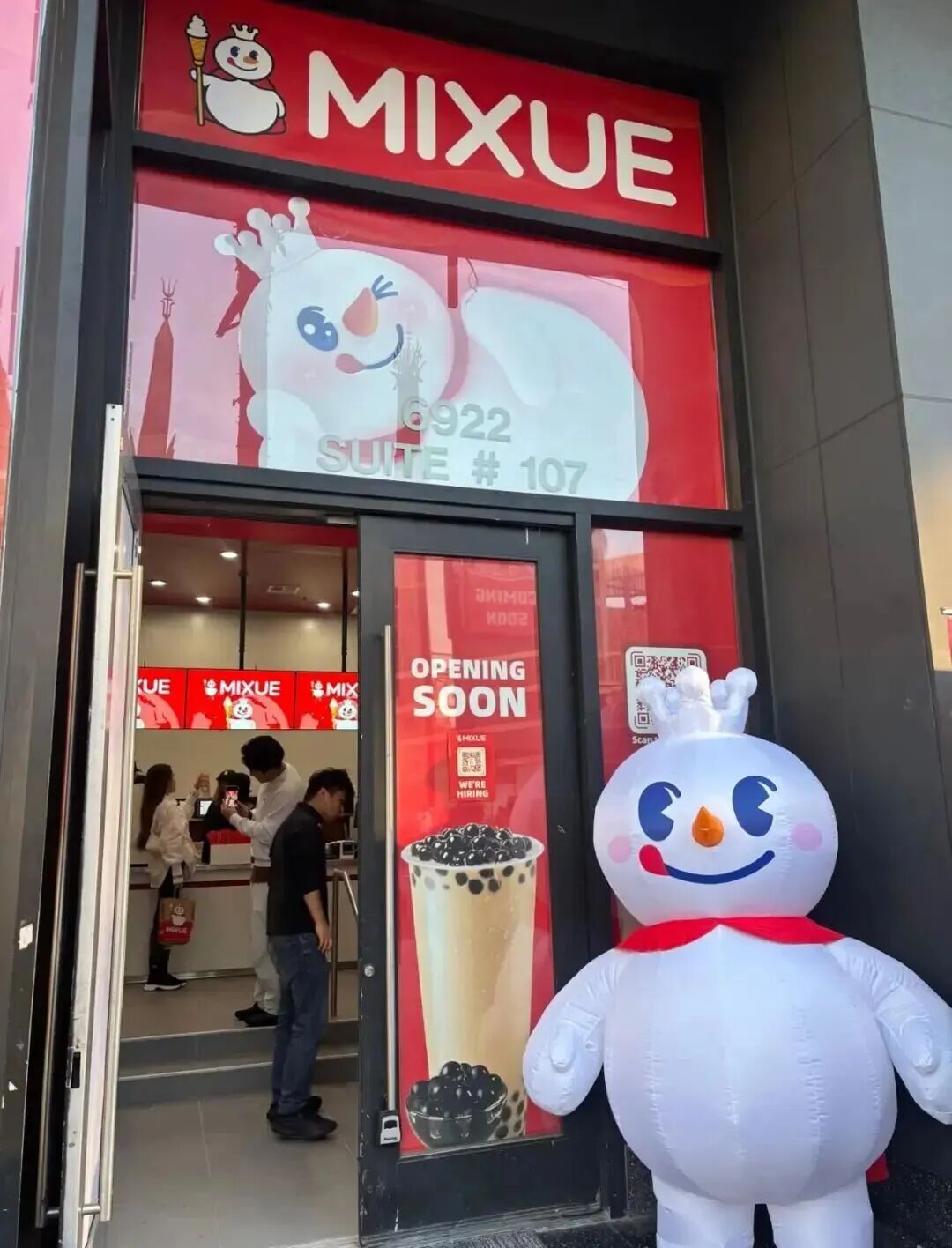
Core Insights - The opening of MIXUE (蜜雪冰城) store on Hollywood Walk of Fame is generating significant interest among Chinese netizens in Los Angeles, with promotional activities including free drink giveaways [1][3] - The store has launched a limited-time pre-sale package priced at $3.99 (approximately 28 RMB), which includes a drink and ice cream, and offers discounts for new users [5] - MIXUE has expanded internationally since opening its first overseas store in Vietnam in 2018, now operating over 4,800 stores across 11 countries, including recent openings in Kazakhstan and upcoming stores in New York and Mexico [5][6] Company Performance - As of June 30, 2025, MIXUE has established a global network of over 53,000 stores, with 48,281 in mainland China and 4,733 overseas [6] - The company reported a revenue of 14.875 billion RMB for the first half of 2025, marking a year-on-year growth of 39.32%, and a net profit of 2.693 billion RMB, up 42.94% [6] - Other tea beverage companies, such as Bawang Chaji and Cha Baidao, are also accelerating their international expansion, with Bawang Chaji's overseas GMV reaching over 300 million RMB in Q3 2023, reflecting a year-on-year increase of 75.3% [6][8] Market Trends - The adaptation of MIXUE's products to cater to Western consumer preferences includes offering customized sugar levels, with options for 120%, 150%, and 200% sweetness [5] - The competitive landscape in the tea beverage sector is intensifying, with brands like Bawang Chaji and Cha Baidao also making significant strides in overseas markets, particularly in Southeast Asia [6][8]
中国茶饮,正在美国卷出一个新市场
3 6 Ke· 2025-11-26 01:03
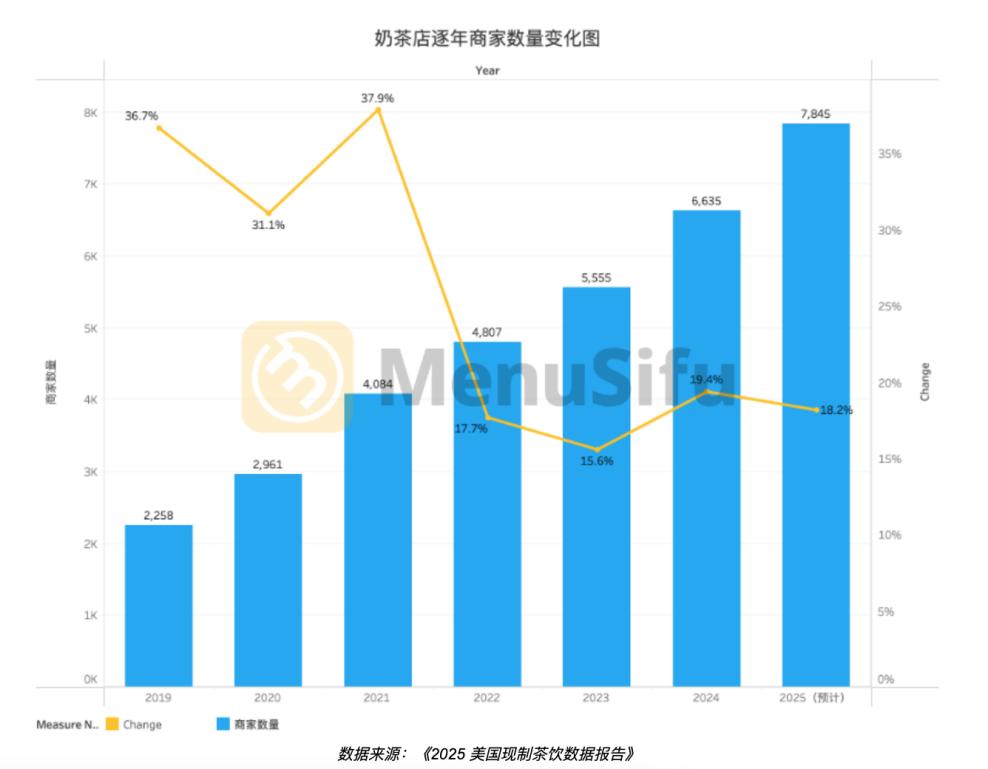
Core Insights - The rise of Chinese tea brands in the U.S. is reshaping consumer habits and creating new market dynamics, with a significant increase in bubble tea shops expected to reach 7,845 by 2025 from 6,636 in 2024 [1][2] - The U.S. bubble tea market is valued at $2.6 billion and is growing at an annual rate of 9.1%, indicating strong potential for expansion [2][3] - No single bubble tea brand currently holds more than 5% market share in the U.S., suggesting a fragmented market with ample opportunities for growth [3] Market Entry Strategies - Heytea aims to position itself as a premium brand, directly competing with Starbucks by opening its first overseas LAB store in Times Square, New York, with a price point of $9.9 per item, which attracted significant customer interest [4] - Bawang Chaji adopts a different approach by pricing its products lower, with a large cup priced at $5.95, aiming to capture a broader consumer base in a competitive market [4] - Mixue Ice Cream and Tea is implementing a dual-coast strategy, opening stores in high-traffic areas like Manhattan and Hollywood, focusing on offering affordable products in premium locations [5] Challenges Faced - High operational costs in the U.S., including rent and labor, pose significant challenges for Chinese tea brands, necessitating higher revenue per store to achieve profitability [8] - The investment required for a single store in the U.S. can exceed $1 million, with substantial costs associated with securing prime locations [8] - Cultural differences and consumer perceptions of tea as a sweet beverage complicate market entry, as American consumers typically prefer higher sugar content in their drinks [9][10] Future Strategies for Success - Successful market entry requires precise location selection, with data indicating that at least 30,000 shopping centers in the U.S. can support bubble tea brands [12] - Product localization is crucial, as American consumers have different taste preferences, with a growing demand for brown sugar and matcha products [14] - Brands are expanding their offerings by bundling tea with other food items, enhancing customer experience and increasing average transaction values [15] Long-term Sustainability - Establishing a localized supply chain is essential for long-term success, with brands like Heytea investing in regional warehouses to control costs and ensure product consistency [16] - Cultural integration and brand value creation are vital, as brands need to offer a unique experience that differentiates them from traditional coffee shops and fast-food tea outlets [17] - The journey for Chinese tea brands in the U.S. is expected to be a long-term endeavor, focusing on gradual brand building and cultural assimilation rather than immediate profits [17]

不只聚焦东南亚,茶饮出海迎新战场!茶话弄蜜雪冰城抢滩美国
Nan Fang Du Shi Bao· 2025-11-18 12:53
Core Insights - Multiple tea brands are expanding into the U.S. market, with notable openings from Nayuki, ChaHalo, and TeaByDo, while Mixue is preparing to open its first store in New York's Chinatown [2][6][8] - The U.S. tea market is seen as having significant growth potential, akin to the early stages of the domestic tea market, despite the challenges posed by complex regulations [5][22] - The competitive landscape in Southeast Asia has prompted brands to seek new growth opportunities in the U.S., where the tea market is less saturated compared to coffee [21][36] Market Entry and Expansion - Several tea brands, including ChaHalo and TeaByDo, have opened stores in areas with high Chinese populations, such as Flushing, New York, which is becoming a hub for tea shops [6][8] - Mixue, which has a strong presence in Southeast Asia, is also entering the U.S. market, although it has recently reduced its overseas store count by over 160 due to operational adjustments in Indonesia and Vietnam [2][13] - The U.S. currently has fewer than 8,000 tea shops compared to over 45,000 coffee shops, indicating a potential market gap for tea brands [5][22] Consumer Preferences and Pricing - The pricing of tea drinks in the U.S. ranges from approximately $5.25 to $8.90, which is generally higher than local brands, reflecting the positioning of Chinese tea brands in the market [9][28] - U.S. consumers are increasingly seeking diverse beverage options, moving from coffee to tea, which presents an opportunity for tea brands to capture a growing market segment [28][36] Challenges in the U.S. Market - The complexity of U.S. regulations and the lengthy store setup process, often exceeding one year, pose significant challenges for tea brands entering the market [5][29][33] - Brands must adapt to local consumer preferences and operational requirements, which differ from their home markets, necessitating a tailored approach to product offerings and marketing strategies [30][35] - The high costs associated with compliance, local sourcing, and real estate in prime locations add to the operational challenges faced by tea brands in the U.S. [35][36] Strategic Insights - Brands like ChaHalo are focusing on the U.S. as a key market due to its relatively relaxed competition and strong consumer purchasing power, aligning with the broader strategy of cultural export [9][21] - The entry of tea brands into the U.S. market is expected to continue, particularly in areas with significant Chinese communities, although the pace of expansion may be slower compared to Southeast Asia [36][37]


蜜雪冰城美国第二家店即将开业,选址好莱坞C位
3 6 Ke· 2025-10-22 02:21
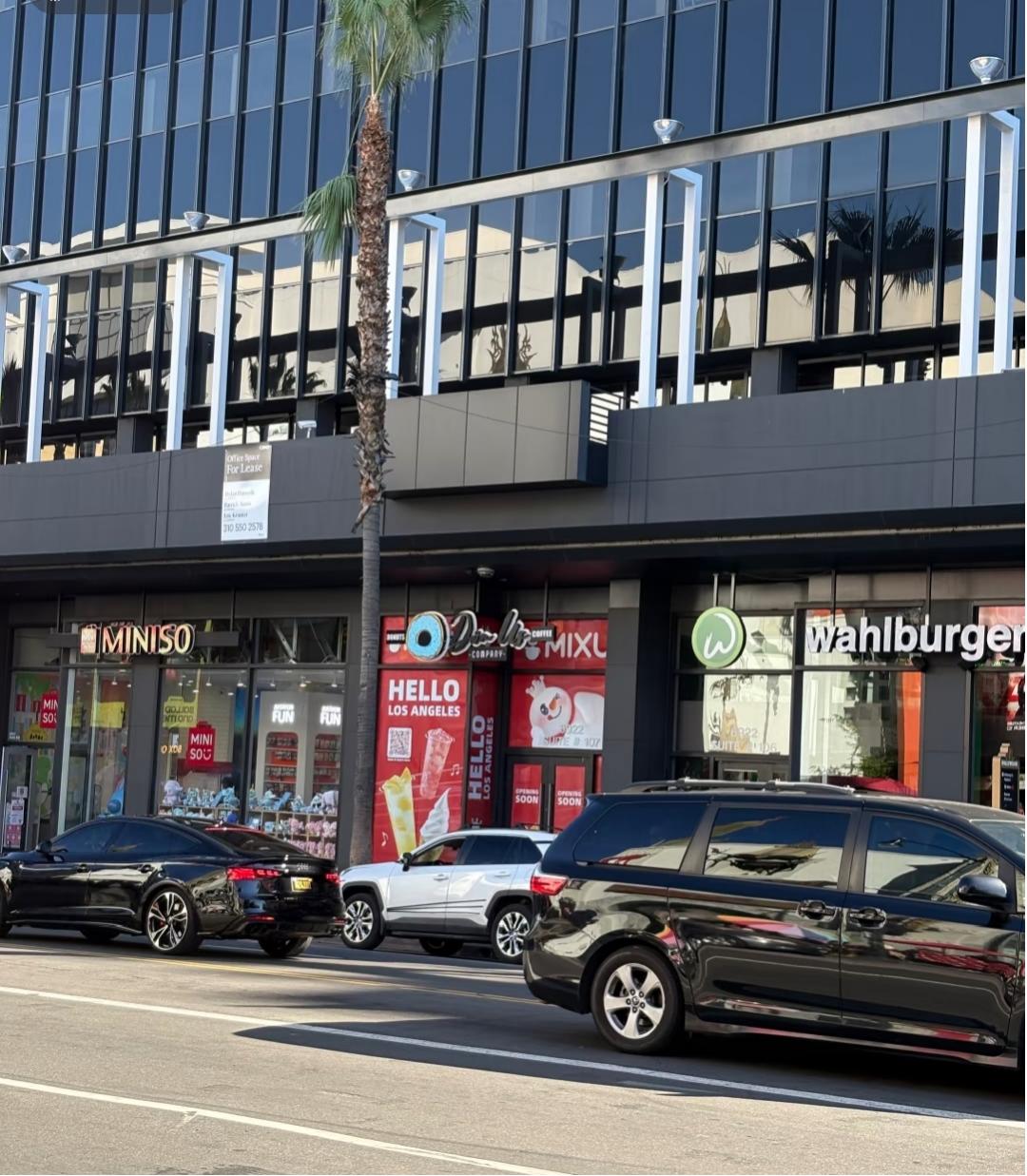
Core Insights - The company, Mixue Ice City, is set to open its second store in North America on the Hollywood Walk of Fame in Los Angeles, following its first store in Manhattan, New York [1][5]. Store Details - The new store will occupy 752 square feet (approximately 69.86 square meters) and is currently under renovation, with an expected opening by the end of this year or early next year [1]. - The location at 6922 Hollywood Boulevard is strategically positioned across from major tourist attractions, including the TCL Chinese Theatre and Madame Tussauds, attracting approximately 10 million visitors annually, translating to an estimated daily foot traffic of about 27,400 [3]. Market Context - The Hollywood retail sector is experiencing a recovery, with the retail vacancy rate decreasing from 9% to 8% over the past year, indicating a resurgence in commercial activity [6]. - In contrast, other areas of Los Angeles have seen a significant increase in retail vacancies, with 1.7 million square feet of space being vacated during the same period [6]. Expansion Plans - Mixue plans to open an additional 5 to 10 stores in Los Angeles next year, targeting high streets, shopping centers, complexes, and airports [7]. - The company is also considering franchise opportunities, with store sizes ranging from 500 to 3,000 square feet, and has shown interest in locations previously occupied by Starbucks [7]. Financial Performance - The latest financial report indicates that Mixue achieved revenue of 14.875 billion yuan and a net profit of 2.718 billion yuan in the first half of the year, representing year-on-year growth of 39.3% and 44.1%, respectively [7]. - As of June 30, Mixue's global store network surpassed 53,000 locations across 12 countries, with 4,733 stores located overseas, marking an increase of 128 stores compared to the previous year [7]. Global Strategy - Mixue has made significant strides in international expansion, with recent openings in Kazakhstan and Brazil, and plans to establish a global business support center by 2025 to enhance operational efficiency [8][14]. - The U.S. market is seen as a critical battleground for Chinese tea brands, with over 45 brands having opened nearly 15,000 stores overseas, particularly in key urban areas [8][14]. Competitive Landscape - The U.S. tea beverage market is projected to grow at an annual rate of 9.1%, with potential for 5 to 10 times the current store count, expected to exceed $8 billion by 2030 [14]. - The absence of a dominant national player in the tea beverage sector presents an opportunity for Chinese brands to establish a foothold in the market [14].
出海布局加速 茶百道北美首店落地纽约
Bei Jing Shang Bao· 2025-08-18 05:35
Core Viewpoint - The company, Cha Bai Dao, is set to open its first store in North America in Flushing, Queens, New York, which is the largest Chinese community in the U.S. [1] Group 1: Expansion Strategy - Cha Bai Dao aims to provide fresh, made-to-order tea products to global consumers [1] - The company utilizes a standardized store operation system and a global supply chain network to ensure consistency in products and services across its international locations [1] Group 2: Recent Developments - In July, Cha Bai Dao entered the Singapore market, opening two stores on the first day, with an average customer wait time exceeding 2 hours [1] - The company's first store in France was opened in May in the 13th district of Paris [1]
独家|对话柠季汪洁:深度剖析出海节奏与东南亚战略
虎嗅APP· 2025-08-03 03:48
Core Viewpoint - The article discusses the international expansion strategy of the tea brand "柠季" (Ningji), emphasizing a controlled and deliberate approach to entering overseas markets, particularly the United States and Southeast Asia, while adapting to local consumer preferences and operational challenges [7][14][38]. Group 1: International Expansion Strategy - 柠季 has opened 3 overseas stores and signed contracts for 18 more, with a focus on the U.S., Malaysia, Cambodia, Australia, New Zealand, and Singapore [6][21]. - The brand's founder, 汪洁, emphasizes that global expansion is not about replicating domestic success but about understanding and adapting to local markets [7][8]. - The U.S. market is viewed as a "developing country" for tea, with potential for growth, despite the slower pace of store openings compared to domestic expansion [14][19]. Group 2: Market Entry and Adaptation - The first overseas store in the U.S. was opened in July 2023, after extensive research and adaptation of the brand name to "BOBOBABA" to fit local recognition [8][14]. - In contrast to the U.S. market's slow pace, Southeast Asia is characterized by a "speed war," with a higher number of stores planned and opened in a shorter timeframe [20][21]. - 柠季's strategy includes testing models in less central locations to minimize risks and costs before expanding to more prominent areas [23][24]. Group 3: Operational Challenges - The brand faces significant operational challenges in the U.S., including lengthy approval processes and the need for bilingual documentation, which contrasts sharply with the faster pace of operations in China [16][18]. - The team is adapting to local cultures and consumer preferences, such as offering products that cater to the Muslim population in Malaysia [27][28]. - 柠季's internal structure allows for flexibility and adaptation, with a focus on building a strong foundational team before scaling operations [30][31]. Group 4: Future Trends and Goals - The company anticipates a trend towards consolidation and mergers in the tea industry, with larger brands acquiring smaller ones to enhance their market position [32][38]. - Future expansion plans include exploring markets in Brazil and Mexico, leveraging existing infrastructure from platforms like Meituan and Didi [33][38]. - The overarching goal is to ensure that overseas operations not only succeed commercially but also represent Chinese brands positively on the global stage [36][38].

独家|对话柠季汪洁:深度剖析出海节奏与东南亚战略
Hu Xiu· 2025-08-02 23:05
Core Insights - The company, 柠季, has opened its first overseas store "BOBOBABA" in Los Angeles, California, marking its entry into the international market with a focus on bubble tea [1] - The company has a total of 3 operational overseas stores and has signed contracts for 18 additional locations across various countries, including Australia, New Zealand, Malaysia, and Singapore [1][2] - The founder, 汪洁, emphasizes a strategic approach to international expansion, prioritizing a measured pace rather than rapid replication of domestic success [2][3] Expansion Strategy - The company plans to expand internationally with a focus on the U.S. market, which is seen as a "developing country" for bubble tea, while also exploring opportunities in Southeast Asia [7][12] - The initial strategy involved waiting for established brands to test the waters before entering the U.S. market, allowing for a more refined approach [3][6] - The company has adopted a "test model" strategy in Southeast Asia, opening stores in less central locations to minimize risk and gauge local consumer preferences [15][19] Market Challenges - The U.S. market presents unique challenges, including slower operational processes and complex regulations, which require a longer planning and execution timeline compared to domestic operations [9][10] - The company has faced difficulties with local regulations, such as lengthy approval processes for signage and store design, which can take 6 to 12 months [11][10] - In contrast, the Southeast Asian market is characterized by a faster pace of expansion, with a significant number of stores already planned or opened [13][14] Product Localization - The company emphasizes the importance of localizing its product offerings to cater to regional tastes, such as introducing halal-certified products in Malaysia and adapting menu items for the U.S. market [17][19] - The branding and product names have been adjusted to resonate better with local consumers, avoiding direct translations that may confuse [17][9] - The company aims to create a balance between maintaining its brand identity and adapting to local market preferences [20][22] Organizational Structure - The company has a diverse leadership team with backgrounds in technology and operations, which aids in navigating the complexities of international expansion [21][22] - The internal culture promotes flexibility and creativity, allowing teams to adapt to local market conditions without rigid performance metrics in the early stages [22][27] - The company is focused on building a strong foundation before scaling, ensuring that the operational model is sustainable and replicable [31][28] Future Outlook - The company plans to continue exploring new markets, including Brazil and Mexico, while also considering potential acquisitions to enhance its market presence [23][28] - The founder predicts a trend towards consolidation in the industry, with larger brands acquiring smaller ones to strengthen their market position [27][28] - The emphasis will remain on a gradual and thoughtful approach to both international expansion and potential mergers and acquisitions [30][31]
野村东方国际:寻求出海增量,新茶饮企业路在何方
野村· 2025-07-02 15:49
Investment Rating - The report indicates a strong investment potential in the new tea beverage industry, particularly in overseas markets, highlighting the rapid growth of companies like Mixue Ice City and BaWangChaJi [1][2]. Core Insights - The tea beverage industry has evolved through three main stages: industrialized products, gradual diversification of raw materials, and a mature phase where consumers demand high-quality ingredients [4]. - The overseas market presents significant growth opportunities, with Mixue Ice City achieving a staggering 900% and 175% year-on-year revenue growth in 2022 and 2023, respectively [2][3]. - Different regions exhibit varying acceptance levels for Chinese tea brands, necessitating tailored strategies for market entry and expansion [5][6]. Summary by Sections Industry Development Stages - The tea beverage industry has undergone three key phases over the past 30 years: dominance of industrialized products, slow diversification of raw materials, and a current phase characterized by high consumer expectations for quality [4]. Regional Market Dynamics - Southeast Asia offers vast potential due to its tropical climate and youthful demographic, while Japan and South Korea require adaptations to cater to aging populations and seasonal preferences [5][11]. - The North American and European markets present both challenges and opportunities, with a need to expand consumer awareness beyond the Asian demographic [13]. Strategic Approaches for Expansion - Companies are adopting three main strategies: large-scale expansion in Southeast Asia, refined operations in Japan and South Korea, and premium positioning in North America and Europe [6][9]. - The supply chain is crucial for successful overseas expansion, requiring local sourcing and global procurement strategies [14][15]. Local Adaptation Strategies - Chinese tea brands are implementing localization strategies, including partnerships with local firms and adjusting pricing to fit local income levels [17][18]. - The pricing strategy varies significantly across regions, with brands like Mixue Ice City focusing on affordability in Southeast Asia while premium brands target higher-income consumers in Japan and South Korea [18]. Future Trends - The future of the tea beverage industry is expected to be driven by health-conscious trends and global expansion, with a focus on diverse consumer demands and supply chain efficiency [19][20].
必选消费行业|寻求出海增量,新茶饮企业路在何方
野村东方国际证券· 2025-06-27 09:47
Group 1 - The core viewpoint of the article is that the Chinese ready-to-drink tea industry is transitioning from homogeneous competition to global expansion and structural upgrades, with a focus on health and cultural recognition in consumer demand [11] - The current state of the domestic tea beverage market is characterized by intense competition and saturation in lower-tier markets, leading to the conclusion that international expansion is essential for growth [2][3] - The overseas revenue growth of tea beverages is showing a rapid increase, indicating a potential second growth curve for tea companies [2] Group 2 - The Southeast Asian market is identified as a promising area for high-density replication of ready-to-drink tea, supported by a favorable climate and a large young population [5] - In 2023, the annual consumption of new tea beverages in Southeast Asia reached $3.66 billion, with Indonesia leading at $1.6 billion [5] - The coffee-drinking culture in Japan and South Korea presents a challenge for tea beverages, necessitating strategies to penetrate these markets [8] Group 3 - The article emphasizes the importance of adapting pricing strategies to align with the income levels of overseas consumers [9] - Companies are encouraged to enhance product innovation capabilities driven by health upgrades and consumer demand segmentation [11] - Establishing a global supply chain to ensure quality and cost-effectiveness is crucial for maintaining competitive advantages [12] Group 4 - The article outlines a tiered international expansion strategy, suggesting high-density penetration in Southeast Asia, gradual market entry in Japan and South Korea, and a premium approach in the U.S. and Europe [14][15] - The need for consumer education and brand recognition in the U.S. and European markets is highlighted, as the current density of tea beverage stores is low compared to coffee shops [8]