货币改革

Search documents
叙利亚新纸币将直接去掉两个零!或与俄罗斯合作印钞
Jin Shi Shu Ju· 2025-08-22 11:47
Core Viewpoint - Syria plans to issue new banknotes by removing two zeros from the currency denomination to restore public confidence in the severely devalued Syrian pound, which has lost over 99% of its value since the conflict began in 2011 [2][5]. Group 1: Currency Reform Details - The new banknotes are set to be officially issued on December 8, coinciding with the anniversary of President Bashar al-Assad's ousting [2]. - The Central Bank of Syria has instructed commercial banks to prepare for the new currency by mid-October, including submitting detailed infrastructure reports [2][3]. - Both old and new banknotes will circulate simultaneously for a 12-month "parallel period" until December 8, 2026 [2]. Group 2: Economic Context - The Syrian pound's purchasing power has plummeted, with the current exchange rate at approximately 10,000 pounds to 1 US dollar, compared to 50 pounds before the conflict [2]. - The ongoing conflict has led to a significant dollarization of the economy, with prices in stores and gas stations often quoted in US dollars [5]. - Concerns have arisen regarding the liquidity of the Syrian pound, particularly as an estimated 40 trillion pounds circulate outside the formal financial system [5]. Group 3: Political Implications - The currency reform is seen as a necessary political shift, symbolizing a break from over 50 years of Assad rule, as the current banknotes feature the images of Bashar and his father, Hafez al-Assad [5][6]. - The new leadership has promised to create a free market economy and lift restrictions on currency use to improve cash flow [5]. - Economic experts warn that the revaluation may confuse consumers, especially the elderly, and highlight the lack of a clear regulatory framework for implementation [6].
【环球财经】伊朗内阁批准货币改革方案 改革后1里亚尔相当于现在的10000里亚尔
Xin Hua Cai Jing· 2025-08-11 13:57
Core Viewpoint - The Iranian government has approved a currency reform plan that will change the value of the rial, with 1 new rial equating to 10,000 old rials, aiming to simplify financial transactions [1][1][1] Group 1 - The Iranian cabinet has officially announced the currency reform, which will maintain the rial as the national currency while allowing for a dual currency system temporarily [1][1] - The purpose of the currency reform, as stated by the chairman of the Iranian Parliament's Economic Committee, is to simplify financial transactions within the country [1][1] - The reform plan is still pending approval from the Iranian Parliament and the Constitutional Council [1][1]
议会经济委员会批准货币改革方案 伊朗货币里亚尔将“瘦身”
Xin Hua She· 2025-08-04 13:50
Group 1 - The Iranian Parliament's Economic Committee approved a currency reform plan, which states that the reformed 1 rial will equal 10,000 rials [2] - The currency reform aims to address severe inflation in Iran, with the proposal to change the official currency name from "rial" to "toman," where 1 toman equals 10,000 rials [2] - The approved reform plan requires a vote in Parliament and approval from the Guardian Council, with no clear timeline for the parliamentary vote [2] Group 2 - Since the U.S. unilaterally withdrew from the Iran nuclear deal in 2018, Iran has faced multiple rounds of severe sanctions, leading to currency devaluation and significant inflation [4] - The Iranian government has experienced economic challenges, including high inflation and currency depreciation, resulting in the impeachment of the Minister of Economy [5] - The previous Central Bank Governor, Ali Saleh Abadi, resigned amid criticism for failing to prevent significant currency devaluation [5]

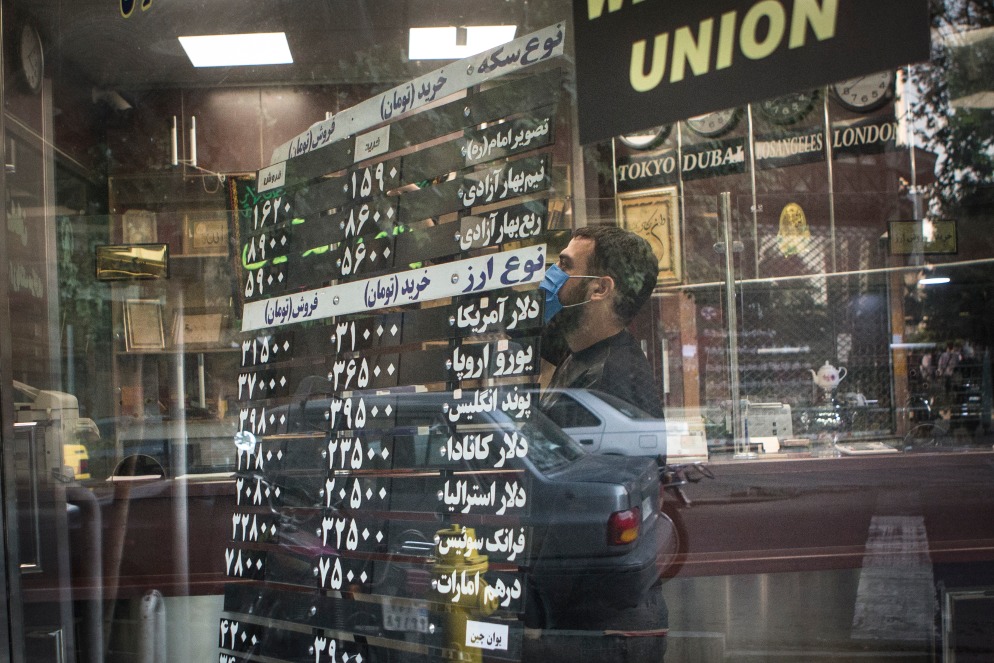
伊朗议会经济委员会批准货币改革方案
Sou Hu Cai Jing· 2025-08-04 09:09
Core Viewpoint - Iran's parliament economic committee has approved a currency reform plan, which will change the value of the rial, with 1 rial equating to 10,000 rials under the new system, aimed at addressing severe inflation in the country [1] Summary by Relevant Sections Currency Reform - The approved reform maintains the currency name as "rial" despite previous proposals to change it to "toman" [1] - The reform plan requires approval from the parliament and the Guardian Council, with the timing of the parliamentary vote still unclear [1] Economic Context - The currency reform is a response to Iran's severe inflation and economic challenges exacerbated by multiple rounds of sanctions from the US and Western countries since 2018 [1] - Following the US's unilateral withdrawal from the nuclear deal, Iran's economy has faced significant setbacks, including currency devaluation and high inflation rates [1] - The economic situation led to the impeachment of the Minister of Economic Affairs due to the high inflation and currency depreciation issues [1]
从卢布走过的一个半世纪,透视俄罗斯政治变迁
Di Yi Cai Jing· 2025-08-01 03:58
Core Viewpoint - The book "The Ruble: A Political History (1769-1924)" by Ekaterina Plavilova fills a gap in the literature regarding the history of the ruble, highlighting its unique influence in the commodity exchange system despite Russia not being a dominant financial power today [1][8]. Group 1: Historical Context of the Ruble - The first paper ruble was issued in 1769, marking a significant moment in Russian financial history, with its issuance tied to military campaigns and political messaging [3][4]. - The issuance of the ruble sparked debates among Russian officials about the nature of currency and the responsibilities of the monarchy, reflecting the political and economic challenges of the time [4][6]. - The ruble's evolution was influenced by various reforms and international relations, particularly with Poland and the Ottoman Empire, showcasing its role in Russia's imperial ambitions [5][6]. Group 2: Economic Reforms and Political Implications - The book discusses how the ruble was used as a tool for reform and expansion, with significant figures like Sergei Witte advocating for monetary policies that supported imperial goals [6][7]. - The transition to a gold standard was seen as a means to stabilize the ruble and attract foreign investment, although it also tied the currency's value closely to Russia's political stability [6][7]. - The impact of major historical events, such as the Russo-Japanese War and World War I, led to the eventual decline of the gold ruble, illustrating the interplay between currency and national crises [7][8]. Group 3: Contemporary Relevance - The ruble's current status is shaped by its unique position in the global commodity exchange system, maintaining its influence despite economic sanctions and geopolitical tensions [1][8]. - The ongoing Russia-Ukraine conflict has highlighted the ruble's volatility and its responses to international political dynamics, including attempts to internationalize the currency [9]. - The book encourages readers to explore the historical lessons of the ruble in relation to contemporary issues, such as the impact of political changes on currency stability and national development [8][9].

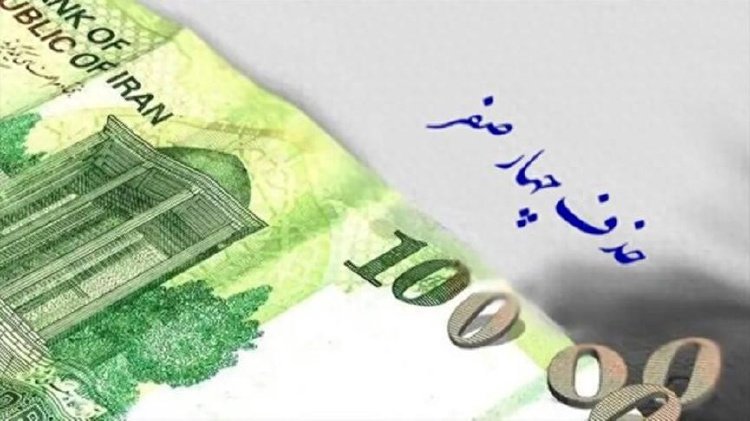
伊朗议会推进改革:抹去现行货币后4个0
Huan Qiu Shi Bao· 2025-07-29 15:07
Core Points - The Iranian Parliament's Economic Committee has conditionally approved a currency reform plan to remove four zeros from the current currency, the rial, and replace it with the toman [1][3] - The reform aims to enhance the currency's convenience in daily transactions and establish its credibility in international financial markets [3] - A two-year transition period is set during which both the rial and toman will circulate simultaneously to help the public adapt [3] Summary by Sections - **Currency Reform Details** - The plan involves changing the currency unit from rial to toman, where 1 toman will equal 10,000 rials, effectively removing four zeros from the current currency [1][3] - The Economic Committee emphasized that the final plan requires approval from the Guardian Council, which reviews the constitutionality of parliamentary bills [3] - **Implementation and Transition** - The central bank's governor stated that the reform is designed to improve the currency's usability in everyday transactions [3] - The transition period will allow for both currencies to coexist, facilitating public adaptation to the new system [3] - **Historical Context** - Previous reports indicated that the central bank had already begun preparations for this reform, including the issuance of new banknotes with the new denomination [3]