
超级计算

Search documents
华工科技:公司800G LPO光模块已经在海外工厂开始交付
Bei Ke Cai Jing· 2025-10-26 08:52
Core Viewpoint - The company has commenced the delivery of its 800G LPO optical modules in overseas factories as of October, with expectations for increased production in Q4 of this year [1] Group 1: Product Development and Market Demand - The company is preparing for the ramp-up of its 1.6T optical module products for next year [1] - The overall demand in the overseas market is projected to be between 40 million to 50 million units, indicating a potential for further adjustments and increases [1] - The company anticipates an increase in product types, with LPO and LRO optical modules expected to become mainstream solutions due to their advantages in low cost, low power consumption, and low latency, which are critical for AI and supercomputing applications [1] Group 2: Capacity Expansion - The company is making preparations for capacity expansion in anticipation of future order increases [1]

这颗芯片,终于流片
半导体芯闻· 2025-07-09 10:07
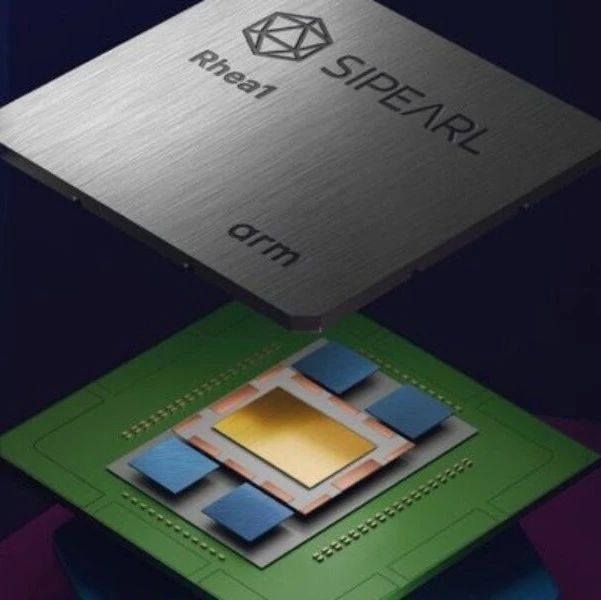
Core Insights - SiPearl has launched its long-awaited Rhea1 supercomputer chip, set for silicon sampling in early 2026, featuring 80 ARM Neoverse V1 cores and 61 billion transistors, aimed at powering Germany's Jupiter supercomputer [1][2] - The chip's development timeline has been pushed from 2024 to 2025, and now to 2026, utilizing TSMC's N6 6nm process and Samsung's four-layer high bandwidth memory [1] - SiPearl has secured an additional €32 million investment from a key Taiwanese investor, bringing its Series A funding total to €130 million, which will support upcoming Series B funding and the development of the next-generation Rhea2 processor [1][3] Company Vision and Strategy - SiPearl's CEO emphasizes the importance of independently developed hardware for Europe's sovereignty in AI and strategic sectors, showcasing Europe's capability to compete globally [2] - The company was initially funded by the EU under the European Processor Initiative (EPI) and has established a team of 200 employees across France, Spain, and Italy, along with a sovereign infrastructure in northern France [2][5] - Rhea1 will be integral to various European collaborative projects aimed at enhancing Europe's sovereign cloud and supporting simulations in strategic fields like engineering and materials research [3][5] Investment and Partnerships - The completion of Series A funding has attracted new investors, including Cathay Capital, marking its first investment in France, as the firm anticipates a growing semiconductor penetration across all market segments [3][4] - SiPearl's current investors include ARM, Atos Group, the French government, the European Investment Bank, and the European Investment Committee [4] - The company aims to strengthen ties with Taiwan's semiconductor supply chain, recognizing Taiwan's leadership in the global semiconductor industry [4][5] Technological Development and Performance - SiPearl has validated its designs using hardware simulators that replicate real data center environments, demonstrating excellent power performance even before production [5] - The Rhea1 processor is expected to significantly enhance Europe's technological autonomy in the supercomputing domain, marking a milestone in the European Processor Initiative [6] - The French government supports SiPearl as part of its 2030 investment plan, recognizing the strategic importance of developing complex high-performance CPUs for European sovereignty [5][6]

特稿丨中国科技进步的世界注脚——从自然指数看中国“十四五”科研成就
Xin Hua She· 2025-06-25 14:02
Core Insights - China is rapidly emerging as a significant engine of global scientific research, maintaining the highest quality research output and expanding its lead during the "14th Five-Year Plan" period [1][2] - The rise of China's research capabilities reflects not only its own strength but also injects new momentum and hope into global scientific progress [1] Research Output and Global Standing - In 2015, China's share in the Nature Index was about one-third of the United States, but by 2024, it reached 32,122, surpassing the U.S. at 22,083 [2] - Reports indicate that China has surpassed the U.S. in contributions to the top 1% of highly cited papers, marking a significant shift in the global research landscape [2] Institutional Support and Achievements - China has established a world-class scientific system, with eight out of the top ten global research institutions in 2024 being Chinese, led by the Chinese Academy of Sciences [3] - Significant achievements in technology innovation have been made in fields such as artificial intelligence, supercomputing, and quantum information during the "14th Five-Year Plan" [3] Collaboration and Global Impact - China's approach to research emphasizes open cooperation, significantly enhancing the research capabilities of other Asian countries through collaborative projects [6] - The number of natural science research papers involving China and at least one Belt and Road Initiative country increased by 132% from 2015 to 2023 [6] - China's support for developing countries through scientific cooperation is evident in various infrastructure and space exploration projects [6]