
酒店投资

Search documents
全景透视日本酒店市场:复苏、投资机遇与未来版图
3 6 Ke· 2025-04-28 02:25
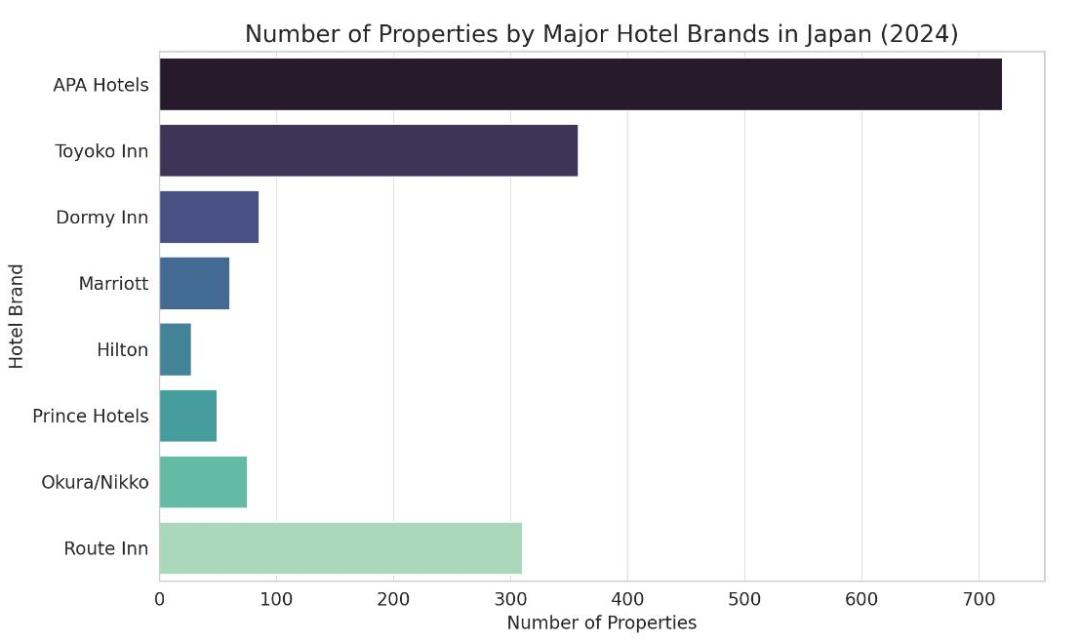
Core Insights - Japan's hotel and lodging market is diverse, encompassing various types from budget business hotels to high-end resorts, with a total of approximately 1.5 million guest rooms as of 2024 [1] - The hotel industry in Japan is experiencing a strong recovery post-COVID-19, with domestic tourism surpassing pre-pandemic levels and international tourist arrivals expected to reach a record high in 2024 [1][2] - The average occupancy rate for Japanese hotels in the first half of 2024 is around 74.4%, with an average daily rate (ADR) of approximately $129 and revenue per available room (RevPAR) of about $96, nearing or surpassing historical records from 2019 [2] Market Overview - Japan's hotel market includes both international hotel chains and local brands, with significant growth in domestic brands like APA Hotel, which aims to expand its room count to 150,000 by 2027 [3][4] - Major international brands such as Marriott, Hilton, and IHG are expanding their presence in Japan through partnerships and management contracts with local companies [6][7] - The hotel market in key cities like Tokyo and Osaka shows strong performance, with Tokyo's hotel RevPAR reaching ¥22,900 in the first half of 2024, reflecting a 16% increase from the previous year [9][10] Investment Trends - The investment landscape in Japan's hotel sector is characterized by a mix of acquisitions of existing assets and new developments, with a notable trend of foreign capital entering the market [20][21] - The average construction cost for hotels has risen by over 25% from 2021 to 2023, leading to a preference for acquisitions and renovations over new builds [21] - Japan's hotel REITs provide liquidity and exit strategies for investors, with several REITs focusing on hotel properties showing recovery in dividends and market value post-pandemic [23][26] Future Opportunities - The influx of international tourists, particularly from neighboring countries, presents significant growth potential for the hotel industry, with the government targeting 60 million annual visitors by 2030 [33] - Major events like the 2025 Osaka World Expo are expected to drive hotel demand and occupancy rates in the region [33] - The limited supply of new hotel developments due to high land costs and regulatory constraints enhances the bargaining power of existing hotels, leading to potential price increases [34] Challenges - The hotel industry faces risks related to dependence on specific international markets, particularly China and South Korea, which could impact visitor numbers amid economic fluctuations [36] - Labor shortages and rising operational costs pose challenges for hotel management, with many establishments struggling to maintain service quality [37] - The potential for oversupply in certain markets, particularly in Osaka due to upcoming events, raises concerns about long-term sustainability post-event [38]


酒店投资市场热度走高,六成交易位于一线城市,仍有高星酒店法拍遇冷
Hua Xia Shi Bao· 2025-04-27 01:50
Core Insights - The hotel investment market in China has become increasingly active, with a projected transaction value of 187.9 billion yuan for 2024, expected to remain stable at around 180 billion yuan in 2025 [1][2][3] Group 1: Market Activity - The hotel investment market has seen significant transactions, including a notable acquisition by Tongcheng Travel of Wanda Hotel Management for approximately 2.497 billion yuan, marking one of the largest deals in recent years [2] - As of April 24, 2023, there have been 18 hotel assets with a starting price exceeding 100 million yuan that have failed to sell on the Alibaba auction platform, indicating ongoing challenges despite market activity [1][4] - Approximately 60% of hotel transactions occur in first-tier cities, with new first-tier cities emerging as a growing investment area, increasing their share of hotel investment transactions by 6 percentage points from 2015-2019 to 2020-2024 [3] Group 2: Investment Opportunities - The active hotel investment market is driven by various factors, including cash flow pressures faced by some hotel asset holders, leading to discounted sales that create opportunities for investors [3] - Hotel assets are viewed as attractive investment options for high-net-worth individuals seeking diversification and inflation hedging [3] - The valuation of hotel assets requires consideration of multiple dimensions, including cash flow returns, market supply and demand, and replacement costs [5] Group 3: Legal and Risk Considerations - Legal risks in hotel investment transactions include property ownership disputes, compliance with operating licenses, and management contract issues, which are critical for ensuring transaction value [5] - The traditional exit strategies for hotel assets have been equity transfers and asset sales, but the potential introduction of public REITs could provide new avenues for asset liquidation and enhance liquidity [5][6] - The importance of legal risk management in hotel investment transactions is emphasized as it is crucial for compliance and transaction value [5]