Autonomous vehicles

Search documents
3 Foreign Auto Stocks to Buy Despite Industry Challenges
ZACKS· 2026-01-27 16:31
Core Viewpoint - The Zacks Foreign Auto Industry outlook remains cautious, with varying growth prospects across key markets, particularly in China, Europe, Japan, and India, influenced by policy changes and consumer confidence [1][4][5][7]. Industry Overview - The Zacks Automotive – Foreign industry encompasses the design, manufacturing, and sale of vehicles and components, heavily influenced by economic conditions and business cycles [3]. - Key manufacturing countries include China, Japan, Germany, and India, with a significant shift towards electric and autonomous vehicles driven by stricter emission regulations and technological advancements [3]. Factors Influencing Industry Dynamics - **China**: After record sales in 2025, growth is expected to slow in 2026 due to reduced policy support for new energy vehicles (NEVs) and fragile consumer confidence [4]. - **Europe**: Modest growth of about 2.5% in 2025 is anticipated to continue, but profitability remains a concern due to a shift towards lower-margin mass-market and EV models [5]. - **Japan**: The market showed a 3.3% sales increase in 2025, with a positive outlook for 2026 supported by tax reductions, although prices limit a full recovery to pre-pandemic levels [6]. - **India**: The market grew by 5% in 2025, driven by government tax cuts improving affordability, with a positive sentiment expected to sustain demand momentum [7][8]. Industry Performance and Valuation - The Zacks Automotive – Foreign industry ranks 184, placing it in the bottom 25% of Zacks industries, reflecting a negative earnings outlook with a 62.6% decline in earnings estimates for 2026 [9][10]. - The industry has underperformed compared to the broader Auto, Tires, and Truck sector and the S&P 500, with an 11% increase over the past year compared to 16% and 14% for the sector and S&P 500, respectively [12]. - The industry is currently trading at an EV/EBITDA ratio of 10.48X, significantly lower than the S&P 500's 18.90X and the sector's 27.29X [15]. Stock Recommendations - **XPeng Inc. (XPEV)**: Notable growth with a 126% increase in vehicle deliveries in 2025, expanding internationally and investing in future technologies [19][20][21]. - **Nissan Motor (NSANY)**: Undergoing a strategic reset with cost-cutting measures and an electrification push, expecting significant improvements in sales and profitability by fiscal 2026 [24][25][26]. - **Mazda Motor (MZDAY)**: Focusing on hybrids while delaying its major EV rollout, with a strategy to balance emissions reduction and consumer preferences, expecting substantial growth in sales and earnings by fiscal 2027 [29][30][31].



Uber Technologies, Inc. (UBER) Expands Its Reach Across Mobility, Delivery, and Freight
Yahoo Finance· 2026-01-25 04:42
Group 1 - Uber Technologies Inc. is highlighted as a strong investment opportunity by billionaire Bill Ackman, despite a recent price target adjustment by KeyBanc Capital Markets from $110 to $105 while maintaining an Overweight rating due to valuation concerns related to autonomous vehicles [1][2] - The company holds a dominant 64% market share in ridesharing compared to Lyft's 31%, and has experienced an 18.25% revenue growth, reaching $49.61 billion over the past year [2] - KeyBanc noted Uber's current EBITDA at $5.29 billion, indicating continued profitability, while introducing new non-GAAP metrics to align with the company's updated guidance [2] Group 2 - Mizuho has identified Uber as one of the best US internet stocks for 2026, suggesting the company is well-positioned to benefit from reduced fears surrounding autonomous vehicles, which are expected to drive growth from current depressed levels [3] - The research firm anticipates that competition and terminal value risks will diminish as more autonomous vehicles become commercially viable by 2026, alleviating concerns about a single company dominating the robotaxi business model [4] - Uber's business model focuses on demand aggregation, pricing, routing, and payments rather than vehicle ownership, which supports its long-term growth prospects [4]

Buy, Sell or Hold TSLA Stock? Key Tips Ahead of Q4 Earnings
ZACKS· 2026-01-21 14:41
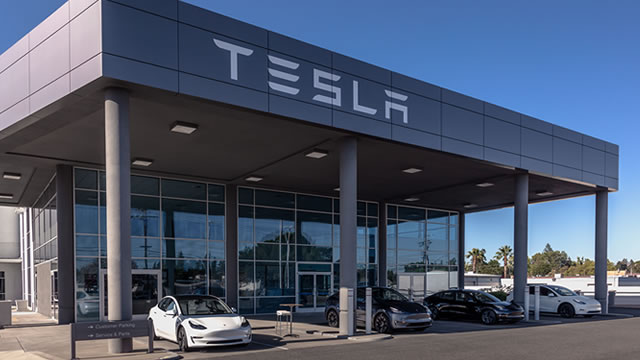
Core Viewpoint - Tesla is expected to report a decline in both earnings and revenues for the fourth quarter of 2025, with significant challenges in its automotive segment due to reduced deliveries and increased competition [1][2][6]. Financial Performance - The Zacks Consensus Estimate for Q4 2025 earnings is 44 cents per share, with revenues projected at $25 billion, indicating a year-over-year earnings decline of 40% and a revenue contraction of 3% [1][2]. - For the full year 2025, the revenue estimate stands at $95 billion, also reflecting a 3% decline year-over-year, while the EPS is projected at $1.61, suggesting a 33% drop [3]. Delivery and Sales Analysis - In Q4 2025, Tesla sold 418,227 vehicles, a 16% decrease from Q4 2024, primarily due to the withdrawal of the $7,500 EV tax credit and heightened competition from Chinese EV manufacturers [6][7]. - The decline in deliveries has negatively impacted Tesla's automotive revenues and margins, although the energy segment has shown strong performance with record storage deployments [8][9]. Competitive Landscape - The withdrawal of EV incentives has affected not only Tesla but also legacy automakers like Ford and General Motors, which reported significant declines in EV sales [7]. - Tesla's energy business, particularly its Megapack and Powerwall products, is performing well, with a record deployment of 14.2 GWh in Q4 2025, expected to increase revenues from this unit by 11% year-over-year [8]. Stock Performance and Valuation - Tesla's stock has declined by 4.5% over the past three months, underperforming compared to industry peers [10]. - The company is currently trading at a forward price/sales ratio of 13.2, which is considered overvalued relative to the industry and its historical averages [13]. Strategic Outlook - The slowdown in deliveries indicates increasing pressure on Tesla's core EV business, with a notable increase in the rate of sales decline from 1% in 2024 to over 8% in 2025 [16]. - CEO Elon Musk is shifting focus towards autonomous vehicles and artificial intelligence as future growth engines, although significant revenue from these initiatives is not expected in the near term [17]. - Given the current challenges and execution risks, Tesla is advised to be avoided as an investment at this stage [18].

Is Tesla stock a buy before January 28 earnings?
Finbold· 2026-01-15 11:25
Core Viewpoint - Tesla's stock performance may be significantly impacted by the upcoming Q4 2025 earnings report, scheduled for January 28, 2026, following a year of evading business-side issues [1] Group 1: Delivery Performance - Tesla's recent delivery report showed underperformance, with 418,227 cars shipped and 434,358 produced, falling short of the expected 426,000 for the quarter [2] - The company's expansion efforts in new markets have been mixed, exemplified by only 227 vehicle registrations in India throughout 2025 [2] Group 2: Leadership and Innovation Concerns - Concerns persist regarding Elon Musk's divided attention among multiple companies, which may affect Tesla's performance [3] - The trademark for Tesla's 'Cybercab' was suspended due to a late filing, allowing a French beverage company to secure it first [4] - Musk's history of overpromising on autonomous vehicles and humanoid robots continues, with both the 'Cybercab' and 'Optimus' android reportedly still years away from production [5] Group 3: Business Model Changes - A potential positive development for Tesla is the shift from a one-time purchase option for the self-driving system, priced at $9,000, to a subscription model at $99 per month starting February 14, 2026 [6] Group 4: Market Sentiment and Stock Performance - Wall Street's consensus on Tesla stock has shifted towards 'Hold' or 'Sell' ratings, with the average 12-month price target at $394.12, which is 10.26% below the latest close [7][9] - Despite various challenges, Tesla stock closed at $439.20 on January 14, 2026, representing a 104.99% increase from its 52-week low of $214.25, and has rallied 41% in the last six months [10][13]
ChargePoint (NYSE:CHPT) FY Conference Transcript
2026-01-14 17:02
ChargePoint Conference Call Summary Company Overview - **Company**: ChargePoint - **Industry**: Electric Vehicle (EV) Charging - **Key Executives**: Rick Wilmer (CEO), Mansi Khetani (CFO) Core Insights and Arguments - **Market Position**: ChargePoint is emerging from a challenging period and expects steady growth due to a less competitive landscape and new innovations in the market [2][5] - **Financial Improvements**: Significant debt restructuring has reduced outstanding debt from $340 million to approximately $157 million, extending maturity to 2030 and cutting annual interest expenses by about $10 million [3][43][44] - **Operational Efficiency**: Operating expenses (OpEx) have decreased from nearly $90 million per quarter to the mid-$50 million range, indicating improved cash management [5] - **Growth Strategy**: Focus on partnerships with grid builders like Eaton to lower infrastructure costs and enhance operational efficiency [6][26] - **Market Share**: ChargePoint holds a 70% market share in Level 2 charging in North America and aims to expand its presence in Europe with new product offerings [21][56] Industry Dynamics - **EV Adoption**: The company emphasizes that EV adoption is crucial but is also influenced by charging infrastructure availability and costs [11] - **Competitive Landscape**: The EV charging market has seen a reduction in competition, with many smaller players struggling to secure funding, leading to consolidation [19][20] - **Partnerships**: Collaborations with auto OEMs and energy sector players are essential for enhancing customer experience and driving growth [7][8][26] Financial Metrics and KPIs - **Active Ports**: As of the last quarter, ChargePoint managed approximately 400,000 active ports, which are critical for generating recurring revenue [34] - **Subscription Revenue**: The company reported nearly $170 million in annual recurring revenue from subscriptions, with a gross margin of 63% [34][36] - **Cash Flow Management**: The average cash burn has been halved compared to the previous year, with a focus on reaching cash flow break-even soon [36] Innovations and Product Development - **Next-Gen Charging Solutions**: ChargePoint is developing a next-gen DC charger that separates AC to DC conversion, significantly reducing costs and increasing capacity [27][28] - **Home Charging Solutions**: Innovations include smart panel technology that allows for efficient home energy management, enabling vehicle-to-home power during outages [29][31] - **Software Integration**: The company has integrated software solutions from acquisitions to create a scalable platform for managing public DC fast chargers and fleet telematics [56] Customer Segmentation - **Market Segments**: ChargePoint serves two main segments: fleet (mission-critical electric vehicle operations) and commercial (discretionary charging installations) [22][23] - **Retail Demand**: Increasing EV penetration in retail areas is driving demand for charging solutions, as businesses seek to attract customers by offering charging facilities [24][25] Future Outlook - **Growth Expectations**: ChargePoint anticipates a return to growth, with significant customer wins and partnerships expected to be announced [10][66] - **European Expansion**: The company plans to leverage favorable regulatory conditions in Europe to drive growth, with new products set to launch in the region [56][57] - **Cost Management**: Ongoing efforts to reduce product costs through lower-cost manufacturing and innovative designs are expected to enhance gross margins [45][47] Additional Considerations - **Tariffs Impact**: Tariffs have negatively affected the company's bottom line, but operations in Europe are less impacted due to direct sales [61][62] - **Inventory Management**: ChargePoint is transitioning from high inventory levels to a more balanced approach, expecting to generate cash flow as inventory is sold down [62][63] This summary encapsulates the key points discussed during the ChargePoint conference call, highlighting the company's strategic direction, financial health, and market dynamics within the EV charging industry.

Despite Bubble Fears, 93% of AI Investors Say They're Bullish on Long-Term Returns. Here Are 2 Stocks to Hold for a Decade or More.
Yahoo Finance· 2026-01-07 16:55
Core Insights - The rapid growth of the AI sector has raised concerns about a potential AI bubble, but 93% of investors in AI stocks and ETFs remain confident in the long-term returns of the industry [1][7] Company Insights - Nvidia is experiencing significant growth, with a 62% year-over-year revenue increase to a record $57 billion in its fiscal 2026 third quarter, driven by demand for AI-related technology [4] - Nvidia's CEO emphasizes the need for upgraded tech infrastructure to support AI, which is creating more demand for their products [4] - Nvidia is also investing in emerging technologies like agentic AI and autonomous vehicles, positioning itself for long-term benefits [5] - Alphabet, as the parent company of Google, is focused on delivering AI to a broader audience, complementing Nvidia's role in providing the necessary computational power [6]


Looking At ON Semiconductor's Recent Unusual Options Activity - ON Semiconductor (NASDAQ:ON)
Benzinga· 2026-01-05 19:01
Group 1 - Investors are showing a bullish stance on ON Semiconductor, with significant options activity indicating potential upcoming developments [1][2] - The sentiment among large traders is predominantly bullish at 62%, with 29% bearish, highlighting a strong inclination towards positive market expectations [2] - The predicted price range for ON Semiconductor is between $30.0 and $80.0, based on the analysis of volume and open interest in options contracts [3] Group 2 - The average open interest for ON Semiconductor options is 1710.2, with a total trading volume of 11,128.00, indicating active trading in the options market [4] - Recent significant options trades include multiple bullish call options, with notable trades such as a $123.1K call option at a strike price of $60.00 and a $105.6K call option at a strike price of $55.00 [7] - ON Semiconductor is the second-largest power chipmaker globally and the largest supplier of image sensors to the automotive market, focusing on emerging applications like electric vehicles and renewable energy [8] Group 3 - Analysts have set a consensus target price of $57.0 for ON Semiconductor, with a current trading price of $59.08, reflecting a 4.2% increase [9][11] - The anticipated earnings release for ON Semiconductor is in 35 days, which may influence future trading activity [11]


TI accelerates the shift toward autonomous vehicles with expanded automotive portfolio
Prnewswire· 2026-01-05 14:05
Core Viewpoint - Texas Instruments (TI) has introduced new automotive semiconductors aimed at enhancing safety and autonomy in vehicles, supporting advanced driver assistance systems (ADAS) and software-defined vehicles (SDVs) [2][4]. Group 1: New Product Offerings - TI launched the TDA5 high-performance computing system-on-a-chip (SoC) family, which supports up to Society of Automotive Engineers Level 3 vehicle autonomy, featuring edge AI capabilities with processing power ranging from 10 trillion operations per second (TOPS) to 1200 TOPS [2][4]. - The AWR2188 is a new single-chip, eight-by-eight 4D imaging radar transceiver designed to simplify high-resolution radar systems, enhancing detection capabilities [2][8]. - The DP83TD555J-Q1 10BASE-T1S Ethernet physical layer (PHY) is introduced to extend Ethernet capabilities to vehicle edge nodes, reducing wiring complexity and costs [2][10]. Group 2: Performance and Efficiency - The TDA5 SoC family integrates the latest generation of TI's C7 neural processing unit (NPU), providing up to 12 times the AI computing power of previous generations while maintaining similar power consumption [5][6]. - The TDA5 SoCs are designed to support cross-domain fusion of ADAS, infotainment, and gateway systems within a single chip, simplifying system architecture and reducing costs [6][7]. Group 3: Enhanced Capabilities - The AWR2188 radar transceiver features enhanced analog-to-digital converter data processing, achieving 30% faster performance than existing solutions, enabling advanced radar applications [9]. - TI's 10BASE-T1S technology allows for real-time data collection and transmission across vehicle zones, facilitating the shift towards higher levels of vehicle autonomy [10][11]. Group 4: Development and Support - TI is collaborating with Synopsys to provide a Virtualizer development kit for TDA5 SoCs, which can accelerate time-to-market for software-defined vehicles by up to 12 months [8]. - The TDA54 software development kit is now available to assist engineers in utilizing the new SoC family, with samples expected to be available to select automotive customers by the end of 2026 [13].


Advantest Wins Excellent Performance Award at TSMC’s 2025 Supply Chain Management Forum
Globenewswire· 2025-12-24 08:05
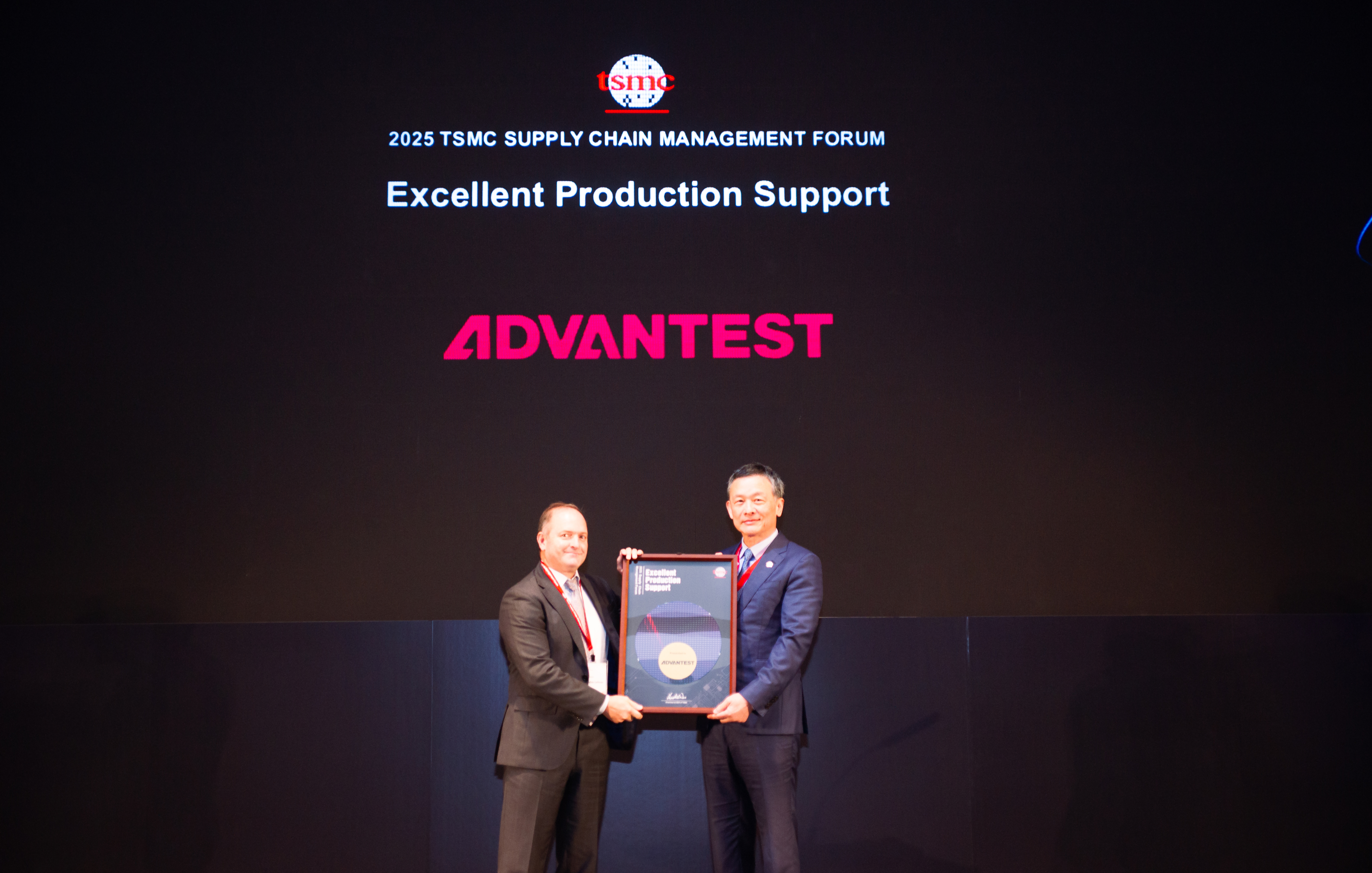
Core Insights - Advantest Corporation has been awarded TSMC's Excellent Performance Award for Excellent Production Support, marking its first recognition at TSMC's annual Supply Chain Management Forum [1][4] Group 1: Award Recognition - The award was presented during the Supply Chain Management Forum held on November 25, which celebrated supplier contributions over the past year [2] - The evaluation criteria for the awards emphasized construction safety, sustainability, and localization [2] Group 2: Company Performance - Advantest was recognized for its flexibility in expanding production capacity and supporting project development, which has strengthened its partnership with TSMC [3] - Doug Lefever, Advantest's CEO, expressed the company's commitment to serving partners and enhancing supply chain resilience [4] Group 3: Product Portfolio - Advantest offers a broad range of products including SoC and memory testers, handlers, software, and system-level test solutions, catering to the entire semiconductor value chain [5] - The company focuses on developing advanced solutions for various applications such as 5G, IoT, autonomous vehicles, and AI [6]
Elon Musk boasts of Tesla services as Waymo's driverless cars froze due to San Francisco power outage — What happened?
MINT· 2025-12-22 01:33
Core Insights - A significant power outage in San Francisco affected over 130,000 customers, with 16,000 still without power as of late December 21 [1][8] - Waymo's driverless vehicles were notably impacted, causing traffic disruptions as they froze mid-ride due to the outage affecting traffic signals [2][7] - The outage was attributed to a fire at PG&E's substation, leading to extensive damage and a complex restoration process [4][5] Company Impact - PG&E reported that it restored power to 110,000 customers by Sunday morning, but 21,000 remained without electricity [9] - Waymo had to pause its services in the Bay Area, affecting at least seven cities, due to the outage and subsequent traffic chaos [10][11] - Elon Musk highlighted that Tesla's robotaxis were unaffected by the power outage, positioning Tesla favorably against Waymo in terms of reliability during infrastructure failures [2][12] Industry Implications - The incident underscores the vulnerability of urban transport systems to power outages, emphasizing the need for reliable infrastructure [8] - The reliability of autonomous vehicles is critical, especially in emergency situations, as demonstrated by Waymo's challenges during the outage [8] - Technological resilience in the face of infrastructure failures can serve as a competitive advantage in the autonomous vehicle market [12]