Concentration risk

Search documents
The Stock Market’s Wild 2025 Roller-Coaster Ride in Six Charts
Yahoo Finance· 2025-12-21 14:00
Market Overview - The Invesco QQQ Trust Series 1 ETF experienced its first net outflow in seven months in April, with traders withdrawing funds at the fastest pace in over two years, but inflows resumed in May following a reversal of tariff plans [1] - The S&P 500 Index saw a significant recovery, rising 16% for the year after a 15% decline in April, indicating a strong rebound fueled by corporate profit outlooks and AI-linked spending [3] Tariff Impact - The pace of equity ETF flows slowed from March through summer due to concerns over tariffs, leading to outflows from cyclical sectors and reflecting a reduced risk appetite among investors [2] - Trump's tariff plans nearly ended the multi-year bull market, causing sharp net outflows in April [2] Volatility and Market Sentiment - The Cboe Volatility Index (VIX) spiked above 50 on April 8, the highest since the pandemic, due to fears surrounding tariff plans, but fell below 20 by May after the delay of levies [5] - The year 2025 has been characterized by extreme volatility, with the S&P 500 nearly entering a bear market in April before rebounding to record highs by late June [6] Analyst Forecasts - Major Wall Street banks had to revise their S&P 500 outlooks multiple times in response to the shifting tariff policies, first cutting targets and then raising them as market conditions improved [7] - The historical timeline for market recovery from corrections has shrunk from four months to two months due to the rapid changes in trade policy [9] Bubble Concerns - Concerns about a potential bubble have emerged, particularly in the semiconductor sector, as valuations have reached their highest levels since the pandemic [10] - Some strategists, including Howard Marks, have warned about bubble risks, while others, like BofA Global Research, do not yet see an AI bubble [11] Concentration Risk - The top 10 stocks in the S&P 500 account for nearly 40% of the index, raising concerns about concentration risk among investors [12] - Approximately 45% of the S&P 500's gains in 2025 have come from the "Magnificent Seven" tech stocks, leading to underperformance among actively managed funds [14] International Market Performance - Despite the US stock market's rally, it is underperforming international benchmarks for the first time in a rising market since 2017, with stock gauges in several countries outperforming the S&P 500 [18] - The decline in the value of the US dollar and policy uncertainty in the US have contributed to this underperformance [20]
Broadcom stock plunges nearly 9%: what AVGO's sell-off signals for tech investors
Invezz· 2025-12-12 14:56
Core Insights - Broadcom's stock fell nearly 9% after the company warned that rising AI revenue would lead to lower profit margins, disappointing investors who anticipated a successful transition to custom chips for hyperscalers [1][2] - Despite beating Wall Street estimates with Q4 revenue of $18.02 billion and guiding for Q1 revenue of $19.1 billion, the margin warning overshadowed the positive earnings report [1][2] Financial Performance - In Q4, Broadcom reported adjusted EPS of $1.95 on revenue of $18.02 billion, exceeding estimates of $1.87 and $17.45 billion [2] - AI semiconductor revenue reached $8.3 billion in Q4, significantly surpassing prior guidance of $6.2 billion [2] - For fiscal 2025, Broadcom achieved record revenue of $64 billion, a 24% increase, with AI revenue soaring 65% to $20 billion [3] Margin Concerns - CFO Kirsten Spears projected a decline in Q1 gross margins by approximately 100 basis points due to a higher mix of AI revenue, raising concerns among analysts [4] - The shift towards lower-margin system sales, where component costs are passed through to customers, is expected to grow, impacting overall gross margins [4][5] - Custom AI chips and systems inherently carry lower gross margins compared to traditional software products, leading to a compression in gross margin percentage despite absolute dollar profit growth [5] Customer Concentration Risk - The $73 billion backlog is heavily reliant on just five customers, including Google, Meta, and Anthropic, which poses a concentration risk [6] - Any slowdown in orders or a shift to in-house chips by major customers could significantly impact Broadcom's growth trajectory [6] Market Position and Outlook - Despite the sell-off, Broadcom's operating margins remain strong at 66.2% in Q4, and the company is well-positioned as a beneficiary of hyperscalers' demand for custom silicon [7] - The substantial backlog provides unusual revenue visibility, but the margin warning indicates potential challenges ahead [7]


Zafrir: We need redundancy, multiple vendors and an open platform
CNBC Television· 2025-12-01 12:21
Core Problem & Solution - The primary concern is concentration risk, highlighted by a cooling issue-induced outage, emphasizing the impact of single points of failure [1] - Redundancy, multiple vendors, and an open platform are crucial for mitigating risks associated with single points of failure in digital infrastructure [3] - A hybrid environment, encompassing physical, virtual, and multi-cloud setups, is essential due to the difficulty in pinpointing single points of failure [4][5] - Optionality, including redundant systems and the capability to operate on-site, remotely, and via multiple clouds, is vital [10] AI's Role & Challenges - AI presents both opportunities and challenges in digital infrastructure, requiring a redefinition of security approaches [6][8] - AI's journey involves enhancing humans, replacing humans, and utilizing agents, each phase introducing new security considerations [7] - AI models are probabilistic, not deterministic, and adversaries with fewer constraints can exploit AI technologies, necessitating proactive security measures [11][12] - A full-stack security approach for AI is needed, considering the entire journey and how adversaries leverage AI [13] Redundancy & Technological Fixes - Redundancy is a fundamental solution, but optionality and architectural considerations are also important [9][10] - There is no "silver bullet" technological fix; a combination of redundancy, optionality, and architectural design is necessary [9][11]

Powers: Concentration risk is the biggest risk in the market
CNBC Television· 2025-11-07 12:33
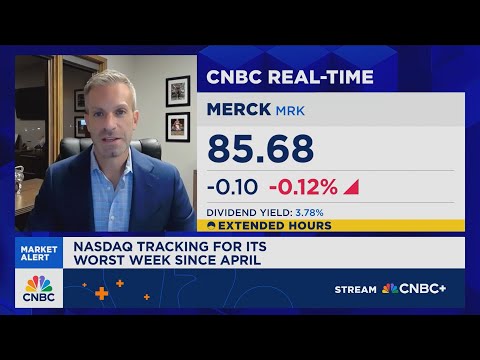
Market Sentiment & Risk - Investors could be "blindsided" if the concentrated market unwinds, as too much money is piled into too few names [2] - The top 10 stocks, mostly mega-cap AI names, make up 41% of the S&P 500's market share and have driven over 70% of this year's return, indicating concentration risk [5] - Equal weight S&P is up about 6% year-to-date, while the cap weight is up close to 16%, showing the average stock is not keeping up [6] - Sentiment fatigue is evident when good news isn't enough to move stocks higher, as seen with Palantir and previously with Nvidia's earnings [9][10] - Dollar bottomed on September 17th and is up more than 3% since then, while Bitcoin peaked on October 6th and gold on October 20th, suggesting a shift in market sentiment [10][11] AI & Valuation - 24% of early AI adopters report benefits from AI, up from 15% a quarter ago, potentially supporting elevated valuations [7] - Some AI-linked stocks are trading at forward P/E ratios close to 100 or even 200 times, while the broader S&P sits at 23 [9] Sector & Stock Specifics - Healthcare is a leading sector in Q3, indicating a defensive positioning [12] - The market has tossed aside quality companies with strong balance sheets and consistent earnings, overshadowed by mega-cap names [13][14] - Merck (MRK) stock is down almost a third since last July due to concerns around Keytruda losing exclusivity in 2028 [14] - Merck offers almost a 4% dividend yield, consistently grown for over a decade, and a close to 8% shareholder yield when including buybacks [15]
Powers: Concentration risk is the biggest risk in the market
Youtube· 2025-11-07 12:33
Market Sentiment and Concentration Risk - Investors may be blindsided by concentrated market positions, where a small number of stocks dominate returns, leading to potential volatility in the S&P 500 [2][5] - The top 10 stocks, primarily mega-cap AI companies, account for 41% of the S&P 500's market share and have driven over 70% of this year's returns [5][6] - The equal-weighted S&P is only up about 6% year-to-date, contrasting with the cap-weighted index's nearly 16% increase, indicating that the average stock is underperforming [6] AI Adoption and Valuation - A recent Morgan Stanley note indicates that 24% of early AI adopters report benefits from AI, up from 15% a quarter ago, suggesting growing efficiency gains [7] - The adoption of AI may justify elevated valuations for certain stocks, as companies experience margin benefits and potential reductions in headcount [8] Market Momentum and Sector Performance - The dollar has increased over 3% since its low on September 17, indicating a shift in market sentiment [10] - Healthcare is currently a leading sector in Q3, with a focus on quality companies that have strong balance sheets and consistent earnings [12][13] Specific Company Insights - Merck's stock has declined nearly a third since last July, primarily due to concerns over the loss of exclusivity for its drug Kitruda in 2028, which generates about half of its revenue [14] - Merck offers a nearly 4% dividend yield, with consistent growth over the past decade, and when including buybacks, the total shareholder yield approaches 8% [15]
Tech Stock Slides: AMD Down, ANET Slides
Youtube· 2025-11-05 13:45
Market Overview - The S&P 500 is currently only 2% below record highs, indicating a strong market performance recently [1] - The S&P 500 has risen 15% year-to-date, with November historically being a strong month for the market [2] Concentration Risk - The S&P 500 is heavily concentrated, with 40% of its value derived from the top 10 companies, raising concerns about concentration risk [2] - Small-cap stocks have shown weakness recently, while the equal-weight S&P 500 index is lagging behind [4] AI and Market Dynamics - There are concerns regarding the sustainability of the AI sector's growth, with potential pullbacks in AI infrastructure spending affecting market performance [3] - The overall market is being led by a few key names, which may lead to profit-taking as valuations become elevated [5][10] AMD Performance - AMD reported strong earnings, beating EPS expectations of $1.20 with $1.17 and raising revenue guidance to a midpoint of $9.6 billion [7] - The gaming division generated $1.3 billion, exceeding expectations, while the data center revenue increased over 22% to $4.3 billion [9] - Despite positive results, concerns about margins not meeting expectations and elevated valuations may lead to profit-taking [8][10] Analyst Sentiment on AMD - Analysts have raised their price targets for AMD, with Rosenblatt increasing it to $300 and Stifel raising it to $280, indicating continued confidence in the stock [11] AET Performance - AET is under pressure due to lighter-than-expected guidance despite a 40% increase in stock price this year [12] - Earnings rose 25% to $0.75, and revenue climbed 27% to $2.308 billion, but the guidance for Q4 revenue is in line with consensus, which may be a concern [13][14]

Equal-Weight ETFs Are Back in Style
Etftrends· 2025-10-13 13:33
Core Insights - The concentration risk in cap-weighted S&P 500 ETFs has raised concerns about their diversification, with the top five holdings accounting for 29% of these funds [1][4] - The ALPS Equal Sector Weight ETF (EQL) offers a solution by employing an equal-weight strategy at the sector level, providing a 9.41% weight to tech stocks compared to 35.29% in cap-weighted S&P 500 funds [2][5] - EQL is positioned as a complementary investment to traditional broad market funds, helping to mitigate concentration risk in the current market environment [3][6] Fund Overview - EQL has nearly $526 million in assets under management and has been operational for 16 years, demonstrating resilience across various market conditions [2] - The ETF tracks the NYSE Equal Sector Weight Index, equally weighting the 11 relevant sector SPDR ETFs, which minimizes turnover and results in a competitive expense ratio of 0.27% [5] - Investors may consider equal-weight funds like EQL to reduce exposure to large companies or to increase positions in smaller stocks within the index [6]
X @Investopedia
Investopedia· 2025-10-05 22:00
Risk Management - Concentration of company stock in retirement plans poses risks to long-term financial security [1] - Reducing concentration risk is crucial for protecting retirement savings [1] Strategies - Tax-efficient strategies can be employed to manage company stock in retirement plans [1]
How the Mag 7 Are Driving the Future of AI Capex
Bloomberg Television· 2025-07-25 18:39
AI 投资与支出 - 四家公司计划今年支出超过 3000 亿美元,约六家公司支出超过 4000 亿美元,已从对股市有重要影响转变为对 GDP 有重要影响 [3] - 大型科技公司资本支出增加,固定资产占账面价值的比例从 20% 增加到 70% 以上 [4] - 企业将原本用于股票回购或特别股息的自由现金流转移到资本支出 [6][7] 债券市场影响 - 科技公司资本支出增加,导致资金从金融市场(尤其是债券市场)流出,可能导致更高的收益率 [5] - 本周期企业部门的累计现金流盈余比十年前下降了 75% [8] 集中风险 - 少数几家超大规模企业正在引领这一趋势,存在集中风险 [10] - 这些公司都在追求相同的目标,对同一未来进行集中押注,如果投资回报不佳,可能对经济产生重大影响 [12][13] 未来挑战 - 企业资本支出激增引发了产能利用率以及新资本折旧经济率的问题 [7] - 投资于新技术前沿的功能性淘汰风险以及技术更新换代的速度 [8]