Digital Technology

Search documents
X @The Economist
The Economist· 2025-11-04 22:40
Older people have traditionally lagged behind when it comes to digital technology. A decade ago only a fifth of Americans over 65 owned a smartphone. That is changing https://t.co/SEwjmUmvBs ...
X @The Economist
The Economist· 2025-11-03 21:40
Digital Adoption - Older people's adoption of digital technology is increasing [1] - A decade ago, only 20% of Americans over 65 owned a smartphone [1]
X @The Economist
The Economist· 2025-11-01 09:50
Industry Dynamics - Silicon Valley's success has been attributed to its distance from Washington [1] - The increasing reliance of AI on chips, data centers, and grids elevates the importance of politics [1]
Bending Spoons CEO Luca Ferrari on AOL acquisition: The company 'holds a lot of promise'
CNBC Television· 2025-10-31 11:45
Acquisition & Strategy - Bending Spoons acquires digital technology businesses with untapped potential, aiming to transform them for improved performance [3] - The company's strategy involves rewriting code, re-architecting cloud infrastructure, redesigning UI, optimizing monetization and marketing, and re-architecting the organization [4] - Bending Spoons operates as a mix of private equity (25%) and a technology company (75%), focusing on long-term operation and development of digital products [4][5] - Bending Spoons has acquired over 50 businesses and intends to hold them long-term, using generated cash flow for further acquisitions and platform strengthening [18][19] AOL's Potential & Transformation - AOL still attracts and retains a large user base, with 8 million daily and 30 million monthly users across its email client and web portal [6] - Bending Spoons plans to improve AOL's technology and user experience, including leveraging AI to enhance recommendations on the web portal [8] - The company aims to close the gap between AOL's email client and best-in-class products, benefiting millions of users [10] - Bending Spoons intends to both retain existing AOL customers and attract new ones by improving the product [11][12][13] Bending Spoons' Business Model - Bending Spoons' toolkit for improving acquired businesses includes enhancing user interface, technological infrastructure, monetization, and cost base [16][17] - The company's ultimate strategy is to improve businesses and hold onto the cash flow they generate [18]


AI理财顾问“幻觉”给出错误建议,如何应对?学者详解
Sou Hu Cai Jing· 2025-10-31 07:33
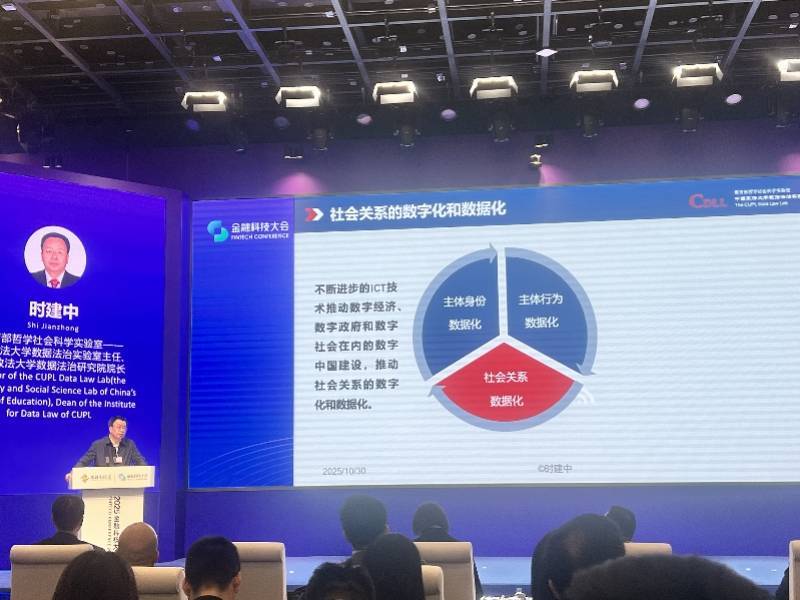
Core Insights - The current innovation in financial technology has shifted risks from traditional credit and market risks to technology, model, and compliance risks [4][5] - Digital technology has fundamentally transformed social and financial relationships, creating new legal challenges and opportunities for law [3][4] - The definition of financial data is crucial, as it affects regulatory and market data classification, which can lead to confusion in subsequent rules [4] Group 1: Financial Technology Risks - Financial technology innovation has transitioned risks from traditional credit and market risks to technology, model, and compliance risks [4] - New challenges in the financial industry include issues such as distorted information from IoT devices affecting insurance claims and liability for erroneous advice from AI financial advisors [4] Group 2: Legal and Regulatory Framework - The future legal and regulatory framework should develop capabilities to penetrate technological black boxes and define responsibilities in decentralized environments [5] - There is a need to enhance the protection of financial consumer rights within the evolving legal landscape [5] Group 3: Digital Technology and Law Interaction - Digital technology has created new legal issues, such as data ownership disputes, which require legal responses [3] - Law must not only regulate technology but also serve as a tool to promote healthy technological development, indicating a bidirectional relationship [3]
4 Financial Stocks to Bet on as Sector Momentum Builds
ZACKS· 2025-10-28 13:56
Core Insights - Financial stocks have shown strong performance in 2025, with the S&P 500 Financial Select Sector SPDR ETF increasing by 11.5% as of October 27, driven by robust economic momentum, supportive regulatory conditions, and renewed investor confidence in capital markets [1][10] Economic Environment - The sector's performance is attributed to supportive monetary trends, solid earnings fundamentals, and improved investor sentiment, with banks benefiting from healthier net interest margins as the yield curve normalized after two years of elevated interest rates [2] - Borrowing costs for consumers and businesses remained manageable, while rates paid on deposits stabilized, aiding lenders in sustaining profitability [2] Investor Sentiment - Investor confidence has risen as markets anticipate a gradual shift in Federal Reserve policy, with expectations of measured rate cuts reducing funding pressure and volatility in money markets [3] - This moderation in monetary tightening has alleviated fears of a hard landing for the U.S. economy, improving the outlook for credit quality and lowering risk premiums across the sector [3] Regulatory Environment - The market has priced in a more pragmatic regulatory tone, reassuring investors that banks will retain adequate capital while rewarding shareholders through dividends and buybacks [4] - Financial institutions are investing in digital technology and artificial intelligence, enhancing efficiency in compliance, risk management, and customer service, positioning the industry for long-term margin improvement [4] Profitability Outlook - The outlook remains cautiously optimistic, with profitability expected to remain firm as funding costs decline faster than lending yields compress [5] - The sector is better prepared to weather the next stage of the economic cycle due to stronger balance sheets, diversified income sources, and a renewed focus on operational efficiency [5] Investment Opportunities - Financial stocks present a compelling investment case, combining strong recent performance, favorable macroeconomic timing, and responsiveness to Federal Reserve policy, offering both cyclical exposure and structural potential [6] - Notable investment options include Goldman Sachs (GS), HCI Group (HCI), Interactive Brokers (IBKR), and Janus Henderson Group (JHG), all showing solid earnings upgrades [10] Company-Specific Insights - Goldman Sachs (GS) has an expected earnings growth rate of 19.8%, with a Zacks Consensus Estimate improvement of 6.5% over the past 60 days, holding a Zacks Rank 2 and a VGM Score of B [8] - HCI Group (HCI) has an expected earnings growth rate of 4.7%, with a significant Zacks Consensus Estimate improvement of 130.5% over the past 60 days, also holding a Zacks Rank 2 and a VGM Score of B [9] - Interactive Brokers (IBKR) has an expected earnings growth rate of 14.8%, with a Zacks Consensus Estimate improvement of 3.6% over the past 60 days, holding a Zacks Rank 1 and a VGM Score of B [11] - Janus Henderson (JHG) has an expected earnings growth rate of 6.5%, with a Zacks Consensus Estimate improvement of 3% over the past 60 days, holding a Zacks Rank 1 and a VGM Score of B [12]


X @The Economist
The Economist· 2025-10-27 19:20
Older people have traditionally lagged behind when it comes to digital technology. A decade ago only a fifth of Americans over 65 owned a smartphone. That is changing https://t.co/dM40ABn4HX ...
X @The Economist
The Economist· 2025-10-26 14:00
Demographic Trends - 随着熟悉数字技术的 60 多岁人群进入退休年龄,老年人在智能设备上花费的时间正在迅速增加 [1] - 老年人的屏幕使用时间还有很大的增长空间 [1]
X @The Economist
The Economist· 2025-10-24 15:20
Social Impact - A moral panic is emerging in many countries regarding the impact of digital technology on young people [1] - A less-noticed surge in screen time is occurring within a different generation [1]
질문 하나가 바꾼 세상: 디지털 시대, 함께 배우는 힘 l 이채린 클라썸 대표 | Chaerin Lee | TEDxSeoul
TEDx Talks· 2025-10-20 16:05
Problem & Solution - The initial problem was students' hesitation to ask questions in class due to fear of judgment or disrupting the flow [4] - The solution was creating subject-specific chat rooms (과목별톡방) for students to ask questions, share answers, and discuss topics [5] - The platform evolved to include features like anonymous posting options (with professors/TAs seeing real names) and a "Me Too" button to gauge interest in questions [12][13] - AI was later integrated to answer repetitive questions and direct users to relevant resources, fostering further discussion [17][18] Platform Features & Impact - The platform allowed students to choose between anonymous and real-name posting, addressing psychological barriers [12] - The "Me Too" feature helped students realize they weren't alone in their confusion, boosting confidence [14] - Professors noted that students were not lacking questions, but rather lacking a safe space to ask them [15] - The platform expanded to other departments and schools, even becoming a campaign promise for a student council president [8][15] AI's Role & Unexpected Outcomes - AI was initially implemented to automate answers to frequently asked questions and improve efficiency [17] - Unexpectedly, AI-generated answers led to further discussion and connection as users explored the source material [18] - AI was also used to facilitate personalized growth plans, offering a more flexible and honest approach compared to traditional methods [19][20] - The company realized AI could elicit genuine thoughts and initiate sincere conversations, beyond just automation [21]