Dotcom Bubble

Search documents
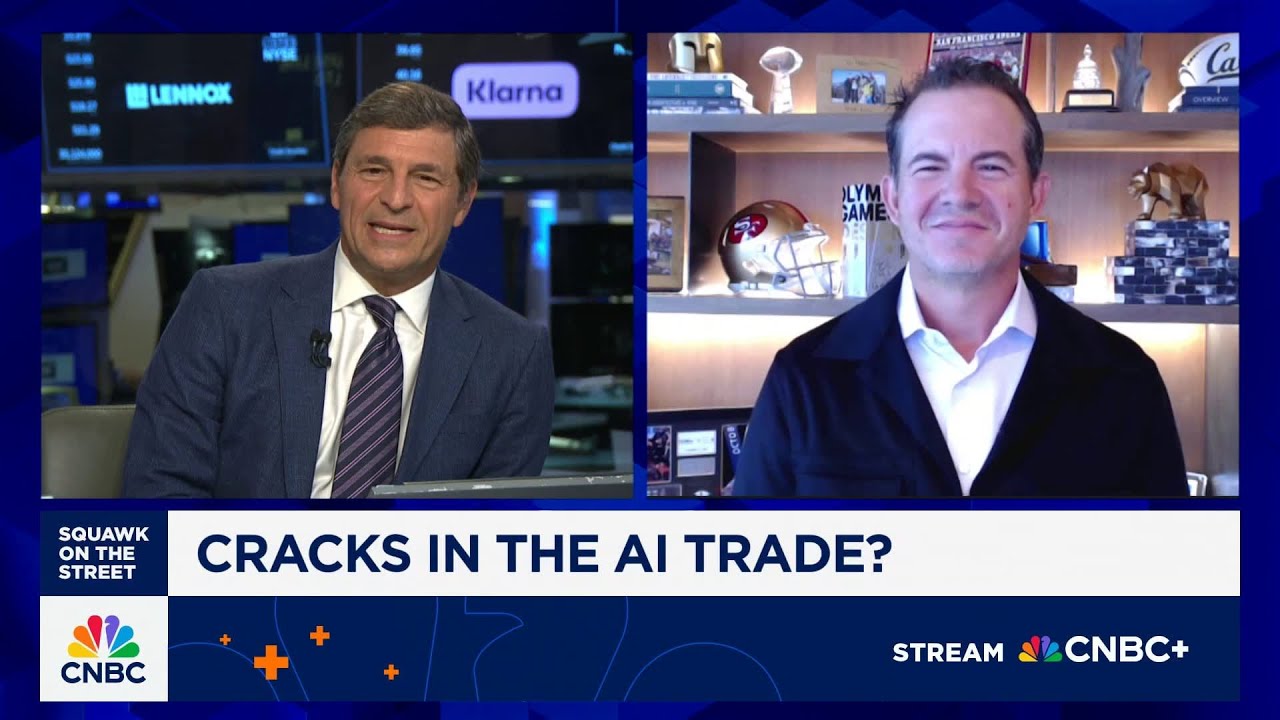
AI valuations are high but no dotcom bubble, says Bessemer Venture Partners' Byron Deeter
Youtube· 2025-09-29 16:36
AI Industry Insights - There are concerns among investors that AI spending may be excessive, with comparisons being made to the dot-com bubble, as noted by Ken Griffin and David Einhorn [1][4] - Despite these concerns, some industry experts argue that the current revenue growth in AI companies is unprecedented, with significant enterprise value being created [4][7] - OpenAI and Anthropic are highlighted as examples of companies experiencing substantial revenue growth, with OpenAI's ChatGPT reportedly having 700 million monthly active users [5][7] Market Dynamics - The AI market is characterized by a potential for massive revenue generation, with estimates suggesting trillions of dollars will be spent on infrastructure to support AI applications [9][12] - The competition among major companies in the AI space is expected to lead to an oligopoly, similar to the hyperscaler market, with significant investments from leading firms [11][12] - The transition in the workforce due to AI is compared to historical industrial revolutions, suggesting a realignment that could lead to the creation of higher-value jobs [15][16] Technological Advancements - Innovations in hardware, such as more efficient GPUs, are anticipated to drive further advancements in AI capabilities, potentially transforming the industry [17][20] - The focus on energy efficiency and power management in data centers is critical, with ongoing developments in both hardware and software expected to enhance performance and reduce costs [19][20] - The industry is witnessing a resurgence in funding for alternative energy sources, such as fusion, to address power shortages, which could impact the AI sector positively [20]

KNOT Offshore Partners: No Distribution Increase Anytime Soon
Seeking Alpha· 2025-09-29 12:00
Group 1 - The focus has shifted from primarily tech stocks to include offshore drilling, supply industry, and shipping sectors such as tankers, containers, and dry bulk [1] - There is an emerging interest in the fuel cell industry, which is still in its nascent stage [1] Group 2 - The individual has a background in auditing with PricewaterhouseCoopers and transitioned to day trading nearly 20 years ago [2] - The experience includes navigating significant market events such as the dotcom bubble, the aftermath of the World Trade Center attacks, and the subprime crisis [2]


How vulnerable are stocks?
Youtube· 2025-09-25 18:41
Market Overview - The AI trade is currently under scrutiny, with major tech stocks experiencing declines, raising concerns about market vulnerability to a larger pullback [1][4] - The NASDAQ is in the midst of a significant win streak, with 102 consecutive closes above the 50-day moving average, nearing historical records [7][9] Interest Rates and Economic Impact - Interest rates have been rising since the Federal Reserve's recent cut, with the 2-year rate increasing from 3.55% to 3.65%, the 10-year from 4.08% to 4.18%, and the 30-year from 4.68% to 4.77% [2][6] - Rising debt levels in the tech sector are becoming a concern, particularly as companies like Oracle shift to financing projects through debt rather than cash flow [5][18] AI Sector Performance - AI-related stocks have contributed to 75% of the S&P 500's returns and 80% of its earnings growth since the launch of ChatGPT in November 2022 [10][16] - Despite a broader rally, only 59% of S&P stocks are above the 200-day moving average, indicating a lack of broad market strength [11][12] Company-Specific Insights - Oracle has seen a significant stock price increase of 40% due to its willingness to engage in negative cash flow for AI investments, but this has led to concerns about its rising debt, which now stands at $91 billion [5][19] - Ken Griffin of Citadel has drawn parallels between the current market environment and the dot-com bubble, highlighting the excessive capital expenditures and investor enthusiasm surrounding AI [15][16]
Does Fed Chair Powell Think 'Irrational Exuberance' Is Back on Wall Street?
Investopedia· 2025-09-24 21:15
Core Insights - Federal Reserve Chair Jerome Powell described stock prices as "fairly highly valued," raising concerns about potential market bubbles, particularly in the context of the ongoing AI rally [2][5][6] - The current AI-driven market surge is being compared to the Dotcom Bubble of the late 1990s, with fears that tech stocks are trading at unsustainable valuations [2][5][7] - Some analysts argue that while tech valuations are high, they are not at the extreme levels seen during the Dotcom era, suggesting a more stable foundation for current valuations [7][8] Market Sentiment - Investors are increasingly worried that the AI rally, which is entering its fourth year, may be driven more by speculation than by solid business fundamentals, reminiscent of past economic crises [3][5] - Powell's comments have triggered concerns about "irrational exuberance," a term famously used by former Fed Chair Alan Greenspan, indicating a potential for unexpected market corrections [3][4][6] Valuation Comparisons - Current tech sector forward price-to-earnings (P/E) ratio is approximately 30, significantly lower than the 55 ratio observed during the late 1990s [7] - Structural factors, such as strong revenue bases and proven business models, support today's higher valuations, contrasting with the speculative nature of the Dotcom Bubble [8] Economic Impact - Analysts from Morgan Stanley estimate that AI efficiency gains could generate a net economic benefit of $920 billion annually, indicating potential for substantial growth in corporate profitability [8]

Jim Cramer Sees AI Spending 'Revulsion' Clash With 'Desperate' Demand As Top Analyst Warns AI Investments Mirror Dotcom Bubble On 'Steroids' - Apple (NASDAQ:AAPL), Amazon.com (NASDAQ:AMZN)
Benzinga· 2025-09-24 12:22
Group 1 - The AI sector is experiencing conflicting forces, with both caution regarding spending and a strong demand driving capital expenditures [1][2] - GQG Partners warns that the current tech sector exhibits "dotcom-era overvaluation," suggesting that the consequences of the current boom could be more severe than the dot-com collapse of the late 1990s [3][4] - GQG's analysis indicates that big tech's capital expenditure (CapEx) as a percentage of EBITDA is now between 50% and 70%, comparable to levels seen during the telecom and energy bubbles [4][5] Group 2 - The report highlights deteriorating fundamentals in the tech landscape, including decelerating revenue growth and collapsing free cash flow, contradicting the belief that today's tech giants are superior to those of the dot-com era [5][6] - Currently, 35% of the S&P 500's weight is driven by companies trading at over 10 times sales, exceeding the 25% level observed at the dot-com peak [6] - GQG believes there are better investment opportunities outside the tech sector, urging caution for those heavily investing in the AI boom [7] Group 3 - A list of notable big tech firms and their year-to-date (YTD) and one-year performance is provided, with Nvidia Corporation showing a YTD performance of 29.01% and a one-year performance of 47.62% [9][10] - The SPDR S&P 500 ETF Trust and Invesco QQQ Trust ETF saw premarket increases, with SPY up 0.19% and QQQ up 0.29% [10]

One Big Beautiful Bubble: Oracle, Amazon, Microsoft, Google, Meta Platforms, Palantir et al in the danger zone?
BusinessLine· 2025-09-20 15:42
Core Insights - The AI mania is driving significant market movements, exemplified by Oracle Corporation's stock gaining 36% and adding over $255 billion to its market cap in a single day [2][3][13] Company Performance - Oracle's Q1 FY26 results showed net profit in line with expectations but a slight revenue miss, which was overshadowed by ambitious plans to scale its cloud infrastructure business from $10.2 billion in FY25 to $144 billion by FY30, indicating a compounded growth rate of 70% [3][5] - The company signed multiple multi-year, multi-billion-dollar contracts, increasing its remaining performance obligations (RPO) to $455 billion, a 359% year-on-year and 230% quarter-on-quarter increase [6][7] - RPO is expected to reach $500 billion in the coming months, while Oracle's FY25 revenue was $57.4 billion [7] Market Dynamics - The AI race is intensifying demand for data centers, with Oracle positioned to provide cloud-based compute, storage, and networking services [5] - The top 10 AI stocks have collectively added $18 trillion to their market cap since January 2020, highlighting the significant economic interest in AI [14][16] - The Big 5 tech companies, including Oracle, have invested $586 billion in capital expenditures over the last three fiscal years, with expectations of $860 billion in the next two years [17] Economic Impact - Tech capital expenditure has shown resilience, contributing positively to GDP growth, with tech capex surpassing personal consumption expenditure for the first time since 2022 [22][27] - The current market cap of the S&P 500 is significantly influenced by AI stocks, which account for 40% of the index's market cap [16] Valuation Concerns - Despite the growth potential, Oracle's stock trades at a trailing PE of 69x, raising concerns about overvaluation in the context of historical performance [13] - The concentration risk associated with Oracle's future revenue being tied to a single client, OpenAI, is a notable concern, given OpenAI's status as a cash-burning startup [9][10] Future Outlook - The evolving nature of AI technology presents uncertainties regarding efficiency gains and the right level of capital expenditure [29][30] - Investors are advised to be cautious of current valuations, as many top AI stocks trade above their five-year averages, reminiscent of the dotcom bubble [32][34][35]

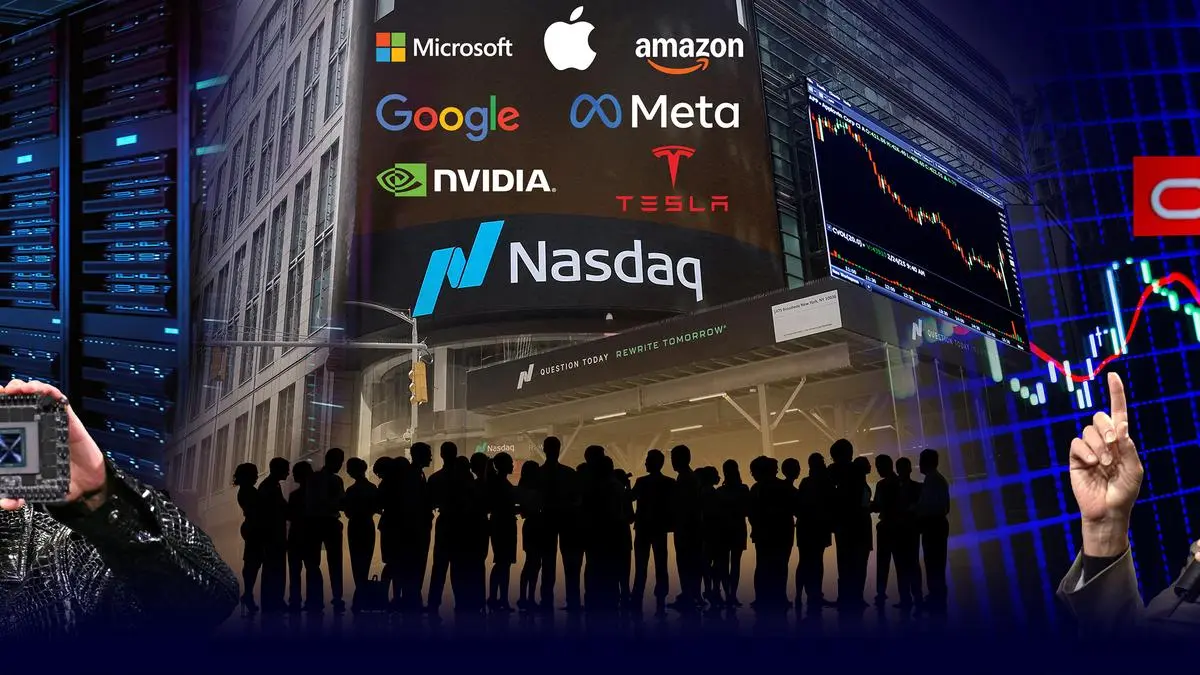
Big Tech Stocks Mirror Dotcom Bubble But On 'Steroids,' Says Top Analyst: Could Repercussions Be More Pronounced Than 1999 Crash?
Benzinga· 2025-09-18 12:08
Group 1 - GQG Partners warns that the current technology market is experiencing "dotcom-era overvaluation," with high capital spending and weakening fundamentals potentially leading to significant repercussions [1][3] - The report titled "Dotcom on Steroids" argues that the AI-driven boom has created a precarious situation in the tech sector, characterized by rich valuations, increasing macro risks, and deteriorating company fundamentals [2][4] - GQG highlights that capital expenditure (CapEx) in the tech sector is reaching levels comparable to previous market bubbles, raising concerns about the sustainability of such high spending [4][5] Group 2 - The report indicates that big tech companies' CapEx as a percentage of EBITDA is currently between 50%-70%, similar to historical peaks during the telecom and energy bubbles [5] - GQG challenges the notion that today's tech companies are cheaper than those during the dot-com era, asserting that they are actually more expensive on a growth-adjusted basis [6][7] - Data shows that the share of S&P 500 companies trading at more than 10 times sales has surpassed the 2000 peak, indicating widespread overvaluation in the market [7] Group 3 - GQG concludes that there are "better investment opportunities outside the tech sector" due to the identified risks and overvaluation [7] - The report also includes performance data for major tech firms and AI-linked ETFs, highlighting their year-to-date and one-year performance metrics [9][10]

Big Tech Stocks Mirror Dotcom Bubble But On 'Steroids,' Says Top Analyst: Could Repercussions Be More Pronounced Than 1999 Crash? - Apple (NASDAQ:AAPL), Amazon.com (NASDAQ:AMZN)
Benzinga· 2025-09-18 12:08
Core Viewpoint - GQG Partners warns that the current technology market is experiencing "dotcom-era overvaluation," with high capital spending and weakening fundamentals potentially leading to more severe repercussions than the 1999 crash [1][2]. Current Conditions More Fragile Than Dotcom Bubble - The report titled "Dotcom on Steroids" argues that the AI-driven boom has pushed the tech sector to a precarious inflection point, concealing underlying risks for investors [2]. - The central thesis indicates that current market conditions may be worse than during the dot-com bubble due to a combination of rich valuations, increasing macro risks, and deteriorating company fundamentals [2]. Capital Expenditure Concerns - GQG highlights a significant increase in capital expenditure (CapEx) necessary for competing in the AI arms race, reaching levels comparable to previous market bubbles [4]. - Big tech's CapEx as a percentage of EBITDA is currently between 50%-70%, similar to AT&T's 72% during the 2000 telecom bubble and Exxon's 65% at the peak of the 2014 energy bubble [5]. Valuation Comparisons - The report challenges the notion that today's tech companies are cheaper than their dot-com counterparts, asserting that they are actually more expensive on a growth-adjusted basis [6]. - Data indicates that the share of S&P 500 companies trading at more than 10 times sales has already exceeded the 2000 peak, suggesting widespread overvaluation [7]. Investment Opportunities - GQG concludes that there are "better investment opportunities outside the tech sector" due to the identified risks [7].





Coffee Holding: Strong Quarter Ahead (Rating Upgrade) (NASDAQ:JVA)
Seeking Alpha· 2025-09-17 03:59
Group 1 - The focus has shifted towards offshore drilling, supply industry, and shipping, including tankers, containers, and dry bulk [1] - The fuel cell industry is being monitored as it is still in its early stages of development [1] Group 2 - The individual has extensive experience in auditing and trading, having navigated significant market events such as the dotcom bubble and the subprime crisis [2] - The research provided aims to maintain high quality despite language barriers [2]


Perion Network: Still Positive After Q2 Connected TV Disappointment - Buy
Seeking Alpha· 2025-09-15 16:26
Group 1 - The focus has shifted from primarily tech stocks to include offshore drilling, supply industry, and shipping sectors such as tankers, containers, and dry bulk [1] - There is an emerging interest in the fuel cell industry, which is still in its nascent stage [1] Group 2 - The individual has a background in auditing with PricewaterhouseCoopers and transitioned to day trading nearly 20 years ago [2] - The experience includes navigating significant market events such as the dotcom bubble, the aftermath of the World Trade Center attacks, and the subprime crisis [2]