Margin Improvement

Search documents
Rocky Mountain Stock Slips Post Q3 Earnings Despite Margin Improvement
ZACKS· 2026-01-16 16:55
Core Viewpoint - Rocky Mountain Chocolate Factory, Inc. (RMCF) is undergoing a transformation focused on profitability and long-term value creation, despite a decline in revenue due to strategic exits from lower-margin channels [6][7]. Financial Performance Overview - For Q3 of fiscal 2026, RMCF reported total revenues of $7.5 million, a 4.4% decrease from $7.9 million in the same quarter last year [2]. - The net loss narrowed to $0.2 million, or $0.02 per share, compared to a loss of $0.8 million, or $0.11 per share, in the prior-year quarter [3]. - Total product and retail gross profit increased to $1.4 million from $0.7 million year-over-year, driven by pricing actions and improved efficiencies [3]. Key Business Metrics - Gross manufacturing margin improved to 21.4% from 10% in the same quarter last year [4]. - Total costs and expenses decreased by 13.2% to $7.5 million from $8.6 million a year ago [4]. - The addition of a second production shift is expected to unlock annual cost savings of $500,000 to $1 million [4]. Management Commentary - Management emphasized the quarter as an inflection point, focusing on profitability over revenue growth [6]. - Progress in franchise development and digital marketing efforts is seen as a key driver for future growth [6]. Factors Influencing Financial Results - Revenue decline was attributed to the exit from lower-margin revenue streams, viewed as necessary for resetting the economic foundation [7]. - Cocoa price volatility impacted results, but recent declines and tariff eliminations are expected to provide margin support [8]. Guidance and Outlook - RMCF did not provide formal quantitative guidance but expects continued margin improvement and gradual return to profitability [10]. - Near-term growth is anticipated from improving same-store sales and expanding e-commerce capabilities rather than rapid unit expansion [10]. Other Developments - RMCF completed a $2.7 million equity capital raise, using $1.2 million to pay down debt and retaining $1.5 million for working capital [11]. - An area development agreement with four franchisees will bring 34 new stores over the next four to five years [11]. - Technology initiatives are being rolled out, including expanded point-of-sale systems and a loyalty program expected to launch soon [12].



SMPL Stock Jumps 7% After Posting Earnings & Sales Beat in Q1
ZACKS· 2026-01-09 18:32
Core Insights - Simply Good Foods Company (SMPL) reported first-quarter fiscal 2026 results with both revenue and earnings exceeding Zacks Consensus Estimates, although both metrics declined year over year [1][9] - Management maintained its full-year outlook, indicating a path toward margin improvement in the second half of the fiscal year [1][15] Quarterly Performance - Adjusted earnings were 39 cents per share, surpassing the Zacks Consensus Estimate of 36 cents, but down from 49 cents in the same quarter last year [2] - Net sales reached $340.2 million, beating the Zacks Consensus Estimate of $337 million, but decreased by 0.3% from $341.3 million year-over-year [3] - North America revenues were $331.8 million, reflecting a modest decline of 0.2% year-over-year, while international sales were $8.4 million, down 5.7% [4] Brand Performance - Quest brand grew by 9.6%, while Atkins and OWYN experienced declines of 16.5% and 3.3%, respectively, with OWYN's performance affected by product quality issues and high retailer inventory levels [3][4] Margins and Expenses - Gross profit was $109.9 million, down 15.8% year-over-year, with a gross margin of 32.3%, a decrease of 590 basis points [5] - Operating expenses decreased by 4.7% to $72.3 million, with selling and marketing expenses down 10.1% to $29.7 million [6] - Adjusted EBITDA was $55.6 million, down 20.6% year-over-year, with an adjusted EBITDA margin of 16.4%, a decline of 410 basis points [7] Financial Position - At the end of Q1, the company reported cash of $194.1 million and a term loan balance of $400 million, resulting in a net debt to adjusted EBITDA ratio of 0.8x [8] - Operating cash flow improved to $50.1 million from $32 million last year, driven by working capital improvements [8] Future Expectations - The second quarter is expected to be the weakest for fiscal 2026, with net sales anticipated to decline between 3.5% and 4.5% year-over-year [11] - Gross margin for Q2 is expected to decline approximately 300 basis points year-over-year, with adjusted EBITDA anticipated to decline by double digits [12] - For the full fiscal year 2026, net sales growth is projected to range from negative 2% to positive 2%, with expectations for margin recovery in the second half [15][17]


3 Food Industry Stocks to Feast on Before the New Year
ZACKS· 2025-12-30 15:01
Industry Overview - The food industry is demonstrating resilience as 2025 concludes, with food inflation cooling but prices remaining high, leading consumers to focus on value [1][2] - Many consumers are trading down to affordable brands and limiting discretionary dining, impacting volumes for some packaged food and restaurant companies, although pricing actions have stabilized revenues [1][2] Company Performance - Companies with established brands, wide distribution networks, and strong cost control are better managing input and labor pressures, with product innovation in protein, convenience foods, and health-focused options attracting consumer interest [2][3] - Supply-chain conditions have improved, allowing companies to operate more efficiently, and foodservice demand is stabilizing, setting a positive tone for 2026 [2] Growth Expectations - Growth expectations for the food industry remain modest, with volume rebounds unlikely but margin improvements anticipated as cost pressures ease [3] - Companies are focusing on efficiency, automation, and smarter portfolio management while leveraging strong brands to maintain pricing discipline [3] Investment Opportunities - Food stocks are becoming attractive as everyday demand provides a defensive foundation, and improving operating leverage offers potential upside [4] - Companies prioritizing operational discipline, brand strength, and margin recovery are well-positioned to navigate a value-conscious consumer environment [4] Company Highlights - United Natural Foods, Inc. (UNFI) has seen a 47.4% rally in the past six months, benefiting from a multi-year transformation and favorable long-term demand trends in natural and organic food categories [5][6] - UNFI is improving margins through automation, cost discipline, and strong free cash flow, which has enabled debt reduction and improved financial flexibility [6] - The Zacks Consensus Estimate for UNFI's current fiscal-year earnings per share (EPS) suggests growth of 187.3%, with upward revisions in the past 30 days [7] Other Notable Companies - Ingredion Incorporated (INGR) is executing well with steady demand for specialty ingredients, focusing on clean-label and health-driven food trends, which supports margin expansion [11][12] - The Zacks Consensus Estimate for INGR's current and next fiscal-year EPS suggests respective growth of 5.1% and 1.6%, with upward revisions in the past 60 days [13] - Beyond Meat, Inc. (BYND) is working on a turnaround by resizing its cost structure and improving manufacturing efficiency, despite pressure in the plant-based meat category [14][15] - The Zacks Consensus Estimate for BYND's current and next fiscal-year EPS suggests respective growth of 51.5% and 69.6%, with upward revisions in the past 30 days [16]




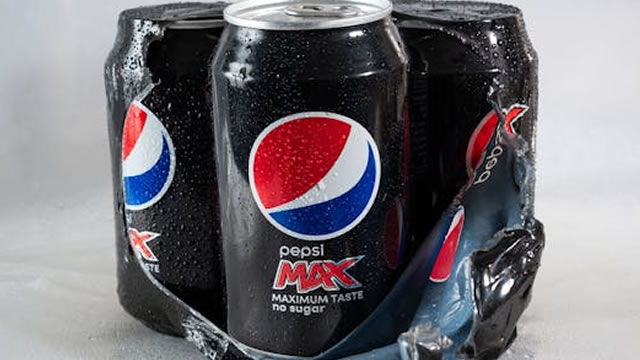
Is PepsiCo's Margin Outlook Improving Despite Tariff Cost Pressures?
ZACKS· 2025-12-29 20:01
Core Insights - PepsiCo, Inc. is focused on improving overall margins as a key component of its growth strategy [2] - The company is facing pressure on margins due to a challenging cost environment and uneven performance across key segments [3] - Management anticipates organic revenue growth of 2-4% in 2026, with a target of at least 100 basis points of core operating margin expansion over the next three years [5][10] Financial Performance - PepsiCo's third-quarter 2025 results showed a core gross margin decline of 160 basis points year over year, and a core constant-currency adjusted operating margin contraction of 60 basis points [3][10] - The Zacks Consensus Estimate for PepsiCo's 2025 earnings per share (EPS) implies a year-over-year drop of 0.5%, while the estimate for 2026 EPS shows a growth of 5.4% [15] Strategic Initiatives - The company is advancing productivity through supply-chain optimization, automation, digitalization, and disciplined cost management [2][4] - PepsiCo is streamlining its portfolio and simplifying operations, with savings reinvested into brand building and innovation [4] - The company is executing consumer-centric innovations to align with shifting consumer preferences toward healthier offerings [6] Competitive Landscape - Coca-Cola is leveraging technology for data analytics and improving employee engagement, resulting in increased efficiency and enhanced customer satisfaction [8] - Monster Beverage focuses on productivity through strategic investments in R&D and operational excellence, achieving a gross margin expansion of 250 basis points in Q3 2025 [9][11] Stock Performance and Valuation - PepsiCo shares have gained 8.9% in the past six months, outperforming the industry growth of 1.6% [12] - The company trades at a forward price-to-earnings ratio of 16.82X, compared to the industry average of 18.15X [14]

SIF Stock Dips Post Q4 Earnings Despite Improved Sales, Narrowed Loss
ZACKS· 2025-12-26 19:06
Core Viewpoint - SIFCO Industries, Inc. has experienced a decline in stock price following its earnings report, with a notable loss of 8.2% compared to the S&P 500's gain of 1.4% during the same period [1] Financial Performance - For Q4 fiscal 2025, SIFCO's net sales increased by 5.3% year-over-year to $22.8 million, while the loss from continuing operations narrowed to $0.5 million, or $(0.08) per diluted share, compared to a loss of $1.4 million, or $(0.24) per diluted share, in the previous year [2] - The total net loss for the quarter was $429,000, slightly improved from $443,000 a year ago, with EBITDA at $1.1 million, down 15.7% from $1.3 million [2] - For the full fiscal year, net sales rose by 6.5% to $84.8 million, and the loss from continuing operations improved significantly to $0.9 million, or $(0.15) per diluted share, from a loss of $8.6 million, or $(1.44) per diluted share, in fiscal 2024 [3] Profitability Metrics - Gross profit for Q4 declined by 5.6% to $2.2 million despite higher sales, indicating margin pressure [4] - For fiscal 2025, gross profit increased by 76.9% to $10.6 million, raising gross margin to 12.5% from 7.5% due to higher volumes and improved pricing [5] - Selling, general and administrative (SG&A) expenses decreased by 6.6% to $10.4 million, contributing to an operating income of $0.2 million compared to an operating loss of $5.2 million a year earlier [5] Revenue Mix and Market Performance - Fixed-wing aircraft revenue increased by $9.6 million to $51.4 million, while Rotorcraft sales remained flat at $17.1 million [6] - Commercial space revenue declined sharply by $8.2 million to $5 million, attributed to reduced procurement activity [6] - Military net sales accounted for 56.5% of total net sales in fiscal 2025, up from 47.6% in fiscal 2024, while commercial net sales represented 43.5% [7] Management Insights - Management highlighted progress in margin improvement and strong demand in military and commercial aerospace markets, with a backlog of $119.2 million at the end of fiscal 2025 [8] - The company emphasized a focus on cost reduction, selective price increases, and scaling production to meet customer needs [8] Factors Influencing Financial Results - The year-over-year improvement was supported by higher sales volumes, improved gross margins, and a net Employee Retention Credit (ERC) benefit totaling $3.3 million [10][11] - Interest expense declined by 45.3% due to reduced average debt balances, contributing to the improved loss from continuing operations [11] Future Outlook - SIFCO did not provide formal quantitative guidance for fiscal 2026 but expressed confidence in demand trends and plans for capital expenditures between $1 million and $2 million to enhance production capabilities [12] Structural Changes - The sale of SIFCO's European operations, specifically the Italian forging and manufacturing business, has been presented as discontinued operations, affecting comparability [13]


健康服务-2026 年展望- 这次有所不同:利润率改善潜力与政策明确性奠定积极基调2026 Outlook_ It‘s Different This Time_ Potential for Margin Improvement and Policy Clarity Create a Positive Backdrop
2025-12-20 09:54
Summary of Healthcare Services Conference Call Industry Overview - The conference call focused on the **Healthcare Services** industry, particularly the **Managed Care** sector and its outlook for 2026, highlighting potential margin improvements and policy clarity as positive factors for growth [4][10][11]. Key Points and Arguments Managed Care - **Earnings Recovery**: Most Managed Care Organizations (MCOs) are expected to reach trough earnings in 2026, with potential upward revisions thereafter. Medicare Advantage (MA) is anticipated to drive margin upside, while skepticism remains around Medicaid and ACA Exchanges until MCOs demonstrate margin improvements [5][12]. - **Enrollment Trends**: MCOs are targeting enrollment declines to improve margins, with companies like CVS, ELV, and UNH focusing on this strategy. Conversely, HUM is positioned for membership growth [12][52]. - **Regulatory Environment**: The 2026 midterms are expected to create gridlock, reducing the likelihood of major policy changes outside of CMS rulemaking, which could stabilize the operating environment for MCOs [5][12]. Pharmaceutical Distributors - **Strong Fundamentals**: The current strength in results for pharmaceutical distributors is attributed to stable generic pricing, MSO growth, and a robust specialty pipeline. Companies like McKesson (MCK) and Cencora (COR) are favored due to their strong specialty businesses [9][16]. - **M&A Activity**: Distributors led M&A activity in 2025, with expectations for continued integration and organic investment in MSO capabilities in 2026 [25]. Labs and Healthcare Facilities - **Demand Trends**: Labs are expected to see steady demand trends with a healthy backdrop in diagnostics. Regulatory uncertainties may impact pricing and mix development, but overall operating conditions are stable [9][12]. - **Facility Performance**: Healthcare facilities are positioned to benefit from favorable utilization trends, although policy uncertainty remains a concern for future earnings growth [12][16]. Additional Insights - **Investment Picks**: Top investment picks include UnitedHealth (UNH) and CVS Health (CVS) for their cleaner stories, while Cigna (CI) is seen as attractive but with more complexities [5][14][17]. - **Margin Pressures**: Medicaid remains a challenge, with companies like ELV and UNH guiding for margin pressure in 2026. Investment income is also expected to be a headwind for managed care [5][12]. - **Market Dynamics**: The ACA Exchanges are viewed as a swing factor for MCOs, with a wide range of outcomes expected due to potential shifts in market morbidity [12][43]. Conclusion The healthcare services industry is navigating a complex landscape with potential for margin recovery and growth driven by Medicare Advantage, while facing challenges in Medicaid and ACA Exchanges. The focus on regulatory clarity and strategic M&A activity will be crucial for companies as they prepare for 2026 and beyond.


Roku's Improving Margins Signal a Turnaround: Is the Stock a Buy Now?
ZACKS· 2025-12-12 17:25
Core Insights - Roku is entering a stronger phase of its turnaround with improving margins and disciplined execution, leading to reshaped performance expectations [1] - The company is projected to achieve significant revenue growth and profitability improvements in the upcoming quarters [2] Financial Performance - In Q3 2025, Roku's platform revenues grew by 17% year over year, gross profit reached $525 million, and adjusted EBITDA increased by 19% [1] - Fourth-quarter revenues are expected to be $1.35 billion, a 12% increase year over year, with platform revenues projected to grow by 15% and platform gross margin at 52% [2] - Full-year projections include $4.11 billion in platform revenue and $395 million in adjusted EBITDA [2] Market Position - Roku remains the leading TV operating system in the U.S., Canada, and Mexico, with a significant market share that exceeds the combined share of its closest competitors [5] - The Zacks consensus estimate for fourth-quarter streaming hours is 38.77 billion, indicating a 13.7% year-over-year growth [5] Advertising Growth - Roku's advertising engine is strengthening, with automated, data-driven ad buying expanding across the platform [7] - Approximately 90% of advertisers using Roku in Q3 were new to the platform, indicating fresh spending from performance marketers and small businesses [9] - Integrations with third-party demand-side platforms, including Amazon's advertising ecosystem, are broadening demand and improving campaign performance [9] Subscription Growth - Roku's streaming services distribution segment is seeing momentum, supported by Premium Subscriptions and the acquisition of Frndly TV [10] - The launch of the Howdy service, priced at $2.99 per month, expands Roku's reach and promotes efficient subscriber acquisition [11] Valuation and Performance Trends - Roku's valuation is attractive compared to the Zacks Broadcast Radio and Television industry and the broader Consumer Discretionary sector, trading at a forward price-to-sales ratio of 2.98X [12] - Over the past six months, Roku delivered a 42.9% return, significantly outperforming the industry's 8.3% decline and the sector's 3.1% drop [14] Competitive Advantage - Roku can monetize high-margin owned inventories more efficiently than competitors like Netflix and Warner Bros Discovery, who face escalating content costs [17] - Roku's data-rich ecosystem positions it well to capture incremental ad spend while maintaining superior margin potential [17] Conclusion - Roku's strengthening margin profile, growing advertising engine, and expanding subscription ecosystem indicate a business regaining momentum at scale [18] - The improving fundamentals support a clear buy stance, making the stock a compelling opportunity for investors [18]


Ollie’s Bargain Outlet Hits Rock-Bottom in Q4: Buy the Dip?
Yahoo Finance· 2025-12-10 13:27
Core Viewpoint - Ollie's Bargain Outlet is experiencing significant growth and is expected to outperform its guidance in the upcoming quarters, despite a recent stock price pullback [2][5]. Financial Performance - The company reported a record quarterly net revenue of $613.6 million, representing an 18.6% increase year-over-year (YOY) [3]. - The growth was driven by an 18% YOY increase in new stores and a 3.3% increase in comparable sales, attributed to higher transaction volume [3]. - Operating income grew at an accelerated pace of 24.5%, with adjusted earnings per share (EPS) at 75 cents, up 30% YOY, exceeding expectations by 270 basis points [4]. Margin Analysis - Gross margin contracted by 10 basis points, but this was offset by a 50-basis-point improvement in selling, general and administrative (SG&A) expenses, resulting in a 40-basis-point increase in operating margin [4]. - The overall operational quality and leverage improvements contributed positively to the financial results, despite higher input costs associated with new store openings [4]. Growth Outlook - Management has increased targets for store count growth, revenue, and earnings, with the low end of the revenue range above previous highs and the earnings midpoint improved by 100 basis points [4]. - The company is expected to continue its robust growth trajectory, claiming market share and accelerating on a YOY basis [3][5]. Market Sentiment - Analysts and institutions are accumulating Ollie's stock, indicating strong market support, and the December price pullback is viewed as a sign of market capitulation, likely leading to a rebound in early 2026 [5].

Kenvue Inc. (KVUE): A Bull Case Theory
Yahoo Finance· 2025-12-04 17:21
Core Thesis - Kenvue Inc. is undergoing a strategic review to optimize its brand portfolio and enhance operating performance, aiming to unlock shareholder value [2][3][4] Company Overview - Kenvue Inc. operates as a consumer health company across multiple regions including the United States, Europe, the Middle East, Africa, Asia-Pacific, and Latin America [2] - As of November 28th, Kenvue's share price was $17.35, with a market capitalization of approximately $30 billion and an enterprise value of around $38 billion [3] Financial Metrics - Kenvue's trailing and forward P/E ratios are 23.13 and 15.77 respectively, with an EV/EBITDA multiple of roughly 11× [1][3] - The company offers a dividend yield of about 4%, providing a solid income component for investors [3] Strategic Initiatives - The strategic review may lead to the sale of underperforming Skin Health & Beauty brands, acquisitions in high-growth OTC health categories, and capital reallocation to higher-margin segments [4] - Analysts estimate that these initiatives could raise Kenvue's margins and overall valuation by 15–25% [4] Investment Case - The combination of a disciplined strategic review, potential divestitures, and a focus on higher-margin segments positions Kenvue to enhance profitability and shareholder returns over time [5] - Kenvue's current valuation and dividend yield, along with strategic initiatives, create an attractive investment case for those seeking operational upside and a clear path to value creation [5]

SAIC(SAIC) - 2026 Q3 - Earnings Call Transcript
2025-12-04 16:02
Financial Data and Key Metrics Changes - Third quarter revenue was $1.87 billion, a decline of 5.6% year-over-year, impacted by a government shutdown which accounted for approximately one percentage point of the decline [6][7] - Adjusted EBITDA was $185 million, resulting in a margin of 9.9%, driven by strong program execution [7][8] - Adjusted diluted EPS was $2.58, reflecting strong margin performance and a favorable tax rate [7] - Free cash flow for the third quarter was $135 million, despite being affected by the government shutdown [8][19] Business Line Data and Key Metrics Changes - Net bookings for the third quarter were $2.2 billion, resulting in a book-to-bill ratio of 1.2x [15] - The civil business segment experienced a year-over-year decline of 7%, but margins improved significantly over the first nine months of the year [32][33] Market Data and Key Metrics Changes - The government shutdown slowed proposal submissions, but normalization is expected in the near term [15][22] - The company anticipates submitting bids totaling over $30 billion in FY 2027 [15][16] Company Strategy and Development Direction - The acquisition of SilverEdge is expected to enhance the company's capabilities and contribute positively to margins and EPS [5][31] - The company is focusing on improving execution, resource allocation, and prioritizing bid quality to drive growth [9][10] - There is a commitment to reinvest over $100 million in annual spending into higher ROI areas to improve profitability [10][19] Management's Comments on Operating Environment and Future Outlook - Management expressed confidence in the ability to improve execution and deliver sustained profitable growth despite market uncertainties [20] - The company is prepared to adapt to changes in procurement processes within the Department of War, aiming for greater speed and efficiency [37][39] - The outlook for FY 2026 and FY 2027 includes increased revenue guidance due to the acquisition of SilverEdge and reaffirmed organic growth expectations [17][19] Other Important Information - The company plans to repurchase approximately $500 million in shares for both FY 2026 and FY 2027, totaling $1 billion, which represents about 25% of its market value [19] - Management is actively seeking a permanent CEO to lead the company forward [13] Q&A Session Summary Question: What is the current procurement environment post-shutdown? - Management noted a slowdown in submit activity and RFPs due to the shutdown, but expects normalization in Q4 [22] Question: Any residual impact from DOGE and pricing environment? - Management indicated no material changes from previous disclosures regarding DOGE, and margins remained healthy with minimal pricing pressure [24][25] Question: Opportunities and integration of SilverEdge? - Management expressed enthusiasm about SilverEdge's integration, expecting it to enhance bid differentiation and contribute positively to margins and EPS [30][31] Question: Civil growth decline and future trajectory? - Management stated that the civil business has been roughly flat over nine months, with no specific program-related drivers for the recent decline [32][33] Question: Thoughts on Department of War's reforms? - Management is ready to assist with procurement changes and is focusing on execution to align with the Department's objectives [37][39] Question: How to allocate savings from cost efficiencies? - Management indicated that a substantial portion of the $100 million savings will be reinvested into business development and proposal improvement [44][45] Question: Expectations on federal civil spending? - Management anticipates continued pressure on civilian agency budgets, but remains optimistic about their positioning within key agencies [51][52] Question: Portfolio shaping and defense budget growth? - Management is open to portfolio shaping but is currently focused on organic growth, with expectations of upward pressure on the DoD budget [62][65]