
ET9

Search documents
【汽车】春节长假扰动销量,关注财报季业绩表现——新势力2月销量跟踪报告(倪昱婧/邢萍)
光大证券研究· 2026-03-03 23:03
Core Viewpoint - The article discusses the impact of the Spring Festival holiday on February's new energy vehicle (NEV) sales, highlighting the performance of various manufacturers and the upcoming product launches in the industry [4][5][7]. Group 1: February NEV Sales Performance - Li Auto's delivery volume increased by 0.6% year-on-year but decreased by 4.5% month-on-month to 26,421 units [4] - NIO's delivery volume rose by 57.6% year-on-year but fell by 23.5% month-on-month to 20,797 units, with the NIO brand up by 65.8% year-on-year and down by 27.5% month-on-month to 15,159 units, while the Lada brand decreased by 26.4% year-on-year and 14.3% month-on-month to 2,981 units [4] - Xpeng's delivery volume dropped by 49.9% year-on-year and 23.8% month-on-month to 15,256 units [4] Group 2: New Flagship Models Launch - On February 6, Li Auto officially launched the L9 Livis, a flagship SUV featuring an 800V fully active suspension and a self-developed high-performance driving platform [5] - On February 8, Xpeng announced the core parameters of the GX, an AI luxury six-seat flagship SUV, equipped with an 800V high-voltage platform and L4-level autonomous driving capabilities [5] - The flagship models from Li Auto and Xpeng aim to enhance product strength through chassis architecture and intelligent driving features to capture high-end NEV market share [5] Group 3: Financing and Delivery Updates - Tesla's domestic Model 3 delivery cycle has been shortened to 1-3 weeks, with various financing policies extended, including an 8,000 yuan limited-time insurance subsidy [6] - Li Auto maintains delivery cycles for L6/L9 at 1-3 weeks, while the delivery cycle for L8 has been extended to 2-4 weeks [6] - NIO's delivery cycles for several models remain stable, with the new ES8's cycle shortened to 4-5 weeks [6] - Xpeng's delivery cycles for several models have been adjusted, with the G9's cycle extended to 1-5 weeks [6] - Xiaomi's delivery volume exceeded 20,000 units in February, with financing offers continuing [6] - Huawei's Hongmeng Zhixing saw a year-on-year delivery increase of 31.1% but a month-on-month decrease of 51.3% to 28,000 units [6] Group 4: Upcoming Product Launches and Financial Performance - The industry anticipates a surge of new vehicle launches from multiple manufacturers in March and April, with a focus on financial performance amid rising costs [7][8] - Tesla is expected to launch the third-generation Optimus humanoid robot in Q1 2026, presenting potential investment opportunities in components related to domestic and international robot mass production [8]


Nio chip unit set to secure 2.25bn yuan from local investor group
Yahoo Finance· 2026-02-27 17:31
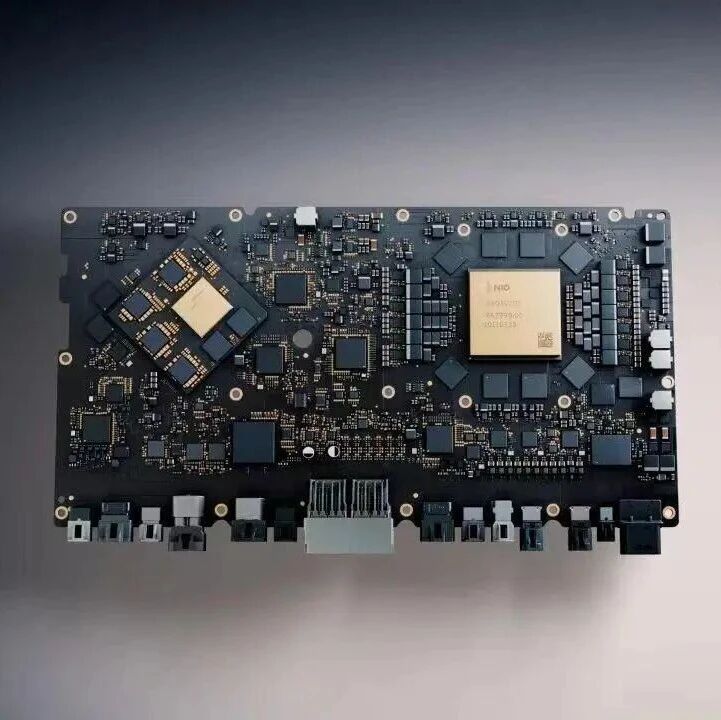
Core Viewpoint - GeniTech, a subsidiary of Nio, has secured a 2.25 billion yuan ($323 million) investment from local investors to enhance its intelligent-driving chip program, while Nio will maintain a controlling stake in Shenji [1][2]. Group 1: Investment and Stakeholding - GeniTech has entered into binding agreements for a 2.25 billion yuan ($323 million) investment from a group of local investors, including notable firms such as Hefei State-Owned Capital Enterprise Investment and IDG Capital [1][2]. - Following the investment, Nio will retain a controlling 62.7% stake in Shenji, while the investor group will own 27.3%, and the remaining 10% will be held for employee incentives [2]. Group 2: Business Development and Partnerships - Shenji was established after Nio separated its chip business in June 2022 and has since partnered with Axera Semiconductor and OmniVision Integrated Circuits Group to form a joint venture with a registered capital of CNY 100 million ($14.6 million) [3]. - The recent fundraising is aimed at supporting Shenji's development and commercialization of advanced chips, aligning with Nio's long-term focus on autonomous driving and embodied intelligence [3][4]. Group 3: Product Development and Market Demand - Shenji has developed five-nanometre automotive-grade chips and has deployed the Shenji NX9031 in over 150,000 vehicles, including models like ET9, ES6, ES8, and EC6 [4]. - The unit is seeking to expand its market beyond Nio, targeting growth in areas such as embodied robotics and agent reasoning, with plans to offer a wider range of chip and smart hardware solutions [5]. Group 4: Financial Performance Outlook - Nio anticipates an adjusted operating profit (non-GAAP) of approximately 700 million to 1.2 billion yuan for Q4 2025, marking its first quarterly adjusted operating profit on a non-GAAP basis [5][6]. - This forecast contrasts with an adjusted operating loss of 5.54 billion yuan in Q4 2024, indicating a significant turnaround in financial performance [6].
独家丨蔚来芯片子公司完成首轮融资,投后估值近百亿元
雷峰网· 2026-02-27 13:52
Core Viewpoint - NIO's chip subsidiary, Anhui Shenji, is set to announce its first round of financing, with a post-investment valuation nearing 10 billion RMB, indicating strong industry interest in NIO's chip project [2]. Group 1: Company Overview - Anhui Shenji Technology Co., Ltd. was established in June 2025 to oversee chip research and development, production, and technology licensing, with a registered capital increased from 10 million to 75.29 million RMB [2]. - The chip development team at NIO has grown to over 500 members since the project was initiated in 2021 [3]. Group 2: Product Development - The Shenji NX9031 chip, launched in March 2025, is a significant breakthrough in NIO's technology strategy, being the world's first 5nm automotive-grade intelligent driving chip, boasting four times the computing power of NVIDIA's Orin-X and a memory bandwidth of 546GB/s, double that of NVIDIA's Thor-U chip [3]. - The design and development of the Shenji NX9031 took two years, with an additional year for performance testing, incorporating comprehensive safety circuits for real-time anomaly detection and self-correction [3]. Group 3: Financial Implications - NIO's self-developed chips are expected to reduce vehicle costs by at least 10,000 RMB per unit, with the company spending billions on NVIDIA chips in 2024, highlighting the cost-saving potential of their own chips [3]. - The investment in the Shenji NX9031 chip's development is comparable to the cost of building 1,000 battery swap stations, amounting to several billion RMB, which is a key factor in NIO's decision to spin off its chip business for market-oriented operations [3]. Group 4: Strategic Partnerships - Shortly after its establishment, Anhui Shenji began seeking external investment, leading to the formation of a joint venture with Aixin Yuanzhi and OmniVision in Chongqing, indicating a strategic move to develop a technology ecosystem [4][5].
不玩虚!李斌内部定调:2026全年盈利,500万辆目标藏着蔚来野心
Xin Lang Cai Jing· 2026-02-11 07:00
Core Insights - NIO has officially entered a profitable phase, achieving its first quarterly profit under both GAAP and Non-GAAP standards in Q4 2025, marking a significant turnaround from previous struggles [3][18] - The company has outlined ambitious goals for 2026, aiming for full-year Non-GAAP profitability and maintaining a growth rate of 40%-50% [12][27] Group 1: Financial Performance - In Q4 2025, NIO achieved a significant milestone with a total of 60,000 units of the new ES8 delivered within 134 days, contributing to its profitability [5][20] - The overall sales for 2025 increased by 47% year-on-year, with the second half of the year seeing a surge of over 70% [7][22] Group 2: Product and Technology - The success of NIO's new models, particularly the ES8 and the L90, has been pivotal, with the ES8 becoming the best-selling large SUV in its category [5][20] - NIO has introduced advanced technologies, including the self-developed 5nm smart driving chip and a comprehensive operating system, positioning itself as a leader in the industry [7][22] Group 3: Strategic Goals - NIO's development is divided into three phases, with the current phase being the "harvest period," focusing on solidifying profitability and growth [8][23] - The company plans to build 1,000 new battery swap stations and enhance customer experience through operational efficiency [10][25] - Long-term goals include reaching a sales target of 5 million vehicles by 2035, supported by a strong product lineup and technological advancements [12][28]
晚点独家丨蔚来李斌最新内部讲话:跑通 CBU 机制,花最小的钱办出最大的事
晚点LatePost· 2026-02-10 13:42
Core Viewpoint - NIO is focusing on maintaining technological and product leadership while enhancing operational efficiency to ensure sustainable growth and profitability in the competitive electric vehicle market [4][8]. Group 1: Company Achievements and Growth - NIO held an all-hands meeting on February 9, where CEO Li Bin highlighted the company's achievements in 2025 and outlook for 2026, introducing a "Special Contribution Award" to recognize outstanding teams and projects [5]. - The new ES8 model delivered 60,000 units in just 134 days, significantly contributing to NIO's profitability in Q4 [5][12]. - NIO's sales grew by 47% year-on-year, with over 70% growth in the second half of the year, marking the production of the 1 millionth vehicle in January [7][16]. Group 2: Technological Advancements - Li Bin emphasized the importance of NIO's "three core components": the self-developed smart driving chip NX9031, the SkyOS operating system, and the intelligent chassis, all set to be implemented in 2025 [7][13]. - The NX9031 chip, produced using a 5nm process, is a significant achievement for NIO, showcasing the company's commitment to advanced technology [7][13]. - NIO's ET9 model remains one of the most technologically advanced vehicles globally, attributed to its proprietary chip and integrated systems [13][14]. Group 3: Future Strategies and Goals - NIO aims to achieve annual Non-GAAP profitability as a foundation for sustainable development, with a focus on operational efficiency and user value creation [8][19]. - The company plans to build 1,000 new battery swap stations this year, increasing its total to over 4,600 by year-end, highlighting the importance of battery swapping in its business model [16][18]. - NIO's goal is to maintain a 40%-50% annual growth rate, targeting 5 million vehicles by 2035, while ensuring high user satisfaction [22][23].

独家丨蔚来李斌最新内部讲话:跑通 CBU 机制,花最小的钱办出最大的事
晚点Auto· 2026-02-10 08:19
Core Viewpoint - NIO's focus for 2025 and beyond is on maintaining technological and product leadership while ensuring operational efficiency and profitability [2][6][20]. Group 1: Company Achievements and Growth - NIO delivered 60,000 units of the new ES8 model within 134 days, significantly contributing to the company's profitability in Q4 [4][9]. - The company achieved a 47% year-on-year sales growth last year, with over 70% growth in the second half of the year [6][12]. - NIO celebrated the production of its 1 millionth vehicle in January, marking a significant milestone in its growth trajectory [12][13]. Group 2: Product and Technology Development - NIO's "new three key components" include the self-developed smart driving chip NX9031, the SkyOS operating system, and the intelligent chassis, all of which are set to be implemented in 2025 [6][10]. - The NX9031 chip, built on a 5nm process, is highlighted as a major achievement, showcasing NIO's commitment to advanced technology [10][11]. - The company emphasizes the importance of maintaining product competitiveness through efficient R&D investment and prioritizing user value [18][19]. Group 3: Future Goals and Strategies - NIO aims to achieve annual Non-GAAP profitability this year, emphasizing the necessity of reasonable profits for sustainable development [7][20]. - The company plans to continue expanding its battery swap infrastructure, targeting the construction of 1,000 new swap stations this year [14][19]. - NIO's long-term vision includes maintaining a 40%-50% annual growth rate, with a goal of reaching 5 million annual sales by 2035 [20][21].
蔚来推送Cedar雪松1.4.0系统更新:新增“NWM人机共驾”模式
Feng Huang Wang· 2026-02-05 09:51
Core Viewpoint - NIO has launched the Cedar Cedar system version 1.4.0 update, primarily targeting its flagship models ET9 and the new ES8, featuring over 80 new and optimized functions across four major areas, including intelligent assisted driving and smart cockpit [1] Group 1: Intelligent Assisted Driving - The point-to-point global navigation assistance feature based on the "NIO World Model (NWM)" has been enhanced [1] - New efficiency lane change functionality has been added for urban roads, improving lane change decisiveness and intersection navigation capabilities [1] - On highways, the success rate for on/off ramps and the ability to avoid construction zones have been improved [1] - A new non-fixed parking space collection feature allows vehicles to automatically search for and park in spaces before reaching the target area, supporting remote parking reservations [1] - Enhanced lane centering assistance based on NWM has been introduced, with new support for left/right turn assistance at urban intersections based on traffic signals and arrows [1] - The "NWM Human-Machine Co-Driving" mode allows drivers to intervene in the driving direction of assisted driving in real-time on urban roads [1] - The system has added all-directional unintended acceleration suppression assistance (MAI) and general obstacle warnings (GOA) for rearward parking, alerting to obstacles like columns and low walls [1] Group 2: Smart Cockpit - The update introduces the industry's first in-vehicle disaster warning system [1] - New AR enhanced mode supports the display of blind spot images and intelligent narrow road images for steering [1]

How Is NIO Expanding Its Global Footprint Beyond China?
ZACKS· 2026-02-04 16:25
Core Insights - NIO Inc. is advancing its global expansion strategy, moving beyond China into Europe, Central Asia, and the Asia-Pacific region to reach more customers with its electric vehicles [1] Group 1: Expansion into Central Asia - NIO has opened its first store in Uzbekistan, named NIO Space Tashkent, in partnership with local distributor Abu Sahiy Motors, marking its entry into Central Asia [2] - The company plans to offer several models in Uzbekistan, including ET9, EL8, EL6, ET5, ET5 Touring, L90, and L60 from its Onvo sub-brand, reflecting a shift to a national distributor model overseas [3] Group 2: Expansion into Other Regions - NIO is targeting Australia and New Zealand for its Firefly sub-brand, planning to enter these right-hand-drive markets in the second half of 2026, focusing on compact electric vehicles [4] - In Europe, NIO plans to introduce five models in Portugal, Greece, Cyprus, Bulgaria, and Denmark, partnering with national distributors in each market to support this expansion [5] - The company began its European journey in Norway in 2021 and has plans to enter the Middle East and North Africa (MENA) region in 2024, establishing a technology research center in the UAE [6] Group 3: Strategic Objectives - NIO's international moves aim to reduce reliance on the domestic market while addressing challenges such as competition and tariff barriers, with a long-term goal of establishing itself as a global smart EV brand [7] Group 4: Competitive Context - Competitors like BYD and XPeng are also expanding internationally, with BYD aiming to sell around 1.3 million vehicles overseas by 2026 and XPeng focusing on localized supply chains in Europe and ASEAN [8][10]
【快讯】每日快讯(2026年2月3日)
乘联分会· 2026-02-03 10:48
Domestic News - The Ministry of Industry and Information Technology has released a mandatory national standard for automotive door handle safety requirements, effective from January 1, 2027, mandating mechanical release handles for each car door [3] - Nine departments, including the Ministry of Commerce, encourage local governments to increase subsidies for trade-in programs during the Spring Festival, aiming to boost consumer spending on various products [4] - The Ministry of Finance projects that sales of products related to trade-in programs will exceed 2.6 trillion yuan by 2025, benefiting over 360 million people [5] - Shanghai is actively supporting the development of smart connected new energy vehicles and other industries, focusing on modernizing the industrial system and promoting major industrial projects [6] - Guangdong province is supporting multiple regions to advance road testing and demonstration applications for smart connected vehicles, promoting their use in various scenarios [8] - NIO's sub-brand, Ladao, has launched in Uzbekistan, with several models introduced to the market, marking its first entry into overseas markets [9] - Dong'an Power and Lantu Automotive have established a joint innovation center to focus on next-generation efficient range-extending power and rotor engine technologies [10] - Quanzhou City has signed a cooperation agreement with CATL to build a smart zero-carbon battery factory, enhancing the new energy industry ecosystem [11] International News - France's new car sales fell by 6.55% in January, totaling 107,157 vehicles [12][13] - Italy's new car sales increased by 6.2% year-on-year in January, reaching approximately 142,000 vehicles [14] - Tesla has officially announced its entry into the Moroccan market, with a launch event scheduled for February 6, introducing the Model 3 and Model Y [15] - India's 2026 federal budget supports the automotive and electric vehicle industries through various policies aimed at reducing battery manufacturing costs and enhancing supply chain resilience [16] Commercial Vehicles - SAIC Maxus has announced a new vehicle plan, with multiple models including pickups, light trucks, and MPVs set to be released [17] - Iveco has officially launched the new Dedi 8AT model, featuring an 8-speed automatic transmission, enhancing performance while maintaining pricing strategies [18] - The Jiangxi section of the East China-South China expressway has officially opened, featuring 12 new heavy truck battery swap stations to improve logistics efficiency [19] - Dongfeng Motor is advancing the DPW (Dongfeng Production Way) initiative at its Shiyan base to enhance manufacturing competitiveness [20]

光大证券:1月各车企购车优惠加码 关注AI转型、以及上游原材料涨价压力消化
Zhi Tong Cai Jing· 2026-02-03 07:17
Core Viewpoint - The report from Everbright Securities highlights the focus on AI transformation in the automotive industry, particularly among new energy vehicle (NEV) manufacturers, while also addressing the pressure from rising raw material prices affecting profit margins. Group 1: AI Transformation in Automotive Industry - New energy vehicle companies are actively transitioning towards AI, especially in humanoid robotics, with Tesla planning to convert its Model S/X production line for humanoid robots, Xiaopeng announcing mass production of humanoid robots by 2026, and Li Auto establishing a humanoid robot team [1] Group 2: January NEV Performance - In January, the performance of NEVs was weak, with Li Auto's deliveries down 7.5% year-on-year and 37.5% month-on-month to 27,668 units; NIO's deliveries increased by 96.1% year-on-year but decreased by 43.5% month-on-month to 27,182 units; Xiaopeng's deliveries fell 34.1% year-on-year and 46.6% month-on-month to 20,011 units [1] Group 3: New Model Launches - Various NEV manufacturers launched updated models in January to meet tax requirements and enhance product competitiveness, including BYD's long-range versions of the Qin and Sea models, Xiaopeng's new P7+ and G7 models, and AITO's M7 long-range version [2] Group 4: Increased Purchase Incentives - Tesla is offering significant purchase incentives, including an 8,000 yuan insurance subsidy and low-interest financing for its Model 3 and Model Y vehicles, with delivery timelines ranging from 1 to 6 weeks [3] - Li Auto has maintained short delivery timelines for several models and extended purchase subsidies into February, while NIO and Xiaopeng have also introduced low-interest financing options across their vehicle ranges [4]
