Quantitative Easing (QE)

Search documents
KG Analyzes Warsh Nomination, PPI, OpenAI & Silver's "Topping Pattern"
Youtube· 2026-01-30 16:01
Market Reaction to Kevin Worsh's Potential Nomination - The prediction market shows a slight increase in the probability of Kevin Worsh being nominated by President Trump, although there are still hurdles to overcome for confirmation [2][3] - Senator Tillis is opposing the nomination until investigations into Chairman Powell and Lisa Cook are resolved, indicating political challenges ahead [3] Economic Indicators and Inflation - The dollar is gaining strength, with the dollar index up about 0.5%, which may lead to weakness in physical commodities like silver and gold [5][6] - The Producer Price Index (PPI) increased by 0.5% month-on-month, which was higher than expected, indicating potential inflationary pressures [9][10] - Services inflation is driving the PPI increase, with a notable rise of 0.7% month-on-month, primarily due to a 1.7% increase in trading services margins [11][12] Earnings Reports and Market Sentiment - Recent tech earnings, particularly from Apple, Microsoft, and Meta, have shown mixed results, with concerns about supply chain issues and margin pressures affecting market sentiment [15][17] - Apple reported decent earnings but faces uncertainty regarding chip supply and pricing, which could impact future margins [17] - Microsoft’s capital expenditure and backlog from OpenAI raise concerns about revenue viability, while Meta is managing expenses through job cuts and strategic spending [18][19] Commodity Market Dynamics - The commodities market is experiencing significant volatility, particularly in metals, with silver down approximately 12% and gold down about 5% [21][22] - Liquidity issues in the silver futures market are contributing to erratic price movements, with low contract depth making it easier to push prices [23][26] - Technical indicators suggest a potential bearish divergence in silver, indicating a possible reversal, but past patterns show that such signals can be misleading [24][25]

Trump's Fed Chair Pick: What Kevin Warsh Brings to the Federal Reserve
Youtube· 2026-01-30 12:29
That's the question. Who is Kevin Warsh. And I think the answer comes from the president.He's someone well-known on both Wall Street and in Washington. He began his career after graduating from Harvard Law and Stanford at Morgan Stanley, then moved from there to the George W Bush White House in 2000 to as an economic adviser. And then Bush appointed him as the youngest Fed governor ever in 2006.Since then, he's lectured at Stanford, but his primary job is advising the legendary investor Stan Druckenmiller a ...
Trump Administration Preparing to Nominate Warsh as Fed Chair
Youtube· 2026-01-30 11:23
Core Insights - The article discusses the potential appointment of Kevin Warsh to a significant position in the financial world, likely related to the Federal Reserve, highlighting his past consideration for the role and his extensive experience in monetary policy [2][3]. Group 1: Background and Experience - Kevin Warsh is a Stanford and Harvard Law graduate who began his career at Morgan Stanley before serving as an economic adviser in the White House and later being appointed to the Federal Reserve [3]. - He served on the Federal Reserve from 2006 to 2011, resigning due to his objections to excessive quantitative easing (QE) [3]. Group 2: Market Perception and Criticism - Warsh is recognized for his monetary policy experience and familiarity with Wall Street, which could be favorable for market reactions [4]. - Despite his strengths, he is known as a harsh critic of the Fed and a hawk, which has led to mixed reactions from the markets [4]. Group 3: Proposed Changes and Focus - Warsh advocates for significant changes at the Fed, emphasizing a focus on inflation and a reduction in the Fed's balance sheet [5][6]. - He has criticized the Fed for overreach in its responsibilities and has suggested that the regulation of banks should be handled by other entities [6].
Trump Set to Nominate Warsh as Fed Chair: Bloomberg
Yahoo Finance· 2026-01-30 02:14
The Trump administration is preparing to nominate Kevin Warsh as the next Federal Reserve Chair, Bloomberg reported, citing people familiar with the matter. The selection is not final until Trump makes a formal announcement on Friday morning. Warsh's anti-QE stance could reshape the liquidity environment that has supported risk assets, including cryptocurrencies, since 2008. Bloomberg Reports Warsh Pick Warsh, a former Fed governor, visited the White House on Thursday, according to Bloomberg. Markets re ...
The Great Inflation Debate Pits Precious Metals Against Bonds
Yahoo Finance· 2026-01-22 19:00
What’s curious is that bond investors don’t appear to share these concerns. In the world’s largest public debt market, U.S. Treasury yields have been falling at the short end. At the long end of the curve, yields have been stable even after the recent sell-off in Japanese government bonds (Figure 4). While it’s understandable that short-term yields are falling, given the pressure on the Federal Reserve (Fed) to cut rates in the face of softening core inflation and weak employment growth, it is curious that ...
Year-End Liquidity Turmoil on the Fed’s Balance Sheet. Plus $38 Billion in T-bills Replace $15 Billion in MBS and Add $23 Billion in RMPs
Wolfstreet· 2026-01-03 02:46
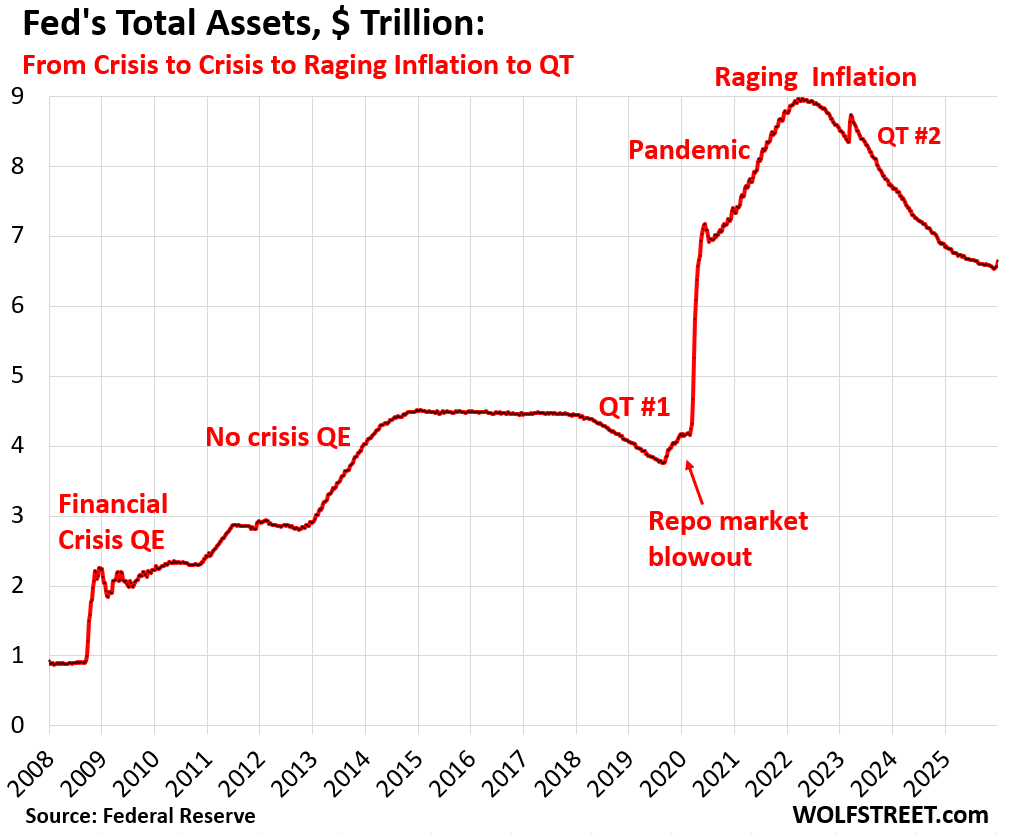
Core Insights - The Federal Reserve's balance sheet experienced significant year-end liquidity shifts, with the Standing Repo Facility (SRF) spiking to $75 billion before falling back, and Overnight Reverse Repos (ON RRPs) reaching $106 billion before also declining [1][14][15] Group 1: Standing Repo Facility (SRF) - The SRF saw a one-day uptake of $75 billion on December 31, which increased the Fed's total assets temporarily [6][7] - By January 2, the SRF balance fell back to $23 billion, with expectations that it will approach zero in the following week [6][7] - The SRF allows approved counterparties, primarily large broker-dealers and banks, to borrow overnight at a rate of 3.75%, enabling them to profit from lending in the repo market [11][12] Group 2: Overnight Reverse Repos (ON RRPs) - ON RRP balances spiked to $106 billion on December 31, reflecting a significant influx of funds from money markets depositing at the Fed [14] - By January 2, ON RRP balances dropped to just $6 billion, indicating a rapid unwinding of year-end liquidity [14] Group 3: Treasury Bills and Balance Sheet Management - The Fed added $38 billion in short-term Treasury bills in December, with $15 billion replacing mortgage-backed securities (MBS) that came off the balance sheet [2][19] - The Fed's strategy aims to shift its balance sheet composition towards shorter-term securities, with T-bills expected to grow while MBS are phased out [18][23] - The Fed's total assets rose by $104 billion to $6.64 trillion, largely due to the SRF spike and Reserve Management Purchases (RMPs) [27] Group 4: Mortgage-Backed Securities (MBS) - MBS holdings fell by $15 billion in December to $2.04 trillion, with the Fed's plan to continue reducing MBS until they are eliminated [23][24] - The decline in MBS is primarily due to reduced pass-through principal payments as mortgage refinancing and sales have decreased significantly [24][25]
Long View of the S&P 500 & Stock Markets of Canada, Japan, China, Hong Kong, India, UK, France, Germany, Italy, Spain
Wolfstreet· 2026-01-01 01:26
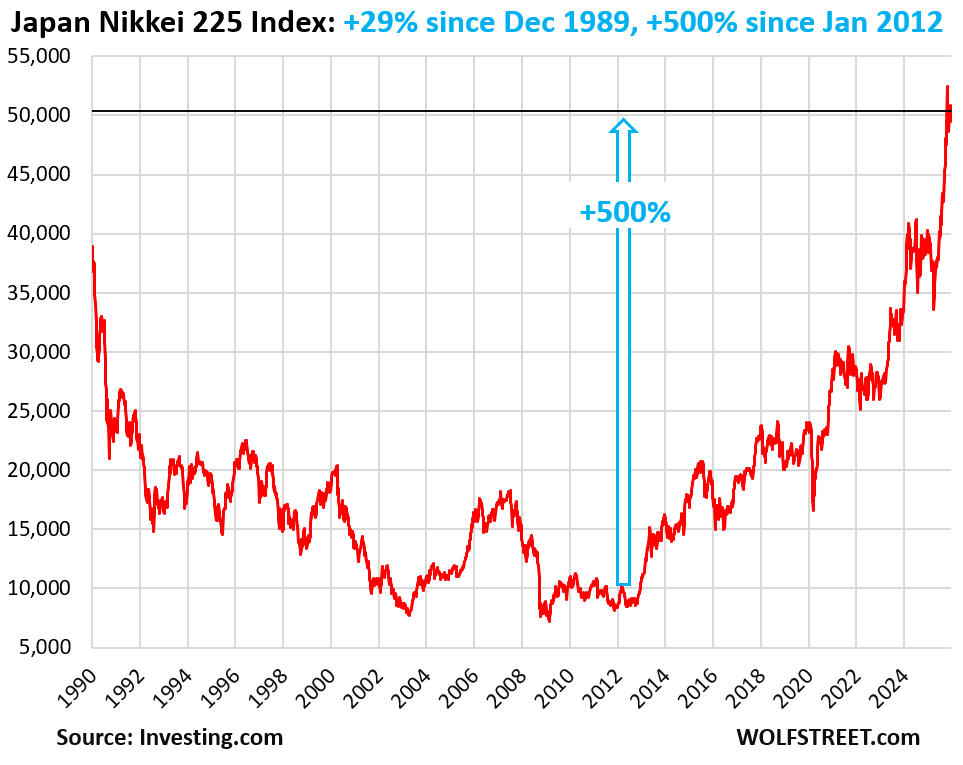
American hot money piling into some foreign markets produced gigantic gains in 2025 (Spain +49%). The S&P 500 Index soared by 16.4% in 2025. Since the Liberation Day bloodletting bottom on April 8, it soared by 38%. Over the past three years of 2023-2025, it soared by 79%. Since the March 2020 low, the index soared by 208%, despite two sell-offs in between. These are huge gains.In March 2020, the Fed unleashed its mega-massive QE program, to outdo all prior QE programs, and cut short-term interest rates to ...
How AI productivity is reshaping the Fed's 2026 economic outlook
Youtube· 2025-12-30 13:36
Core Insights - The discussion centers around the impact of AI on productivity and economic growth, with a focus on the expectations for 2026 and the implications for corporate earnings and stock prices [1][2][3] Group 1: AI and Productivity - AI is seen as a key driver of productivity, allowing for economic growth without significant inflationary pressures, which is favorable for central bankers [1][2] - Fed Chair Jerome Powell has acknowledged that AI usage is likely increasing productivity, with GDP growth expectations for 2026 raised to 2.3% from 1.8% [2] - The Fed has also lowered its inflation expectations for next year to 2.4% from 2.6%, indicating a belief that productivity gains from AI can coexist with moderate inflation [2] Group 2: Corporate Earnings and Stock Market - The estimated earnings per share for the S&P 500 in 2024 is projected to be $3922, which would set a new record [1][3] - Concerns about high valuations in the stock market are countered by the expectation of record corporate profits, suggesting that high stock prices may be justified [3][4] - Companies are focusing on increasing revenue per employee rather than hiring more staff, which could lead to significant outperformance for those that can effectively leverage AI [2][3] Group 3: Micron Technology - Micron has seen its stock price triple this year, driven by demand for its DRAM products, particularly for AI data centers [2][3] - The company has announced it will no longer produce memory chips for the consumer segment due to high demand from AI applications, indicating a shift in focus [2] - Micron's stock is considered vulnerable to price fluctuations based on memory chip prices, which could impact its future performance [3]


Trump's 'Humongous' Tax Refunds Could Spook Markets, Risk Rattling Bond Yields, Warns Ed Yardeni - SPDR S&P 500 (ARCA:SPY)
Benzinga· 2025-12-30 09:16
Core Viewpoint - Ed Yardeni predicts that the "Roaring 2020s" stock market rally will continue through 2026, but he warns that aggressive fiscal stimulus from the Trump administration poses significant risks to the economic outlook [1][3]. Group 1: Economic Outlook and Market Predictions - Yardeni highlights a potential conflict between government spending and the bond market, noting that massive taxpayer refunds could lead to increased liquidity that may upset "bond vigilantes" [2]. - He forecasts the S&P 500 to reach 7,700 by 2026, representing a 10% increase from current levels, driven by an AI-driven productivity boom that will enhance corporate earnings [3][4]. Group 2: Socioeconomic Divide - Yardeni describes a "Chick-fil-A Economy," where Baby Boomers are financially secure and spending freely, while younger generations face challenges such as housing affordability [5]. - He believes that Trump's policies are aimed at addressing the dissatisfaction among the "have-nots," although this may lead to volatility in the bond market [6]. Group 3: Market Performance - Year-to-date, the S&P 500 has increased by 17.67%, while the Nasdaq Composite and Dow Jones have gained 21.75% and 14.32%, respectively [7]. - Despite these gains, the SPDR S&P 500 ETF Trust (SPY) and Invesco QQQ Trust ETF (QQQ) closed lower recently, with SPY down 0.36% and QQQ down 0.48% [7].
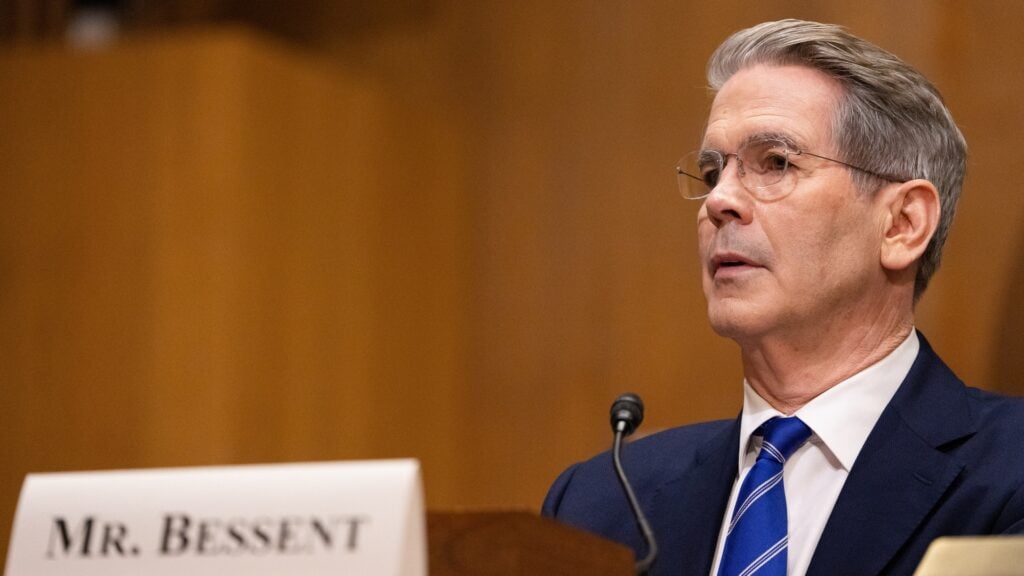
Scott Bessent Confirms Search For Fed Chair Who Will Shrink Institution, End Perpetual QE
Benzinga· 2025-12-24 08:27
Core Viewpoint - The administration is actively seeking a new Federal Reserve Chair who will focus on reducing the central bank's influence and ending the era of quantitative easing [1][2]. Monetary Policy - Treasury Secretary Scott Bessent criticized the Federal Reserve's monetary policies over the past 15 years, particularly large-scale asset purchases initiated in 2008, which he believes have contributed to economic inequality [2][3]. - Bessent described the Fed as "the engine of inequality," arguing that while it is not responsible for creating equality, it should not worsen the wealth gap [3][4]. - He emphasized that the next Chair should regard quantitative easing as an emergency measure rather than a standard practice, highlighting the negative impact of low interest rates and asset purchases on economic fairness [4]. Structural Changes - Bessent called for a structural downsizing of the Federal Reserve, criticizing its lack of budgetary oversight and the ability to "print its own money" without fiscal discipline [5]. - He stated that there is a desire for a smaller and more predictable central bank that does not dominate market sentiment [6]. Candidate Selection - Bessent confirmed that he has conducted in-depth interviews with potential candidates for the Fed Chair position, including Kevin Warsh, Kevin Hassett, and Governor Chris Waller, who align with the administration's vision for a traditional Fed focused on price stability [7].