
Smart Home

Search documents
Govee präsentiert auf der CES 2026 neue „Lighting the Future" Beleuchtungsinnovationen
Prnewswire· 2026-01-04 13:01
Core Insights - Govee showcases its vision of "Lighting the Future" at CES 2026, presenting innovative smart lighting products that enhance its smart home ecosystem and announce a partnership with Samsung SmartThings [1][9] Product Innovations - Govee Floor Lamp 3 features advanced color and AI technology, utilizing LuminBlend+ for precise colors and a temperature range of 1000 K to 10000 K, along with AI Lighting Bot 2.0 and DaySync for personalized and adaptive lighting [3][6] - Govee Ceiling Light Ultra is designed as a creative canvas with a leading LED matrix of 616 pixels, enabling dynamic light effects and improved DIY tools for enhanced creative expression [4] - Govee Sky Ceiling Light mimics natural daylight using specially designed LEDs and architectural gradient lighting, creating a calming atmosphere suitable for indoor spaces [5] Advanced Lighting Technologies - LuminBlend+ offers a 16-bit precision chip for smoother color transitions and consistent color reproduction across brightness levels, supporting a wide color temperature range [6] - AI Lighting Bot 2.0 integrates advanced generative models for more expressive and intuitive lighting that adapts to user behavior over time [7] - DaySync simplifies adaptive lighting adjustments based on the time of day, automatically modifying brightness, color, and temperature for a natural lighting rhythm [8] Smart Home Integration - Govee expands its smart home ecosystem through a partnership with Samsung SmartThings, allowing seamless integration of Govee lighting products with other connected devices for effortless home automation [9] Event Information - Attendees at CES can experience Govee's latest products from January 6 to 9 at booth number 52812 in the Venetian Expo [10]

三大智能家居APP暗战:谁更适合用户?
和讯· 2025-12-30 09:23
Core Viewpoint - The article discusses the evolving definitions and standards of smart home technology, highlighting the recent "New National Standard" released by the National Standards Commission, which categorizes smart home products into five levels (L1-L5) based on their intelligence and user experience. The article compares three leading companies—Haier, Midea, and Xiaomi—each with distinct approaches to their smart home applications [1][5]. Group 1: Haier - Haier's smart home app aims to be the "first entry point for smart homes," featuring a new 3D interactive view that transforms a flat device list into an engaging 3D home model, enhancing user experience from "controlling appliances" to "managing life" [1]. - The app integrates over 55 brands and 167 categories of devices, extending smart living from indoor to outdoor scenarios through partnerships, such as with Changan and Chery [1]. - Haier offers a comprehensive service model that includes installation, maintenance, and design, providing a seamless user experience [1]. Group 2: Midea - Midea's app positions itself as a leader in the AI smart home era, introducing the Smart Home Agent concept and the "Xiao Mei AI Family Assistant," which aims for a "no-feel" control experience through self-sensing and decision-making capabilities [2]. - The company actively collaborates with major smartphone manufacturers and automotive companies to expand the interconnectedness of "people, vehicles, and homes," focusing on deep AI integration [2]. - Midea's strategy emphasizes making smart home technology smarter and more invisible, enhancing user comfort [2]. Group 3: Xiaomi - Xiaomi's app serves as the core control platform for its smart ecosystem, characterized by a simple interface and intuitive operation, allowing users to easily access frequently used functions [3]. - Although the 3D view feature is still under development, the app has strengthened its scene capabilities with new modes for security, environment, lighting, and shading, catering to comprehensive user needs [3]. - The app acts as an efficient "connector" and "adaptation center," integrating both Xiaomi's products and third-party devices, thus reducing complexity and cost for users looking to build a mixed-brand smart home [3]. Group 4: Conclusion - The competition among the three apps reflects deeper industry interpretations of "smart home" and the battle for user engagement, with Haier focusing on ecosystem building, Midea on control, and Xiaomi on adaptability [5]. - Users may find that there is no "best" option, but rather one that is "more suitable" based on their preferences for brand integration, AI experiences, or mixed-brand compatibility [5].




Yoolax Announces a Milestone 2025 of Growth, Smart Innovation, and Customer Trust
Globenewswire· 2025-12-25 07:41
Core Insights - Yoolax has achieved significant growth in 2025, focusing on customer-driven product innovation and integration into smart home technology [1][19][20] Product Development - Yoolax's product development in 2025 was centered on solving real problems rather than merely following trends, with upgrades and new launches based on direct user feedback [3][11] - The introduction of motorized wooden blinds combined aesthetics with smart control, allowing users to enjoy both beauty and functionality [4] - The launch of Extra-Wide Design Motorized Outdoor Roller Shades addressed the need for covering large outdoor spaces with a single-panel solution up to 5 meters wide, enhancing installation and maintenance [7] - The Top-Down Bottom-Up series was designed for flexible light control, allowing adjustments from both the top and bottom, making it a practical tool for daily use [8] Technological Advancements - Yoolax's integrated solar panel technology in outdoor shades eliminates the need for external wiring, simplifying installation and maintenance while enhancing energy efficiency [11][13] - The focus on purposeful innovation aims to create a connected smart home ecosystem where products work harmoniously, enhancing user control over their environment [14] Customer Empowerment - Yoolax introduced the MeasureFit Guarantee to help customers with accurate measurements, reducing the uncertainty of online purchases [15][16] - Enhanced product warranties were rolled out, extending motor coverage from 2 to 3 years and fabric/accessory warranties from 1 to 2 years without increasing prices, reinforcing customer trust [17][18] - The company aims to redefine the online shopping experience by removing barriers and providing transparent, customer-friendly policies [18] Future Outlook - Yoolax's achievements in 2025 signify a shift towards smarter, user-centric living, with a commitment to making innovation intuitive and service dependable as it moves into 2026 [19][20]

This Smart Home Stock Just Drew a $42 Million Institutional Bet — Should Long-Term Investors Follow?
The Motley Fool· 2025-12-15 18:15
Core Insights - Permian Investment Partners has initiated a new position in Resideo Technologies, acquiring 965,936 shares valued at approximately $41.7 million as of the end of the third quarter [1][2]. Company Overview - Resideo Technologies is a leading provider of comfort and security solutions, with a market capitalization of $5.4 billion and a revenue of $7.4 billion over the trailing twelve months (TTM) [4][5]. - The company reported a net income of -$640 million TTM, indicating a loss [4]. Financial Performance - In the third quarter, Resideo achieved $1.86 billion in revenue, reflecting a 2% year-over-year increase, and recorded a gross margin of 29.8%, which is up 110 basis points year-over-year [9]. - The adjusted EBITDA for the same period was $229 million, representing a 21% increase from the previous year, with net income rising to $156 million [9]. Market Position - Resideo's shares have increased by 39% over the past year, significantly outperforming the S&P 500, which rose by 13% during the same period [3]. - The new position in Resideo represents about 4.7% of Permian's total reportable U.S. equity assets, which amount to $885.7 million as of September 30 [3]. Product and Service Offering - Resideo offers a diverse range of products, including temperature and humidity controls, security panels, sensors, and related software under the Honeywell Home brand [7]. - The company serves both commercial and residential markets, targeting contractors, OEMs, service providers, and retail channels across the U.S. and internationally [7].


OneRobotics (Shenzhen) Co., Ltd. (formerly known as Switchbot (Shenzhen) Co., Ltd.)(06600) - PHIP (1st submission)
2025-12-15 16:00
The Stock Exchange of Hong Kong Limited and the Securities and Futures Commission take no responsibility for the contents of this Post Hearing Information Pack, make no representation as to its accuracy or completeness and expressly disclaim any liability whatsoever for any loss howsoever arising from or in reliance upon the whole or any part of the contents of this Post Hearing Information Pack. Post Hearing Information Pack of OneRobotics (Shenzhen) Co., Ltd. 臥 安 機 器 人( 深 圳 )股 份 有 限 公 司 (the ''Company'') ...
EZVIZ brings unbeatable Double 12 magic across Southeast Asia, celebrating smarter living with exclusive offers on smart home gadgets
Globenewswire· 2025-12-11 05:35
Core Insights - EZVIZ is promoting its smart home products during the festive season, emphasizing joy and security for families in Southeast Asia as the year ends [1][3] Product Highlights - EZVIZ offers exclusive savings on its popular smart home camera collection, enhancing home security and connectivity [3] - The C6N Indoor Pan & Tilt Wi-Fi Camera features 360° pan-and-tilt control, motion detection, Smart IR night vision, and two-way talk capabilities [4] - The C90 Dual-Lens Outdoor Pan & Tilt Camera provides wide and detailed views with 2K⁺ resolution, color night vision, and smart notifications to differentiate between people and vehicles [5]

Doma Redefines the Modern Home
Businesswire· 2025-12-10 19:00
Core Insights - Doma has launched its first products, Doma Intelligent™ Doors and Doma Intelligent™ Windows, aiming to redefine modern homes by integrating intelligence and robotics into traditional craftsmanship [1][4][14] - The vision of Doma is to transform homes into intelligent environments that enhance daily life, focusing initially on doors and windows as the foundational elements of smart homes [2][4] Product Features - Doma Intelligent™ Doors feature advanced sensor technology, including Doma WelcomeDrive™, which allows for automatic opening and closing based on homeowner authentication, enhancing security and convenience [6][7] - The doors are designed with embedded security and identity sensors, ensuring reliable access through advanced radar, motion, and facial recognition technologies [6][5] - Doma's products are hardwired for reliability, eliminating the need for batteries and ensuring continuous operation regardless of external conditions [6][5] Partnerships and Collaborations - Doma collaborates with leading manufacturers such as Kolbe Windows & Doors and GlassCraft, leveraging their expertise in design and craftsmanship to create custom options integrated with Doma Intelligence [4][9] - The partnership aims to elevate the intersection of architecture and technology, transforming traditional entryways into responsive and elegant experiences [10] Future Developments - Doma Intelligent™ Windows will include features such as motorized operation, electronic locking, and air quality monitoring, contributing to energy efficiency and enhanced home security [11] - Doma-enabled doors are set to be available in Summer 2026, with pricing comparable to premium entry doors, while windows will be showcased in late Q1 and available in Fall 2026 [12][13]


【行业深度】洞察2025:中国全屋智能行业竞争格局及市场份额(附市场竞争派系、区域分布、出海情况、研发能力对比)
Qian Zhan Wang· 2025-12-09 13:45
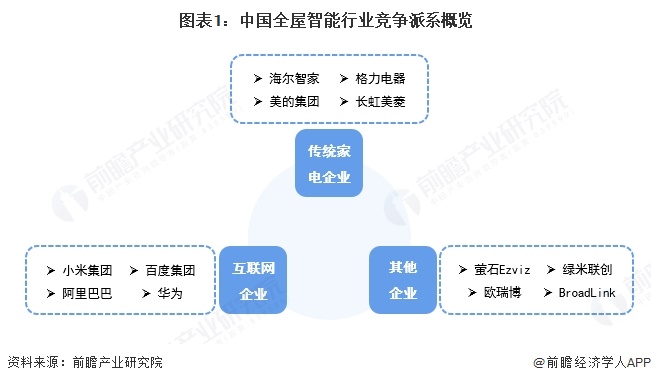
Core Insights - The article discusses the competitive landscape of China's whole-home smart industry, highlighting the key players and their strengths in the market. Group 1: Industry Overview - China's whole-home smart industry can be categorized into three competitive factions: traditional home appliance companies, internet companies, and other specialized firms [2][4]. - Major traditional home appliance companies include Haier Smart Home, Midea Group, and Gree Electric, which have strong supply chains and brand advantages [2]. - Internet companies like Xiaomi, Baidu, Alibaba, and Huawei possess significant technological and financial strengths [2]. Group 2: Competitive Landscape - The competitive landscape is diverse and layered, with Huawei focusing on high-end solutions, Xiaomi targeting the mass market, and traditional brands like Haier and Midea leveraging their appliance roots for comprehensive solutions [5]. - Companies such as UIOT and Aqara specialize in technical niches, while Tuya Smart empowers the industry with an open cloud platform [5]. Group 3: Company Profiles - **Huawei Harmony Smart Home**: Offers a wide range of smart ecosystem products with strong compatibility and stability, leveraging its communication technology [8]. - **Xiaomi Mi Home**: Focuses on a comprehensive ecosystem that includes mobile and smart home devices, known for high cost-performance [8]. - **Haier Smart Home**: Provides integrated smart home solutions with a strong global supply chain and localized service capabilities [8]. - **Gree Electric**: Primarily focuses on smart home products related to air conditioning, with a strong brand influence and product reliability [10]. - **Stone Technology**: Specializes in robotic vacuum cleaners with advanced technology and high user satisfaction [10]. Group 4: Market Dynamics - The industry shows a significant presence of registered companies in Anhui Province, with notable activity in Guangdong, Jiangsu, and Shandong [11]. - Companies like Stone Technology and Haier Smart Home have a high proportion of overseas business, indicating the importance of international markets [13]. - R&D investment varies significantly among companies, with Xiaomi leading with over 15 billion yuan in recent years [16]. Group 5: Competitive Threats and Customer Dynamics - The threat of new entrants is low due to high capital requirements and established ecosystems [18]. - The bargaining power of downstream customers is strong, with consumers being price-sensitive and B2B clients seeking cost reductions [18]. - The bargaining power of suppliers is moderately strong, particularly for core components like high-end chips and sensors [18]. Group 6: Overall Competition Status - The competition is intense and characterized by differentiation, with major players like Huawei and Xiaomi holding significant market shares [19]. - The focus of competition is on technological innovation, ecosystem compatibility, cost-effectiveness, and channel expansion [19].


iRobot’s Rally Fooled Investors, But The Balance Sheet Doesn’t Lie (NASDAQ:IRBT)
Seeking Alpha· 2025-12-08 19:20
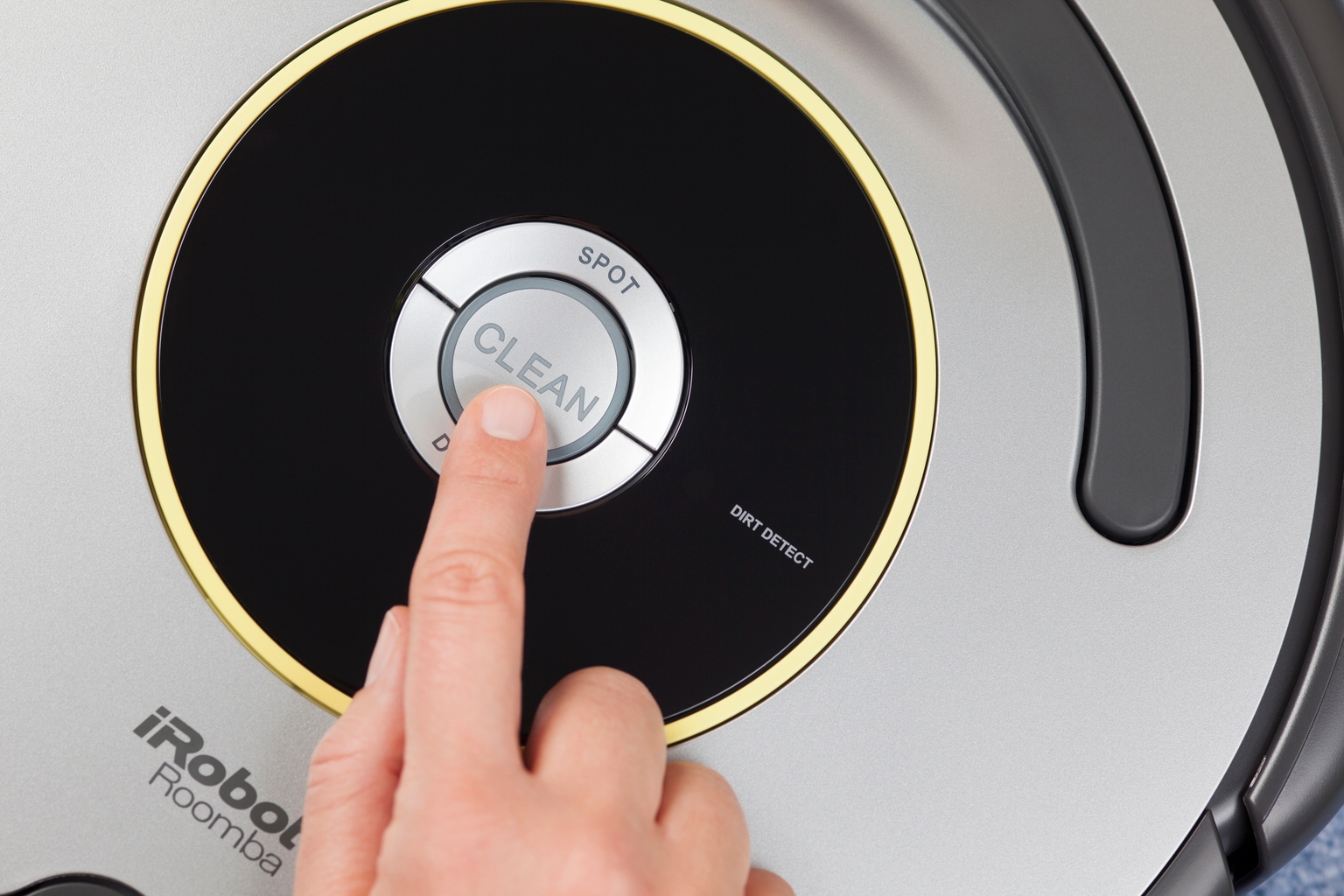
Company Overview - iRobot Corporation (IRBT) is based in Bedford, Massachusetts and was founded in 1990, specializing in consumer robots [1] - The company's most recognized product is the Roomba robotic vacuum, along with floor-mopping robots and other smart home devices [1] Investment Focus - The analysis primarily targets small- to mid-cap companies, which are often overlooked by many investors, while occasionally reviewing large-cap companies for a broader market perspective [1]

欠中国代工厂超25亿元 扫地机器人鼻祖iRobot爆雷
是说芯语· 2025-12-07 06:20
Core Insights - iRobot, once a leader in the robotic vacuum industry, is facing a severe financial crisis, with debts exceeding $350 million and cash reserves dwindling to $24.8 million, putting the company on the brink of technical bankruptcy [1] - The company's market share has plummeted from over 80% in the early 2000s to just 7.9% in 2023, largely due to increased competition and internal challenges [1] - iRobot's revenue fell by 24% year-on-year in 2022, resulting in a net loss of $286.3 million, leading to significant layoffs and a failed acquisition attempt by Amazon [1][2] Financial Situation - As of September 2023, iRobot's total assets were $481 million, total liabilities were $508 million, and shareholders' equity was -$26.8 million, indicating insolvency [1] - The company is currently negotiating with its creditor, Shanjun Robotics, for a debt resolution, which may result in a loss of control to a Chinese entity [2] Market Trends - The global robotic vacuum market saw a shipment of 17.424 million units in the first three quarters of 2025, marking an 18.7% year-on-year increase, with a notable 22.9% growth in the third quarter [3] - Chinese manufacturers dominate the market, with Stone Technology leading shipments at 3.788 million units, followed by Ecovacs and others [6][7] - The domestic market in China also experienced a robust growth of 27.2% year-on-year, with a total shipment of 4.63 million units in the first three quarters of 2025 [9]
