美的美居APP

Search documents
三大智能家居APP暗战:谁更适合用户?
和讯· 2025-12-30 09:23
Core Viewpoint - The article discusses the evolving definitions and standards of smart home technology, highlighting the recent "New National Standard" released by the National Standards Commission, which categorizes smart home products into five levels (L1-L5) based on their intelligence and user experience. The article compares three leading companies—Haier, Midea, and Xiaomi—each with distinct approaches to their smart home applications [1][5]. Group 1: Haier - Haier's smart home app aims to be the "first entry point for smart homes," featuring a new 3D interactive view that transforms a flat device list into an engaging 3D home model, enhancing user experience from "controlling appliances" to "managing life" [1]. - The app integrates over 55 brands and 167 categories of devices, extending smart living from indoor to outdoor scenarios through partnerships, such as with Changan and Chery [1]. - Haier offers a comprehensive service model that includes installation, maintenance, and design, providing a seamless user experience [1]. Group 2: Midea - Midea's app positions itself as a leader in the AI smart home era, introducing the Smart Home Agent concept and the "Xiao Mei AI Family Assistant," which aims for a "no-feel" control experience through self-sensing and decision-making capabilities [2]. - The company actively collaborates with major smartphone manufacturers and automotive companies to expand the interconnectedness of "people, vehicles, and homes," focusing on deep AI integration [2]. - Midea's strategy emphasizes making smart home technology smarter and more invisible, enhancing user comfort [2]. Group 3: Xiaomi - Xiaomi's app serves as the core control platform for its smart ecosystem, characterized by a simple interface and intuitive operation, allowing users to easily access frequently used functions [3]. - Although the 3D view feature is still under development, the app has strengthened its scene capabilities with new modes for security, environment, lighting, and shading, catering to comprehensive user needs [3]. - The app acts as an efficient "connector" and "adaptation center," integrating both Xiaomi's products and third-party devices, thus reducing complexity and cost for users looking to build a mixed-brand smart home [3]. Group 4: Conclusion - The competition among the three apps reflects deeper industry interpretations of "smart home" and the battle for user engagement, with Haier focusing on ecosystem building, Midea on control, and Xiaomi on adaptability [5]. - Users may find that there is no "best" option, but rather one that is "more suitable" based on their preferences for brand integration, AI experiences, or mixed-brand compatibility [5].





从一场展会,看美的为何能重新定义“家”的万亿价值?
格隆汇APP· 2025-12-05 13:39
Core Viewpoint - The article emphasizes that Midea is transitioning from a focus on individual product features to creating a comprehensive ecosystem in the smart home sector, driven by AI and data integration [2][10]. Group 1: Midea's Smart Home Strategy - Midea showcased two distinct smart living "operating systems" at the AIE, targeting both high-end and broader consumer markets [4]. - The high-end system, centered around AI HOME, aims to provide integrated smart home solutions for affluent users, featuring advanced AI capabilities and a "smart home brain" that learns and adapts to user needs [5][7]. - The mass-market approach, branded as Smart for Joy, focuses on user-friendly products that simplify smart home experiences, appealing to younger consumers and lowering the entry barrier for smart technology [8][10]. Group 2: Strategic Partnerships and Ecosystem Development - Midea's collaboration with BYD aims to create a "people-car-home" smart ecosystem, integrating data and control between smart appliances and vehicles [11][13]. - This partnership is expected to generate a "data flywheel" effect, enhancing user experience through seamless interaction between home and vehicle environments, while providing Midea with valuable user behavior data [13][14]. - The integration of diverse business segments within Midea allows for innovative service models, potentially transforming the company from hardware sales to ongoing service and data monetization [14][15]. Group 3: Long-term Value and Market Positioning - Midea's dual strategy of high-end and mass-market offerings positions it to capture a wide consumer base while establishing a strong brand presence in the smart home sector [10][11]. - The company's focus on creating a cohesive ecosystem enhances customer retention and creates significant switching costs for users, thereby increasing customer lifetime value [14]. - Midea's ability to redefine living paradigms and leverage its extensive user ecosystem for service monetization is seen as a key driver of its long-term valuation potential [15].


从一场展会,看美的为何能重新定义“家”的万亿价值?
Ge Long Hui· 2025-12-05 13:37
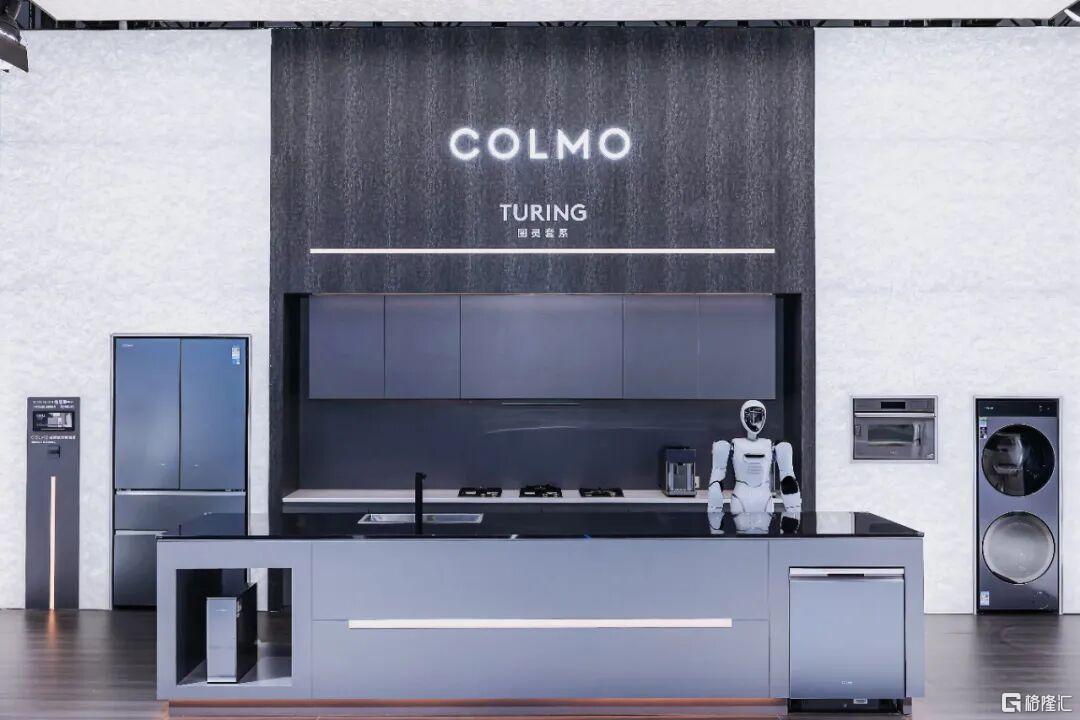
Core Viewpoint - The first Global Intelligent Machinery and Electronic Products Expo (AIE) in Zhuhai showcased Midea's vision for the future of smart home ecosystems, indicating a shift from basic functionality to integrated ecosystems and data fusion in the smart home market [1] Group 1: Midea's Smart Home Strategy - Midea presented two distinct yet complementary smart living "operating systems" at the expo: one targeting high-end users with AI HOME and the other focusing on broader accessibility with Smart for Joy [2][3] - The AI HOME system, centered around the COLMO brand, offers comprehensive smart home solutions, emphasizing user experience through autonomous learning and proactive service [3][5] - The Smart for Joy initiative aims to engage younger consumers by simplifying smart home technology, making it more accessible and user-friendly [6][8] Group 2: Market Positioning and Revenue Potential - Midea's high-end offerings are designed to enhance brand value and profitability by providing expensive, integrated smart home solutions to affluent customers, creating high switching costs and ongoing revenue opportunities [5] - The broader strategy aims to expand Midea's user base and cultivate an ecosystem, leveraging lightweight products to increase smart appliance penetration [8] Group 3: Strategic Partnerships and Data Integration - Midea's collaboration with BYD to create a "people-car-home" smart ecosystem represents a significant strategic advancement, integrating data and control between smart appliances and vehicles [10][12] - This partnership is expected to generate a powerful "data flywheel," enhancing user experience and enabling personalized smart services through continuous data flow [12][13] - The collaboration also opens avenues for innovative service models, such as energy and health management, transitioning Midea from hardware sales to ongoing service and data monetization [12][13] Group 4: Future Outlook - Midea's presentation at AIE signals a profound transformation in its business model, focusing on the potential for service monetization and the unique advantages of cross-scenario data assets [15] - The company's ability to define new living paradigms and convert them into reality will be crucial for its long-term value and market positioning [15]