
多式联运

Search documents
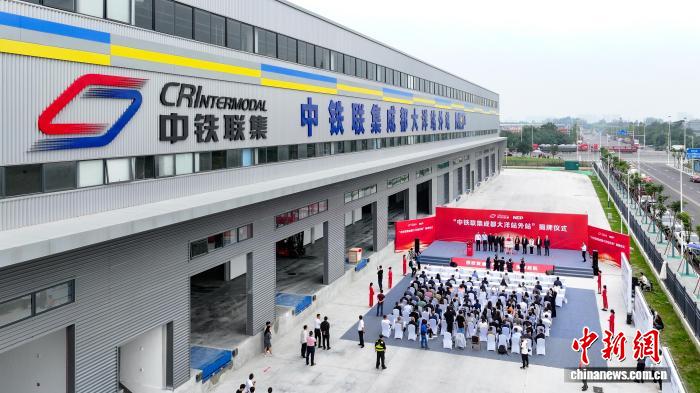
中铁联集成都大洋站外站揭牌 中欧班列多式联运体系再添“新节点”
Zhong Guo Xin Wen Wang· 2025-10-16 13:09
Core Points - The unveiling of the China Railway Container Chengdu Dayang Station marks a new phase of deep cooperation between China Railway United International Container Co., Ltd. and Shenzhen Dayang Logistics Co., Ltd. in international rail transport and supply chain collaboration [1][3] - The Chengdu Dayang Logistics Park, covering 66 acres with a planned construction area of 37,000 square meters, is strategically located in the core area of the Qingbaijiang District's logistics hub [3] - The new station will enhance the efficiency of the China-Europe Railway Express by improving storage facilities and extending service networks, thereby boosting logistics capabilities in the Chengdu region [3][4] Company Developments - The Chengdu Dayang Station will operate under the China Railway United brand, with standardized management systems implemented for logistics operations [3] - Dayang Logistics will act as a commissioned supplier, leveraging its operational strengths to expand the logistics market in Chengdu [3] - The collaboration aims to provide higher quality services to customers by utilizing both companies' resource advantages [3] Industry Impact - The establishment of the Chengdu Dayang Station is a key initiative to strengthen the railway container service network in the region, supporting the development of the Chengdu International Railway Port [4] - Ongoing projects at the Chengdu International Railway Port, including a container sharing center and multi-modal transport center, are enhancing the hub's infrastructure and operational capabilities [4] - The new station is expected to contribute significantly to the creation of an efficient and open international logistics corridor in the Chengdu-Chongqing area [4]

打通关键节点 中国粮食运输迈入“高效联运”时代
Zhong Guo Xin Wen Wang· 2025-10-16 05:47
Core Viewpoint - The article highlights the importance of the Nansha Grain General Terminal in Guangzhou as a key hub for grain logistics in Southern China, emphasizing the need for an efficient multi-modal transport system to enhance grain distribution and reduce losses during transit [1][2]. Group 1: Logistics and Efficiency - The Nansha Grain General Terminal is the largest grain transshipment hub in South China, handling millions of tons of grain annually, with a significant portion being transported to inland areas via various modes of transport [1]. - The terminal has implemented advanced automation, allowing a 70,000-ton vessel to be unloaded in one day with just two operators, showcasing a 20% increase in efficiency and an unloading capacity of 8,000 tons per hour [2]. - The average berthing time for vessels has been reduced to 1.5 days, significantly improving the overall efficiency of grain flow [2]. Group 2: Technological Innovations - The terminal utilizes high-efficiency unloading machines and a proprietary smart management system to streamline operations, which has led to a substantial increase in throughput [2]. - The introduction of a high-capacity, long-distance, closed-loop conveyor system addresses the limitations of traditional storage facilities, enhancing the efficiency of grain handling in various warehouse types [3]. - The use of innovative equipment, such as the chain conveyor, allows for seamless grain transfer between different storage levels, increasing output efficiency to 300 tons per operation [3]. Group 3: Broader Implications - The article emphasizes the need for a coordinated multi-modal transport system to address the challenges posed by the long-distance grain transport from production areas in the north to consumption centers in the south [1]. - As more key logistics nodes are optimized, China's grain transportation system is moving towards a more efficient and streamlined operation, marking a significant advancement in the country's grain logistics landscape [3].
2026年成都国际铁路港将实现集装箱年办理能力超120万标箱
Sou Hu Cai Jing· 2025-10-16 04:23
Core Viewpoint - The Sichuan Provincial Government has issued a three-year action plan to enhance the construction of the China-Europe Railway Express (Chengdu) hub, aiming to leverage the railway to promote industrial development in the Qingbaijiang District [1] Group 1: Infrastructure and Trade Development - Qingbaijiang District has established three major designated supervision sites for grain, meat, and complete vehicles, creating specialized port industry clusters for import and export [3] - The district has achieved a total foreign trade import and export volume of 35.44 billion yuan from January to August, representing a year-on-year growth of 23.5%, ranking third in the province [3] - The Chengdu International Railway Port Comprehensive Bonded Zone has maintained a "Double A" rating in the national performance evaluation for 2024, ranking second in the western and northeastern regions [3] Group 2: Industrial Growth and New Business Models - Qingbaijiang District is focusing on developing industries such as equipment manufacturing and smart home appliances, having attracted 319 port-related manufacturing enterprises [4] - The district has seen a rapid development of new business models like cross-border e-commerce and offshore trade, with 75% of the goods transported via the China-Europe Railway Express originating from within the province [4] - The district is exploring the integration of cultural tourism with the railway, having received 901,000 visitors during the recent National Day and Mid-Autumn Festival [4] Group 3: Logistics and Infrastructure Enhancement - Qingbaijiang District is enhancing logistics infrastructure to support the high-quality development of the China-Europe Railway Express, with plans to complete the construction of a container center by 2026, aiming for an annual handling capacity of over 1.2 million TEUs [5] - The district is advancing the construction of a "Smart Land Port" service platform, integrating transportation, logistics, and data networks [5] - The cold chain storage area in the district has reached nearly 1 million square meters, with ongoing efforts to implement low-carbon and zero-carbon transformations [5]
让粮食供应链更有韧性更安全
Ren Min Ri Bao· 2025-10-15 22:22
Group 1 - Food security is a national priority, and stable supply chains are essential for ensuring food security. COFCO Group is accelerating the construction of a modern food logistics supply chain system to enhance the resilience and safety of food supply chains [1] - The grain terminal at Nansha Port in Guangzhou, designed by COFCO Technology, is the largest grain port logistics facility in South China, achieving a single silo unloading capacity of 2,000 tons per hour and a berth unloading capacity of 8,000 tons per hour, with an annual throughput capacity of nearly 16 million tons [1] - COFCO Technology has developed advanced equipment such as a non-destructive multi-point grain unloading device and a self-cleaning low-damage elevator, which reduce transportation losses and improve grain circulation efficiency. The automated control system enhances unloading efficiency by 20% and enables real-time information linkage with rail and road transport [1] Group 2 - Grain depots are critical nodes in the grain transportation chain. A new grain storage project in Huangpu District, Guangzhou, designed by COFCO Technology, utilizes next-generation tubular chain technology to address issues of low capacity and high material loss in traditional systems, filling a domestic technology gap [2] - The new tubular chain system has increased grain unloading efficiency from 50 tons per hour to 300 tons per hour, allowing for flexible layout and rapid transportation of grain to designated locations, thus improving the efficiency of the entire grain transportation network [2] - The project transforms traditional grain depots from static nodes into dynamic circulation hubs, facilitating seamless connections for subsequent transportation and creating a high-efficiency, clean, and coherent logistics loop [2] Group 3 - COFCO Group is driving the transformation of traditional industries towards high-end, green, and intelligent development. Innovations in storage include the development of six-sided active temperature control and autonomous temperature control smart storage technologies for precise and eco-friendly grain storage [3] - In processing, COFCO has developed an intelligent milling machine that overcomes key industry challenges such as automatic gap adjustment and online data monitoring [3] - The company is also exploring new growth avenues, including the launch of a new generation of healthy sugar substitute D-allohexose, which supports the Healthy China strategy, and is engaging in cutting-edge research in synthetic biology for future health industry applications [3]
中粮集团发展多式联运、智能仓储 让粮食供应链更有韧性更安全
Ren Min Ri Bao· 2025-10-15 22:13
Core Insights - Food security is a national priority, and a stable supply chain is essential for ensuring food security [1] - COFCO Group is accelerating the construction of a modern grain logistics supply chain system to enhance the resilience and safety of the grain supply chain [1] Group 1: Logistics and Supply Chain Innovations - The grain terminal at Nansha Port in Guangzhou, designed by COFCO Technology, is the largest grain port logistics facility in South China, capable of unloading 8,000 tons of grain per hour and has an annual throughput capacity of nearly 16 million tons [1] - COFCO Technology has developed advanced equipment such as a non-destructive multi-point grain unloading device and a self-cleaning low-damage elevator, which reduce transportation losses and improve grain circulation efficiency [1] - The implementation of a multi-modal transport system integrates rail, sea, and road transport, leveraging the low-carbon advantages of rail and water transport to lower logistics costs and enhance production efficiency [1] Group 2: Grain Storage Innovations - The new grain storage project in Huangpu District, designed by COFCO Technology, utilizes next-generation tubular chain technology to address issues of low capacity and high material loss in traditional systems, significantly improving efficiency from 50 tons to 300 tons per hour [2] - The new tubular chain technology allows for flexible layout based on warehouse structure, facilitating rapid grain transport and enhancing the efficiency of the grain logistics network [2] - The transformation of traditional grain storage facilities into dynamic logistics hubs enables seamless connections between storage and transportation, improving the overall efficiency of grain logistics [2] Group 3: Technological Advancements and Future Growth - COFCO Group is driving the transformation of traditional industries towards high-end, green, and intelligent solutions, including the development of smart temperature-controlled storage technologies [3] - The company has launched a new generation of healthy sugar substitute, D-allohexose, contributing to the health industry and aligning with the Healthy China strategy [3] - COFCO is also exploring cutting-edge technologies in synthetic biology to prepare for future growth in the health sector [3]
天津南仓至成都城厢快速多式联运班列成功首发
Zhong Guo Xin Wen Wang· 2025-10-15 09:36
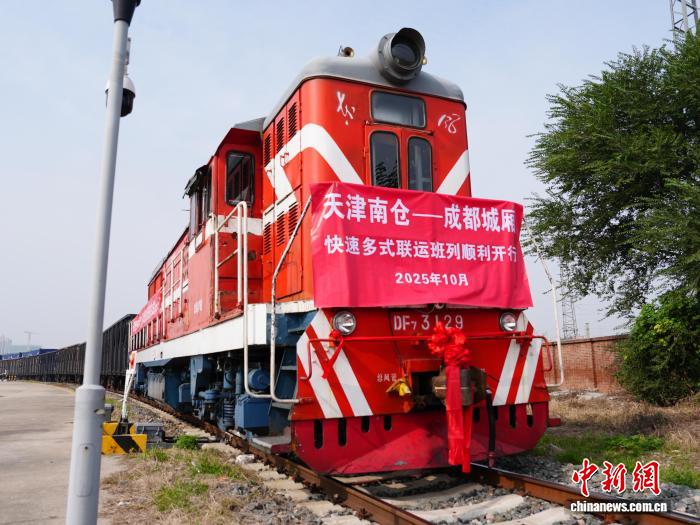
天津南仓至成都城厢快速多式联运班列成功首发 中新网天津10月15日电 (记者 王君妍 通讯员 董策 李杭)记者从中国铁路北京局集团有限公司(简称:国 铁北京局)获悉,10月15日上午,一列满载磷酸铁、汽车配件、日用百货等白货的货物班列从国铁北京 局天津铁路物流中心南仓铁路货场鸣笛启程,驶向成都城厢站。该班列是连通天津南仓和成都城厢的首 趟快速多式联运班列,成为跨区域物流通道运输的又一新突破。 据天津铁路物流中心南仓营业部经理舒树轩介绍,天津南仓至成都城厢快速多式联运班列是铁路四季度 调图后新增的运输产品,主要运输天津本地生产的太阳能板、汽车配件产品及高附加值日用品,计划每 月开行20列以上。 天津铁路物流中心营销部经理牟从凯表示,该班列采取"一站直达"的运输组织模式,每周开行5列,按 照最高时速120公里运行,从南仓到城厢全程2300公里,用时42小时。相比于传统货物列车,该班列还 采用定时发车、定点发车、定时到达的"客车化"开行模式,便于企业客户提早安排落实生产、销售、集 货等环节,运输时间压缩20%左右,有效提升了运输服务质量。 为确保该班列安全顺利开行,天津铁路物流中心成立专项工作组,提前对接天津本地制 ...
福建省首列快速多式联运班列发车
Ren Min Ri Bao· 2025-10-14 22:12
本报泉州10月14日电 (记者施钰)装载25个集装箱轻工产品的X8666次快速多式联运班列近日从福建省 泉州市黄塘铁路货场驶出,以最高120公里的时速开往重庆团结村站,标志着福建省首列快速多式联运 班列正式开行。 该班列采用"公路+铁路"多式联运模式,实行固定线路、固定时刻、固定班次运行,综合运输成本较公 路运输降低约25%。为确保班列顺利开行,中国铁路南昌局集团有限公司联合中铁集装箱运输有限公 司,统筹车务、机务、物流等部门协同作业,实现运输计划、车辆调度、货物追踪等全流程信息实时交 互。目前,黄塘至团结村快速多式联运班列已纳入铁路运行图,按隔日开行模式实施常态化运输。 (责编:赵欣悦、袁勃) 关注公众号:人民网财经 《 人民日报 》( 2025年10月15日 11 版) ...
福建省首列快速多式联运班列发车 综合运输成本较公路运输降低约25%
Ren Min Ri Bao· 2025-10-14 21:59
该班列采用"公路+铁路"多式联运模式,实行固定线路、固定时刻、固定班次运行,综合运输成本较公 路运输降低约25%。为确保班列顺利开行,中国铁路南昌局集团有限公司联合中铁集装箱运输有限公 司,统筹车务、机务、物流等部门协同作业,实现运输计划、车辆调度、货物追踪等全流程信息实时交 互。目前,黄塘至团结村快速多式联运班列已纳入铁路运行图,按隔日开行模式实施常态化运输。 (文章来源:人民日报) 本报泉州10月14日电 (记者施钰)装载25个集装箱轻工产品的X8666次快速多式联运班列近日从福建省 泉州市黄塘铁路货场驶出,以最高120公里的时速开往重庆团结村站,标志着福建省首列快速多式联运 班列正式开行。 ...
散改集”+“保税混配”,烟台港铜精矿业务跑出“加速度
Qi Lu Wan Bao Wang· 2025-10-14 15:22
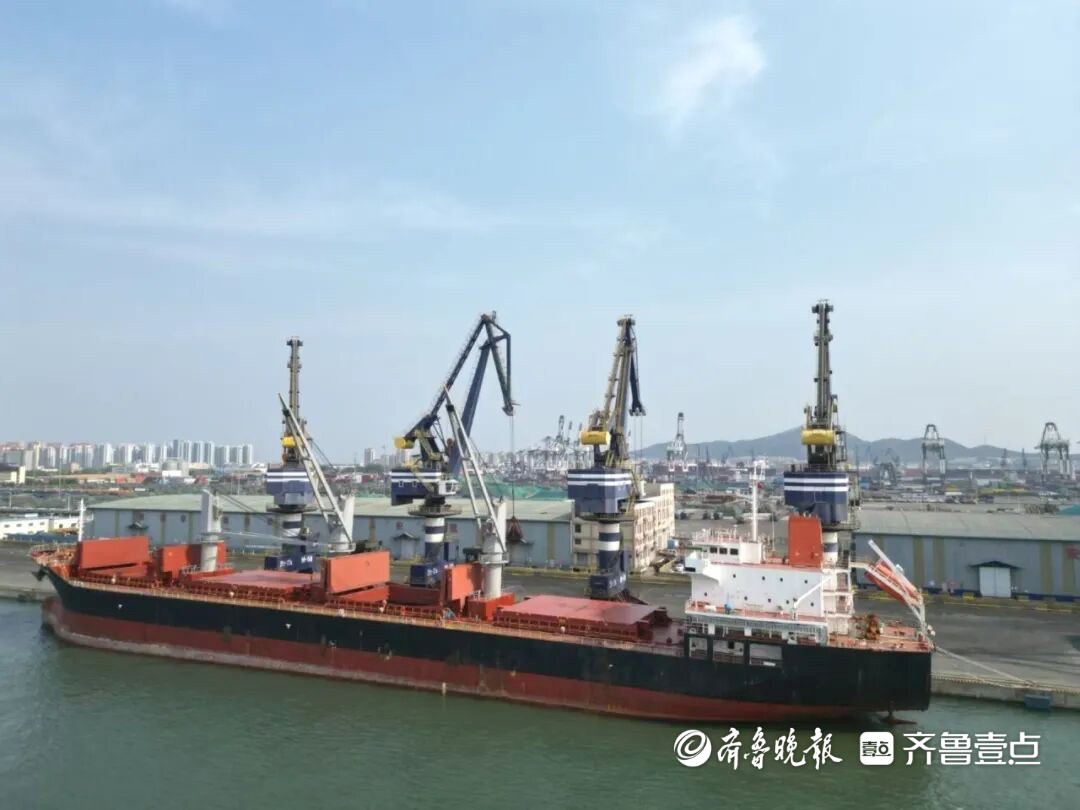
Core Insights - Yantai Port is experiencing a peak in copper concentrate operations, with imports arriving from South America, Australia, and Southeast Asia, contributing to over 2 million tons of copper concentrate handled from January to September 2023, which supports the construction of an international mineral product bonded blending center and enhances logistics in the Yellow River basin [1][3]. Group 1: Business Development - Yantai Port aims to enhance national copper resource security and stabilize raw material imports for inland enterprises by focusing on bonded blending projects and multi-modal transport channel construction [3]. - The port is integrating various elements such as berths, shipping routes, and bonded blending to establish a comprehensive supply chain for copper concentrate, linking foreign mines, shipping, port operations, and domestic smelting and sales [3][5]. Group 2: Logistics and Operations - Yantai Port is facilitating multi-modal transport through sea-rail and transshipment methods, ensuring efficient logistics for copper concentrate, including a continuous sea-rail container service from Yantai to Liaocheng [5]. - The port has developed a transportation model that allows direct shipping from foreign mines to the port, followed by short-distance trucking to manufacturers, ensuring a steady supply of raw materials for smelting enterprises [5][6]. Group 3: Efficiency and Innovation - The port is enhancing its blending processes and has designed an automated blending line capable of mixing multiple types of copper concentrate simultaneously, achieving a blending efficiency of 4,000 tons per shift, which is five times more efficient than initial operations [6]. - The domestic bonded blending business has replaced previous operations that were limited to countries like Malaysia, effectively reducing costs and improving the overall service capability and market competitiveness of Yantai Port's mineral product supply chain [6].
第四届国际港航物流暨多式联运(上海)展览会将于2026年4月在沪举办
Zheng Quan Shi Bao Wang· 2025-10-14 02:40
Core Viewpoint - The fourth International Port and Shipping Logistics and Multimodal Transport (ISL Expo 2026) will take place in Shanghai on April 22, 2026, with significant enhancements in scale and participation [1] Group 1: Event Details - The total exhibition area will increase by 50% to 20,000 square meters [1] - The number of professional attendees is expected to rise to 25,000, with foreign trade buyers increasing to 3,000 [1] - The number of industry-specific forums will expand from 11 to 15, with over 20 related activities planned [1] Group 2: Internationalization and Participation - The goal is to have 10% of the exhibition area occupied by overseas companies and 5% of attendees from abroad [1] - Currently, over 50% of the exhibition space has been reserved, showing significant improvement compared to the previous edition [1] Group 3: Previous Exhibitions - The first three editions attracted over 500 quality exhibitors, including logistics technology and AI companies, and more than 6,000 logistics heads from key export industries [1] - The event has established an international logistics enterprise database with over 200,000 pieces of information [1]