Physical AI

Search documents
Why This Analyst Says Any Dip in Tesla Stock Is Worth Buying
Yahoo Finance· 2026-02-03 18:31
Core Viewpoint - Tesla's stock trades at a significantly higher forward price-to-earnings (P/E) multiple of approximately 248 times compared to the sector average of around 18 times, reflecting investor confidence despite recent performance challenges [1] Financial Performance - In Q4 2025, Tesla reported total revenue of about $24.9 billion, a 3% year-over-year decline, with automotive revenue at $17.69 billion, slightly below the consensus estimate of $17.92 billion [4][6] - GAAP operating profit was $1.41 billion, exceeding estimates by 8.8%, while non-GAAP EPS of $0.50 surpassed forecasts by 10.8% [6] - Free cash flow margin decreased from 7.9% to 5.7%, indicating ongoing heavy investment for growth [7] Market Position and Competition - Tesla lost its position as the world's largest EV maker to BYD, which sold 2.26 million EVs in 2025, highlighting increased competition, particularly from Chinese manufacturers [4] - The U.S. EV market is projected to face a 15% contraction in annual passenger EV sales in 2026, with overall vehicle sales expected to decline by 2.4% [5] Analyst Perspectives - Roth Capital Markets analyst Craig Irwin maintains a "Buy" rating with a price target of $505, suggesting that Tesla's valuation will be driven by future catalysts rather than current auto sales [3] - Other analysts, such as Dan Ives from Wedbush, have a bullish outlook with a base-case target of $600 and a bull-case target of $800, based on the potential for Tesla to capture a significant share of the global autonomous vehicle market [12] Future Growth Opportunities - Tesla's partnership with Pilot to deploy Semi chargers across major freight corridors is expected to enhance the infrastructure for electric trucks, broadening revenue opportunities beyond passenger vehicles [8][9] - A new agreement with SPIE for battery energy storage systems in Europe aims to streamline Tesla's utility-scale and commercial storage projects, making operations more repeatable [10] Upcoming Expectations - The next earnings release is anticipated in April, with Wall Street expecting EPS of $0.30 for the current quarter, reflecting a 100% year-over-year growth [11]

NXP(NXPI) - 2025 Q4 - Earnings Call Transcript
2026-02-03 14:02
Financial Data and Key Metrics Changes - NXP delivered fourth quarter revenue of $3.34 billion, an increase of 7% year-on-year and up 5% sequentially, which was $35 million better than the midpoint of guidance [5][6] - Non-GAAP operating margin in the fourth quarter was about 35%, 40 basis points above the same period a year ago [6] - Non-GAAP earnings per share were $3.35, $0.07 better than guidance [6][14] - Non-GAAP gross profit was $1.91 billion, with a 57.4% non-GAAP gross margin, slightly missing guidance due to stronger-than-expected mobile revenue [14][15] Business Line Data and Key Metrics Changes - Automotive revenue was $7.1 billion, flat year-on-year, with the second half performance aligning with the long-term growth outlook of 8% to 12% [7][8] - Industrial and IoT revenue was $2.3 billion, flat year-on-year, but showed strong growth in the second half, exceeding the long-term growth outlook [9] - Mobile revenue was $1.6 billion, up 6% year-on-year, driven by stronger demand in the premium mobile market [10] - Communications infrastructure revenue was $1.3 billion, down 24% year-on-year, with expectations of flat growth over the long term [10] Market Data and Key Metrics Changes - All regions and end markets are expected to be up year-on-year in the first quarter of 2026, with guidance for revenue of $3.15 billion, up 11% versus the year-ago period [11][12] - Automotive is expected to be up in the mid-single digits versus Q1 2025, while industrial and IoT is expected to be up in the low-20% range year-on-year [12][19] Company Strategy and Development Direction - The company remains focused on disciplined investment and portfolio enhancements to drive profitable growth while maintaining control over operational factors [13] - NXP is shifting its R&D resources towards software-defined vehicles and physical AI, with a focus on enhancing strategic priorities [20][21] - The company plans to stop new product development in the RF Power business, redirecting resources to more aligned areas [20] Management's Comments on Operating Environment and Future Outlook - Management expressed optimism about the demand environment, indicating that the inventory digestion phase is largely behind them [36][41] - The company expects to operate within its long-term financial model for the full year of 2026, benefiting from secular trends in its focus end markets [22] - Management noted that the accelerated growth drivers in the automotive sector are now expected to be within or better than the model for 2026 [78] Other Important Information - The company completed the acquisition of MEMS sensor business, receiving $900 million in gross proceeds, with a one-time gain of approximately $630 million recognized in the first quarter's GAAP guidance [21] - NXP's balance sheet remains strong, with total debt of $12.2 billion and cash of $3.3 billion, allowing for flexibility in investments and capital returns [16][18] Q&A Session Summary Question: Channel Restock Strategy - Management indicated that they are moving towards a long-term target of 11 weeks of inventory, reflecting an improving demand environment [25] Question: Communications Business Dynamics - The communications infrastructure business is expected to benefit from growth in the secure car segment, offsetting declines in digital networking and RF power [28] Question: Customer Ordering Trends - Internal signals indicate improved customer ordering trends, with increased backlog and short-term orders [34][35] Question: Automotive Demand Dynamics - Management remains optimistic about automotive demand, with expectations for growth in Q1 and a focus on content gains despite low single-digit price declines [36][41] Question: Impact of Divestitures - The MEMS sensor divestiture is expected to have a revenue impact of around $300 million per year, while the RF business will continue to contribute for at least the next two years [42][44] Question: Supply Disruptions - Management noted that supply disruptions have not significantly impacted orders, although there are ongoing discussions about memory supply concerns [49][51] Question: Geographic Demand Differences - No significant regional differences in automotive demand were noted, with expectations for strong performance across all regions [51][72] Question: Acquisitions and Customer Interest - Recent acquisitions have accelerated interest in NXP's software-defined vehicle portfolio, with strong customer engagement expected to lead to design wins [70]

Cyngn Accelerates Commercial Deployment of Physical AI with NVIDIA Isaac Sim
Prnewswire· 2026-02-03 12:05
Core Insights - Cyngn is advancing its collaboration with NVIDIA by developing a simulation environment using NVIDIA Isaac Sim to enhance the commercial deployment of its autonomous vehicle solutions [1][2] Group 1: Collaboration and Technology Development - The simulation environment allows Cyngn to run its autonomy and fleet management software in a high-fidelity digital warehouse, facilitating faster validation and refinement of capabilities [1][3] - This environment supports larger simulated fleets and more complex operational scenarios, enabling Cyngn to accelerate quality assurance cycles and evaluate new features earlier in development [3][4] Group 2: Strategic Impact - The use of NVIDIA Isaac Sim is seen as a critical factor in bringing new autonomous products to market, allowing for faster validation of new use cases and reducing development risks [4] - Cyngn is contributing a detailed industrial-vehicle dynamics model to the Isaac Sim framework, which aims to improve simulation accuracy for real-world performance [4] Group 3: Future Applications - Cyngn plans to utilize the new simulation environment for development, customer demonstrations, and early-stage training workflows, while also exploring opportunities with existing partners [5] - The company’s DriveMod technology enables customers to integrate self-driving technology into their operations without significant upfront costs [7]




英伟达3D模型打造“AI建筑师特工队”,8位华人合著,包括千问实习生
3 6 Ke· 2026-02-03 11:44
Core Insights - Nvidia announced a new 3D generalist model, 3D-GENERALIST, which aims to revolutionize the construction of 3D worlds by using AI-generated synthetic data to significantly reduce the costs associated with visual model pre-training [1][12] - The model integrates four core elements of 3D environment generation—layout, material, lighting, and assets—into a unified decision-making framework, enhancing the efficiency and physical realism of complex 3D scene construction [1][46] Group 1: Current Challenges - Existing technologies primarily focus on single aspects of 3D generation, such as layout or texture synthesis, making it difficult to achieve collaborative optimization across all elements [13] - Current generated scenes lack separable and operable objects, limiting their applicability in tasks requiring precise annotations or robotic interaction simulations [13] Group 2: Research Methodology - The research team expanded the role of a "designer" into a "team of architects," breaking down the construction process into specialized tasks [14] - A three-step "scene strategy" was introduced, utilizing a panoramic diffusion model to generate guiding images, followed by structural extraction and programmatic generation of 3D rooms [16] Group 3: Key Technologies - The model employs a self-improvement mechanism that generates multiple candidate action sequences, selecting the optimal one based on CLIP scores for further fine-tuning [20] - A domain-specific language was established to standardize action command formats, ensuring compatibility with tool APIs [23] Group 4: Performance Validation - 3D-GENERALIST achieved a collision-free score of 99.0 and an overall physical semantic alignment score of 67.9, surpassing baseline methods [24][25] - The model's CLIP score reached 0.275 after three rounds of fine-tuning, significantly higher than versions without fine-tuning [27] Group 5: Research Team - The paper features eight Chinese authors, including notable figures from Stanford University and Tsinghua University, highlighting a strong academic background in AI and computer science [2][30][39] Group 6: Conclusion - 3D-GENERALIST integrates various modeling aspects into a cohesive decision-making sequence, demonstrating the feasibility of high-quality synthetic data as a scalable alternative to manual annotation, potentially lowering the cost barriers for downstream visual and robotic model training [46]

NXP Semiconductors Reports Fourth Quarter and Full-Year 2025 Results
Globenewswire· 2026-02-02 21:10
Core Insights - NXP Semiconductors reported fourth-quarter revenue of $3.34 billion, exceeding guidance and showing sequential improvement across all end markets, with a focus on software-defined vehicles and physical AI [1] - The company emphasized operational discipline and strategic acquisitions to enhance its portfolio, positioning itself for profitable revenue growth in the automotive, industrial, and IoT sectors [1] Financial Performance - Fourth-quarter revenue was $3,335 million, up from $3,173 million in the previous quarter and $3,111 million year-over-year [17] - Gross profit for the fourth quarter was $1,807 million, compared to $1,787 million in the previous quarter and $1,678 million year-over-year [17] - Operating income for the fourth quarter was $744 million, with a net income of $468 million, down from $646 million in the previous quarter [17] Guidance for Q1 2026 - NXP provided revenue guidance for the first quarter of 2026, estimating between $3,050 million and $3,250 million, reflecting a quarter-over-quarter decline of 3% to 9% but a year-over-year increase of 8% to 15% [4] - Expected gross profit for Q1 2026 ranges from $1,685 million to $1,831 million, with gross margins projected between 55.2% and 56.3% [4] Strategic Focus - The company is committed to disciplined investment, margin expansion, and portfolio optimization to create sustainable long-term value for shareholders [1] - NXP's strategic acquisitions have strengthened its position in intelligent systems at the edge, particularly in the automotive and industrial sectors [1] Market Position - NXP reported total revenue of $12.27 billion for the full year 2025, indicating a strong market presence and operational effectiveness despite challenges in the first half of the year [13]

Real-World Autonomy: At Production Scale | Rasmus Bendvold | TEDxDetroit
TEDx Talks· 2026-02-02 15:40
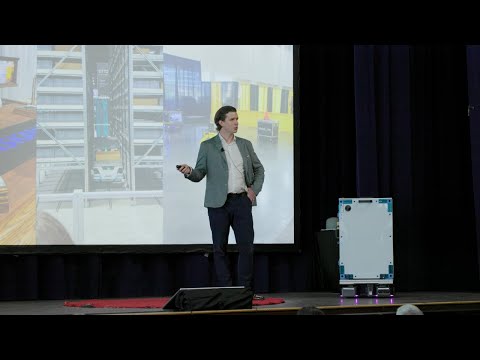
[music] [applause] Please welcome the managing director of Wheel Me, Rasmus Binbold. >> Hello everyone. [cheering] [applause] Thank you.It's great to be here today. I'm so excited to see all of you. Today, I'll talk about real world autonomy at production scale.So, let's start with this. Hands up if you've ever seen a robot do a backflip in your social feed. About 50%.Pretty cool. And the robots, they are indeed really, really cooled. They're a feat of engineering.However, when it comes to the real world, s ...
汽车-高度自动驾驶时代已至-Autos & Shared Mobility-Global Auto Monitor The Era of Abundant Autonomy Is Upon Us
2026-02-02 02:22
Summary of Key Points from the Conference Call Industry Overview - The conference call focuses on the **North American automotive industry**, particularly the developments in **autonomous vehicles (AV)** and the transition towards **physical AI** in automotive technology [1][2][3]. Core Company Insights Tesla (TSLA) - Tesla is phasing out the **Model X/S** to concentrate on **robotaxi** and **Optimus** initiatives, indicating a strategic shift towards autonomy [1]. - The company is expected to incur a **cash burn of $8 billion** in 2026 due to increased spending, which may pressure the stock but is deemed necessary to maintain leadership in **autonomous vehicles**, **robotics**, and **energy** sectors [2]. - Current stock valuation is at **30x 2030 EBITDA**, with a cautionary stance on potential downside risks to near-term consensus estimates [3]. General Motors (GM) - GM's stock rose nearly **10%** following a strong earnings report, with a **2026 guidance** that exceeds consensus expectations [2]. - The company has announced a **$6 billion buyback authorization**, reinforcing its commitment to capital return [2]. - The price target for GM is set at **$100**, with a bullish case reaching **$140** [2]. Industry Dynamics - The automotive industry is entering a period characterized as an **'EV Winter'**, expected to persist through 2026, which may impact growth prospects [4]. - Despite challenges in the electric vehicle segment, there is a slightly more optimistic outlook for **internal combustion engine (ICE)** and **hybrid vehicles**, projected to grow by **1.0% year-over-year** [4]. - The year 2026 is anticipated to be a pivotal moment for **autonomous driving**, with advancements in technology and new entrants in the market [4]. Additional Insights - The **global auto market** saw a **1% decline** in December, influenced by a drop in China, while the U.S. market showed a smaller-than-expected decline [18]. - **BYD** reported a **20%+ month-over-month growth** in overseas registrations, indicating strong performance in Europe and Latin America, despite challenges in the ASEAN region [13]. - **Kia** and **Hyundai** are positioned favorably in the physical AI narrative in Korea, suggesting potential for re-rating of traditional OEMs globally [9]. Financial Performance Highlights - **Volvo** reported revenues of **SEK 123.8 billion**, a **1% increase** compared to consensus expectations, with an adjusted EBIT of **SEK 12.8 billion**, exceeding forecasts by **12%** [8]. - The **global auto sales** summary indicates a **5.1% year-to-date growth**, with notable performances from various OEMs, although some, like **General Motors**, faced a **15.9% decline** in December sales [22]. Conclusion - The North American automotive industry is navigating a complex landscape with significant shifts towards autonomy and physical AI, with key players like Tesla and GM leading the charge. The outlook remains cautious due to potential headwinds in the EV market, but opportunities for growth in traditional segments and advancements in technology present a mixed but promising scenario for investors.
Dan Ives names ‘best in the world' stocks to bet on ‘Physical AI'
Invezz· 2026-01-30 18:56
Core Viewpoint - The year 2026 is identified as the pivotal moment for "Physical AI," where artificial intelligence transitions from digital platforms to physical applications in robots, vehicles, and handheld devices [1] Group 1: Tesla Inc (NASDAQ: TSLA) - Tesla is viewed as the leading company in the Physical AI sector, evolving beyond a traditional car manufacturer to a significant player in embodied AI [1] - Concerns regarding quarterly delivery fluctuations are dismissed, with a focus on the anticipated "golden year" ahead [1] - Key technologies driving Tesla's valuation include Full Self-Driving (FSD) and the Optimus humanoid robot, with FSD adoption expected to reach 50% and autonomous "Cybercabs" operational in 30 cities by the end of 2026 [1] Group 2: Nvidia Corp (NASDAQ: NVDA) - Nvidia is described as the foundational company for the Physical AI ecosystem, providing essential computing power and specialized chips for autonomous fleets and industrial robotics [1] - The company is considered four to five years ahead of competitors, creating a significant competitive moat [1] - Nvidia's hardware is characterized as the "oxygen" of the industry, indicating its critical role in the shift towards physical robotics [1] Group 3: Apple Inc (NASDAQ: AAPL) - Apple is positioned as a key player in the upcoming physical AI upgrade cycle, with 2026 seen as a crucial year for the company [1] - The integration of generative AI into iPhone hardware and a potential partnership with Google Gemini are highlighted as catalysts for a major upgrade cycle [1] - The iPhone is regarded as the primary interface for consumers engaging with the AI revolution, with predictions of unlocking billions in recurring, high-margin revenue, potentially elevating Apple's valuation towards $5 trillion [1]


Urtasun: Autonomous trucking is where self-driving will scale first
CNBC Television· 2026-01-30 15:06
So, you just raised this funding round. You're focused on autonomous trucking. Uh Uber's in the mix here too if I I'm not mistaken.This comes in a week where there is more focus in part because of Tesla yesterday on uh physical AI. How do you play in that space. >> Yes.So the the goal really of the company of WAB is to lead physical AI and to build for the first time a single brain single AI system that is fully verifiable and safe and that can actually drive and perform all the tests necessary for uh you k ...
Why Dan Ives Thinks Tesla And Nvidia Will Define The 'Physical AI' Era - NVIDIA (NASDAQ:NVDA), Tesla (NASDAQ:TSLA)
Benzinga· 2026-01-30 08:19
Core Viewpoint - The investment thesis emphasizes Tesla Inc. and Nvidia Corp. as the leading companies in the physical AI market, which is seen as a critical component of the fourth industrial revolution [1][2]. Tesla Inc. - Tesla's focus has shifted from vehicle delivery to high-margin software adoption, particularly through Full Self-Driving (FSD) technology, which is expected to increase adoption from 12% to 50% [4]. - A base case valuation of $600 and a bullish case of $800 are projected, driven by the margin story associated with FSD [4]. - The year 2025 is anticipated to be a significant transition year, leading into a "golden year" in 2026, influenced by advancements in FSD, autonomous Cybercabs, and robotics [5]. Nvidia Corp. - Nvidia is viewed as the foundational provider of hardware essential for autonomous systems and industrial robotics, positioning it as a leader in the AI infrastructure market [6]. - The company is considered to be four to five years ahead of competitors in the chip industry, making it a primary beneficiary of the current capital expenditure surge in the tech sector [6]. Energy Constraints - The primary constraint in the AI arms race is identified as energy shortages rather than capital or technology [7][8]. - There is a notable increase in data centers under construction, which is straining the energy grid, necessitating vertical integration strategies such as custom cooling and on-site energy generation to address the power crunch [7]. Price Action - As of 2026, Tesla shares have decreased by 4.91%, but have shown a 30.57% increase over the last six months and a 4.07% increase over the year [10]. - Nvidia shares have increased by 1.94% year-to-date, with a 7.39% rise in six months and a 54.44% increase over the year, indicating a stronger price trend compared to Tesla [10][11].