
脑机接口技术

Search documents
脑机接口“接入”睡眠干预,加速打开万亿睡眠经济市场
Di Yi Cai Jing· 2025-07-28 05:46
Group 1: Core Insights - Sleep disorders have become a significant public health issue, with non-invasive brain-computer interface (BCI) technology providing potential for daily intervention in sub-healthy sleep populations, shifting health management from "passive treatment" to "active prevention" [1] - The 2025 Sleep Neuroregulation Medicine Seminar highlighted the transition from traditional symptom management to personalized proactive health management based on real-time neural activity perception and precise regulation [1] - The development of BCI technology for sleep treatment is crucial, as sleep disorders can exacerbate mental health issues like depression and pain, creating a cyclical relationship [2][3] Group 2: Market Potential - The Chinese sleep economy market has grown from 261.63 billion yuan in 2016 to 495.58 billion yuan in 2023, with projections to reach 658.68 billion yuan by 2027, indicating a potential trillion-yuan market [6] - The launch of the "Dream Neighbor" device, a consumer-grade product integrating BCI technology with daily sleep scenarios, aims to provide tools for "precise sleep intervention" and "active health management" [6][7] - The focus on consumer-grade products may enhance public awareness and market recognition, while the development of medical-grade products will target conditions like depression, anxiety, and chronic pain [7]
科学与健康|健康“链”世界 中国医疗装备走出国际范儿
Xin Hua She· 2025-07-25 14:39
Core Insights - China's medical equipment industry is rapidly emerging, with exports covering over 9,000 medical institutions in more than 190 countries and regions by 2024 [2] - The industry has seen significant growth, with revenue from large-scale medical equipment enterprises exceeding 540 billion yuan, maintaining a rapid growth trend over the past decade [5] - The approval of innovative medical devices has accelerated, with 45 new devices approved in the first half of the year, marking an 87% year-on-year increase [5] Group 1: Industry Growth and Innovation - The medical equipment market in China has reached a scale of 1.35 trillion yuan, showcasing the country's position as a major application market and production base for medical equipment [5] - Innovative products such as smart bionic hands and advanced imaging systems are being developed, demonstrating the integration of brain-machine interface technology and artificial intelligence [5][9] - The international competitiveness of China's medical equipment industry has been improving, with a compound annual growth rate of 9.4% in import and export trade over the past five years [8] Group 2: Global Expansion and Collaboration - Chinese medical equipment is increasingly being utilized globally, with products like CT scanners and ventilators being exported to serve numerous patients [8] - The shift from single equipment exports to comprehensive professional solutions is evident, as companies like Mindray Medical have developed integrated ecosystems to enhance operational efficiency [8][10] - Collaborative efforts are being made to strengthen the ecosystem of production, education, research, and application, with initiatives from various government bodies to support innovation in the medical field [10][11]



Neuralink预计心灵感应脑机设备将于2029年获批
news flash· 2025-07-23 23:54
Core Insights - Neuralink anticipates regulatory approval for its Telepathy device by 2029, aiming for 2,000 surgeries annually and generating $100 million in revenue [1] - By 2030, Neuralink plans to launch Blindsight, increasing the annual surgery volume to 10,000 and projecting over $500 million in revenue [1]
意念下棋 科幻成真(科技瞭望)
Ren Min Ri Bao Hai Wai Ban· 2025-07-22 21:56
Core Viewpoint - The successful initiation of China's first invasive brain-computer interface (BCI) clinical trial marks the country as the second globally, after the United States, to enter this phase of clinical testing [3][4]. Group 1: Clinical Trial Overview - The clinical trial is a collaborative effort involving the Chinese Academy of Sciences' Center for Excellence in Brain Science and Intelligence Technology, Fudan University Huashan Hospital, and related enterprises [3][4]. - The research team progressed from animal testing to human trials, ensuring the technology's maturity, safety, and functional effectiveness, achieving a breakthrough from laboratory to clinical application [3][4][5]. Group 2: Technical Innovations - The BCI system utilizes a minimally invasive "embedded" surgical method, requiring only a small recess in the skull rather than full craniotomy, which reduces recovery time and infection risks [7][8]. - The flexible neural electrodes developed are significantly smaller and more flexible than existing products, such as those from Neuralink, with a cross-sectional area only 1/7 to 1/5 of Neuralink's electrodes, minimizing tissue damage and inflammatory responses [7][8][9]. Group 3: Patient Experience and Outcomes - A 37-year-old male participant, who lost all four limbs due to an accident, successfully used the BCI to play chess and racing games, achieving a performance speed comparable to that of able-bodied individuals [3][9]. - After just 2-3 weeks of adaptive training, the participant was able to type, send messages, and play computer games, regaining a sense of "hand" functionality and reconnecting with the world [9][10]. Group 4: Future Prospects - The project team plans to enable the participant to control robotic arms for physical tasks such as grasping and holding objects, expanding his capabilities in daily life [10]. - The BCI system is expected to assist individuals with complete spinal cord injuries, upper limb amputations, and amyotrophic lateral sclerosis in regaining motor functions and improving their quality of life once it receives regulatory approval for market entry [10].
实现多个国际首次!美媒:脑机接口技术,“中国正迎头赶上”
Huan Qiu Shi Bao· 2025-07-21 22:40
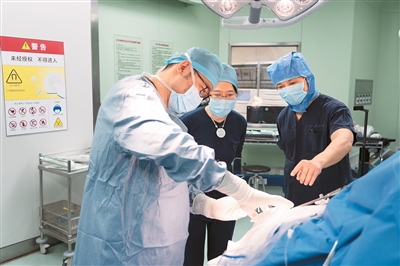
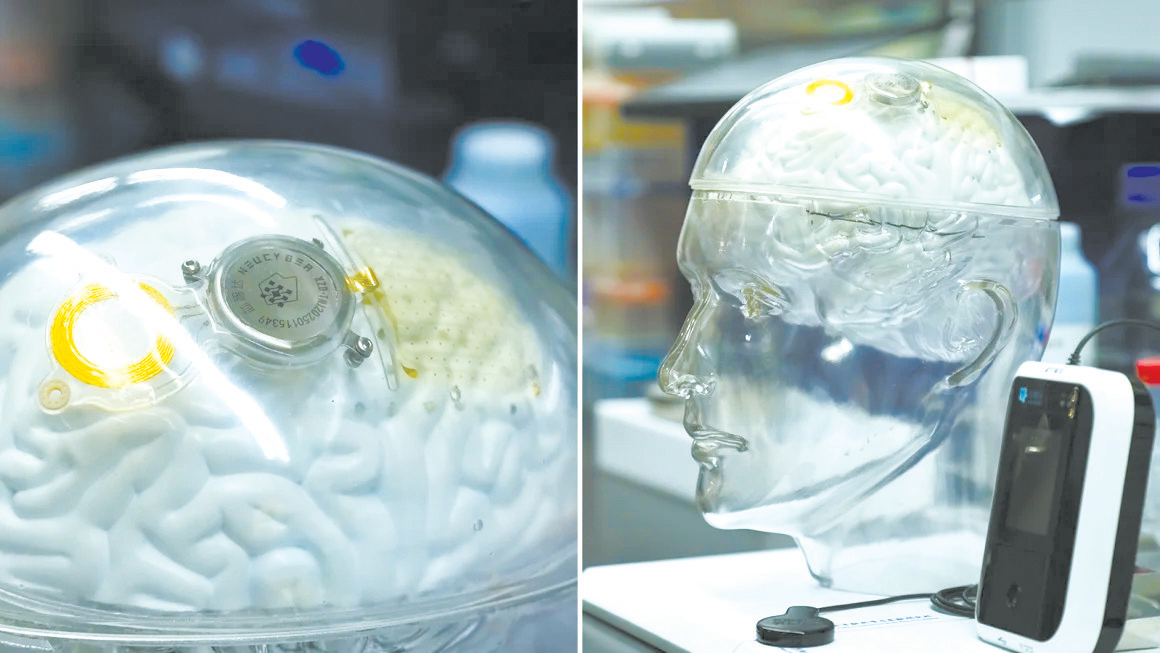
【环球时报特约记者 谢昭 环球时报记者 马俊】脑机接口技术被认为是当前最热门的前沿领域之一,美国富豪埃隆·马斯克创立的Neuralink公司已经成功实施 了多例相关手术。美国有线电视新闻网(CNN)20日注意到,中国当前在该领域正迎头赶上,"正在接近全球先进水平,在复杂性上与美国和英国相当"。 帮患者重建交流能力 所谓脑机接口技术,是指从大脑采集高质量的脑电信号,然后将其处理解码后输出,实现对其他设备的操作。CNN称,北京脑科学与类脑研究所研制的无 线脑机接口芯片已经在临床试验中植入5名患者的大脑中。《环球时报》记者此前在采访中了解到,按照脑电波接收方式的不同,脑机接口主要分为三条技 术路线:不用手术,只是将电极贴在头皮上采集脑电波的无创(非侵入式)模式;通过手术让电极贴着大脑皮层,但并没有插进脑组织的半侵入式;利用微 针或微丝将电极直接插入脑组织的侵入式。从理论上看,采集电极与大脑组织离得越近,收集的脑电波信号质量就越好,但手术风险性也越大。 北京脑科学与类脑研究所研制的名为"北脑一号"的芯片只有硬币大小,属于半侵入式。CNN引用美国乔治城大学神经科学教授马克西米利安·里森胡贝尔的 评论称,大多数美国公司采 ...
“起步晚美国20年,中国迅速赶上!”
Huan Qiu Wang· 2025-07-21 13:50
近日,美国有线电视新闻网(CNN)在一篇报道中详细介绍了中国"脑机接口"技术的进展,称中国的这 项技术虽然起步晚于美国20年,但已经迅速赶了上来,甚至已经有能力与美国富商埃隆·马斯克研发这 一技术的企业,一较高下了。 "北脑一号"如硬币一般 一直关注着中国脑机接口技术进展的里森胡贝尔则认为,中国的技术目前在精巧程度上已经与美国和英 国等科技发达的国家相当了。 大小 报道中,CNN先是讲述了今年3月被中国媒体披露的一场引人关注的脑机接口技术临床试验。一位不幸 患上"渐冻症",已经无法说话的67岁女子,通过中国自行研发的半侵入式脑机接口芯片'北脑一号',准 确地表达出了她想要吃饭的意思。 CNN还介绍了这场临床试验的一些背景,比如试验是由北京市政府和多所本地高校联合组建的北京脑 科学与类脑研究所(CIBR)主推的,CIBR的所长——同时也是该机构孵化出的中国脑机接口技术企业 NeuCyberNeuroTech的首席科学家罗敏敏,还在今年5月邀请CNN的记者参观了他所负责的科研机构, 并在其间谈及了中国与美国在脑机接口技术上不同的路线:美国的技术对大脑更具入侵性,而中国的技 术则是半入侵性的。 美国乔治城大学的神经 ...

西部首例!脊髓损伤患者脑机接口手术于四川大学华西医院顺利完成
news flash· 2025-07-21 08:50
Core Viewpoint - The successful implantation of a brain-computer interface (BCI) at West China Hospital of Sichuan University marks a significant advancement in neurotechnology, providing new hope for rehabilitation in patients with spinal cord injuries [1] Group 1: Medical Innovation - The BCI surgery is the first of its kind in Western China, performed on a patient with quadriplegia due to spinal cord injury from a car accident [1] - The procedure involves implanting a BCI device outside the patient's dura mater, utilizing wireless power technology for real-time transmission of brain signals [1] - The technology has undergone multiple clinical trials, with the longest implantation duration exceeding 21 months, and is currently part of a multi-center registered clinical trial [1] Group 2: Patient Demographics and Impact - There are approximately 3 to 4 million spinal cord injury patients in China, with an annual increase of about 80,000 to 90,000 new cases [1] - The BCI technology employs a high-sensitivity electrode array to capture brain signals related to movement intentions, creating a "neural bridge" between the brain and the external world [1] - This innovation offers new rehabilitation treatment possibilities for patients suffering from severe mobility impairments [1]
聚焦脑机接口技术发展与应用 中国科协年会举办两场专题论坛
Huan Qiu Wang Zi Xun· 2025-07-15 09:41
Group 1 - The core focus of the recent forums is on the rapid development and application of brain-computer interface (BCI) technology, highlighting its strategic significance for future technological advancements and industry transformation [1][3]. - The first forum, titled "Brain-Computer Interface and Technological Self-Reliance: Intelligent Innovation and Future Trends," featured discussions on cutting-edge research, core technological breakthroughs, and the strategic implications of BCI for future technology and industry changes [3]. - Experts presented various reports on topics such as clinical research, brain function localization, non-invasive neural modulation techniques, and the application of BCI in visual restoration and rehabilitation [3][6]. Group 2 - The second forum, "Innovative Applications and Strategic Exploration of Brain-Computer Interfaces in Rehabilitation," focused on the breakthroughs and clinical applications of BCI technology in neuro-rehabilitation and functional recovery [6]. - Discussions included the enhancement of rehabilitation outcomes, improvement of patient quality of life, and the innovative transformation of rehabilitation medicine through BCI technology [6]. - Experts emphasized that BCI represents not just a technological innovation but a revolutionary shift in rehabilitation medicine, redefining the boundaries of functional recovery possibilities [4][6].

脑机接口 从“解码语言”到更多可能(国际科技前沿)
Ren Min Ri Bao· 2025-07-14 21:57
Core Insights - Brain-computer interface (BCI) technology establishes a direct communication pathway between the brain and external devices, enabling unprecedented human-machine interaction and making "thought dialogue" a reality [1][2] Group 1: Technology Development - Recent advancements in language brain-computer interfaces have led to breakthroughs such as real-time communication for stroke patients and improved quality of life for ALS patients [1][3] - The "Beina No. 1" semi-invasive system developed in China has successfully restored communication abilities in ALS patients by utilizing a flexible high-density electrode for 128-channel synchronous signal acquisition [3] - A new language BCI system from the University of California, Davis, employs a 256-channel microelectrode array and deep learning algorithms to decode speech intentions from a patient with ALS, achieving near real-time decoding every 10 milliseconds [3][4] Group 2: Artificial Intelligence Integration - The integration of advanced AI models is crucial for decoding neural signals and generating natural language outputs in BCIs [4] - Research from Utrecht University and Radboud University has achieved 92%-100% classification accuracy for individual words, while maintaining the tone and timbre of synthesized speech [4] - A multi-stream neural network model developed by a collaborative team in China has achieved a 76% accuracy rate for tone and syllable classification in Mandarin, and a 91% accuracy rate for single-character decoding [4] Group 3: Future Challenges and Opportunities - Future challenges include decoding higher-level intentions and semantics, as many aphasia patients have damage in areas responsible for language organization rather than speech production [5] - The potential for BCI technology to revolutionize treatment for neurological diseases is significant, with applications ranging from restoring speech to enabling movement in paralyzed patients [6][7] - Innovations such as a brain-spinal cord interface and a visual prosthetic device have shown promise in restoring mobility and vision, respectively [7] Group 4: Ethical Considerations - The development of BCI technology must address ethical, privacy, and data security concerns, with ongoing efforts to establish standards and regulations to ensure sustainable and beneficial applications [8]
国家药监局:将助力基于脑机接口技术的医疗器械产品在中国早日上市
news flash· 2025-07-14 10:45
Group 1 - The core viewpoint is that brain-computer interface technology is a cutting-edge development direction globally, with Beijing making significant progress in the innovation and transformation of medical devices based on this technology [1] - The National Medical Products Administration (NMPA) will continue to closely monitor the research and development progress of medical devices in the brain-computer interface field [1] - The NMPA plans to collaborate with relevant departments to introduce supportive measures and provide targeted solutions to facilitate the market launch of brain-computer interface-based medical devices in China [1]