
人工智能算法

Search documents
以色列试射“箭-4”反导系统,意在对付伊朗高超导弹?
Xin Lang Cai Jing· 2026-02-20 06:12
Core Viewpoint - The "Arrow-4" missile defense system, developed by Israel Aerospace Industries in collaboration with the U.S. Missile Defense Agency, is designed to address the shortcomings of the existing "Arrow-2" system and counter the threats posed by hypersonic weapons [1][4]. Group 1: Development Background - The "Arrow-2" system was initiated in the 1990s to counter missile threats from neighboring countries, becoming Israel's first core defense system for mid-range ballistic missile interception [2]. - The "Arrow-2" system has limitations, including outdated booster technology, limited interception accuracy, and poor resistance to saturation attacks, which have become increasingly problematic with advancements in Iranian missile technology [3][4]. Group 2: Technological Advancements - The "Arrow-4" system has achieved significant technological breakthroughs, including enhanced guidance, kill mechanisms, and propulsion systems, allowing it to intercept hypersonic weapons and medium to long-range ballistic missiles [5][6]. - The system features a maximum range of 200 kilometers and an altitude of 60 kilometers, significantly extending the defense coverage compared to "Arrow-2" [6]. Group 3: Operational Capabilities - The "Arrow-4" system incorporates advanced guidance technology, including inertial navigation, mid-course command updates, and terminal multi-mode guidance, improving its ability to track and intercept high-mobility targets [6][7]. - The system employs a new operational concept of "shoot-observe-shoot," allowing for rapid reassessment and follow-up interceptions if the first attempt fails, thereby increasing overall interception success rates [8]. Group 4: Strategic Implications - The "Arrow-4" system is expected to enter service within two years and will gradually replace the "Arrow-2" system, enhancing Israel's multi-layered missile defense capabilities alongside other systems like "Iron Dome" and "David's Sling" [10]. - The introduction of the "Arrow-4" system may escalate the arms race in the Middle East, prompting adversaries like Iran to accelerate their missile development programs in response to the enhanced Israeli defense capabilities [11].
新春走基层 | 深海一号海底钻云上算
Xin Lang Cai Jing· 2026-02-18 23:26
Core Viewpoint - The article highlights the advancements and operational efficiency of the "Deep Sea One" gas field platform, emphasizing the importance of domestic technology and innovation in enhancing energy security and production capabilities in China's deep-sea oil and gas sector [1][2][4]. Group 1: Technology and Innovation - The "Deep Sea One" platform utilizes 16 mooring lines, each enduring a pull of 300 to 400 tons, ensuring stability in the ocean [2]. - The platform has achieved complete domestic production of mooring cables, which were previously imported, showcasing significant advancements in local manufacturing capabilities [2]. - The team has developed a fully autonomous system for monitoring and managing hydrate blockages, enhancing operational efficiency [3]. Group 2: Operational Efficiency - The platform has supplied over 14 billion cubic meters of gas since its inception, contributing to both the Hainan Free Trade Port and the Guangdong-Hong Kong-Macao Greater Bay Area [4]. - The implementation of "smart completion" technology has improved drilling efficiency by 30%, allowing for real-time monitoring and remote control of drilling operations [3]. - The integration of digital twin technology and AI algorithms has led to a 40% reduction in energy consumption per unit of output [3]. Group 3: Strategic Importance - The development of the "Deep Sea One" gas field is positioned as a strategic initiative to enhance China's energy self-sufficiency and security [2]. - The platform is recognized as the starting point for China's deep-sea oil and gas exploration, marking a significant milestone in the industry [4].



深海一号海底钻云上算|2026新春走基层
Ren Min Ri Bao· 2026-02-18 08:58
Core Viewpoint - The article highlights the advancements and achievements of China's deep-sea oil and gas exploration, particularly focusing on the "Deep Sea No. 1" platform and its operational efficiency through domestic innovations and technologies. Group 1: Technological Innovations - The "Deep Sea No. 1" platform utilizes 16 mooring lines that withstand 300 to 400 tons of tension, ensuring stability in deep waters [2] - The platform has achieved complete domestic production of mooring cables, which were previously imported, enhancing energy security [2] - The team has developed a fully automated system for monitoring and managing underwater production, allowing for real-time data analysis and remote control of drilling operations [3] Group 2: Operational Efficiency - Since its inception, the "Deep Sea No. 1" gas field has supplied over 14 billion cubic meters of gas, contributing to national energy needs [4] - The implementation of smart completion technology has increased drilling efficiency by 30%, allowing for maintenance without interrupting production [3] - The integration of digital twin technology and AI algorithms has improved production process control, reducing energy consumption per unit output by 40% [3] Group 3: Strategic Importance - The development of the "Deep Sea No. 1" platform is seen as a strategic move to enhance China's energy self-sufficiency and security [2] - The gas supply from the platform connects to the national natural gas network, benefiting regions such as Hainan Free Trade Port and the Guangdong-Hong Kong-Macao Greater Bay Area [4]
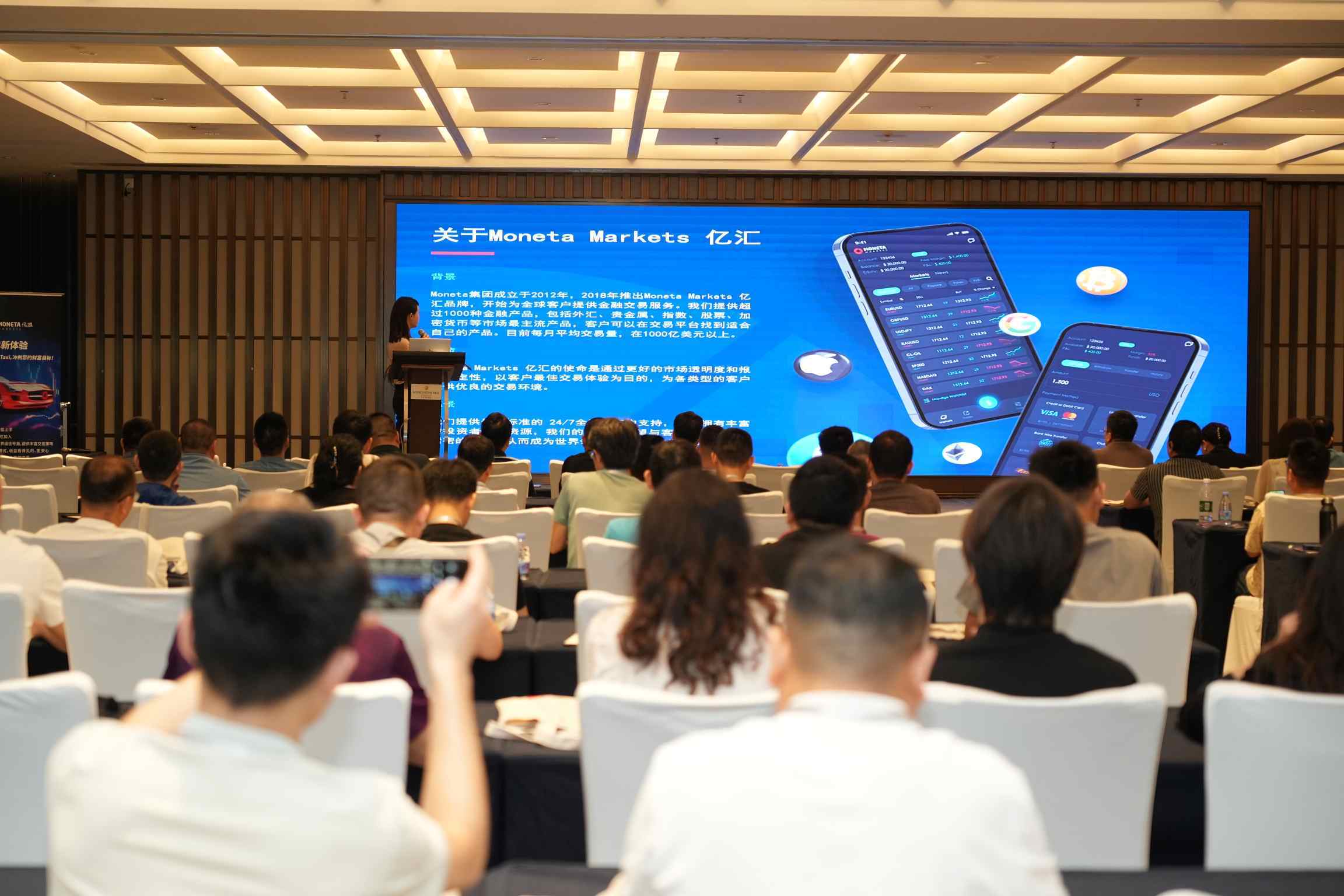
亿汇:全球外汇市场的智能量化交易平台
Sou Hu Cai Jing· 2026-02-18 06:42
Core Insights - Moneta Markets leverages intelligent quantitative technology to provide efficient and transparent resource allocation services in the global forex market [5][10] - The platform aims to lower technical barriers for users, enabling effective participation in the forex market through automated tools [5][10] Group 1: Technological Innovation - Moneta Markets utilizes a smart quantitative system as its core, creating a technological framework that covers the global forex market [6] - The core engine processes data in milliseconds, generating forward-looking strategy recommendations by analyzing macroeconomic signals, geopolitical dynamics, and market liquidity changes [6] - This technological architecture enhances response efficiency and continuously optimizes strategy stability through historical backtesting and stress testing models [6] Group 2: Decision-Making Empowerment - Unlike traditional models that rely on subjective judgment, Moneta Markets' quantitative system focuses on objective data value [7] - The platform's adaptive algorithms can identify over 200 market characteristic variables, dynamically adjusting resource allocation weights during volatility periods [7] - Users can track strategy performance in real-time through a visual panel, allowing for personalized parameter settings and strategy management [7] Group 3: Service Ecosystem Enhancement - Moneta Markets has established a multi-layered service system that supports seamless integration of user models into the platform's resource network via API ports [8] Group 4: Market Opportunities - With the global forex market's daily trading volume exceeding $6 trillion, refined operations have become a core demand [9] - Moneta Markets collaborates with research institutions like Cambridge University to continuously iterate algorithm models, achieving a 42% improvement in strategy Sharpe ratio over the past three years [9] - The user base spans 85 countries, including professional institutions and individual innovators, with over 50 liquidity providers forming an innovative network of technical sharing and resource collaboration [9] Group 5: Future Outlook - Moneta Markets aims to reconstruct participation logic in the forex market through intelligent quantitative technology, focusing on data science to build dynamic strategy engines and transparent decision support systems [10] - The platform is expected to lead the evolution of quantitative services towards higher dimensions of intelligence with the integration of artificial intelligence and blockchain technology [10] Group 6: Additional Features - The platform offers a one-stop tool library for strategy building, backtesting, and deployment [11] - It includes a cloud-based learning center with over 100 hours of scenario-based courses that deeply interpret quantitative logic and market mechanisms [11] - Moneta Markets operates under a global compliance framework, holding licenses from multiple countries including Australia's ASIC and employing bank-level fund custody mechanisms [11]
深海一号海底钻云上算
Ren Min Ri Bao· 2026-02-17 23:59
Core Insights - The article highlights the advancements and operational efficiency of the "Deep Sea No. 1" gas field platform managed by China National Offshore Oil Corporation (CNOOC), emphasizing its strategic importance for energy security and self-sufficiency in China [1][3]. Group 1: Operational Efficiency - The "Deep Sea No. 1" platform is stabilized by 16 mooring lines, each enduring a pull of 300 to 400 tons, ensuring its stability in the ocean [2]. - The platform has successfully transitioned to using domestically produced mooring cables, which were previously imported, showcasing advancements in local manufacturing capabilities [3]. - The platform has implemented a real-time monitoring system for 23 deep-water wells, allowing for immediate response to any anomalies detected in pressure and temperature [3][4]. Group 2: Technological Innovations - The introduction of "smart completion" technology has improved drilling efficiency by 30%, allowing for underwater equipment maintenance without interrupting production [4]. - The platform utilizes digital twin technology and artificial intelligence algorithms, resulting in a 40% reduction in energy consumption per unit of output [4]. - The cumulative gas supply from the gas field has exceeded 14 billion cubic meters, contributing to both the Hainan Free Trade Port and the Guangdong-Hong Kong-Macau Greater Bay Area [4]. Group 3: Strategic Importance - The development of the "Deep Sea No. 1" gas field is positioned as a critical step towards enhancing China's energy self-sufficiency and security, as emphasized by President Xi Jinping [3]. - The platform is recognized as the starting point for China's deep-sea oil and gas exploration, marking a significant milestone in the country's energy development strategy [4].
深海一号海底钻云上算(新春走基层·开局之年新气象)
Ren Min Ri Bao· 2026-02-17 22:32
Core Insights - The article highlights the advancements and operational efficiency of the "Deep Sea No. 1" gas field platform, showcasing its strategic importance in China's energy security and self-sufficiency [2][3][5]. Group 1: Operational Efficiency - The "Deep Sea No. 1" platform is stabilized by 16 mooring cables, each enduring a pull of 300 to 400 tons, ensuring its stability in the ocean [3]. - The platform has successfully transitioned to fully domestically produced mooring cables, which were previously reliant on imports, enhancing the country's energy independence [3]. - The platform's operations include real-time monitoring of 23 deep-water wells, allowing for immediate response to any anomalies detected [4]. Group 2: Technological Innovations - The platform employs advanced technologies such as digital twins and artificial intelligence algorithms, resulting in a 40% reduction in energy consumption per unit of output [4]. - The introduction of "smart completion" technology has improved drilling efficiency by 30%, allowing for maintenance of underwater equipment without interrupting production [4]. - The platform has developed a self-sustaining system to manage hydrate blockages, ensuring uninterrupted energy flow [4]. Group 3: Production and Supply - Since its inception, the "Deep Sea No. 1" gas field has supplied over 14 billion cubic meters of gas, contributing to both the Hainan Free Trade Port and the Guangdong-Hong Kong-Macau Greater Bay Area [5]. - The platform is recognized as the starting point for China's deep-sea oil and gas development, emphasizing its significance in the national energy landscape [5].
渤海最大油气平台完成浮托安装
Ren Min Ri Bao· 2026-01-14 08:13
Core Viewpoint - The installation of the center processing platform for the Kenli 10-2 oilfield group development project marks a significant achievement in the Bohai Sea, setting records for size and weight in offshore oil and gas platforms [1] Group 1: Project Details - The center processing platform is a multifunctional marine platform with a height of 22.8 meters and a design weight exceeding 20,000 tons, with a footprint comparable to nearly 15 standard basketball courts [1] - The project utilized floating support technology for installation due to the platform exceeding the lifting capacity of domestic offshore cranes [1] - The project team employed digital twin technology for 3D modeling and analysis, enabling precise design of the floating support plan and conducting virtual simulations to identify operational risks [1] Group 2: Technological Innovations - During the floating support operation, three sets of AI algorithm-based Beidou positioning systems were installed on the main operation vessel, providing "millimeter-level anti-collision radar" [1] - The operation also involved coordinated control of multiple tugboats to achieve precise positioning of the platform in one attempt [1] - China has completed a total of 50 large offshore platform floatations, with the maximum floating capacity reaching 32,000 tons and a total floating weight exceeding 600,000 tons [1] Group 3: Economic Impact - The average water depth in the Kenli 10-2 oilfield area is approximately 20 meters, with proven geological reserves of crude oil exceeding 100 million tons [1] - The first phase of the project is planned to commence production within the year, supporting the Bohai Oilfield's target of achieving an annual oil and gas output of 40 million tons [1]
机器人有了“皮肤”触觉
Xin Lang Cai Jing· 2025-12-22 10:07
Core Insights - The research team from the University of Cambridge and University College London has developed a new type of flexible conductive robot "skin" that can simultaneously sense pressure and temperature, distinguishing multiple contact points to gather environmental information in a human-like manner [1][2] Group 1: Technological Breakthrough - The innovative "skin" utilizes a single sensor to identify various stimuli through a method called "electrical impedance tomography," which employs 32 electrodes to create over 860,000 different current path combinations, forming a high-density, fully covered sensing network [2] - The system processes complex electrical signals generated by the skin in response to external stimuli, using artificial intelligence algorithms to learn and identify the most effective electrode combinations for distinguishing specific stimuli [2][3] Group 2: Material Innovation - The robot skin is made from a hydrophilic three-dimensional network structure gel known as hydrogel, which is soft, conductive, and sensitive to mechanical force, temperature, and humidity, allowing it to be shaped into complex forms [3] - This hydrogel-based skin represents a significant advancement in the fields of robotic perception and materials science, merging computational intelligence with biomimetic trends [3] Group 3: Future Applications and Challenges - The development of robotic skin is expected to enhance robots' interaction capabilities with their environment, making them adaptable to more complex settings, with potential applications in humanoid robots, healthcare monitoring, smart wearables, prosthetics, industrial manufacturing, and disaster relief [4] - Despite the significant achievements, challenges remain, such as the hydrogel's tendency to lose water and crack in air, and the current system's slow scanning speed, which does not meet high-speed interaction demands [3][4]

机器人有了“皮肤”触觉(创新汇)
Ren Min Ri Bao· 2025-12-21 22:20
Core Insights - The research team from the University of Cambridge and University College London has developed a new type of flexible conductive "skin" for robots that can simultaneously sense pressure and temperature, distinguishing multiple contact points to gather environmental information in a human-like manner [1][2] Group 1: Technological Breakthroughs - The innovative "skin" utilizes a single sensor to identify various stimuli through a method called "electrical impedance tomography," which employs 32 electrodes to create over 860,000 different current path combinations, forming a high-density, fully covered sensing network [2] - The system processes complex electrical signals generated by the skin in response to external stimuli, using artificial intelligence algorithms to learn and identify the most effective electrode combinations for distinguishing specific stimuli [2][3] Group 2: Material Innovation - The flexible material used for the skin is a hydrogel, known for its excellent conductivity, softness, and sensitivity to mechanical force, temperature, and humidity, allowing it to be shaped into complex forms [3] - This hydrogel-based technology represents a significant advancement in the fields of robotic perception and materials science, merging computational intelligence with biomimetic design [3] Group 3: Future Applications and Challenges - The development of robotic "skin" is expected to enhance robots' interaction capabilities with their environment, making them adaptable to more complex settings, with potential applications in humanoid robots, healthcare monitoring, smart wearables, prosthetics, industrial manufacturing, and disaster relief [4] - Despite the promising results, challenges remain, such as the hydrogel's tendency to lose water and crack in air, and the current system's slow scanning speed, which does not meet high-speed interaction demands [3][4]
光智科技:热成像技术与人工智能算法结合 推出全新炉内高温监测系统
Zhong Zheng Wang· 2025-12-12 13:45
Core Viewpoint - The company has developed a new high-temperature monitoring system that combines thermal imaging technology and artificial intelligence algorithms, successfully implemented in a silver smelting plant in Hunan, enhancing both safety and efficiency in production [1][2] Group 1: Product Features - The high-temperature monitoring system consists of a high-performance infrared thermal imager, a specialized pinhole camera, and a stainless steel high-temperature protective device, integrating monitoring, early warning, and protection functions [2] - The system aims to provide efficient, safe, and environmentally friendly monitoring and management solutions for the silver smelting industry, contributing to increased production efficiency and reduced personnel injuries [2] Group 2: Implementation Process - The implementation of the monitoring system involved a professional team that followed a scientific process, customizing the installation plan based on the layout of the silver smelting furnace and production workflow [1] - Key steps included the installation of air cooling pipelines and network fiber optics, reinforcement of the stainless steel main unit, and thorough testing of imaging, temperature measurement, and operational functions to ensure system reliability [1]
