Physical AI

Search documents
GSI Technology Reports 3-Second Time-to-First-Token for Edge Multimodal LLM Inference on Gemini-II
Globenewswire· 2026-01-29 13:30
Core Insights - GSI Technology announced preliminary benchmark results for its Gemini-II Compute-in-Memory processor, achieving a time-to-first-token (TTFT) of 3 seconds for multimodal large language models at the edge, with a power consumption of approximately 30 watts [1][2]. Performance Metrics - The Gemini-II processor demonstrated a TTFT of 3 seconds, which is the lowest reported for a multimodal 12B model on an embedded edge processor [2]. - Competitive platforms reported TTFTs of approximately 12 seconds on Qualcomm Snapdragon X Elite at 30W and 3 seconds on NVIDIA Jetson Thor at over 100W, indicating that Gemini-II offers superior performance at lower power levels [3]. Market Implications - The performance profile of Gemini-II is well-suited for "physical AI" markets, including drones and smart city applications, where power and thermal constraints are critical [4]. - The shift from cloud-assisted models to local inference in edge physical AI is expected to enhance latency, reliability, and operational efficiency [5]. Development and Collaboration - GSI's engineering team is focused on optimizing the responsiveness of the Gemini-II processor while collaborating with partners like G2 Tech for system integration and proof-of-concept activities [6].



TSLA EPS Review: A Tsunami of New Product Launches Awaits
ZACKS· 2026-01-29 00:20
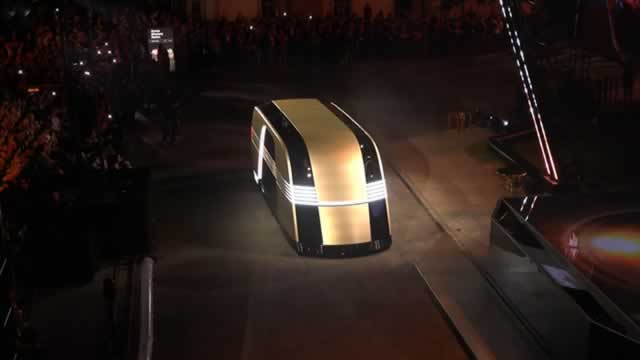
Core Insights - Tesla's Q4 earnings report showed an EPS of $0.50, beating Wall Street estimates of $0.45 by 11%, but down 32% year-over-year. Revenue was $24.901 billion, slightly above the expected $24.78 billion, but down 3% year-over-year. Operating income for Q4 was $1.41 billion, exceeding the estimate of $1.32 billion [1][4] Group 1: Financial Performance - Tesla's Q4 vehicle deliveries dropped 15.6%, reflecting a slowdown in the legacy EV business due to the loss of federal tax credits. Despite this, margins increased by 4%, indicating a positive sign for the company [1] - Tesla Energy achieved a record gross profit of $1.1 billion, marking its fifth consecutive record quarter, driven by high demand for large-scale battery energy storage systems [3][12] Group 2: Strategic Investments - Tesla plans to invest $2 billion in xAI to integrate AI into physical applications, capitalizing on the rapid growth of xAI, which reached a valuation of approximately $230 billion following a successful Series E funding round [2][5] - The investment in xAI is expected to create synergies between Tesla and xAI, enhancing Tesla's capabilities in the AI sector [2] Group 3: Future Growth Initiatives - Tesla confirmed the production timeline for the Optimus Humanoid robot and is ramping up production for the Tesla Semi and Cybercab, with preparations ongoing for a launch in the first half of 2026 [7][8] - The company is expanding its robotaxi fleet, which has driven 650,000 miles since June 2025, and plans to enter seven additional markets in the first half of 2026 [9][10] Group 4: Market Positioning - Investors are shifting focus from Tesla's slowing legacy EV business to emerging sectors such as physical AI, energy, and a broad ecosystem of products, similar to Apple's strategy with its devices and services [12][13] - Tesla's strong cash reserve of over $40 billion provides a solid foundation to support its transition and upcoming product launches [16][17]

Tesla profit tanks in earnings, but the stock pops
Yahoo Finance· 2026-01-28 22:27
Tesla didn’t post the kind of quarter that usually lifts a stock. Profit fell sharply, deliveries declined, and margins stayed under pressure. But after-hours trading told a different story — up 4% initially — one that has less to do with cars and more to do with the future investors still want to believe in. By the numbers, the quarter was bruising. Net income dropped 61% from a year earlier, automotive revenue slid 11%, and total deliveries fell by double digits. Costs rose, operating leverage worked i ...
Tesla invested $2B in Elon Musk's xAI
TechCrunch· 2026-01-28 21:52
Core Insights - Tesla has invested $2 billion in Elon Musk's AI company, xAI, which recently raised $20 billion in a Series E funding round [1][2] - The investment aligns with Tesla's Master Plan Part IV, focusing on integrating AI into physical products and services [3][6] - Tesla's shareholders previously voted against the investment, with 1.06 billion votes in favor and 916.3 million opposed, but the abstentions led to the measure's rejection [1][3] Investment Details - Tesla's investment in xAI is part of a broader strategy to enhance its capabilities in AI and robotics, including developments like the Optimus humanoid robot and autonomous vehicles [3][6] - The investment is expected to close in the first quarter and includes a framework agreement for potential AI collaborations between Tesla and xAI [4][6] Financial Performance - Tesla reported earnings that exceeded Wall Street estimates, although profits fell by 46% last year [3]
POSCO Unit Invests in Factorial to Strengthen Solid-State Battery
ZACKS· 2026-01-28 17:30
Core Insights - POSCO Holdings Inc.'s unit, POSCO Future M, has invested in U.S.-based all-solid-state battery company Factorial, enhancing their partnership established through a Memorandum of Understanding (MOU) signed in November 2025 [1][6] - The partnership is expected to accelerate growth in the all-solid-state battery market, with Factorial securing a high-quality supply of solid-state battery materials to improve manufacturing competitiveness [1][2] Group 1 - Factorial's all-solid-state battery platform, Solstice, provides higher energy density and safety, with successful collaborations with automakers in Korea, Europe, and North America [2][6] - The partnership will leverage POSCO Future M's material design and coating technologies, expanding portfolios to include sulfide-based solid electrolytes and advanced anode materials, which will enhance energy retention [3][6] - The global demand for solid-state batteries is expected to rise, targeting emerging applications in autonomous electric vehicles, urban air mobility, and physical AI markets [2][3] Group 2 - PKX stock has increased by 39.4% over the past year, while the industry has seen a growth of 51.6% [3] - POSCO Future M's investment aligns with the growing trend towards solid-state battery technology, which is anticipated to play a significant role in future automotive and technology applications [1][2]

Waabi hauls in $750M Series C to become Canada’s newest autonomous vehicle unicorn
Yahoo Finance· 2026-01-28 11:00
Toronto-based Waabi announced Wednesday that it closed an oversubscribed $750 million Series C funding round. The autonomous vehicle technology company secured an additional milestone-based investment from Uber, bringing total available capital to $1 billion. The funding, the largest fundraise in Canadian history, will fuel continued advancement of Waabi’s Physical AI Platform. The platform will accelerate the Canadian trucking technology maker’s commercial progress and support the company’s expansion int ...
Honeywell Sees Physical AI Gain Foothold in Business World
PYMNTS.com· 2026-01-27 14:37
Core Insights - Honeywell is increasingly integrating artificial intelligence into physical operations, with significant adoption in various sectors [1][2] - Over 200,000 sites have implemented Honeywell's AI tools to enhance energy efficiency and productivity in airports, hospitals, and factories [2] Group 1: Adoption of Physical AI - The widespread adoption of "physical AI" projects was noted last year, indicating a shift towards operational efficiency [2] - Other companies, such as JLL, emphasize the financial benefits of using AI to optimize commercial real estate operations [3] Group 2: Operational Efficiency and Cost Reduction - AI systems can help companies reduce ongoing operating expenses by identifying inefficiencies in office and facility management [4] - Examples from other enterprises, like Amazon and Walmart, illustrate the integration of physical AI into core operational infrastructure, enhancing throughput and lowering costs [5] Group 3: Supply Chain Resilience - Honeywell is leveraging lessons from the pandemic to strengthen its supply chains against tariff-related disruptions [5] - The global trade order is shifting towards bilateral agreements, prompting companies to adapt their supply chains to local ecosystems [6]



Opinion: Brian Niccol's Turnaround Plans Will Make Starbucks a Screaming Winner in 2026
247Wallst· 2026-01-27 13:53
Core Viewpoint - Starbucks has shown a strong start to 2026 with a 15% stock gain in the first three weeks, indicating potential recovery under CEO Brian Niccol's leadership [1] Group 1: Company Performance and Strategy - The effectiveness of Niccol's turnaround strategy is still under scrutiny, but recent improvements suggest that his plans are beginning to yield positive results [2][3] - Key strategies include simplifying the menu, closing underperforming stores, and enhancing customer experience, which may help Starbucks regain its former appeal [3][4] - The loyalty program is being enhanced, and there is a focus on protein offerings and reducing wait times, indicating a strategic shift towards core strengths [4][5] Group 2: Future Outlook - The introduction of "coffeehouse coaches" aims to improve in-store quality and consistency, reflecting Niccol's successful strategies from previous roles [8] - Upcoming Investor Day is anticipated to reveal more about how Niccol plans to sustain momentum, with a particular interest in AI and robotics integration in stores [9][10] - The future of Starbucks stores may involve significant changes, potentially leading to improved returns in the next decade compared to the past [10]


Navigating the Tech-Driven 'Physical AI' Up-Cycle
Etftrends· 2026-01-26 21:28
Core Insights - The transition of physical AI into a tech-driven industrial up-cycle is expected to drive U.S. robot shipments to a historical high of 40,000 units by 2026 due to persistent labor shortages [1][8] - Global enthusiasm for robotics, particularly in the U.S., Japan, and China, is growing, with physical AI being a significant focus [2][3] U.S. Market Dynamics - The U.S. is projected to face a manufacturing worker shortfall of 1.5 to 3.9 million, which is a fundamental driver for increased robotics and automation demand [7] - A historical correlation of 94% between job openings and robot installations suggests that the U.S. will see about 30% year-over-year growth in robot shipments in 2026 [7][8] Global Robotics Trends - China has the highest robot density globally, with over one million operational units, and has shown better-than-expected performance in 2025, particularly in the automotive and electronics sectors [9] - Foreign companies like FANUC and Yaskawa reported good growth rates in China, despite concerns over tariffs [9] Technological Developments - The focus on robot hands and tactile sensing is expected to grow, enhancing robots' capabilities to work alongside humans [6] - Emerging technologies such as nano-robots and new robot types for specific applications, like rare earth mining, are areas of potential growth [12][13] Market Outlook - The current industrial cycle is characterized as a tech-driven up-cycle, with expectations for automotive capital expenditures to increase towards the end of the year [15][17] - The market is anticipated to experience a prolonged up-cycle, albeit at a slower pace compared to the post-COVID surge in 2021 and 2022 [17]
SEALSQ Demonstrates the Convergence of Post-Quantum Secure Physical AI and Robotics, Showcasing WISeRobot During the Davos Event
Globenewswire· 2026-01-26 14:15
Core Insights - SEALSQ Corp is demonstrating its Post-Quantum Cryptography Robotic Concept at the World Economic Forum, highlighting the need for post-quantum security in AI and robotic systems [2][3] - The company aims to integrate quantum-resistant algorithms into robotic platforms to ensure long-term security against future quantum computing threats [3][6] Group 1: Demonstration and Technology - The demonstration featured WISeRobot, showcasing how post-quantum security can be embedded across silicon, firmware, and system levels [4][9] - SEALSQ is developing secure semiconductors with hardware-based roots of trust and post-quantum cryptographic accelerators to enhance the security of Physical AI systems [5][14] - The WISeRobot concept aims to establish a new benchmark for trusted autonomous systems in critical environments such as government and healthcare [9][10] Group 2: Industry Context and Future Outlook - Experts at the roundtable emphasized the urgency of preparing for the post-quantum era, with quantum computers expected to emerge as early as 2028 [8] - The integration of post-quantum cryptography into semiconductor solutions is crucial for protecting digital identities and AI systems from future cryptographic disruptions [12][14] - SEALSQ's initiative reflects a broader commitment to developing quantum-ready technologies that enhance security across various industries [12][14]