
AI教育

Search documents
打造AI赋能教育的“先锋”力量
Nan Fang Du Shi Bao· 2025-03-27 23:19
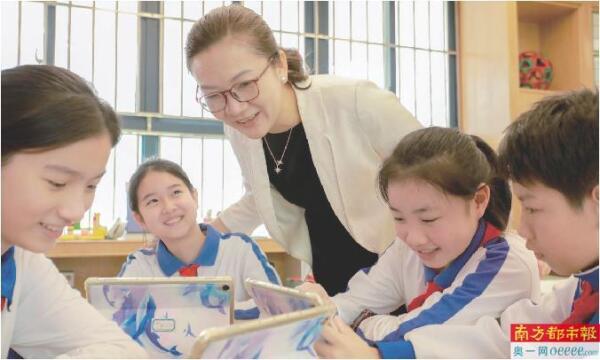
东海实验小学副校长谭春兰在课堂指导学生使用AI工具。 两年多来,AI先锋队逐步实现了"一项一师带动一校"的引领作用。目前,AI先锋队开展12项教学实践任 务探索,制作60余节班主任微课,开展120余场研修分享会。还通过"云端送教"等向全国输出"福田经 验",在20余个省市县开展110多场跨区域AI专题讲座,备受全省同行的好评。 一线教师:AI赋能教育新体验 AI先锋队中的校园管理者和骨干教师,已将AI技术深度融入教学活动中——东海实验小学副校长谭春 兰主导构建的"三体课堂"模式,通过搭建平台推动教育观念变革;石厦学校罗瑞玲老师借助AI驱动跨学 科项目设计,让学生用英文记录化学实验并生成双语报告;荔园外国语小学胡晓璇老师利用AI写作、 绘画和编程实践,拓展学生思路。 AI技术对教育教学的"减负增效",福田教师们已经有了深刻的体会。先锋队员、红岭华富实验学校副校 长李维用AI工具生成迎新形象和校歌MV,将工作时间从数天缩至几小时,他还积极开发、普及AI校本 课程。荔园外国语小学陈晓岚老师使用AIGC优化教学内容、支架、量表等,让她有更多精力关注学生 个性化需求。荔园小学园岭校区黄佳老师用AI工具设计开放性任务,激 ...

港城大校董会主席:香港AI教育要与内地“梦幻联动”
Huan Qiu Wang Zi Xun· 2025-03-27 23:12
来源:环球时报 在谈及香港与内地AI人才培养的差异时,魏名成表示:"香港正在打造国际高端人才集聚地、国际高等 教育的枢纽,在2025年QS世界大学排名全球100强的大学里,5家香港高校位列其中。同时香港本身也 是一个国际金融中心,可以帮助AI科技初创企业融资发展,走向国际。此外,香港高校与内地、国际 的企业合作,形成产学研一体化,助力AI科技成功转化。" 而内地优势在于政策执行力强,如上海、深圳等地校企合作订单班培养效率高。此外还有电商、社交媒 体巨头等提供真实产业数据支持AI研发。魏名成说:"香港与内地的AI教育各有千秋,应当见贤思齐, 在推动自身发展的同时通力合作,实现1+1>2。" "人才、教育跟科技三者密不可分,我们配合大湾区和整个国家的发展战略,有市场、生产基地和人 才,可以解决很多痛点。"魏名成认为,粤港澳大湾区规划政策也为香港青年提供新的机遇。他表 示:"有的香港学生在本地读完课程,却不一定能够在香港找到理想的工作。如果他去大湾区或其他内 地地区,就能在更广阔的就业市场发挥香港的科研实力。"魏名成呼吁:"香港AI教育需要建立国际化视 野,把握时代脉搏,积极参与跨学科、跨地域合作,推动建设人类命运 ...
图灵机器人与华为云:开启深化合作,共谱AI教育新篇章
图灵机器人· 2025-03-17 12:38
近期,北京光年无限(图灵机器人)与 华为云 正式合作签约,并在图灵机器人北京总部办公室正式召开了 深化合作的启动大会 【图灵机器人概况】 图灵机器人 2014 年发布,是国内最早的 AI 对话机器人开发平台,在 AI 技术 / 应用领域近 500 项发明专利。 图灵机器人主要对外输出 AI 技术 / 产品方案,图灵 inside 版的 AI 硬件累计超过 1 亿台,每日 AI 交互数亿次,主要应用于儿童 / 教育、具 身智能 / 机器人、运营商、轨道交通等商业场景。 。 本次重要会议以 "汇聚教育力量,共启教育征程" 为主题,华为云重要领导代表、北京光年无限执行总裁郭家、技术负责人韦克 礼、副总裁及政企业务负责人毛太辉等核心成员出席参会。 图灵教育大模型TuringMM于2月内已完整接入DeepSeek基座模型,通过" 底层模型重构+交互系统创新 "的双轮驱动模式,打造 了涵盖 " AI 助教、AI辅学、AI助育、AI助管 "四大子方案的教育产品及解决方案,全方位覆盖教育的主要关键场景,并为教育工 作者、学生、家长等提供专业、高效的 平台级AI赋能 。 本次合作后,图灵机器人将在华为云AI算力体系(尤其是昇腾 ...
中信建投:AI教育奇点时刻来临 赋能教学教研提质增效
Zheng Quan Shi Bao Wang· 2025-03-03 23:54
Core Insights - The report from CITIC Securities highlights that learning is a slow process with counterintuitive characteristics, but each technological innovation brings significant changes to the education industry [1] - The advent of ChatGPT marks the beginning of the generative AI era, while DeepSeek significantly reduces costs, indicating an imminent transformation in AI education [1] - CITIC Securities believes that AI will more easily replace tutoring teachers than main instructors, suggesting that in the future, every student may require an AI learning assistant [1] AI Education Development - Currently, AI education has matured in areas such as photo-based question searching, error correction, assessments, and personalized Q&A, while there is still room for improvement in precise learning [1] - The greatest potential for AI education lies in the extracurricular learning assessment segment, with commercial directions including: 1. Intelligent educational hardware supported by large models, which may replace tutoring teachers' roles (Q&A, grading, assessments, practice processes) and some teaching roles (knowledge delivery, learning processes) [1] 2. AI education software applications tailored for specific educational scenarios (language learning, Q&A) [1] 3. B2B application scenarios [1]

AI+教育专家交流
2025-03-02 16:46
Summary of the Conference Call on AI in the Education Industry Industry Overview - The conference focused on the impact of AI, particularly large models, on the education industry, including both online and offline education settings [1][2]. Key Points and Arguments 1. **Empowerment of Educators**: AI can significantly support teachers by automating the generation of teaching plans and resources, allowing them to focus more on their core teaching responsibilities [2][3]. 2. **Efficiency in Grading**: The introduction of AI systems enables automatic grading of subjective assignments, such as essays and math problems, which saves teachers considerable time [3][4]. 3. **Enhanced Learning Tools**: AI tools can assist students in real-time, providing feedback on language skills and correcting errors during practice sessions [3][5]. 4. **Accessibility for Administrators**: AI can lower the barriers for school administrators by simplifying processes like report generation and website management [4][5]. 5. **Parental Involvement**: AI tools can facilitate communication between parents and children, helping parents to assist their children with homework and learning activities [5][6]. 6. **Market Trends**: The education sector is witnessing a trend towards self-study models, with companies like "培幼" leading the way in integrating AI into their offerings [12][13]. 7. **Diverse Approaches Among Companies**: Different educational companies are adopting various strategies to incorporate AI, with some focusing on specific subjects while others aim for a broader curriculum [13][14]. 8. **Regulatory Environment**: Current regulations prevent AI from fully replacing teachers in classrooms, emphasizing the need for human oversight in education [8][9]. 9. **Future of Virtual Teachers**: The potential for virtual teachers to surpass traditional educators in capabilities is acknowledged, but regulatory approval is still pending [10][11]. 10. **Student Engagement**: The effectiveness of AI tools largely depends on student engagement and self-discipline, which varies significantly across different age groups [19][20]. Additional Important Insights - **Product Evaluation**: The ability to automatically grade essays is a key differentiator among educational companies, reflecting their commitment to quality education [23][24]. - **Data Utilization**: Companies with access to labeled educational data are better positioned to develop effective AI tools compared to those relying solely on large datasets without proper tagging [26][27]. - **Market Dynamics**: The education market is expected to undergo significant changes as AI tools become more integrated, with a focus on high-end markets for better profitability [30][31]. - **Future Innovations**: The emergence of virtual assistants and AI-driven personalized learning experiences is anticipated, which could reshape traditional educational models [32][34]. This summary encapsulates the main discussions and insights from the conference call regarding the integration of AI in the education sector, highlighting both opportunities and challenges.

