
ChatGpt

Search documents
Ai公司一篇博客,IBM市值蒸发200亿美金!ChatGpt和Deepseek将发布新大模型,Xai和五角大楼签订协议将Grok部署至军方【Vic TALK 第1570期】
Vic TALK· 2026-02-24 05:26
推特:https://x.com/victalk6886 Telegram :victalk2021 #clawdbot #aivideo #ai agent #ai 私人助理 #moltbook #人工智能社交平台 #ai雇佣人类 #seedance #simplclaw #agentwars #GLM-5 #elys ...


熊园:年度策略——2026年资产展望
Sou Hu Cai Jing· 2025-11-27 04:48
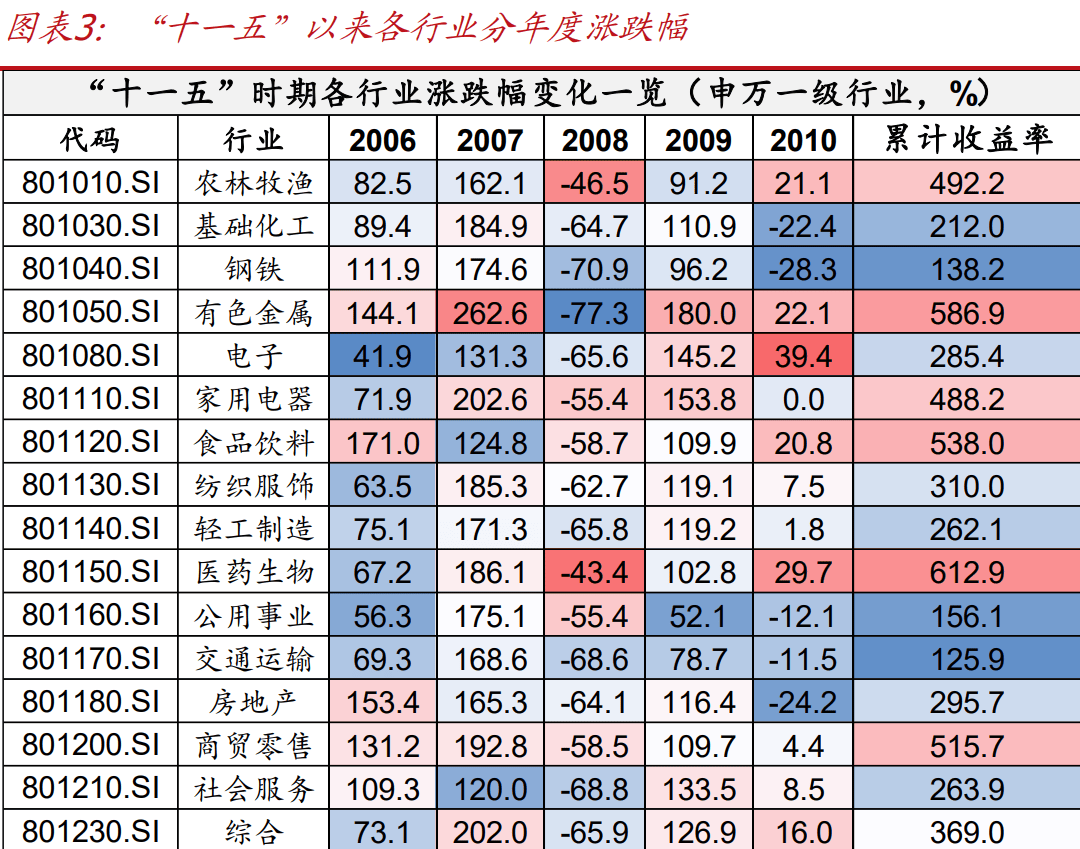
Core Viewpoint - The report emphasizes the potential for new economic momentum and forces to emerge in China during the "14th Five-Year Plan" period, suggesting a strategic and tactical bullish outlook on A-share assets, particularly in sectors related to AI, new productivity, self-sufficiency, and international expansion [1][2][11]. Policy Perspective - The "14th Five-Year Plan" is seen as a critical period for China's economic and technological advancement, with expectations for a robust policy push to achieve a strong start in 2026, marking the beginning of a new economic cycle and technological revolution [2][10][23]. Market Configuration - A strategic and tactical positive outlook on A-share assets is recommended, focusing on a "dumbbell strategy" that emphasizes both high-growth technology sectors and stable dividend-paying stocks in a low-interest-rate environment [3][4][5]. - The report anticipates a volatile domestic bond market, with the 10-year government bond yield expected to fluctuate between 1.5% and 1.9% [6]. U.S. Market Outlook - The U.S. stock market is expected to experience volatility, with support for large tech stocks driven by AI narratives, while the U.S. Treasury yield curve is projected to steepen [7]. - The dollar is anticipated to remain weak, influenced by liquidity conditions and geopolitical factors, while the overall economic environment in the U.S. is expected to remain supportive [7][8]. Commodity Market Insights - There is a broad presence of bullish options in commodities, with precious metals like gold and silver benefiting from trends such as "de-dollarization" and "debt monetization" [8]. - Specific commodities such as lithium, copper, and rare earths are expected to perform well due to energy transition and defense demands [8][10]. Investment Strategy - The report suggests that the investment opportunities during the "15th Five-Year Plan" will focus on technology, industry, and new productivity, with a strong emphasis on high-quality economic growth and maintaining reasonable growth rates [23][24].
X @THE HUNTER ✴️
GEM HUNTER 💎· 2025-11-18 14:09
RT unusual_whales (@unusual_whales)BREAKING: Cloudflare, $NET, is still reporting issues worldwide right now.ChatGpt, Claude, Twitter, Spotify and many other services are affected.Unusual Whales is impacted by the disruption as well. We are working to resolve it. ...

The generation that redefined impossible | Rob Scotland | TEDxScarisbrick
TEDx Talks· 2025-10-20 15:40
[Music] My name is Rob Scotland. I'm a modern cultural anthropologist, which means I study and analyze modern culture for business purposes. 11 years ago, I stood on a TEDex stage and I made a really bold claim.I said we were raising a generation that was going to save the world. Now, why I said that and since then I've had a front row seat in my bold claim. My son, who was featured in that TED talk, he was five at that time.Now he's 16. This big strapping lad, still plays football, still do all those thing ...

南财快评|诺贝尔经济学奖启示:如何应对AI的“创造性破坏”
2 1 Shi Ji Jing Ji Bao Dao· 2025-10-14 03:14
Core Insights - The 2025 Nobel Prize in Economic Sciences was awarded to Joel Mokyr, Philippe Aghion, and Peter Howitt for their groundbreaking contributions to understanding "innovation-driven economic growth" [2][3] Group 1: Historical Insights - Joel Mokyr emphasizes the importance of "knowledge accumulation" and "cultural environment" as key prerequisites for innovation, arguing that the cultural shift in 18th century Europe facilitated the transformation of scientific knowledge into technology, thus promoting economic growth [3][4] - Mokyr's work highlights the significance of ideas and culture in technological innovation and economic growth, asserting that a culture that encourages questioning, values science, and protects intellectual freedom is essential for sustained technological progress [4] Group 2: Theoretical Foundations - Aghion and Howitt introduced the "Schumpeterian Growth Model," which mathematically incorporates the concept of "creative destruction" into mainstream economic analysis, illustrating how new technologies and firms disrupt old market structures to drive economic growth [5] - Their model posits that innovation is profit-driven, with firms motivated to invest in R&D to capture "innovation rents," and that the process of creative destruction is a necessary aspect of economic progress [5] - The model also addresses the inherent contradictions in innovation, where today's innovators may become future obstacles to innovation due to their established advantages [5] Group 3: Policy Implications - The theories of these scholars provide analytical tools and policy insights for managing current technological changes, particularly in the context of artificial intelligence (AI) [6] - It is crucial to actively manage the structural unemployment caused by technological advancements and implement strong antitrust policies to prevent tech giants from stifling innovation [6][8] - Investment in education, social security, and an open cultural environment is necessary to support long-term innovation and higher quality economic development [6][9] Group 4: AI and Creative Destruction - AI technology exemplifies "creative destruction" by rapidly replacing traditional jobs across various sectors, necessitating proactive management of this disruption to foster high-quality economic growth [7] - The concentration of AI research within a few tech giants poses risks of monopolistic practices that could hinder innovation, highlighting the need for effective regulatory frameworks and open competition [8] - The sustainability of technological innovation relies on a supportive social environment that fosters critical thinking, creativity, and interdisciplinary skills, alongside robust unemployment support and retraining systems [9]

诺贝尔经济学奖启示:如何应对AI的“创造性破坏”
2 1 Shi Ji Jing Ji Bao Dao· 2025-10-14 03:00
Core Insights - The Nobel Prize in Economic Sciences 2025 was awarded to Joel Mokyr, Philippe Aghion, and Peter Howitt for their groundbreaking contributions to understanding "innovation-driven economic growth" [1] Group 1: Understanding Economic Growth - The traditional neoclassical growth models view technological progress as an exogenous variable, failing to explain its intrinsic dynamics [2] - Mokyr's research emphasizes the importance of "knowledge accumulation" and "cultural environment" as key prerequisites for innovation [2] - Aghion and Howitt's "Schumpeterian Growth Model" mathematically incorporates the concept of "creative destruction," highlighting that new technologies and firms disrupt old market structures, driving continuous economic growth [3] Group 2: Policy Implications - The theories of these scholars provide analytical tools and policy insights for managing the structural unemployment caused by technological advancements, particularly in AI [4] - Strong antitrust policies are necessary to prevent tech giants from stifling innovation, requiring collaboration among government, market, and civil society [4] - Investment in education, social security, and an open culture is essential to support long-term innovation and higher quality economic development [4] Group 3: AI and Creative Destruction - AI technology is rapidly replacing traditional jobs, exemplifying "creative destruction" by increasing efficiency while posing risks of structural unemployment [6] - The concentration of AI research among a few tech giants raises concerns about monopolistic practices that could inhibit innovation across the ecosystem [7] - The sustainability of technological innovation relies on a supportive social environment, emphasizing the need for critical thinking, creativity, and interdisciplinary skills in the workforce [8]
如何从更宏观层面理解目前的科技牛市
集思录· 2025-09-26 14:00
Core Viewpoint - The current bull market is characterized by a stark divide, with technology sectors like chips, optical modules, innovative drugs, and robotics experiencing significant gains, while traditional sectors such as banking, insurance, real estate, and consumption are underperforming [1][2]. Group 1: Market Dynamics - The bull market is not uniform; technology stocks are surging while traditional blue-chip stocks are lagging behind [1]. - The current economic cycle is driven by a new wave of technological innovation, particularly in AI, which is expected to be more significant than the previous internet and mobile internet revolutions [2]. - The shift towards AI and related industries, including autonomous driving and humanoid robots, is the main theme of this technological revolution [2]. Group 2: Economic Cycles - The technological revolution is anticipated to last for 3-5 years, with supply-side innovations leading the way before demand-side opportunities emerge [2]. - The previous technological cycle was supported by infrastructure changes driven by telecom operators and smartphone manufacturers, leading to the rise of platform companies like Google and Amazon [1]. Group 3: Investment Implications - The current bull market is seen as a supply-side bull market, with macroeconomic cycles providing underlying support, making a switch to demand-side consumption unlikely in the short term [2]. - New consumption opportunities will arise from innovative applications based on new infrastructure, rather than from traditional sectors benefiting from urbanization and real estate cycles [2].

GPT-5 Codex is nuts...
Matthew Berman· 2025-09-15 22:31
Product Overview - OpenAI releases GPT5 Codeex, optimized for agentic coding, available in various environments like terminal, IDE, GitHub, and ChatGPT iOS app [1][2] - GPT5 Codeex is included with ChatGpt Plus Pro business edu and enterprise plans [3] Performance Benchmarks - GPT5 Codeex achieves 74.5% on SWEBench verified, a slight improvement over GPT5's 72.8% [3] - Code refactoring sees a significant improvement with GPT5 Codeex at 51.3% compared to GPT5's 33.9% [3] - GPT5 Codeex can work independently for over 7 hours on complex tasks [4] - GPT5 Codeex uses 93.7% fewer tokens than GPT5 for simpler tasks but spends twice as long on complex use cases [6] - GPT5 Codeex reduces incorrect comments to 4.4% compared to GPT5's 13.7% and increases high impact comments to 52.4% from 39.4% [7] Features and Capabilities - Codeex is trained for code reviews, identifying critical flaws by navigating codebase, reasoning through dependencies, and running code and tests [6] - Codeex CLI updates include better formatted tool calls and diffs, simplified approval modes, and conversation state compaction [12][13] - Codeex automates environment setup by scanning for setup scripts and fetching dependencies at runtime [15] - Codeex can spin up its own browser, iterate on its builds, and attach screenshots to tasks and GitHub PRs [15] - Codeex reviews PRs by matching stated intent to the actual diff, reasoning over the codebase, and executing code and tests [16] Windsurf Integration - Windsurf is highlighted as a powerful agentic IDE, especially after being acquired by Cognition [9] - Windsurf offers features like deep wiki, vibe, replace, one-click MCP store, sophisticated memory, and deep integration with Devon [10][11] Pricing and Availability - Pro plan at $200 per month can support a full work week across multiple projects, positioning it as an additional developer [19] - Business plans offer credit purchases for exceeding included limits, while enterprise plans provide a shared credit pool [20] Infrastructure Improvements - Cloud infrastructure performance is improved by caching containers, reducing medium completion time for new tasks and follow-ups by 90% [14]
Elon Musk plans to build a kid-friendly AI app
CNBC Television· 2025-07-21 18:14
AI Product Development & Strategy - XAI is developing an app for kids called Baby Grock, following the launch of AI companions [1] - XAI's Grock offers a "companion mode" as a premium feature for paying subscribers at $30 per month [5] - The industry is seeing a convergence of mainstream chatbots and AI companions, with Grock integrating both [4] Safety & Regulation Concerns - The industry acknowledges the need for safeguards and parameters for kids using AI chatbots like ChatGPT and Grock [9] - There are concerns about the safety of children accessing information through AI avatars and chatbots [9] - Google is also rolling out Gemini for kids, indicating a trend towards kid-friendly AI applications [9] Market Trends & Competition - AI companion apps have existed as a fringe category, but are now becoming more mainstream [3] - Most chatbots have their own version of premium offerings, similar to Grock's companion mode [5] - The development of Baby Grock and Gemini for kids suggests a growing market for safe AI applications for children [8][9]

中信建投:AI教育奇点时刻来临 赋能教学教研提质增效
Zheng Quan Shi Bao Wang· 2025-03-03 23:54
Core Insights - The report from CITIC Securities highlights that learning is a slow process with counterintuitive characteristics, but each technological innovation brings significant changes to the education industry [1] - The advent of ChatGPT marks the beginning of the generative AI era, while DeepSeek significantly reduces costs, indicating an imminent transformation in AI education [1] - CITIC Securities believes that AI will more easily replace tutoring teachers than main instructors, suggesting that in the future, every student may require an AI learning assistant [1] AI Education Development - Currently, AI education has matured in areas such as photo-based question searching, error correction, assessments, and personalized Q&A, while there is still room for improvement in precise learning [1] - The greatest potential for AI education lies in the extracurricular learning assessment segment, with commercial directions including: 1. Intelligent educational hardware supported by large models, which may replace tutoring teachers' roles (Q&A, grading, assessments, practice processes) and some teaching roles (knowledge delivery, learning processes) [1] 2. AI education software applications tailored for specific educational scenarios (language learning, Q&A) [1] 3. B2B application scenarios [1]
