Autonomous driving

Search documents
Jim Cramer Talks About Tesla, Inc. (TSLA) & AI
Yahoo Finance· 2025-09-23 16:08
Core Insights - Tesla, Inc. (NASDAQ:TSLA) is viewed as a technology firm rather than just a car manufacturer, as discussed by Jim Cramer following Elon Musk's $1 billion share purchase [2] - Cramer supports Musk's new pay package, which could potentially make him a trillionaire, and suggests that those opposed to it should sell their shares [2] - Cramer emphasizes Tesla's potential in autonomous driving and AI, stating that it is currently the leading company in physical AI [2] Company Performance - Tesla's stock performance is closely tied to its vehicle delivery numbers, with recent discussions indicating improved European delivery figures [2] - Cramer notes that the political climate may affect Tesla's customer base, particularly among liberal buyers who may feel alienated [2] Investment Perspective - While acknowledging Tesla's potential, there is a belief that other AI stocks may offer better returns with lower risk [2] - A report is mentioned that highlights a particularly cheap AI stock benefiting from Trump tariffs and onshoring opportunities [2]

Tesla: 3 Reasons October's Earnings Will Make or Break the Stock
MarketBeat· 2025-09-23 14:20
Core Viewpoint - Tesla's upcoming earnings report in October is critical for confirming the sustainability of its current high valuation, especially after a significant stock price increase since April [2][3]. Group 1: Margin and Delivery Pressures - Tesla's U.S. market share has fallen below 40% for the first time since 2017, indicating increased competition in the EV market [4]. - Price cuts in China and discounts in Europe and the U.S. have negatively impacted profit margins, raising concerns about the company's ability to maintain cost efficiencies [5]. - Analysts are closely monitoring whether the refreshed Model Y can help offset these pressures, as even minor disappointments could lead to a rapid decline in stock value [5]. Group 2: Valuation Demands - Tesla's stock is trading at a price-to-earnings ratio exceeding 250, which is significantly higher than the broader market and many tech peers, creating pressure for flawless quarterly results [7]. - The upcoming earnings report must demonstrate robust revenue growth, margin trends, and demand pipelines to justify the high valuation [7]. - Recent upgrades from analysts, such as Baird's upgrade to Strong Buy and Piper Sandler's price target increase to $500, reflect optimism, but caution remains from some analysts like Goldman Sachs, which maintains a Neutral rating [8]. Group 3: New Growth Engines - Tesla's long-term growth narrative increasingly relies on opportunities beyond automotive sales, including advancements in autonomy, robotics, and AI-driven platforms [10]. - The launch of the robotaxi service and progress on the Tesla Bot are seen as potential transformative opportunities, although these remain speculative at this stage [11]. - The earnings call will be crucial for management to provide updates on the progress of these initiatives, as failure to do so may lead to skepticism about the company's future growth prospects [11].
Elon Musk-Led Tesla's San Francisco Ride-Hailing Expansion Alarmed Officials: Report - Tesla (NASDAQ:TSLA)
Benzinga· 2025-09-23 04:54
Core Insights - Tesla's ride-hailing expansion in the San Francisco Bay Area has raised concerns among state officials regarding the lack of necessary permits for autonomous operations [2][5] - The company is under scrutiny for conducting operations under a limousine license rather than an on-demand ride-hailing license [2] - Tesla's ambitious target is to serve over half the U.S. population with robotaxis by the end of the year [7] Regulatory Concerns - Officials from NHTSA and the California State Transport Agency expressed alarm over Tesla's ride-hailing expansion [1] - Emails between regulators and Tesla employees revealed inquiries about clarifying the nature of Tesla's operations to address misconceptions [3][4] - Tesla has not publicly clarified its operations despite requests from state officials [4] Operational Developments - Tesla has expanded its Robotaxi operations in Austin, now operating on highways with a safety monitor relocated to the driver's seat [5] - The company has obtained a permit for testing operations in Arizona, specifically in the Phoenix metropolitan area [6] - Tesla is actively seeking safety operators for its Robotaxi testing in New York City, offering over $33 per hour for the position [6] Strategic Goals - Elon Musk outlined a target to have over 10 million active Full Self-Driving (FSD) subscriptions and a million Robotaxis as part of his new compensation package [9] - The updated definition of FSD indicates that the current system does not enable fully autonomous driving [8][10] Financial Metrics - Tesla scores well on momentum and growth metrics, while showing satisfactory quality but poor value [11]

阿布扎比在马斯达尔城启动自动驾驶配送车试点项目
Shang Wu Bu Wang Zhan· 2025-09-22 17:08
(原标题:阿布扎比在马斯达尔城启动自动驾驶配送车试点项目) 海湾新闻9月16日消息,阿布扎比市政交通局下属机构综合交通中心(ITC)宣布启动阿布扎比首 个自动驾驶配送车试点项目。该项目由智能与自动系统委员会(SASC)监督,携手物流企业K2及7X旗 下物流部门EMX共同推进。阿布扎比酋长国已为首辆自动驾驶配送车辆颁发官方牌照。该计划彰显了 ITC在监管自动驾驶车辆及货运领域的职能,并支持酋长国智能交通战略愿景。阿布扎比计划到2040年 实现25%出行采用智能交通解决方案,此前已通过推出自动驾驶出租车等举措奠定基础。 ...
Marti Technologies(MRT) - 2025 Q2 - Earnings Call Transcript
2025-09-22 13:32
Financial Data and Key Metrics Changes - Revenue increased by 70% from $8.4 million in H1 2024 to $14.3 million in H1 2025, primarily due to the monetization of the ride-hailing service [18] - Adjusted EBITDA improved by $5.4 million from negative $11.3 million in H1 2024 to negative $6 million in H1 2025 [20] - Cost of revenues decreased by 25% from $9.9 million in H1 2024 to $7.4 million in H1 2025 [18][19] Business Line Data and Key Metrics Changes - Unique ride-hailing riders grew from 1.1 million to 2.3 million year-over-year in H1 2025, a 107% increase [11] - Registered ride-hailing drivers increased from 171,000 to 327,000, a 92% year-over-year growth [11] - Total rides increased from 13.7 million in H1 2024 to 19.2 million in H1 2025 [17] Market Data and Key Metrics Changes - The company expanded its operations into six new metropolitan areas, increasing its reach to 10 cities, covering approximately half of Türkiye's population [7][8] - The share of riders based outside Istanbul grew from 13% to 24% over the last year, indicating strong demand in new markets [36] Company Strategy and Development Direction - The company is focusing on ride-hailing as its primary strategic direction, with plans to capture a $3 billion annual revenue opportunity in the ride-hailing market [12] - Investments are being made in building organizational capabilities, including AI engineering and performance marketing, to enhance operational efficiency and market position [9][10] - The company aims to reach 3.3 million riders and 450,000 registered drivers by the end of 2025 [11] Management's Comments on Operating Environment and Future Outlook - Management believes 2025 will be pivotal for scale and financial performance, with expectations to nearly double revenue from $18.7 million in 2024 to $34 million in 2025 [5][20] - The company is optimistic about the demand for ride-hailing services in Türkiye, especially in cities that have not previously experienced tech-based mobility solutions [34][35] Other Important Information - The company is the largest electric vehicle operator in Türkiye and the number one urban mobility app on both iOS and Android platforms [6] - The average App Store rating is 4.9 out of 5, reflecting positive user sentiment and engagement [10] Q&A Session Summary Question: What is the target level for two-wheeled electric vehicles deployed? - Management indicated that two-wheeled electric vehicles are integral to the service offering and will be reevaluated in summer 2026 based on customer needs and traffic to ride-hailing [22][23][24] Question: How is driver supply and AI engineering impacting the business? - There are no constraints in onboarding additional drivers, with driver supply increasing year-over-year. AI engineering is critical for optimizing pricing and enhancing rider and driver experiences [26][29] Question: What are the current take rates compared to global benchmarks? - Current take rates are in the high single digits, with significant upside potential for future increases [33] Question: How does the company balance growth and profitability? - The company is focused on growth while maintaining low take rates to capture market share, with plans to reassess the balance between fundraising and take rates in the future [42][64] Question: What is the strategy regarding the regulatory environment in Türkiye? - The company believes it is uniquely positioned to introduce and regulate new transportation services in Türkiye [48] Question: How does the company view its crypto treasury strategy? - The crypto strategy is designed to diversify non-operating cash, primarily held in USD, with a small fraction in Bitcoin as a store of value [50][51]
Tesla Poised For 16% Upside, Piper Sandler Says After China Visit - Tesla (NASDAQ:TSLA)
Benzinga· 2025-09-22 11:30
Group 1 - Investment bank Piper Sandler has updated its price target for Tesla Inc. to $500 following a visit to China, indicating a potential 16% gain from current trading levels of $429.95 [1][3] - Piper Sandler's investor note highlights that vertically-integrated Chinese OEMs may pose a significant competitive threat to Tesla, having arguably matched or surpassed Tesla in manufacturing capabilities [2] - The bank predicts that Tesla will deliver 495,000 units in Q3 2025, reflecting confidence in the company's growth trajectory [2] Group 2 - Analyst Dan Ives from Wedbush Securities emphasizes that autonomous driving and AI represent a $1 trillion market opportunity for Tesla, praising CEO Elon Musk's commitment to the company [4] - Despite Tesla exceeding analyst delivery estimates, investor Gary Black warns of a potential decline in Q4 and suggests that Tesla should utilize excess cash for buybacks to maintain valuation [5] - Tesla is noted to perform well on Momentum and Growth metrics, while showing satisfactory Quality but poor Value [5]

中国电动汽车落后者正迎头赶上,供应链受关注-China EV Tracker EV laggards playing catch up, supply chain in focus
2025-09-22 01:00
Summary of the Conference Call Transcript Industry Overview - The focus is on the Electric Vehicle (EV) industry in China, highlighting the competitive landscape and supply chain dynamics [1][7]. Key Points and Arguments Market Dynamics - **Consolidation Pause**: The top 10 players in the EV market have seen their market share decrease to 76% in the first eight months of 2025, down from 78% in 2024, indicating a pause in industry consolidation [2][10]. - **Emerging Competitors**: EV laggards are gaining traction with new car launches and aggressive pricing strategies. For instance, SAIC's H5 model, priced at RMB169.8k, received over 50,000 orders within 18 hours of its launch [2][7]. Supply Chain Focus - **Battery Pricing Trends**: A potential turning point in battery pricing is anticipated between the second half of 2025 and the first half of 2026, with some energy storage system (ESS) battery products already showing price improvements [3][7]. - **Demand Surge**: Strong domestic demand for ESS batteries, following the cancellation of a mandatory storage policy, along with increasing orders from international markets, is expected to support both volume and pricing in the upcoming quarters [3][7]. Autonomous Driving Development - The development of autonomous driving technology is accelerating, with more Level 3 (L3) functions being rolled out and Level 4 (L4) Robotaxi commercialization becoming feasible due to technological advancements and supportive policies [3][7]. Stock Highlights - **Preferred Suppliers**: In light of weak auto demand and intense competition, the preference is for resilient suppliers over original equipment manufacturers (OEMs). Key stocks include: - **CATL A/H**: Strong earnings and overseas expansion outlook [4][7]. - **REPT**: Expected profitability turnaround in FY25 due to rising shipments and utilization [4][7]. - **Horizon Robotics**: Benefiting from the acceleration of autonomous driving among OEMs [4][7]. - **Geely**: Gaining market share in EVs with a strong product pipeline [4][7]. Market Share Insights - The EV market is characterized by a long tail of competition, with 50 brands vying for the remaining 24% of the market share [9][10]. Additional Insights - **Discount Levels**: The discount level for EVs in China slightly increased to 10.7% in August 2025, while ICE vehicles saw a decrease to 22.9% [27][29]. - **Battery Installations**: China's EV battery installations increased by 33% year-on-year in August 2025, indicating robust growth in the sector [47][49]. - **LFP Market Share**: Lithium Iron Phosphate (LFP) batteries accounted for 82% of China's EV battery market in the first eight months of 2025 [49][52]. Conclusion - The Chinese EV market is experiencing significant shifts with emerging competitors gaining ground, a focus on supply chain improvements, and advancements in autonomous driving technology. The preference for resilient suppliers over OEMs reflects the current competitive landscape, with specific stocks highlighted for their growth potential.
Tesla stock is a sell: Why this analyst downgraded Elon Musk's EV giant
Youtube· 2025-09-20 16:00
Core Viewpoint - CFRA has downgraded Tesla from hold to sell, citing a disconnection between the stock's valuation and its fundamentals [1] Financial Performance - Tesla shares have increased over 85% since their low in April, but analysts believe future earnings estimates are still too high [2] - The removal of emissions trading credits, which contributed approximately $2.88 billion in revenue last year, is expected to negatively impact Tesla's earnings [2][3] - The revenue from emissions trading credits was up 54% year-over-year last year, with no associated costs, meaning it flowed directly to the bottom line [3] Valuation Concerns - Tesla is currently trading at over 200 times the earnings estimate for the next year, indicating a frothy valuation [5] - Historical data shows that Tesla's stock has experienced several pullbacks of over 40% from peak to trough, suggesting a potential for another decline [5] Long-term Outlook - While the near-term outlook is cautious, there is a belief in Tesla's long-term potential due to its involvement in future industries like autonomous driving and robotics [6][7] - The 12-month price target for Tesla is set at $300, reflecting concerns about overestimated earnings in the near term [6] Autonomous Driving and AI - There is skepticism regarding Tesla's full self-driving capabilities, which are currently not ready for widespread adoption [8][9] - Elon Musk has acknowledged the possibility of challenging quarters ahead, reinforcing the cautious outlook for the company [9] Executive Compensation - The proposed pay package for Elon Musk aligns his interests with those of shareholders, requiring significant stock price increases to trigger compensation [11][13] - Historical support from shareholders for Musk's compensation plans suggests confidence in his leadership and performance [12][13]
Tesla Cleared To Test Self-Driving Robotaxis In Arizona, Expanding Ambitions Beyond Austin - Alphabet (NASDAQ:GOOG), Amazon.com (NASDAQ:AMZN)
Benzinga· 2025-09-20 07:13
Core Insights - Tesla Inc. has received approval to test self-driving robotaxi cars in Arizona, marking a significant step in its ride-hailing service rollout across the U.S. [1][2] - The approval follows Tesla's initial robotaxi trials in Austin, Texas, where approximately a dozen vehicles were tested with safety monitors [3]. - Tesla aims to launch its autonomous ride-hailing services to reach about half of the U.S. population by the end of 2025 [3]. Regulatory Environment - The Arizona Department of Transportation confirmed the approval for testing in the Phoenix Metro area, with safety drivers on board [2]. - Recent announcements from Transportation Secretary Sean Duffy indicate that the National Highway Traffic Safety Administration (NHTSA) will ease regulations on autonomous driving, benefiting Tesla's ambitions [4]. - However, there are mixed signals regarding regulation, as some officials are calling for stricter oversight of autonomous driving [4][5]. Competitive Landscape - Tesla faces increasing competition in the robotaxi market from established players such as Waymo (Alphabet Inc.) and Zoox (Amazon.com Inc.) [5]. - The stock price of Tesla closed at $426.07, reflecting a 2.21% increase [5]. Performance Metrics - Tesla's Momentum score is 91.28 and its Growth score is 75.57, indicating a positive price trend across short, medium, and long-term periods [6].

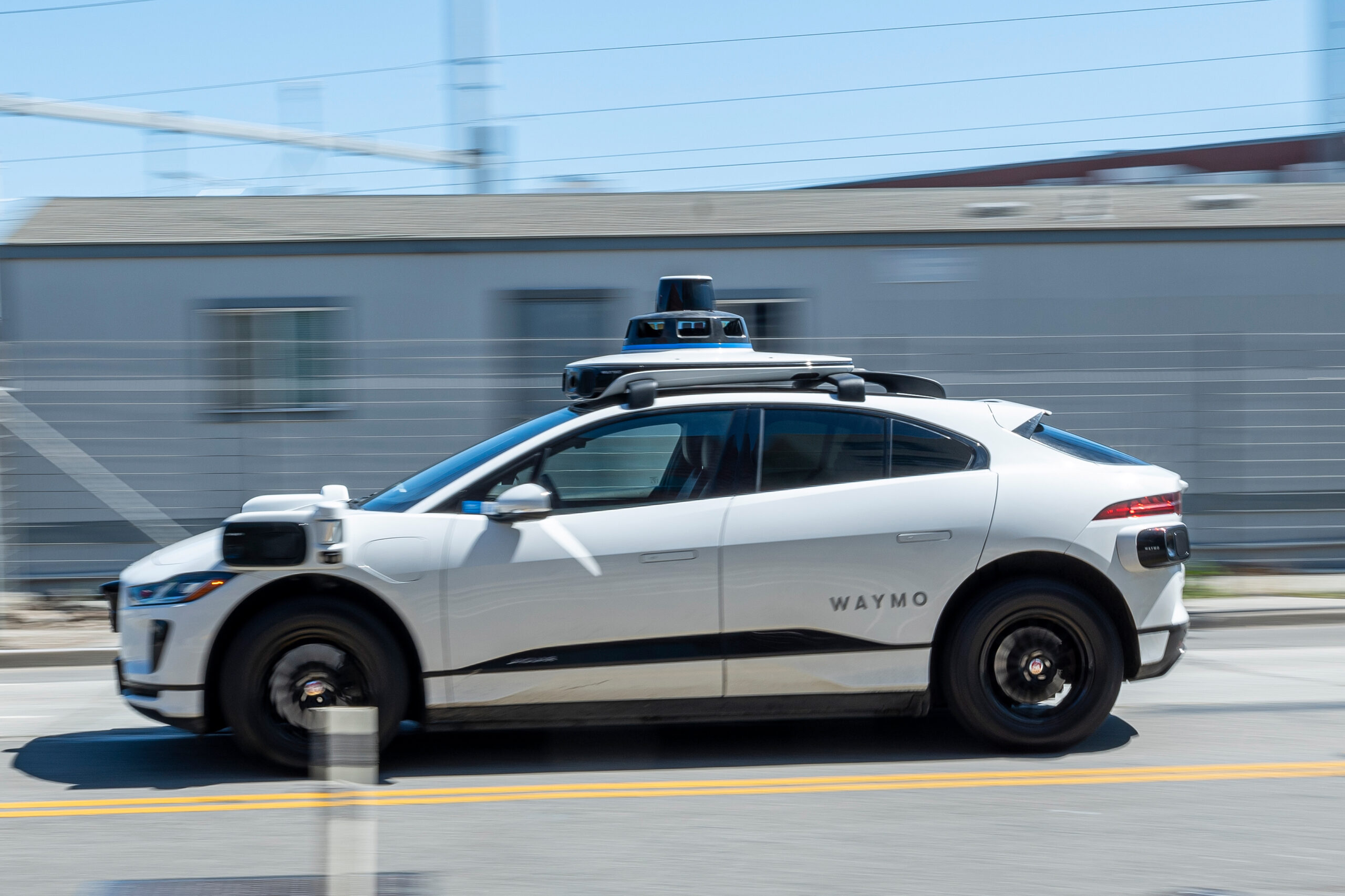
Waymo, Via to Offer Autonomous Public Transit Rides in Arizona
Insurance Journal· 2025-09-19 05:00
Core Insights - Via Transportation Inc. has partnered with Waymo to launch autonomous shared rides in Chandler, Arizona, starting this fall [1][2] - The initiative aims to enhance the existing Flex service, allowing users to book driverless rides during high demand periods [1][2] Group 1: Company Developments - Via Transportation Inc. went public last Friday and is focusing on expanding its public transit software capabilities [1] - Waymo, a self-driving unit of Alphabet Inc., is expanding its public partnerships to introduce autonomous services in new cities [2] Group 2: Service Details - The driverless rides will be available during the same operating hours and at the same price of $2 per ride as the city's Flex program [3] - Waymo's integration into Chandler's transit program aims to improve vehicle utilization while providing affordable transportation options [3] Group 3: Technology and Compliance - Via has implemented demand-matching and routing technology for the Flex service since the partnership began in 2022, allowing city officials to monitor performance and meet federal compliance requirements [2]