去中心化金融(DeFi)

Search documents
Kraken拟上线美股代币化交易 非美用户可24小时买卖特斯拉(TSLA.US)等大盘股
智通财经网· 2025-05-22 15:55
Group 1 - Kraken plans to launch over 50 tokenized versions of US stocks and ETFs for non-US customers in Europe, Latin America, Africa, and Asia, including well-known companies like Apple, Tesla, and Nvidia [1][2] - The tokenized stocks, referred to as "xStocks," will operate on the Solana blockchain and allow for 24/7 trading, aiming to provide a more convenient investment channel for global investors [1] - Kraken collaborates with Backed Finance, which will purchase and custody the actual shares and ETFs, ensuring that the tokens remain aligned with their corresponding stock prices and can be redeemed for cash value [1] Group 2 - The service will not be available to US users to avoid potential regulatory issues, as previous attempts by other exchanges to offer similar services faced regulatory pressure [2] - Kraken is actively working with regulatory bodies in various countries to ensure the xStocks product is launched legally and compliantly [2] - The xStocks initiative represents a significant step towards the integration of traditional finance and cryptocurrency, allowing investors to trade flexibly without traditional market hour restrictions and enabling the tokens to be used in decentralized finance (DeFi) strategies [2]
不容忽视的大趋势:稳定币--正在爆发的“数字美元霸权”
华尔街见闻· 2025-05-15 10:06
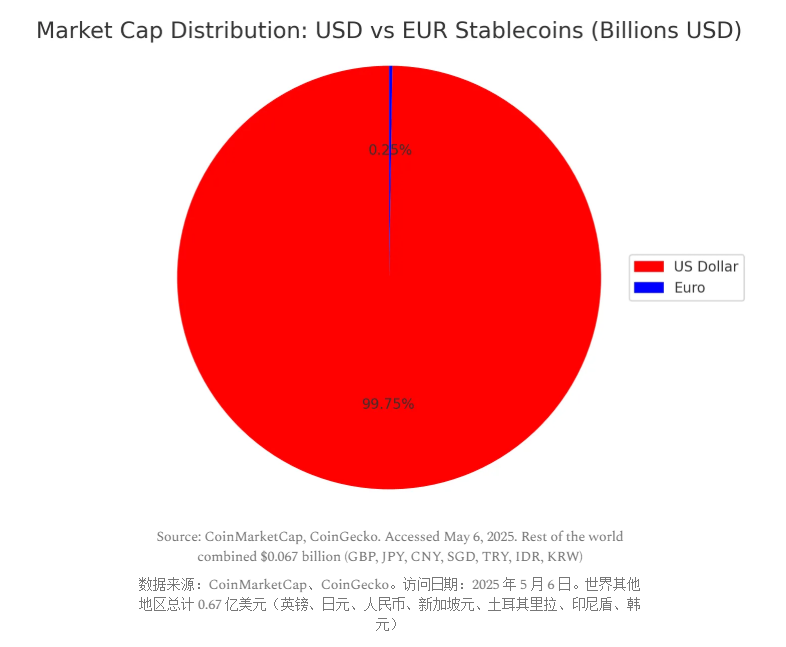
Core Viewpoint - Stablecoins are emerging as an unexpected ally in reinforcing the dominance of the US dollar amidst global de-dollarization discussions, with significant implications for international finance and payment systems [1][14]. Group 1: Growth and Adoption of Stablecoins - The total market size of stablecoins has surged from $20 billion in 2020 to an estimated $246 billion by May 2025, with Tether (USDT) alone growing from $67 billion in June 2022 to over $149 billion by May 2025 [7][19]. - Stablecoin transaction volume has increased by 598% since 2020, reaching $27.6 trillion in 2024, surpassing traditional payment giants like Visa and Mastercard [9][19]. - Active stablecoin wallet addresses grew from 22.8 million in February 2024 to over 35 million by February 2025, marking a 53% increase [9]. Group 2: Impact on Europe and Financial Stability - The widespread adoption of dollar-pegged stablecoins in Europe poses a threat to the European Central Bank's (ECB) control over monetary policy, as transactions may bypass the euro system, reducing the effectiveness of interest rate adjustments [2][3]. - Concerns arise regarding financial stability, as European businesses earning in euros but receiving payments in dollar stablecoins could face currency mismatch risks if the euro depreciates [2][3]. Group 3: Competitive Advantages of Dollar Stablecoins - Dollar-pegged stablecoins dominate the market, with 83% of stablecoins linked to the US dollar, while euro-pegged stablecoins hold a negligible market share, leading to higher transaction costs for euro stablecoins [5][16]. - The regulatory environment in the EU is stricter compared to the US, where there is more room for innovation and expansion due to the absence of comprehensive legislation [5][16]. - Dollar stablecoins have established a strong presence in early application scenarios, benefiting from network effects within the cryptocurrency trading ecosystem and decentralized finance (DeFi) platforms [5][16]. Group 4: Strategic Asset and Political Support - Stablecoins are increasingly viewed as strategic assets, with Tether being one of the largest holders of US Treasury securities, indicating a shift in how these digital currencies are perceived [13][15]. - Political backing from figures like former President Trump and Republican lawmakers positions stablecoins as a private sector solution to digital currency, contrasting with central bank digital currencies (CBDCs) [18][19]. Group 5: Future Projections - Standard Chartered forecasts that the supply of stablecoins could grow nearly tenfold from $230 billion to approximately $2 trillion by the end of 2028, significantly impacting foreign exchange market volumes [19].


不容忽视的大趋势:稳定币--正在爆发的“数字美元霸权”
Hua Er Jie Jian Wen· 2025-05-15 03:45
Core Viewpoint - Stablecoins are emerging as an unexpected ally in reinforcing the dominance of the US dollar amidst global de-dollarization discussions, with significant implications for international finance and economic sovereignty in Europe [1][13]. Group 1: Stablecoin Market Dynamics - The total value of stablecoins in circulation has surpassed $200 billion, with monthly transaction volumes reaching several hundred billion dollars, providing a digital alternative to traditional currencies [2]. - Deutsche Bank's research indicates that stablecoins have evolved from niche tools to mainstream financial infrastructure, with the market size projected to grow from $20 billion in 2020 to $246 billion by May 2025 [6]. - The transaction volume of stablecoins has increased by 598% since 2020, with 2024 projections estimating $27.6 trillion in transactions, surpassing traditional payment giants like Visa and Mastercard [8]. Group 2: European Concerns - The widespread adoption of dollar-pegged stablecoins in Europe poses a threat to the European Central Bank's ability to manage the eurozone economy, potentially undermining monetary policy effectiveness [2]. - Concerns arise regarding financial stability risks, as European businesses and households earning in euros but transacting in dollar stablecoins may face currency mismatches if the euro depreciates [2]. - The limited market share of euro-pegged stablecoins, which account for only 0.24% of the total stablecoin market, results in higher transaction costs and reduced liquidity [3]. Group 3: Regulatory Environment and Adoption - The regulatory landscape for stablecoins differs significantly between the EU and the US, with the EU's MiCA regulations imposing strict controls, while the US lacks comprehensive legislation, fostering innovation and expansion [5]. - Major companies like Visa, Shopify, Gucci, and PayPal are increasingly adopting stablecoins for transactions, indicating a shift towards mainstream acceptance [10][11]. - A Visa survey revealed that users prefer stablecoins over traditional banking due to higher yields (45%), greater efficiency (41%), and lower intervention risks (39%) [11]. Group 4: Strategic Asset and Dollar Dominance - Stablecoins are becoming strategic assets, with 83% pegged to the US dollar, and Tether being one of the largest holders of US Treasury securities [12][14]. - The demand for reserve assets is evident, with Tether's reserves projected to grow significantly, reinforcing the dollar's position in the global economy [14]. - The potential passage of the GENIUS Act could lead to a tenfold increase in stablecoin supply by 2028, further entrenching the dollar's dominance in the foreign exchange market [15].