反垄断审查

Search documents
“十四五”期间,广东省经营主体净增长648.6万户
Xin Lang Cai Jing· 2025-12-30 17:06
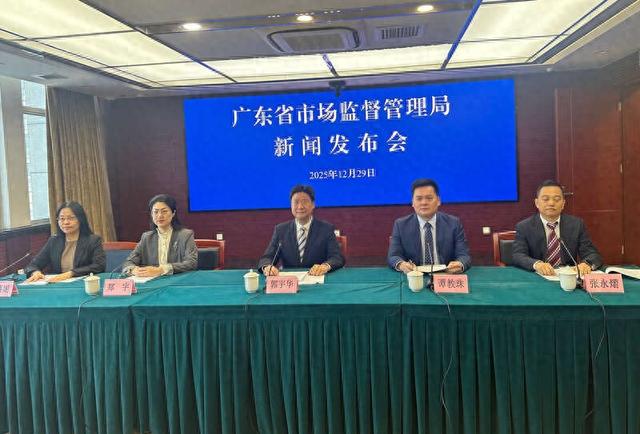
Core Insights - Guangdong Province has seen a net increase of 6.486 million business entities during the 14th Five-Year Plan period, maintaining the highest total number of business entities, enterprises, private enterprises, and foreign-invested enterprises in the country [1][3]. Group 1: Business Environment and Regulations - The province has fully implemented the new Company Law and promoted "one-stop service" and "one license for all," allowing businesses to complete applications in one form within one day, effectively stimulating business vitality [3]. - Guangdong has pioneered the tax clearance "commitment system" and improved the market exit mechanism through the establishment of a system for the deregistration of businesses [3]. - The province has strengthened the rigid constraints of fair competition review and established a joint meeting system involving legislative bodies, achieving full coverage of fair competition review mechanisms at provincial, municipal, and county levels [3]. Group 2: Quality and Standards - The product quality compliance rate in Guangdong's manufacturing sector exceeds 94%, with initiatives for national standardization innovation and the implementation of a leading standards action to accelerate the construction of an advanced standards system [3]. - During the 14th Five-Year Plan period, Guangdong led or participated in the revision of 1,881 international standards, 11,600 national standards, and published 1,550 local standards, along with 2,324 new public measurement standards [3]. Group 3: Consumer Protection and Intellectual Property - The market supervision department has advanced consumer rights protection initiatives, including the formulation of the Guangdong Consumer Rights Protection Regulations and the implementation of the "Top Ten Actions for Safe Consumption," aimed at optimizing the consumer environment [4]. - The department handled 15.238 million consumer complaints, recovering economic losses of 3.66 billion yuan for consumers [4]. - Guangdong has addressed 20,000 intellectual property cases during the 14th Five-Year Plan period, with fines totaling 370 million yuan, and maintains the highest rankings in key indicators such as valid invention patents and PCT international patent applications [4].

港媒:中远高层张勇将出任香港中联办副主任 处理长和港口交易僵局
Xin Lang Cai Jing· 2025-12-29 14:31
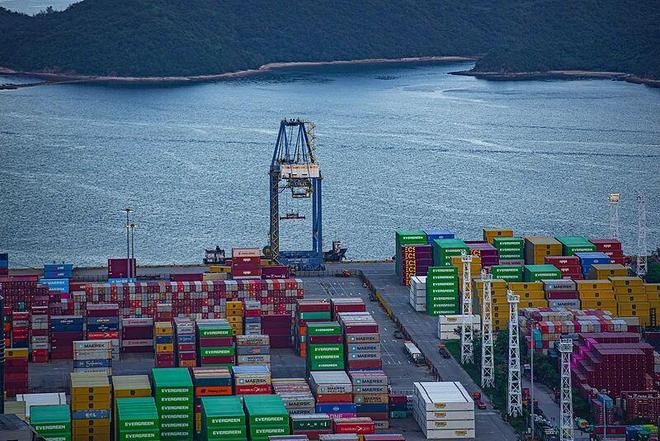
Group 1 - Qi Bin, the Deputy Director of the Hong Kong Liaison Office, is reported to have returned to Beijing after only one year in office, with Zhang Yong, former Vice President of China Ocean Shipping Group, set to replace him and manage economic work, particularly the stalled sale of the Panama port by CK Hutchison Holdings [1][4] - Zhang Yong's appointment is significant as he is expected to handle the sale of 43 global ports, including the Panama port, which is a critical transaction involving the interests of the Chinese state [2][5] - Zhang Yong has a strong background in economics and international law, holding multiple advanced degrees and having participated in drafting the "14th Five-Year Plan" [2][6] Group 2 - China Ocean Shipping Group is the largest shipping enterprise in China and plays a key role in the sale of global port operations by CK Hutchison Holdings, which announced a $22.8 billion deal with a consortium led by BlackRock in March [3][7] - The transaction has attracted central government scrutiny due to its implications for national interests and security, leading to an antitrust review [3][7]
千亿港口交易不确定性加大,但长和股价已涨超36%
Xin Lang Cai Jing· 2025-12-29 00:24
Core Viewpoint - The ongoing negotiations regarding the sale of port assets by CK Hutchison Holdings Limited (referred to as "CK Hutchison") face significant challenges, particularly in obtaining antitrust approvals from the US, EU, and China, making a successful transaction uncertain [2][3]. Group 1: Transaction Details - CK Hutchison announced plans to sell its port business to the "BlackRock-TiL consortium" for a total price of $22.765 billion, covering 43 port assets across 23 countries and regions, excluding mainland China and Hong Kong [4]. - The initial buyer consortium includes BlackRock, its infrastructure fund GIP, and Mediterranean Shipping Company (MSC), which holds a 70% stake in the TiL terminal investment platform [2]. - The transaction has been divided into multiple separate deals, with the Barcelona port transaction already prepared and awaiting EU approval [4]. Group 2: Regulatory Challenges - The transaction's success hinges on navigating complex antitrust reviews from the US, EU, and China, with the potential for failure if any of the regulatory bodies oppose the deal [3][5]. - The EU has raised concerns that the sale of the Barcelona port could lead to increased service prices or decreased service quality, prompting a comprehensive review that must conclude by April 30, 2026 [5]. Group 3: Market Reactions and Implications - The ongoing negotiations and potential changes in the buyer consortium have attracted global attention in the shipping industry, helping to improve market sentiment and reduce the significant discount to net asset value, resulting in a 36.66% increase in CK Hutchison's stock price in 2025 [7]. - The Hong Kong Hang Seng Index has also performed strongly in 2025, rising approximately 31.34% year-to-date, marking its best annual performance in five years [9].
史上最大收购竟秘而不宣,英伟达如何借“授权协议”收割技术和人才?
Feng Huang Wang· 2025-12-27 01:32
Core Viewpoint - Nvidia has acquired key assets from AI chip startup Groq for $20 billion, utilizing a non-exclusive licensing agreement to circumvent traditional acquisition methods and potential antitrust scrutiny [1][3][4]. Group 1: Acquisition Details - Nvidia's acquisition of Groq marks the largest merger in its 32-year history, surpassing the previous record of nearly $7 billion for Mellanox in 2019 [3]. - The deal includes Groq's CEO Jonathan Ross and other top executives, who will join Nvidia to enhance the application of licensed technology while Groq continues to operate independently under CFO Simon Edwards [2][3]. Group 2: Strategic Implications - This acquisition strategy reflects a trend among tech giants like Meta, Google, Microsoft, and Amazon, who have similarly invested billions to attract top AI talent and secure critical technologies through licensing agreements [3]. - Analysts suggest that this move not only prevents Groq's technology from falling into competitors' hands but also strengthens Nvidia's position in the AI market, enhancing its competitive moat [7]. Group 3: Financial Context - Nvidia's stock rose approximately 1% to $190.53 following the announcement, with a year-to-date increase of 42%, and a staggering 13-fold increase since the launch of ChatGPT in late 2022 [5]. - The company has significantly increased its cash reserves, totaling $60.6 billion as of October, up from $13.3 billion at the beginning of 2023, allowing for aggressive investments in the AI ecosystem [5]. Group 4: Future Considerations - Key questions remain regarding the ownership of Groq's language processing unit (LPU) intellectual property and its potential licensing to Nvidia's competitors, as well as the impact of Groq's nascent cloud business on Nvidia's services [8].


200亿美元买下Groq,英伟达图啥?
硬AI· 2025-12-25 08:47
Core Viewpoint - Nvidia is making a strategic move by spending approximately $20 billion to acquire technology from the startup Groq, aiming to eliminate potential threats in the efficient and low-cost AI inference chip market while integrating a top-tier team to address its technological shortcomings [2][3]. Group 1: Strategic Intent - The acquisition is not just a defensive measure against competitors but also a key strategy to build a wider moat and solidify Nvidia's absolute market leadership [2]. - Nvidia's CEO Jensen Huang emphasized the intention to integrate Groq's low-latency processors into Nvidia's AI factory architecture, expanding platform capabilities for a broader range of AI inference and real-time workloads [4][5]. Group 2: Market Dynamics - The core driver of this transaction is Nvidia's competition for the AI inference market, where its existing chips are often too large and costly for practical applications like chatbots [5]. - Groq claims its chips outperform Nvidia's in specific AI application tasks, indicating a potential threat to Nvidia's dominance as Groq's next-generation products are on the horizon [5]. Group 3: Transaction Structure - The deal is structured as a non-exclusive technology license, allowing Nvidia to hire Groq's founders and executives while Groq retains its cloud business [7][8]. - This structure is a common tactic among tech giants to circumvent regulatory scrutiny, similar to past strategies employed by Microsoft, Amazon, and Google [8]. Group 4: Competitive Landscape - Despite significant venture capital backing, challengers like Groq struggle to disrupt Nvidia's stronghold in the high-end AI chip market, as evidenced by Groq's recent revenue forecast cut [10]. - The competitive landscape is intensifying, with Google’s TPU emerging as a strong competitor to Nvidia's GPUs, and other companies like Meta and OpenAI developing their own specialized inference chips [10]. Group 5: Financial Strategy - Nvidia is leveraging its substantial cash reserves, which reached $60 billion by the end of October, to consolidate its business and pursue larger-scale technology acquisitions [12]. - The $20 billion transaction with Groq exceeds Nvidia's previous largest acquisition, indicating a willingness to invest heavily to eliminate potential threats and integrate cutting-edge technology [12].
埃里森提供404亿美元个人担保 加码派拉蒙对华纳兄弟的收购要约
Xin Lang Cai Jing· 2025-12-22 14:17
Core Viewpoint - Larry Ellison, co-founder of Oracle, will provide a personal guarantee of $40.4 billion in equity financing to support Paramount's $108.4 billion all-cash offer to acquire Warner Bros. Discovery, addressing concerns about the stability of the financing [1][5]. Group 1: Acquisition Details - The guarantee aims to alleviate Warner Bros. board's doubts regarding Paramount's funding stability, which previously led to a preference for a cash-and-stock deal with Netflix [1][5]. - Paramount's revised terms maintain the all-cash offer of $30 per share, and following this news, Warner Bros. shares rose nearly 4% in pre-market trading, while Paramount's shares increased by about 3% [1][5]. - Paramount has increased the reverse breakup fee from $5 billion to $5.8 billion in case of regulatory approval failure, aligning with Netflix's terms, and extended the offer's validity until January 21, 2026 [6]. Group 2: Competitive Landscape - The bidding war for Hollywood's most valuable assets continues, with both parties poised to gain significant advantages in the streaming wars due to their extensive content libraries [2][6]. - Analysts suggest that Paramount's current precarious position has led to this aggressive move to avoid being marginalized in the competitive landscape [2][6]. - Some investors, including Harris Associates, are open to considering the revised offer if Paramount can present a more attractive proposal and resolve existing issues in the deal terms [6]. Group 3: Regulatory Considerations - Both acquisition proposals will face stringent antitrust scrutiny in the U.S. and Europe, with bipartisan concerns about media industry consolidation [3][7]. - A successful merger between Paramount and Warner Bros. would create a media giant larger than Disney, potentially controlling a significant portion of television content consumed by Americans [3][7]. - Netflix's potential merger with Warner Bros. would further solidify its dominance in the streaming sector, with a combined total of 428 million subscribers [3][7].


涉及巴拿马港口交易,“中方提高要求,中企必须获得多数股份”
Guan Cha Zhe Wang· 2025-12-18 07:40
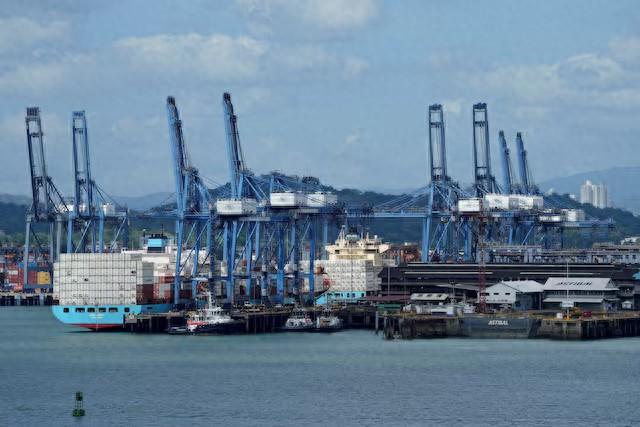
Core Viewpoint - The article discusses the stalled sale of Hong Kong's CK Hutchison Holdings' controlled ports in Panama, highlighting China's demand for majority control by COSCO in the transaction, which has led to tensions with the U.S. and involved regulatory scrutiny from Chinese authorities [1][2][4]. Group 1: Transaction Details - CK Hutchison Holdings reached a preliminary agreement to sell its interests in 199 port berths across 43 ports in 23 countries, including key ports at both ends of the Panama Canal, valued at $22.8 billion [1]. - The deal is led by a consortium headed by BlackRock, which has faced pushback from Chinese authorities demanding that COSCO must obtain majority ownership for the transaction to proceed [1][4]. - The transaction has been described as complex and is expected to take until 2026 to complete, according to CK Hutchison's management [8]. Group 2: Regulatory and Political Context - Chinese regulatory authorities have intervened, asserting their right to review the transaction under antitrust laws, citing potential impacts on China's domestic market and supply chain security [4][7]. - The U.S. has expressed strong opposition to China's influence in the Panama Canal, with the White House stating that it cannot accept China's demands for control over the ports involved in the sale [2][5]. - The article notes that previous instances of Chinese regulatory intervention in international mergers have set a precedent for scrutiny in this case, emphasizing the importance of maintaining fair competition [4][5]. Group 3: Strategic Importance of the Panama Canal - The Panama Canal is crucial for U.S. container shipping, with over 40% of U.S. container cargo passing through it, highlighting its strategic significance in global trade [8]. - The Panama Canal Authority is also planning to sell land on both sides of the canal for development into container ports, which is expected to attract bids from major global shipping companies [8].

截胡失败!华纳兄弟正式拒绝派拉蒙,与奈飞的“世纪联姻”将驶向何方?
Ge Long Hui· 2025-12-17 15:41
Core Viewpoint - The acquisition of Warner Bros. by Netflix is entering a critical phase, with Warner Bros. rejecting Paramount's hostile takeover bid, citing significant risks and costs associated with the offer [1][2]. Group 1: Warner Bros. and Paramount Acquisition - Warner Bros. board rejected Paramount's offer of $30 per share, valuing the bid at $108.4 billion, due to concerns over risks and costs [1][2]. - The board expressed doubts about the stability and transparency of the overseas financing proposed by Oracle founder Larry Ellison's trust [2]. - The board concluded that Netflix's proposal would create higher and more certain value for shareholders, anticipating significant benefits from the merger [2]. Group 2: Netflix's Response and Strategy - Netflix's co-CEO Ted Sarandos emphasized that the merger is the right deal at the right time with the right partner, promising to continue traditional theatrical releases for Warner's films [3]. - Netflix is engaging with regulatory bodies, including the U.S. Department of Justice and the EU, to ensure a smooth transaction and has submitted antitrust filings [3]. Group 3: Financial Details of the Acquisition - Netflix's agreement with Warner Bros. involves a cash and stock deal valued at $82.7 billion, with $27.75 per share (including $23.25 in cash and $4.50 in Netflix stock) [4]. - The acquisition will enhance Netflix's content library significantly, including major IPs like Harry Potter and DC superheroes [4]. Group 4: Challenges and Regulatory Concerns - The acquisition poses challenges, including significant debt for Netflix and the integration of Warner's extensive production system [6]. - A major regulatory hurdle is the potential market share exceeding 30% in the U.S. streaming market, which could trigger antitrust concerns [6]. - Netflix has prepared a breakup fee of up to $5.8 billion to compensate Warner if the deal fails due to regulatory issues, with the entire process expected to take 12 to 18 months [6].
中国宝安火线入局,杉杉重整再临深渊
Xin Lang Cai Jing· 2025-12-17 09:16
Core Viewpoint - China Baoan has entered the restructuring process of Shanshan Group, which is facing significant challenges, including potential antitrust reviews and industry competition issues [3][5][34]. Group 1: Restructuring Involvement - China Baoan announced its role as the lead investor in the restructuring of Shanshan Group, alongside its subsidiary, Bettery, and other potential investors [3][21]. - A due diligence deposit of 50 million yuan has been paid by China Baoan to facilitate the investigation process [3][21]. - The deadline for the restructuring is approaching on December 20, raising concerns about Shanshan Group's ability to avoid bankruptcy [5][23]. Group 2: Financial Performance - China Baoan reported a revenue of 20.23 billion yuan for 2024, a decrease of 34.1% year-on-year, with a net profit drop of 77.2% to 173 million yuan [9][27]. - Bettery, a key subsidiary, also experienced a revenue and profit decline of over 43% [9][27]. - Despite a slight recovery in revenue for China Baoan in the current year, net profit continues to decline, indicating reliance on Bettery's performance [11][29]. Group 3: Antitrust and Competition Risks - The potential merger of Bettery and Shanshan could trigger antitrust reviews due to their combined revenue exceeding 17 billion yuan, which raises concerns about market concentration [12][31]. - The merger could lead to a market share exceeding 40% in the anode materials sector, prompting scrutiny from regulatory bodies in China and abroad [14][32]. - Concerns from downstream battery manufacturers about supply chain stability have been expressed, indicating industry-wide apprehension regarding the merger [14][32]. Group 4: Restructuring Challenges - Previous potential investors, such as Fangda Carbon and Hunan Salt Industry Group, have withdrawn from the restructuring process, complicating Shanshan's situation [5][33]. - The restructuring faces additional challenges due to direct competition between Bettery and Shanshan in the anode materials market, which could lead to regulatory complications [34]. - Shanshan's financial situation is precarious, with total liabilities of 21.968 billion yuan and cash reserves of only 3.15 billion yuan, necessitating a swift resolution to the restructuring [17][35].

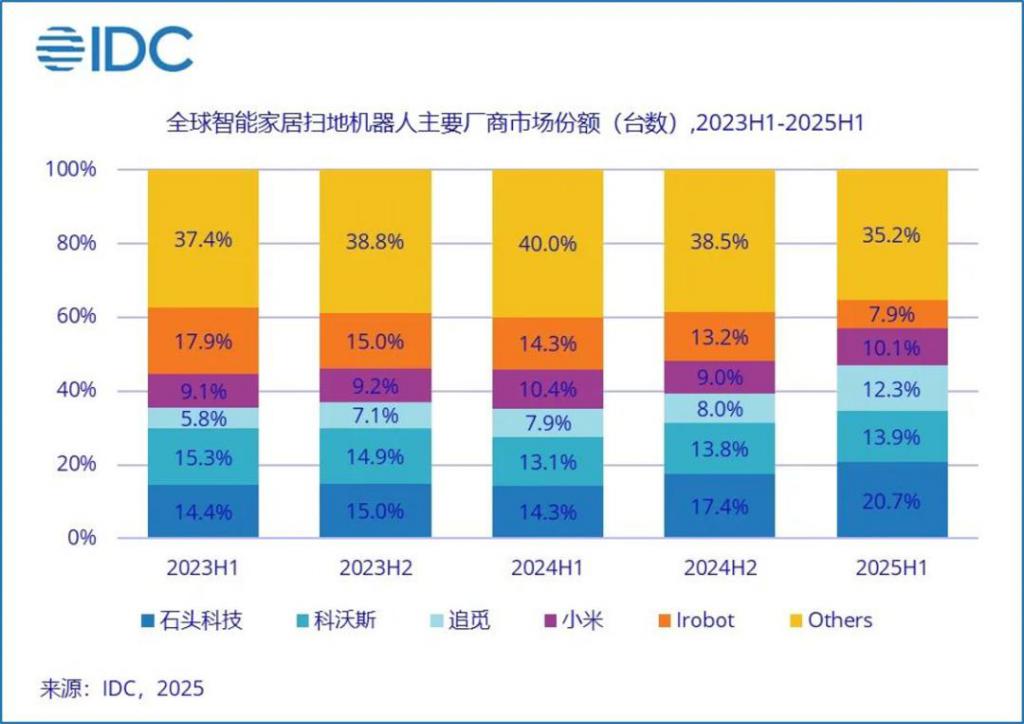
扫地机鼻祖iRobot破产重组,中国代工厂接盘还要过几道关?
2 1 Shi Ji Jing Ji Bao Dao· 2025-12-17 00:13
21世纪经济报道记者 吴立洋 号称"扫地机器人"鼻祖的iRobot破产重组一事迎来阶段性进展。 当地时间12月14日,iRobot宣布已与担保贷款方及主要代工制造商深圳杉川及其子公司Santrum达成《重组支持协议》(RSA),杉川将通过法院 监督程序收购iRobot。公司预计将于2026年2月完成该预先安排的破产重组程序。 其进一步表示,该协议是加强iRobot财务基础、助力公司实现长期增长和创新的重要一步。 根据重组支持协议(RSA)的条款,杉川将获得iRobot公司100%的股权。交易完成后,iRobot将成为杉川全资拥有的私营公司,其普通股将不再 于纳斯达克或任何其他国家证券交易所上市。 今年12月上旬,iRobot 发布公告,深圳杉川机器人旗下子公司 Santrum 收购了 iRobot 此前从凯雷集团贷款的 1.907 亿美元(约合12.43亿元人民 币)本金及利息,加上此前iRobot欠杉川的1.615亿美元(约合11.37亿元人民币)货款,杉川共计持有iRobot超3.5亿美元(约合24.65亿元人民币)债 务,并成为其最大债券人。 多位业内人士在与记者交流时指出,作为iRobot的独家代工厂 ...