Netflix流媒体服务

Search documents
未知机构:首次覆盖奈飞NFLX流媒体巨擘纵向协同横向扩张核心观-20260127
未知机构· 2026-01-27 02:15
Summary of Netflix (NFLX) Conference Call Company Overview - **Company**: Netflix (NFLX) - **Industry**: Streaming Media Key Points Expansion and Growth - Netflix transitioned from DVD rental to streaming, achieving global expansion with a strong technological foundation from its founder [1] - U.S. DVD subscription users grew from approximately 300,000 in 2000 to around 20 million by 2010 [1] - The shift to streaming began in 2007, with global expansion starting in 2013; by 2017, global subscribers exceeded 100 million, with international subscribers surpassing U.S. for the first time [1] - Projected membership by the end of 2025 is 325 million, with international members making up two-thirds of the total [1] Content Investment and Strategy - Netflix has invested a total of $155 billion from 2010 to 2025 to acquire content, achieving positive free cash flow by 2022, indicating self-sustaining capabilities [2] - The company has shifted from licensing content to producing original content, with over 60% of its content being self-produced [2] - The platform offers a diverse range of content, reducing reliance on single blockbuster hits (top content accounts for less than 1% of total viewership); successful series like "Stranger Things," "Wednesday," and "Squid Game" help retain high membership levels and increase ad revenue [2] Mergers and Acquisitions - The ongoing consolidation in the U.S. film and streaming industry is noteworthy; if Netflix successfully acquires Warner Bros. in 2026, it will enhance its IP and production capabilities while increasing market share [2] - As of October 2025, Netflix holds an 8.0% share of U.S. TV viewing time, while HBO accounts for 1.2%, totaling a combined share of 9.2% [2] Financial Projections and Investment Recommendation - Revenue projections for 2026 and 2027 are $51 billion and $56.9 billion, representing year-over-year growth of 13% and 12% respectively [3] - Expected net profit for the same years is $13.2 billion and $15.5 billion, with growth rates of 21% and 17% [3] - Based on a 32x PE ratio for 2026 earnings, the fair value is estimated at $100 per share, with a "Buy" rating recommended [3]

奈飞(NFLX):流媒体巨擘:纵向协同,横向扩张
GF SECURITIES· 2026-01-26 11:24
Investment Rating - The report assigns a "Buy" rating for Netflix (NFLX) with a current price of $86.12 and a fair value of $100 [3]. Core Insights - Netflix has transitioned from a DVD rental service to a global streaming giant, achieving significant growth in membership and content production. By the end of 2025, Netflix is projected to have 325 million members, with two-thirds being international subscribers [6][8]. - The company has built competitive barriers through early market entry and substantial investments in content, totaling $155 billion from 2010 to 2025. This has led to a shift from licensing to producing original content, which now constitutes over 60% of its library [8][9]. - The report forecasts revenue growth of 13% and 12% for 2026 and 2027, respectively, with net profit growth of 21% and 17% for the same years. The estimated earnings per share (EPS) for 2026 is $3.07, with a price-to-earnings (P/E) ratio of 32x [2][8]. Financial Projections - Revenue (in million USD) is projected to grow from $39,001 in 2024 to $62,766 in 2028, with growth rates of 16% for 2024 and 2025, tapering to 10% by 2028 [2]. - EBITDA is expected to increase from $11,019 million in 2024 to $21,736 million in 2028, reflecting a strong operational performance [2]. - Net income is forecasted to rise from $8,712 million in 2024 to $17,692 million in 2028, indicating robust profitability [2]. Company Overview - Netflix's journey began in 1997, initially focusing on DVD rentals before pivoting to streaming in 2007. The company has since expanded globally, with significant milestones including the launch of original content and a focus on local production [8][9]. - The competitive landscape has evolved, with Netflix facing increased competition from platforms like Disney+. The company is adapting by diversifying revenue streams beyond subscriptions, including advertising and gaming [8][9].
Stock Of The Day: Is Netflix About To Rebound?
Benzinga· 2026-01-23 16:37
Core Viewpoint - Netflix, Inc. shares are experiencing a potential reversal at an important support level after a downtrend since early July [1][8]. Group 1: Stock Performance - Netflix stock is currently trading higher, indicating a build-up of positive momentum [2]. - The stock has been trending lower since early July, but it has reached a significant support level around $83, where previous sell-offs ended in January and April [1][6]. Group 2: Market Dynamics - The stock market operates on the principles of supply and demand; an excess of supply over demand leads to a downtrend [3]. - When the stock reaches a support level, the balance shifts, allowing buyers to purchase shares without pushing the price lower, which can lead to a reversal in trend [5][6]. Group 3: Buyer Behavior - Stocks often rally after hitting support levels due to anxious buyers who fear missing out on higher prices, prompting them to increase their bids [6][7]. - This behavior can create upward pressure on the stock price, potentially leading to an uptrend [7][8].


827亿美元大博弈:Netflix拿下华纳后 流媒体之战如何重排?对中国市场影响几何?
Mei Ri Jing Ji Xin Wen· 2025-12-06 11:32
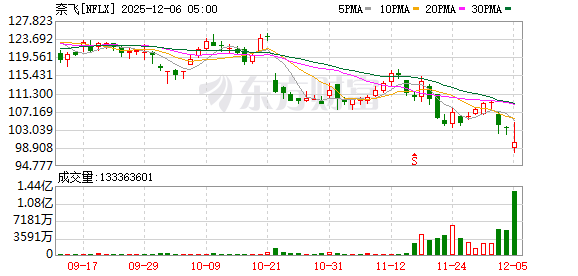
Core Viewpoint - Netflix announced the acquisition of Warner Bros. Discovery's film and television production business, HBO, and HBO Max for approximately $82.7 billion, marking one of the largest mergers in Hollywood history, which could reshape the entertainment industry landscape [2][20]. Group 1: Acquisition Details - The deal values Warner Bros. Discovery's equity at around $72 billion, translating to $27.75 per share, significantly higher than its previous market price, providing a favorable exit for WBD shareholders [4][12]. - Warner Bros. Discovery will retain its cable networks, news, and sports channels, which will be spun off into a new publicly listed company named "Discovery Global" [2]. - Netflix's acquisition includes iconic IPs such as "Harry Potter," "Game of Thrones," "Friends," and core assets from HBO, enhancing its content library [2][19]. Group 2: Market Reaction - Following the announcement, Netflix's stock fell by 3.5% to 4% in pre-market trading, indicating investor concerns regarding the debt burden and integration challenges associated with the acquisition [4][19]. - In contrast, WBD shareholders benefited from the acquisition price, which was significantly above the market value prior to the announcement [4]. Group 3: Strategic Implications - This acquisition is seen as a critical move for Netflix to transition from a streaming service to a full-fledged production powerhouse, addressing its previous lack of a strong IP foundation compared to competitors like Disney [7][18]. - The deal is characterized as a "defensive offensive," as Netflix aims to mitigate the risk of being marginalized in a competitive landscape dominated by major players with extensive IP portfolios [13][18]. - The acquisition signifies a shift in the industry where streaming platforms are no longer just content buyers but are taking control of content production, potentially leading to a more concentrated market [14][20]. Group 4: Industry Context - The acquisition is part of a broader trend in Hollywood where major players are competing for content and IP, with Netflix's $82.7 billion deal surpassing previous significant acquisitions, such as Disney's $71.3 billion purchase of 21st Century Fox [15][17]. - This move positions Netflix as a dominant force in Hollywood, allowing it to control the entire production process from script development to distribution, which could lead to more high-quality content and faster release schedules [17][20]. Group 5: Global Market Impact - Although Netflix cannot directly operate in China, the acquisition allows it to enter the market indirectly, as Warner Bros. films have historically performed well in Chinese theaters, enabling Netflix to benefit from box office revenues [21]. - The strategic decisions made by Netflix regarding content investment will likely influence Warner's future creative direction, potentially aligning more with Chinese audience preferences [21].
Netflix收购华纳兄弟,这是斗争的开始而非结束
36氪未来消费· 2025-12-06 11:27
Core Viewpoint - Netflix has reached an agreement to acquire Warner Bros. Discovery's film studio and HBO Max streaming service assets for $72 billion, with a per-share price of $27.75, but the deal faces regulatory scrutiny and political opposition [3][4][5][7]. Group 1: Acquisition Details - The acquisition is valued at $72 billion, with an enterprise value of approximately $82.7 billion, to be paid in cash and stock [4]. - Paramount Pictures has made a competing offer of $30 per share in cash, indicating a potentially more attractive bid compared to Netflix's offer [5][6]. - Warner Bros. board believes Netflix's offer is superior as it allows shareholders to hold shares in both Netflix and a spun-off company with linear cable assets, thus reflecting a better valuation [6]. Group 2: Market Impact and Future Operations - The merger could create a media giant controlling 30% to 40% of the U.S. streaming market, raising significant antitrust concerns [12]. - HBO's subscription service's future and the theatrical release window for Warner Bros. films remain uncertain, with Netflix indicating a desire to maintain the HBO brand's importance [10][11]. - The acquisition could lead to cost savings of $2 to $3 billion for Netflix by eliminating overlapping business functions [10]. Group 3: Regulatory and Competitive Landscape - The deal is expected to take 12 to 18 months to finalize, with ongoing regulatory risks and political opposition, particularly from the Trump administration [12][13]. - Paramount is actively lobbying against the deal and has threatened a hostile takeover, which could further complicate the acquisition process [14]. - The merger poses a significant threat to competitors like Disney, Amazon, and Comcast, as Netflix would gain a vast library of content, enhancing its bargaining power [15]. Group 4: Industry Reactions - Concerns have been raised by industry insiders about the potential economic and institutional collapse in Hollywood if the acquisition proceeds, highlighting the influence Netflix would wield over content distribution and pricing [15]. - The acquisition is seen as a pivotal moment in the entertainment industry, potentially reshaping the landscape for traditional studios and independent producers [15][16].

Netflix Pops on Long-Anticipated 10-for-1 Stock Split. Here's Why the "Ten Titans" Growth Stock Is a Great Buy in November.
Yahoo Finance· 2025-11-03 18:28
Group 1 - Netflix announced a 10-for-1 stock split, ending speculation about a potential split in 2025 or 2026, which positively impacted its stock price on October 31 [1] - Netflix is part of the "Ten Titans," a group of influential growth stocks that represent over 40% of the S&P 500, and it continues to outperform the broader market [2] - The stock split will allow shareholders to receive nine additional shares for every share held, with trading adjusted for the split starting on November 17 [4] Group 2 - The purpose of the stock split is to make the share price more accessible for employees in the stock option program and individual investors, as a lower price facilitates trading options [5] - A stock split may enhance Netflix's chances of being added to the Dow Jones Industrial Average, as the current share price over $1,000 is not conducive to the price-weighted index [6] - It has been a decade since Netflix's last stock split, and the company's growth potential remains strong, making it a favorable investment opportunity [7]
Wall Street's Long-Awaited Blockbuster Stock Split Announcement of 2025 Has Arrived
The Motley Fool· 2025-11-02 08:06
Core Insights - The article discusses the recent trend of stock splits among major companies, highlighting the significance of artificial intelligence (AI) and investor enthusiasm for stock splits as key drivers of market optimism [1][2]. Group 1: Stock Splits Overview - A stock split is a method used by public companies to adjust their share price and outstanding share count without affecting market capitalization or operational performance [3]. - Forward splits are generally viewed positively by investors, as they make shares more affordable and indicate a company's strong operational performance [5]. - Historically, stocks that undergo forward splits have outperformed the S&P 500 in the 12 months following the announcement [6]. Group 2: Recent Stock Split Announcements - O'Reilly Automotive announced a 15-for-1 forward split, which was approved by shareholders and set to take effect in June 2025 [7][8]. - Fastenal completed a 2-for-1 split in May 2025, marking its ninth split since going public in 1987 [10]. - Interactive Brokers executed its first-ever 4-for-1 split in June 2025, benefiting from automation investments that improved key performance indicators [12][13]. Group 3: Netflix's Blockbuster Split - Netflix announced a 10-for-1 forward split, effective after trading on November 14, 2025, reducing its nominal share price to approximately $113 [15]. - This split follows previous splits in 2004 and 2015, with the upcoming split resulting in an original share from its IPO multiplying into 140 shares [16]. - Netflix's competitive advantages, including consistent profitability and a strong content library, have contributed to its decision to split [20][21]. Group 4: Market Dynamics and Growth - As of October 30, 2023, non-institutional ownership of Netflix stock was 20%, indicating a growing retail investor base that supports the rationale for a forward split [18]. - Netflix's ad-based subscription tiers have attracted a significant number of users, with 94 million monthly active users opting for the ad-supported plan [22]. - The company has experienced substantial sales growth in various regions, including 20% in Latin America and the Asia-Pacific region, which is expected to enhance free cash flow in the coming years [23].
Netflix Earnings Are Coming. This Trade On The Stock Has A Large Profit Zone.
Investors· 2025-10-09 18:23
Company Overview - Netflix (NFLX) is experiencing a rebound after a minor pullback, surpassing the 50-day moving average [1] - The company is set to report earnings after the market closes on October 21, leading to increased volatility in short-term options compared to long-term options [1] Trading Strategy - A diagonal put spread is suggested as a strategy to capitalize on the volatility skew, involving selling an Oct. 24 put at a strike price of 1,090 and buying an Oct. 31 put at a strike price of 1,080 [2] - The trade results in a net debit of approximately 1.05, indicating minimal risk on the upside, with the worst-case scenario being the puts expiring worthless [3] Risk and Reward Analysis - The maximum potential gain from the trade is estimated at around 2,350, achievable if Netflix closes at 1,090 on October 24 [4] - Break-even prices are projected at approximately 1,030 and 1,240, with the trade performing well if the stock remains around 1,200 [4] - Aiming for a return of 10%-15% is advisable, with a stop loss in place to mitigate risks [5] Volatility Considerations - The put option being sold has a higher implied volatility (51%) compared to the one being bought (46%), aligning with the strategy of buying low and selling high in terms of volatility [6] - Closing the position before the earnings announcement on October 21 is recommended to reduce risk exposure [6] Performance Ratings - Investor's Business Daily assigns Netflix a Composite Rating of 93 out of 99, an Earnings Per Share Rating of 97, and a Relative Strength Rating of 80, ranking it first in its industry group [7]
与Netflix的东南亚激战,中国平台能赢吗?
Hu Xiu· 2025-08-28 12:47
Core Insights - The Southeast Asian streaming market is projected to grow to $6.8 billion by 2030, representing a 49% increase from 2024, with strong competition emerging from Chinese platforms against traditional leader Netflix [1] - The competition has evolved beyond content output to encompass localization depth, business model innovation, and cultural understanding [2] Group 1: Market Dynamics - By Q1 2025, U.S. platforms will still dominate Singapore with nearly 60% market share, while in Thailand, Chinese platforms have captured about 40% of the market, surpassing the 30% share of U.S. platforms [1] - The entry of Chinese platforms is driven by saturated domestic markets and the significant growth potential in Southeast Asia, where digital entertainment demand is high and cultural similarities exist [9][10] Group 2: Strategies of Chinese Platforms - iQIYI adopts a "high-profile" strategy, investing heavily in content production, planning to release 4 to 6 original Thai series annually with budgets around $1.54 million each [4] - WeTV focuses on idol cultivation, launching local talent discovery programs, which enhances user engagement and creates a unique content ecosystem [6][7] - Youku emphasizes a model export strategy, successfully adapting its popular variety show "Street Dance of China" for the Vietnamese market, establishing sustainable content production capabilities [8] Group 3: Competitive Advantages - Chinese platforms leverage pricing advantages, with subscription fees around $2 to $3 per month compared to Netflix's starting price of $7 to $8, making them more accessible in Southeast Asia [11] - The depth and agility of localized content production are key strengths for Chinese platforms, as they create content that resonates more with local audiences compared to Netflix's sometimes globally-oriented narratives [12][13] - Chinese platforms have quickly integrated local payment methods, enhancing user experience, while Netflix has been slower to adapt, previously relying mainly on credit card payments [14] Group 4: Future Trends - The rise of short dramas is a significant new variable in the market, with downloads of short drama apps in Southeast Asia increasing by 61% in Q1 2025, indicating a growing preference for this content format [17] - Short dramas offer lower production costs and quicker turnaround times, providing an opportunity for Chinese platforms to explore local user preferences [19] - iQIYI is aggressively pursuing short drama strategies, while Youku and WeTV are taking more cautious approaches, with potential collaborations with local teams [19][20] Group 5: Overall Competitive Landscape - The competition in the Southeast Asian streaming market has shifted from content acquisition to a comprehensive battle over ecosystems and business models [21] - Chinese platforms are establishing a foothold through flexible pricing, deep localization, and payment innovations, while Netflix maintains its position through brand strength and high-quality productions [22]



Wall Street Analysts Look Bullish on Netflix (NFLX): Should You Buy?
ZACKS· 2025-07-31 14:31
Core Viewpoint - Analyst recommendations play a significant role in influencing stock prices, but their reliability is questionable, particularly for Netflix (NFLX) [1][5]. Brokerage Recommendations - Netflix has an average brokerage recommendation (ABR) of 1.75, indicating a consensus between Strong Buy and Buy, based on 46 brokerage firms [2]. - Out of the 46 recommendations, 28 are Strong Buy (60.9%) and 3 are Buy (6.5%) [2]. Limitations of Brokerage Recommendations - Solely relying on ABR for investment decisions may not be advisable, as studies indicate that brokerage recommendations often fail to guide investors effectively [5]. - Analysts from brokerage firms tend to exhibit a positive bias due to vested interests, leading to a disproportionate number of favorable ratings compared to negative ones [6][10]. Zacks Rank as an Alternative - Zacks Rank, a proprietary stock rating tool, categorizes stocks from Strong Buy to Strong Sell and is based on earnings estimate revisions, which correlate strongly with stock price movements [8][11]. - The Zacks Rank is distinct from ABR; while ABR is based on brokerage recommendations, Zacks Rank utilizes quantitative models and is updated more frequently [9][12]. Current Earnings Estimates for Netflix - The Zacks Consensus Estimate for Netflix's earnings has increased by 2.9% over the past month to $26.06, reflecting analysts' growing optimism [13]. - This increase in consensus estimates, along with other factors, has resulted in a Zacks Rank of 1 (Strong Buy) for Netflix, suggesting a potential for stock appreciation [14].