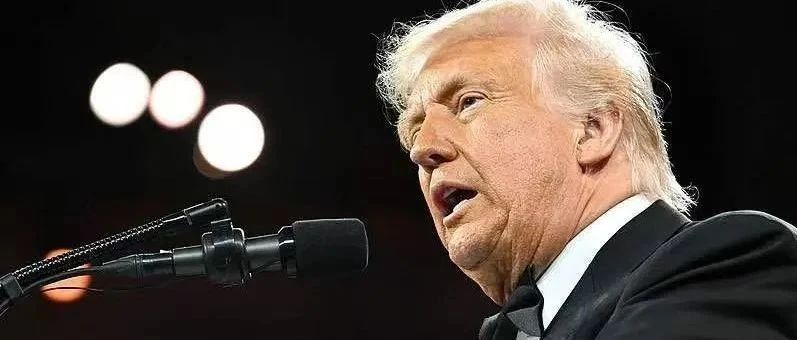
国际紧急经济权力法

Search documents
特朗普对多国征收关税被裁定违法
中国基金报· 2025-08-30 02:49
Core Viewpoint - The U.S. Court of Appeals ruled that most of the global tariff policies implemented by President Trump are illegal, stating that the International Emergency Economic Powers Act does not grant the president the authority to impose these tariffs [2][4]. Group 1: Court Ruling - The Federal Circuit Court upheld a previous lower court ruling with a 7-4 vote, indicating that the law Trump cited does not authorize him to impose most tariffs [4]. - The court's decision allows the tariffs to remain in effect until October 14, giving the Trump administration time to appeal to the Supreme Court [5]. Group 2: Implications for Trade Policy - The ruling is seen as a significant blow to Trump's aggressive trade policies, as it challenges the legality of tariffs imposed without congressional approval [6]. - Trump criticized the court's decision on social media, asserting that all tariffs remain effective and warning of disastrous consequences if they are removed [3][6].

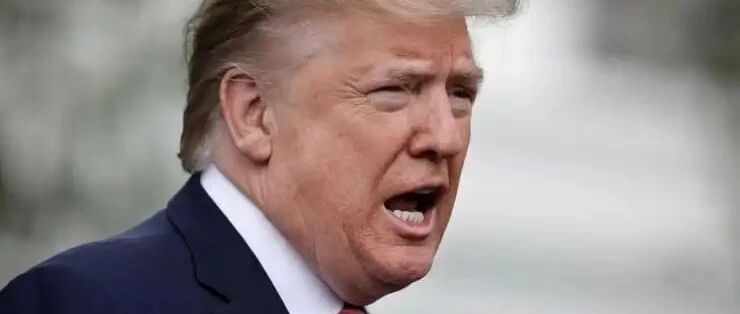
美上诉法院裁定美政府大部分全球关税政策非法
券商中国· 2025-08-29 23:24
Core Viewpoint - The U.S. Court of Appeals ruled that most of President Trump's global tariff policies are illegal, stating that the International Emergency Economic Powers Act does not grant the president the authority to impose tariffs, exceeding his powers [1]. Summary by Sections - The Court's Decision: The Washington-based Federal Circuit Court ruled that Trump's tariffs could remain in effect until October 14 to allow the government to appeal to the Supreme Court [1]. - Legal Basis: The court indicated that the International Emergency Economic Powers Act does not explicitly empower the president to impose tariffs, and Trump's actions exceeded his authority [1]. - Impact on Other Tariffs: The ruling does not affect tariffs imposed by the Trump administration under other regulations, such as the steel and aluminum tariffs [1]. - Trump's Response: Trump criticized the appellate court's decision on social media, calling it "wrong" and emphasizing that the current tariffs are still in effect, warning that their removal would lead to a "total disaster" for the U.S. [1]. - Historical Context: After taking office, the Trump administration invoked the International Emergency Economic Powers Act to implement a series of tariffs without congressional approval. In May, the U.S. International Trade Court ruled this action illegal, stating that the Constitution grants Congress exclusive power to regulate trade with foreign nations [1].

加州就诉特朗普政府关税政策违法案提起上诉
Xin Hua She· 2025-06-04 16:30
Core Points - California Attorney General Rob Bonta announced an appeal against the recent ruling by the Northern District Court of California regarding the lawsuit against the Trump administration's tariff policy [1] - California filed the lawsuit on April 16, claiming that the federal government's "reciprocal tariff" policy was illegal and harmed the interests of states, consumers, and businesses [1] - The Northern District Court dismissed California's request, leading to the decision to appeal to the Ninth Circuit Court of Appeals in San Francisco [1] Summary by Sections - **Legal Proceedings** - California is the first state to sue the Trump administration over tariff issues [1] - The court hearing last week involved a motion from the Trump administration to transfer the case to the U.S. Court of International Trade in New York, which California opposed [1][2] - The Northern District Court's dismissal of California's lawsuit prompted the appeal to clarify the court's jurisdiction over the case [1] - **Economic Impact** - California's lawsuit argues that Trump's tariff policy could lead to an additional $25 billion in costs for consumers and the loss of over 64,000 jobs [2] - The overall estimated loss for California residents due to the tariff policy is around $40 billion [2]
关税政策推进受阻,特朗普政府求助上诉法院
21世纪经济报道· 2025-06-03 00:09
Group 1 - The Trump administration requested a federal appeals court to block a ruling from the District Court of Columbia that deemed its tariff policy "illegal" [1] - On May 29, the District Court of Columbia issued a preliminary injunction against the tariffs imposed by the Trump administration under the International Emergency Economic Powers Act [1] - The U.S. International Trade Court ruled on May 28 to prohibit the enforcement of the tariffs, but the Federal Circuit Court of Appeals temporarily stayed this ruling on May 29 [1] Group 2 - Elon Musk expressed that he does not want to take responsibility for the actions of the U.S. government, suggesting that the Efficiency Department has become a scapegoat [2] - Trump announced an increase in steel tariffs to 50% [2]
反转!特朗普政府“对等关税”被暂时恢复
Jin Rong Shi Bao· 2025-05-30 03:14
Group 1 - The U.S. Court of Appeals temporarily reinstated the Trump administration's "reciprocal tariffs" policy, allowing the government to impose tariffs while the case is under review [1] - The Court's decision came after the U.S. International Trade Court had previously ruled against the Trump administration's tariff measures, stating that the International Emergency Economic Powers Act did not authorize such global tariffs [2] - The reinstated tariffs include a 30% tariff on imports from China, a 25% tariff on certain goods from Mexico and Canada, and a 10% general tariff on most U.S. imports, while tariffs on automobiles, steel, and aluminum remain unaffected [2] Group 2 - The market reaction to the reinstatement of tariffs was muted, with minor increases in major U.S. stock indices and little change in the U.S. dollar index [1] - White House Press Secretary criticized the International Trade Court's ruling as "judicial overreach," indicating the administration's strong stance on tariff policies [1]
美国上诉法院允许特朗普关税暂时继续生效
news flash· 2025-05-29 20:06
Core Points - A federal appeals court has temporarily allowed several tariffs imposed by Trump on international trade partners to remain in effect [1] - The U.S. Court of Appeals for the Federal Circuit stated that the decisions and permanent injunctions made by the International Trade Court will be temporarily suspended until further notice [1] - The lower court's ruling will be delayed at least until June 9, when both parties will submit legal arguments regarding the suspension of the case [1] Summary by Sections - **Court Ruling**: The appeals court's decision indicates a pause on the lower court's ruling that questioned Trump's authority to impose tariffs under the International Emergency Economic Powers Act [1] - **Next Steps**: The appeals court will weigh the issues in the case and consider whether to extend the suspension of the lower court's decisions [1] - **Legal Context**: The International Trade Court had previously ruled that Trump's use of the International Emergency Economic Powers Act did not grant him unlimited tariff authority [1]
法院出手叫停 特朗普关税政策搁浅
Bei Jing Shang Bao· 2025-05-29 14:34
Core Viewpoint - The U.S. International Trade Court has blocked President Trump's tariff policy, ruling that the president overstepped his authority by imposing tariffs on countries with trade surpluses with the U.S. [2][4] Group 1: Court Ruling and Implications - The court's 49-page ruling prohibits the Trump administration from enforcing tariffs imposed under the International Emergency Economic Powers Act (IEEPA), stating that the Act does not grant the president the authority to issue global tariffs or retaliatory tariffs [4][5] - The ruling halts the implementation of a 10% universal tariff on most U.S. imports and certain tariffs on China, Mexico, and Canada, but does not affect the 25% tariffs on the automotive and steel industries [4][6] - This ruling is considered one of the most significant judicial setbacks for the Trump administration, effectively nullifying the legal basis for the tariff strategy during his second term [6][7] Group 2: Future Trade Negotiations - The ruling complicates ongoing trade negotiations with approximately 18 countries, as the Trump administration has relied on the "reciprocal tariffs" as leverage [6][7] - Experts believe that the court's decision may lead trade partners to halt further concessions until there is a clearer legal framework from the U.S. judicial system regarding tariff disputes [7][8] Group 3: Potential Outcomes and Strategies - If the Trump administration's appeal is unsuccessful, it could significantly undermine the strategy of using high tariffs to compel trade partners to make concessions and reduce the trade deficit [8][9] - Analysts suggest that the administration may seek alternative legal avenues to impose tariffs, potentially using different legal justifications to circumvent the court's ruling [9]
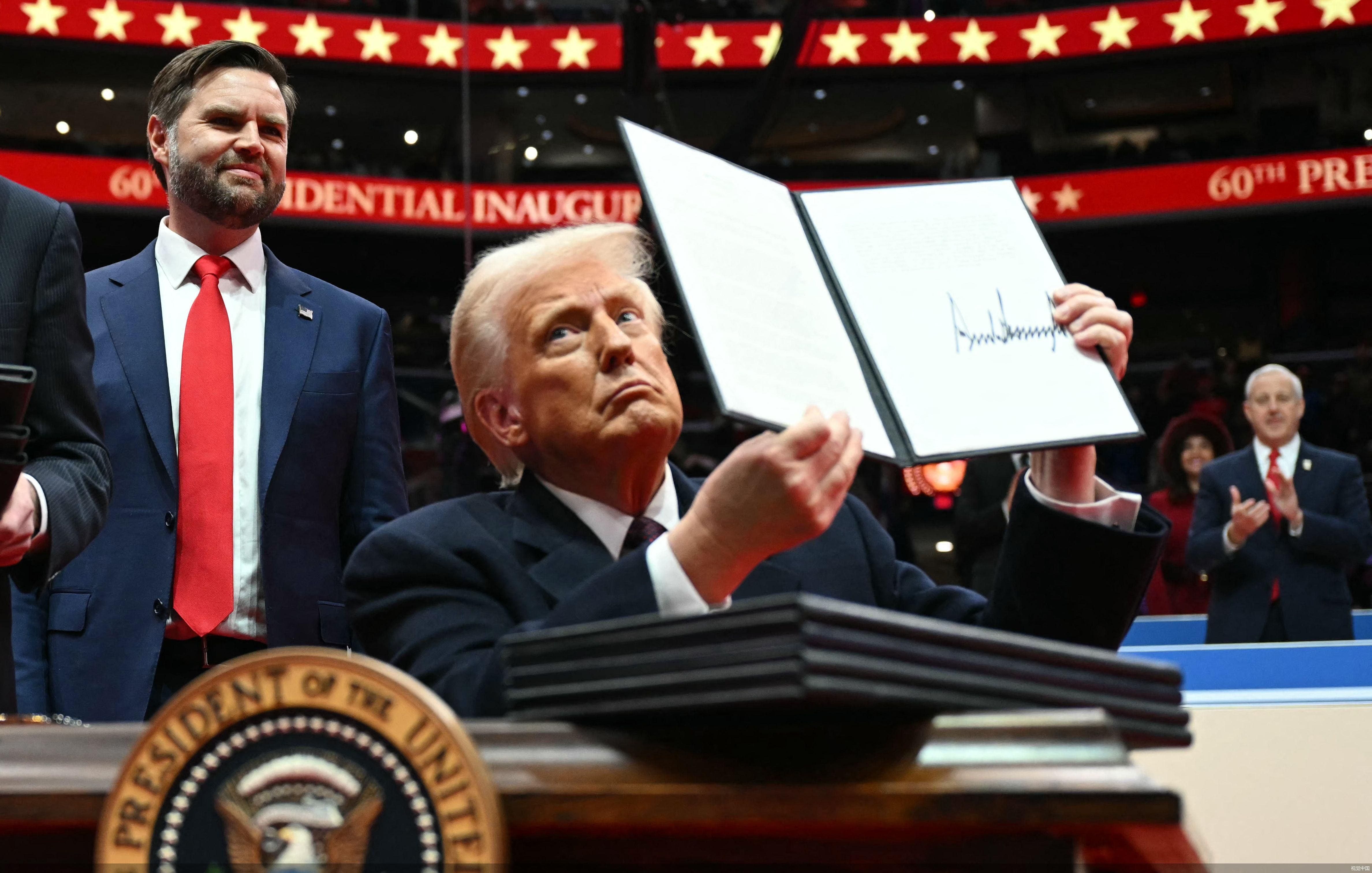
美国联邦法院表示,特朗普援引《国际紧急经济权力法》征收关税是越权行为。
news flash· 2025-05-28 23:16
美国联邦法院表示,特朗普援引《国际紧急经济权力法》征收关税是越权行为。 ...
特朗普关税政策至少面临7项司法挑战
news flash· 2025-05-22 04:36
Core Viewpoint - A coalition of 12 U.S. states has filed a lawsuit against the Trump administration, alleging that its tariff policies are unlawful, with a court hearing scheduled for May 21 [1] Group 1: Legal Arguments - The plaintiffs argue that the Trump administration has misinterpreted the International Emergency Economic Powers Act, leading to baseless tariff impositions [1] - The Act specifies that a national emergency can only be declared under unusual and extreme circumstances, which the current trade situation does not meet [1] - The defense contends that tariffs are not a tax issue but a means to regulate international trade, asserting that Trump has the authority to declare a national emergency and implement measures without court interference [1] Group 2: Current Challenges - The Trump administration's tariff policies are currently facing at least seven judicial challenges [1]
突发!美国11州起诉特朗普政府!
央视财经· 2025-04-24 00:06
Group 1 - Multiple states in the U.S., including New York, Arizona, and California, have filed lawsuits against the Trump administration's tariff policies, seeking to declare them illegal [1] - New York Attorney General Letitia James stated that the President does not have the authority to arbitrarily raise taxes, which is a central argument in the lawsuits [1] - California's Governor Gavin Newsom initiated a lawsuit claiming the Trump administration's use of tariffs is unlawful, marking the first state-level challenge to the tariff policies [1]