
快时尚

Search documents
成立41年的潮牌要破产了
虎嗅APP· 2025-03-05 13:13
Core Viewpoint - Forever 21, once a giant in the fast fashion industry, is facing bankruptcy due to the impact of cross-border e-commerce brands and is seeking buyers for its remaining stores, with plans to liquidate approximately 350 locations if no suitable buyers are found [1]. Company Background - Founded in 1984 by Korean-American couple Do Won Chang and Jin Sook Chang in Los Angeles, Forever 21 started as a small 25-square-meter store named Fashion 21 [3][4]. - The brand quickly gained popularity for its affordable and trendy clothing, expanding to over 800 stores globally and achieving annual revenues exceeding $4 billion at its peak [1][2][8]. Expansion and Market Position - In 2000, Forever 21 began a significant expansion into "superstores," with locations exceeding 500 square meters, and continued to open stores in prime locations even during the 2008 financial crisis [5][6]. - The brand became one of the top five clothing retailers in the U.S., diversifying its product range to include men's clothing, accessories, and plus-size apparel [6][8]. Challenges in the Chinese Market - Forever 21 struggled to establish a foothold in the Chinese market, experiencing multiple entries and exits due to cultural misalignment and competition from established brands like H&M and ZARA [10][11]. - The brand's products were criticized for their quality and design, which did not resonate with Asian consumers, leading to its exit from the market in 2019 [11][12]. Financial Decline and Bankruptcy - After a period of rapid expansion, Forever 21's financial troubles began to surface around 2015, culminating in a 137% decline in profitability due to the costs associated with large new stores [16]. - The company filed for bankruptcy protection in September 2019, later being acquired by a consortium for $81 million, which included plans for restructuring and revitalization [16][17]. Recent Developments - In 2023, SHEIN acquired a one-third stake in SPARC Group, a joint venture with Authentic Brands Group (ABG), which manages Forever 21, indicating a strategic partnership aimed at leveraging Forever 21's retail network for SHEIN's expansion [17]. - Despite these efforts, Forever 21 is once again facing bankruptcy, highlighting the ongoing challenges in the fast fashion sector and the need for a viable buyer to continue its operations [17].

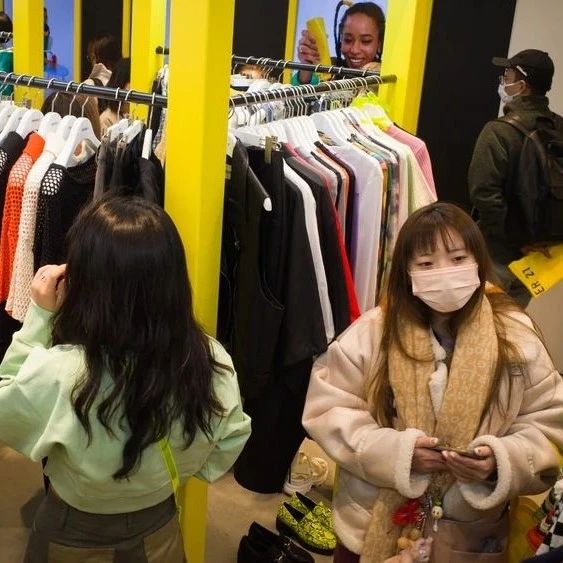
拒绝沦为“时代的眼泪”,本土快时尚品牌如何逆袭?
21世纪经济报道· 2025-03-02 12:40
Core Viewpoint - Domestic fast fashion brands such as YISHION, TANGSHI, and MEITERSBANGWEI are experiencing a resurgence in popularity among young consumers, driven by improved product design and competitive pricing in the context of a mature domestic apparel supply chain [2][4][10]. Group 1: Brand Background and Market Position - YISHION was established in 1997, initially as a small casual wear manufacturer, and peaked with over 6,000 stores nationwide [5]. Currently, it has over 3,000 stores and targets young consumers aged 22-30 [6]. - TANGSHI, founded in 1995, has nearly 2,000 stores and has transitioned from casual wear to trendy fashion, achieving annual sales exceeding 3 billion yuan [7][6]. - MEITERSBANGWEI, once a fashion icon for the youth, had a peak revenue of over 9.9 billion yuan in 2011 but faced challenges due to the rise of e-commerce and international brands [8][10]. Group 2: Strategic Adjustments and Brand Revitalization - YISHION is expanding into first- and second-tier cities and has launched a high-end black label series targeting young consumers, with plans to open around 30 flagship stores by 2025 [11][14]. - TANGSHI is focusing on shopping center locations and has introduced a new brand image to appeal to younger audiences, with plans to enhance its retail presence [14][10]. - MEITERSBANGWEI is pivoting towards the outdoor apparel market, aiming to offer "affordable luxury" products and has introduced a new series of outdoor clothing [16][17]. Group 3: Financial Performance and Future Outlook - MEITERSBANGWEI reported a net profit of approximately 7.68 million yuan in the first half of 2024, a significant increase of 648.07% year-on-year, although it anticipates an overall loss for the year [16][17]. - The brands are undergoing various transformations to shed their previous low-cost image and adapt to changing consumer preferences, but the sustainability of their resurgence remains to be seen [18].

对话 UR 创始人:中国快时尚出海,真正的突破还得去欧美丨小猎犬号
晚点LatePost· 2025-01-15 14:20
400 家,女装类目里,2024 年双十一销售额仅排在波司登和优衣库之后 —— UR 成立于 Zara 进入中国的 同年,目前各个维度都超过了 Zara。 UR 在 2014 年进行了两个关键策略:线下,开放加盟;线上,入驻天猫。它们共同助推了 UR 的快速增 长,前者帮助 UR 在此后的几年每年开出 50 家门店,后者让 UR 的线上销售额从零开始快速攀升,公开 数据里,UR 在 2017 年的线上销售额同比增长 317%,比 2015 年多了 10 倍。 UR 在海外已开出 20 家门店,2025 年重点布局纽约和伦敦。 文丨 管艺雯 编辑丨黄俊杰 "快时尚" 是服装行业里少数可以兼顾效率和溢价的品类。Zara 不像大牌一样创造流行,而是尽早捕捉到大 牌创造的流行趋势,尽快设计款式铺满全球,靠 200 元一条裙子、一件上衣,创始人 Amancio Ortega 一 度成为欧洲首富、世界第三。 2006 年,Zara 正式进入中国。这门生意在中国充满挑战,这里的大众消费更偏爱基本款、性价比,潮流 的优先级没有那么高,于是优衣库在中国服装行业的销售额长期位列第一。 追着 Zara 的中国品牌们大多落败。号称 ...