
新零售

Search documents
安井食品(603345):旺季加速,盈利能力上修可期
ZHONGTAI SECURITIES· 2026-03-31 07:04
Investment Rating - The investment rating for the company is "Buy" (maintained) [4][11] Core Insights - The company reported a revenue of 16.19 billion yuan for 2025, representing a year-on-year growth of 7.05%. However, the net profit attributable to shareholders decreased by 8.46% to 1.36 billion yuan [5] - The company has shown strong performance in new retail and e-commerce, with significant growth in sales from these channels, particularly through partnerships with platforms like Hema and Meituan [7] - The introduction of new products has met expectations, contributing positively to market feedback and sales [7] Financial Performance Summary - Revenue projections for the company are as follows: 15.13 billion yuan in 2024, 16.19 billion yuan in 2025, 17.47 billion yuan in 2026, 18.81 billion yuan in 2027, and 20.11 billion yuan in 2028, with growth rates of 8%, 7%, 8%, 8%, and 7% respectively [4] - The net profit attributable to shareholders is forecasted to be 1.49 billion yuan in 2024, 1.36 billion yuan in 2025, 1.69 billion yuan in 2026, 1.87 billion yuan in 2027, and 1.99 billion yuan in 2028, with growth rates of 0%, -8%, 24%, 11%, and 7% respectively [4] - The earnings per share (EPS) are projected to be 5.06 yuan in 2024, 4.08 yuan in 2025, 5.06 yuan in 2026, 5.60 yuan in 2027, and 5.98 yuan in 2028 [4] Market and Product Insights - The company has expanded its product offerings, including frozen prepared foods and baked goods, which have contributed to revenue growth [7] - The company is focusing on high-margin new products and enhancing its marketing strategies to support distributor upgrades and deepen partnerships with new retail channels [7] - The gross margin for 2025 is expected to decrease by 1.7 percentage points to 21.60%, primarily due to increased raw material costs [7]

蝶变升级路径明确,汇通达网络(9878.HK)“四大工程”锚定未来增长
Ge Long Hui· 2026-03-31 01:10
Core Insights - Huitongda Network (9878.HK) reported record-high core financial metrics for the fiscal year 2025, achieving a revenue of 52.3 billion yuan, a net profit of 530 million yuan (up 14.6% year-on-year), and a net profit attributable to shareholders of 300 million yuan (up 11.3% year-on-year) [1] - The gross profit margin increased to 4.5%, reflecting an 18% year-on-year growth, while operating cash flow showed a net inflow of 420 million yuan, marking seven consecutive years of positive cash flow [1] - The company outlined a clear future development path focusing on activating lower-tier markets, expanding domestic demand, and optimizing traditional industries, supported by its "14th Five-Year Plan" [1] Financial Performance - Revenue reached 52.3 billion yuan, with a net profit of 530 million yuan, representing a 14.6% increase year-on-year [1] - Net profit attributable to shareholders was 300 million yuan, up 11.3% year-on-year [1] - Gross profit margin improved to 4.5%, with an 18% year-on-year increase [1] - Operating cash flow showed a net inflow of 420 million yuan, continuing a trend of positive cash flow for seven years [1] Strategic Initiatives - Huitongda plans to leverage "innovative supply chains" and "AI+" to empower urban and rural retail entities, supply chain partners, upstream factories, and cutting-edge technology companies [1] - A strategic partnership with leading snack brand "Snack Selection" will be established to operate over 2,800 stores nationwide [1] - The company aims to expand rapidly through self-operated, joint ventures, and acquisitions, focusing on hard discount chains, snack retail, community supermarkets, and convenience stores [1] AI and Technology Focus - Huitongda is enhancing its "AI + digital intelligence + hardware-software integration" empowerment system to accelerate the development and commercialization of vertical large models, intelligent agents, and robotics [2] - The company will upgrade its "Intelligent Technology Product Service Platform" to support the marketization and large-scale transformation of cutting-edge technologies [2] - Huitongda aims to optimize supply-demand efficiency through its innovative supply chain platform, focusing on fast-moving consumer goods [2] Future Outlook - For 2026, Huitongda has set the annual guideline of "ensuring growth and improving quality, transforming and upgrading" [2] - The company plans to increase investments and acquisitions in key industries and quality projects, while also considering cash dividends for shareholder returns [2]

2026年春糖反馈报告:叩响酒业新时代
Huachuang Securities· 2026-03-30 14:09
Investment Rating - The report maintains a "Buy" recommendation for the liquor industry, indicating a positive outlook for investment opportunities in the sector [2]. Core Insights - The 2026 Spring Sugar Conference showed a decline in overall participation and interest in traditional exhibitions, while new retail and new liquor formats gained significant traction, reflecting a generational shift in consumer preferences [2][12]. - The report suggests that 2026 marks not only a bottoming out of the liquor cycle but also the beginning of a new era in the industry, driven by changes in consumer behavior and market dynamics [3][8]. Summary by Sections Spring Sugar Conference Observations - The number of participating liquor companies and attendees decreased, with major brands like Moutai and Wuliangye absent from hotel exhibitions, leading to a shift towards smaller brands [12]. - There is a notable increase in interest in new retail and new liquor formats, indicating a shift in consumer focus towards product quality and convenience [12][15]. Thoughts on 2026 - The report emphasizes the need for liquor companies to focus on direct consumer engagement and efficiency, moving away from traditional channel-centric models [19]. - It highlights that the worst phase for the industry is believed to be over, with improvements in cash flow and inventory levels among distributors [28]. Industry Feedback - Sales declines have narrowed, with regional disparities still present; the report notes that the liquor industry is entering a phase of differentiation as it stabilizes [39]. - The report indicates that while high-end brands like Moutai and Wuliangye are performing well, lower-tier brands are struggling with inventory issues [40]. Individual Company Feedback - Moutai and Wuliangye are noted for their strong sales performance, with Moutai's pricing remaining robust and Wuliangye planning to reduce channel expenses while maintaining price stability [25][32]. - Other brands like Fenjiu and Gujing are also highlighted for their strategic adjustments and market performance [25]. Investment Recommendations - The report recommends focusing on Moutai for its strong operational certainty and high dividend yield, as well as Wuliangye for its exceeding sales expectations [9]. - It suggests monitoring brands like Gujing and Fenjiu for their potential recovery and market responsiveness [9].






广州酒家(603043):2025年年报点评:全年平稳收官,Q4收入边际改善
EBSCN· 2026-03-29 11:29
Investment Rating - The report maintains an "Accumulate" rating for the company [1] Core Insights - The company achieved an operating revenue of 5.38 billion yuan in 2025, representing a year-on-year increase of 5%. The net profit attributable to the parent company was 490 million yuan, down 1.2% year-on-year [3][4] - In Q4 2025, the company recorded an operating revenue of 1.1 billion yuan, up 7.5% year-on-year, while the net profit attributable to the parent company was 40 million yuan, down 15.9% year-on-year [3][4] - The company has seen steady growth in its performance, with significant expansion in markets outside Guangdong province [4][5] Revenue Performance - The revenue breakdown by product shows that: 1. Mooncake series generated 1.652 billion yuan, up 0.96% year-on-year 2. Frozen food revenue was 1.057 billion yuan, up 2.67% year-on-year 3. Restaurant business revenue reached 1.539 billion yuan, up 5.79% year-on-year 4. Other food products generated 1.045 billion yuan, up 15.59% year-on-year [4] Regional Performance - Revenue from Guangdong province was 3.937 billion yuan, up 4.04% year-on-year - Revenue from outside Guangdong province was 1.337 billion yuan, up 8.96% year-on-year - Revenue from overseas markets was 61 million yuan, down 11.21% year-on-year [5] Profitability Metrics - The company's gross margin for 2025 was 31.6%, with a slight decline due to changes in product mix - The net profit margin for 2025 was 9.1%, reflecting a decrease of 0.55 percentage points year-on-year [6][12] Future Outlook - The company plans to continue optimizing its product matrix and deepen its channel strategies, focusing on expanding in East China, North China, and overseas markets [7] - The forecast for net profit attributable to the parent company for 2026 and 2027 is adjusted to 527 million yuan and 560 million yuan, respectively [8][10]

中国利郎20260324
2026-03-26 13:20
Summary of the Conference Call for China Lilang Company Overview - **Company**: China Lilang - **Industry**: Apparel and Fashion Key Points 2025 Performance and Financial Health - **Revenue Growth**: Achieved 11.6% year-on-year revenue growth, surpassing 4 billion CNY in sales [3] - **Main Brand Growth**: The main brand, Lilang, grew by 6%, supported by channel and product transformation [3] - **DTC Transformation**: DTC (Direct-to-Consumer) transformation has been effective, with regions where agency rights were reclaimed showing revenue growth twice the overall company rate [2][3] - **Light Business Brand**: Revenue for the light business brand increased by 28%, nearing 1 billion CNY, driven by a clear "youth business" market positioning [2][3] - **Cash Flow**: Operating cash flow for 2025 was approximately 540 million CNY, with net cash on the balance sheet reaching 2 billion CNY [2][4] - **Inventory Health**: Inventory increased by over 30%, but the proportion of goods over one year old decreased from 13% to 11% [4] 2026 Growth Outlook - **Revenue Target**: Aiming for over 10% retail revenue growth in 2026, with the main brand focusing on further DTC transformation and reclaiming another province's agency rights [2][4] - **New Retail Contribution**: New retail channels are expected to contribute 15% to revenue growth [4] - **Southeast Asia and Wanxingwei**: Plans to open 6 stores in Southeast Asia and 4 for the Wanxingwei brand, with a focus on steady investment without strict performance targets [2][4] Marketing and Talent Management - **Talent Development**: Emphasis on internal talent cultivation and team vitality, with a stable core management framework [5] - **Marketing Strategy**: Focus on member operations and product discounts to provide direct value to consumers, with plans for more aggressive marketing when market conditions improve [5][6] DTC and Product Strategy - **DTC Growth**: DTC stores in previously underperforming regions have shown revenue growth exceeding company averages [6][7] - **Product Line Diversification**: Transitioning from a single product line to a differentiated multi-category approach, including taste business, urban leisure, and functional travel series [7] Channel Performance - **Outlet Channel**: The outlet channel accounts for nearly 20% of offline revenue, with single-store sales reaching up to 30 million CNY [2][8] - **Profitability**: The main brand maintains a profit margin above 10%, while the light business is currently in a growth phase with lower profit margins [8] Discount and Margin Management - **Discount Rates**: Overall discount rates have decreased to approximately 70-75%, reflecting a structural adjustment to ensure inventory health [9] - **Future Margin Outlook**: Expected to see upward potential in gross margins, driven by DTC transformation and the growth of the light business [9] Recent Sales Performance - **Q1 2026 Sales**: Retail revenue in the first two months of Q1 2026 showed nearly 10% growth, with the main brand experiencing a slight decline in March due to market conditions [10] - **Order Meeting Growth**: The recent autumn order meeting saw nearly 10% year-on-year growth in order amounts [10] Long-term Vision - **Future Goals**: Management aims to reach a revenue scale of 5 billion CNY in the next couple of years, with a focus on multi-brand and international team development [11]
华润啤酒(00291.HK)2025年报点评:稳进笃行筑根基 踔厉奋发开新局
Ge Long Hui· 2026-03-26 05:16
Core Viewpoint - The company reported a decline in revenue and net profit for 2025, but adjusted figures show growth when excluding certain impairments and costs [1][2] Financial Performance - In 2025, the company achieved total revenue of 37.99 billion yuan, a decrease of 1.7% year-on-year; net profit attributable to shareholders was 3.37 billion yuan, down 28.9% [1] - For the second half of 2025, total revenue was 14.04 billion yuan, a decline of 5.7%, with a net profit of -2.42 billion yuan compared to 0.03 billion yuan in the same period last year [1] - The company recognized goodwill impairment of 2.88 billion yuan; if adjusted for this and other factors, the net profit would be 5.72 billion yuan, an increase of 19.6% [1] Beer Segment Performance - Beer revenue in the second half of 2025 decreased by 4.3%, but sales volume showed resilience with a slight increase of 0.4% to 4.543 million kiloliters; average price per ton fell by 4.6% due to increased promotional activities [1] - For the full year, beer revenue remained stable with a sales volume increase of 1.4%; premium and above product sales grew nearly 10%, while mid-high tier products saw single-digit growth [1] - Notable brands like Heineken and Snow Beer experienced significant growth, with Heineken increasing nearly 20% and Snow Beer around 60% [1] Cost and Efficiency - The company benefited from lower beer costs, with a ton cost decrease of 3.1%, leading to a gross margin decline of 1.1 percentage points to 32.4% in the second half of 2025 [2] - For the full year, the gross margin was 42.5%, an increase of 1.4 percentage points; operational efficiency improved with reductions in sales and management expense ratios [2] White Spirit Segment - The white spirit business faced challenges with revenue of 1.5 billion yuan, down 30.4% for the year, and a 25.9% decline in the second half [2] - The company recorded a significant goodwill impairment of 2.88 billion yuan, leading to a 69.0% decline in EBITDA for the white spirit segment [2] Strategic Initiatives - The new leadership team demonstrated strong execution and cohesion, focusing on innovation to drive growth, including the launch of new beer products [3] - The company is exploring new channel opportunities and partnerships with platforms like Alibaba and JD.com to expand its market reach [3] - Plans to cultivate the Greater Bay Area as a new growth engine and to enhance the resilience of its channel ecosystem were highlighted [3] Investment Outlook - The company is expected to continue its high-end strategy and product upgrades, with improved gross margins and operating cash flow [4] - Adjusted profit forecasts for 2026-2028 are set at 6.39 billion, 6.78 billion, and 7.14 billion yuan respectively, maintaining a target price of 40 HKD [4]

天虹股份(002419) - 2026年3月25日投资者关系活动记录表
2026-03-25 09:50
Group 1: Strategic Direction - The company aims to become an "AI-driven digital technology company," focusing on deep digitalization and intelligent upgrades in retail, with no plans to enter the military industry [2] - The strategic focus includes two main directions: enhancing industry digitalization and accelerating digital industrialization, particularly through the "Lingzhi Bailing Bird AI model" and the "Xiao Huo Er" intelligent labor platform [2][3] Group 2: Core Operating Strategies for 2026 - The core operating strategy for 2026 is based on "three focuses and three cost reductions," targeting breakthrough growth opportunities and optimizing cost structures [3] - Specific initiatives include upgrading the supermarket model (sp@ce3.0), creating benchmark shopping centers, and applying AI in the core value chain of products and services [3] Group 3: Competitive Advantages and Initiatives - The company's competitive edge lies in its comprehensive digital capabilities powered by its proprietary AI model, enabling a fully integrated online and offline retail system [3] - Key initiatives include transforming shopping centers into experiential and digital hubs, enhancing online business through "instant retail + membership value," and optimizing the supply chain with a focus on fresh and ready-to-eat products [3] Group 4: Store Optimization and Financial Outlook - In 2026, the company plans to open one new shopping center and evaluate existing stores for potential closures based on market conditions [4] - The company emphasizes a stable cash dividend policy and is considering share buybacks based on market and operational conditions [4] Group 5: Investor Relations and Market Perception - The company is committed to enhancing its value and investor returns, with a focus on effective communication and market recognition of its value [4] - The stock price has been affected by various factors, including macroeconomic conditions and company fundamentals, and the company encourages rational investment [4]

《揭秘壁挂式自助服务亭:市场现状、趋势与产业链全解析》
QYResearch· 2026-03-25 09:40
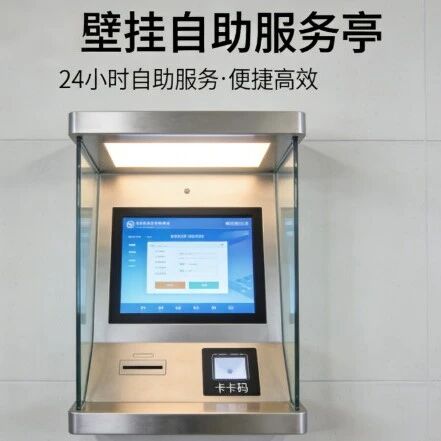
Core Viewpoint - The wall-mounted self-service kiosk market is projected to reach approximately $880 million by 2025, with a compound annual growth rate (CAGR) of 5.3% in the coming years [2]. Market Participants and Dynamics - Key players in the wall-mounted self-service kiosk market include NCR, Diebold Nixdorf, Crane Payment Innovations, Aurionpro Solutions, Zebra Technologies, and several others, with a mix of listed and unlisted companies [4][5]. - Diebold Nixdorf is focusing on local production lines in North Canton, USA, for self-checkout and kiosk systems, emphasizing supply continuity for major clients [6]. - NCR Voyix is enhancing market education on consumer preferences for self-service and has a leading share in self-checkout shipments [6]. - Zebra Technologies announced the acquisition of Elo Touch Solutions to strengthen its hardware layout for interactive front-line devices [6]. - Meridian Kiosks is promoting wall-mounted solutions that save space and integrate peripherals [6]. Industry Development Trends - Accessibility compliance is becoming a prerequisite due to the European Accessibility Act (EAA), affecting installation height and interaction methods [9]. - The trend towards thinner and modular designs is evident, with a focus on space-saving and multi-scenario applications [10]. - AI and voice interaction are entering a practical phase, enhancing user experience in self-service environments [11]. - Payment methods are polarizing, with a rise in cashless transactions alongside the introduction of compact cash handling modules [12]. Industry Chain - The upstream segment includes critical hardware components such as industrial touch screens, cameras, and payment modules [13]. - The midstream involves complete machine manufacturing, system integration, and software platforms, focusing on thin structures and modular compatibility [14]. - The downstream applications span various sectors, including retail, healthcare, transportation, and corporate environments, with procurement methods varying by customer size [15][16][17][18].



华润啤酒(00291.HK)2025 年报点评
Huachuang Securities· 2026-03-24 07:25
Investment Rating - The report maintains a "Strong Buy" rating for China Resources Beer (00291.HK) with a target price of HKD 40 [2][8]. Core Views - The company reported a total revenue of HKD 37.99 billion for 2025, a decrease of 1.7% year-on-year, and a net profit attributable to shareholders of HKD 3.37 billion, down 28.9% year-on-year. However, if adjusted for goodwill impairment and other factors, the net profit would be HKD 5.72 billion, reflecting a 19.6% increase [2][4]. - The company plans to distribute a final dividend of HKD 0.557 per share, resulting in a total dividend of HKD 1.021 per share for the year, with a payout ratio of approximately 98% [2][4]. Financial Performance Summary - **Revenue and Profit**: In H2 2025, the company achieved a revenue of HKD 14.04 billion, down 5.7% year-on-year, and a net profit of -HKD 2.42 billion, compared to HKD 0.3 billion in the same period last year [2][4]. - **Cost and Margin**: The beer segment's cost benefits continued, with a 3.1% decrease in per-ton cost, leading to a gross margin of 42.5% for the year, an increase of 1.4 percentage points year-on-year [2][8]. - **Sales Performance**: The beer revenue remained stable year-on-year, with a volume increase of 1.4%. Premium products saw nearly 10% growth, while the white wine segment faced a 30.4% revenue decline [2][8]. Future Outlook - The company is focusing on high-end product development and has initiated collaborations with major e-commerce platforms to expand its market reach. The management is optimistic about the growth potential in the Greater Bay Area [2][8]. - The report adjusts the profit forecast for 2026-2028 to HKD 6.39 billion, HKD 6.78 billion, and HKD 7.14 billion respectively, maintaining a target price of HKD 40, corresponding to a PE ratio of approximately 18 times for 2026 [2][8].
华润啤酒(00291):2025年报点评:稳健笃行筑根基,踔厉奋发开新局
Huachuang Securities· 2026-03-24 06:04
Investment Rating - The report maintains a "Strong Buy" rating for China Resources Beer (00291.HK) with a target price of HKD 40 [2][8]. Core Views - The company reported a total revenue of HKD 37.99 billion for 2025, a decrease of 1.7% year-on-year, and a net profit attributable to shareholders of HKD 3.37 billion, down 28.9% year-on-year. However, if adjusted for goodwill impairment and other factors, the net profit would be HKD 5.72 billion, reflecting a 19.6% increase [2][4]. - The company plans to distribute a final dividend of HKD 0.557 per share, with a total dividend payout of HKD 1.021 per share for the year, resulting in a payout ratio of approximately 98% [2][4]. Financial Performance Summary - **Revenue and Profitability**: - Total revenue for 2025 was HKD 37,985 million, with a projected increase to HKD 39,880 million in 2026, representing a growth rate of 5.0% [4]. - Net profit for 2025 was HKD 3,371 million, expected to rise to HKD 6,388 million in 2026, indicating a significant growth of 89.5% [4]. - **Earnings Per Share (EPS)**: - EPS for 2025 was HKD 1.04, projected to increase to HKD 1.97 in 2026 [4]. - **Valuation Ratios**: - The price-to-earnings (P/E) ratio is projected to be 20 for 2025, decreasing to 11 in 2026, and stabilizing at 10 for 2027 and 2028 [4]. - The price-to-book (P/B) ratio is expected to be 2.1 in 2025, slightly decreasing to 2.0 in 2026 [4]. Business Segment Performance - **Beer Segment**: - The beer revenue in H2 2025 decreased by 4.3%, but the overall beer revenue for the year remained stable with a 1.4% increase in sales volume [2][8]. - High-end products saw nearly 10% growth, with specific brands like Heineken and Snow experiencing significant sales increases [2][8]. - **Wine Segment**: - The wine business faced challenges with a revenue drop of 30.4% in 2025, but the impairment of goodwill has been addressed, allowing for a clearer path forward [2][8]. Strategic Outlook - The company is focusing on innovation and channel expansion to drive growth, including partnerships with major e-commerce platforms [2][8]. - The management team has shown strong execution capabilities, aiming to enhance operational efficiency and explore new growth engines, particularly in the Greater Bay Area [2][8].