
整治形式主义为基层减负

Search documents
正风反腐可感可及·基层减负篇 | 减负松绑 赋能增效
Zhong Yang Ji Wei Guo Jia Jian Wei Wang Zhan· 2026-01-13 00:33
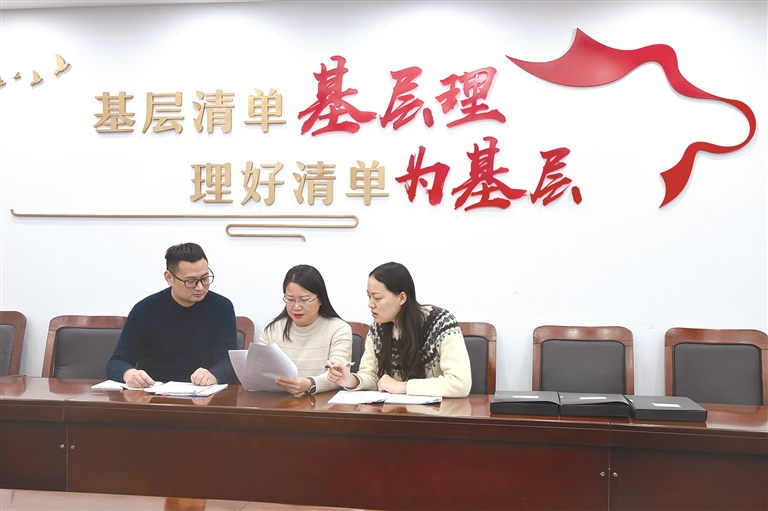
中央纪委国家监委网站 李灵娜 基层是贯彻落实党中央决策部署的"最后一公里",不能被形式主义、官僚主义束缚手脚。党的十八大以来, 以习近平同志为核心的党中央始终高度重视整治形式主义为基层减负,将其作为党的作风建设的重要内容、 关心关爱基层的重要举措。 各地纪检监察机关充分发挥职能职责,将整治形式主义为基层减负工作纳入监督重点,统筹减负和赋能,引 导广大党员、干部树立和践行正确政绩观,积极担当作为,用更多精力抓落实。 如何持续深化整治形式主义为基层减负?基层减负效果如何?基层干部群众感知最真切、体会最深刻、收获 最直接。 "为基层减负要明确权责,不能什么事都压给基层,基层该承担哪些工作,要把职责事项搞清楚" 破形式主义之弊,"减法"如何做?习近平总书记在基层考察时指出,为基层减负要明确权责,不能什么事都 压给基层,基层该承担哪些工作,要把职责事项搞清楚。 全面建立乡镇(街道)履职事项清单是加强基层治理体系和治理能力现代化建设的基础性制度安排,是为基 层减负、破解基层治理"小马拉大车"突出问题的重要举措。目前,全面建立乡镇(街道)履职事项清单工作 取得明显成效。图为江苏省张家港市南丰镇工作人员研究落实权责事项。 罗 ...

“这么多年了,对这名同事始终只闻其名,不见其人!”纪委监委深挖细查,相关人员被处理
Xin Lang Cai Jing· 2026-01-10 12:17
Group 1 - The article emphasizes that the Central Eight Regulations are long-term effective rules that are crucial for maintaining integrity and discipline within the party [1] - The Tianjin Ninghe District's disciplinary inspection and supervision commission has taken action against individuals who have been absent from their posts for extended periods, showcasing a systematic approach to governance [1] - In 2025, a total of 128,000 cases of hedonism and extravagance were investigated, with 162,000 individuals receiving criticism or punishment [1] Group 2 - The article highlights ongoing efforts to combat formalism and bureaucratism, with a focus on reducing unnecessary burdens on grassroots levels [2] - In 2025, 124,000 cases of formalism and bureaucratism were addressed, resulting in 165,000 individuals being criticized or punished [2] - The Central Commission for Discipline Inspection has issued guidelines to address both improper conduct and corruption simultaneously, indicating a dual approach to governance [2]
让干部有更多精力抓落实 让企业有更多时间谋发展(人民眼·整治形式主义为基层减负)
Ren Min Ri Bao· 2026-01-09 01:22
Core Viewpoint - The article discusses the ongoing efforts to reduce bureaucratic burdens on grassroots governance in China, highlighting the positive impacts on community services and efficiency in local government operations [7][8][12]. Group 1: Grassroots Governance Improvements - The implementation of regulations aimed at reducing formalism and bureaucratic burdens has allowed grassroots officials to focus more on serving the public [7]. - The "blow the whistle" system has been established to enable communities to report issues directly to relevant departments, enhancing problem-solving efficiency [12]. - In Ningxia, the number of community responsibilities has been reduced from nearly 300 to less than 50, and the number of required proofs has decreased from around 60 to just over 10 [10]. Group 2: Community Engagement and Services - Community activities have increased significantly, with over 170 events planned for 2025 in the Silver Rainbow Community, demonstrating a shift towards more engaging and meaningful community services [9]. - The reduction of bureaucratic requirements has allowed community staff to dedicate more time to direct service delivery, improving overall community satisfaction [11]. - The establishment of service stations for delivery workers has fostered better relationships between community members and service providers, enhancing community cohesion [12]. Group 3: Innovations in Administrative Processes - Shanghai has introduced a "remote assistance" service for businesses, allowing them to complete necessary inspections via video calls, thus streamlining the process and reducing the need for physical presence [15][16]. - The implementation of a unified credit report system has replaced numerous compliance documents, simplifying the administrative burden on businesses [17]. - The introduction of a "value-added service window" aims to provide comprehensive support for businesses throughout their operational lifecycle, enhancing efficiency [17]. Group 4: Effective Oversight and Accountability - The article emphasizes the importance of direct and unannounced inspections to ensure accountability and effective governance, as demonstrated by the oversight of school meal programs [18][19]. - The focus on resolving practical issues rather than merely checking compliance has led to improved community infrastructure and services [21]. - The reduction of unnecessary meetings and reports has allowed officials to concentrate on real issues affecting their communities, leading to more effective governance [22][23].

靶向纠治严整改,标本兼治见长效
Xin Lang Cai Jing· 2025-12-27 17:39
Group 1 - The Jinbin International Hotel in Chengdu's Jinniu District has seen high demand, with bookings nearly full ahead of the Spring Festival, indicating strong market interest and utilization of the facility [1][2] - The hotel, which opened in January 2023, was previously the Jinniu District Foreign Exchange Center and has undergone significant renovations to address issues of excessive decoration identified by central authorities [1][2] - The hotel offers over 200 rooms and focuses on business travel, meetings, and training events, having hosted over 190 social training and conference activities by the end of November 2023 [2] Group 2 - The Jinniu District is implementing a comprehensive approach to rectify issues in project management and investment oversight, aiming to enhance regulatory frameworks and prevent future risks [2][3] - The district has identified weaknesses in state-owned enterprise investments and is revising internal control systems to ensure effective management across all project phases [2] - Continuous monitoring and evaluation of the implementation of new regulations are being emphasized to ensure compliance and effectiveness in project management [2][3]
广东惠州切实减轻非教育教学负担
Xin Lang Cai Jing· 2025-12-26 23:07
Core Viewpoint - The article discusses the efforts made by the Huizhou government to reduce the administrative burden on teachers and improve the focus on education by addressing formalism in school operations [1][2]. Group 1: Government Actions - The Huizhou government established a special task force led by top officials to implement corrective measures against formalism in education [1]. - A monitoring network was created, including 18 different types of schools, to oversee the reduction of administrative burdens through both online and offline methods [2]. - The government has introduced a hotline and email for reporting issues related to unnecessary activities in schools, ensuring accountability and transparency [2]. Group 2: Impact on Teachers and Education - Teachers reported a significant reduction in non-educational tasks, allowing them to focus more on teaching and research [1][2]. - The overall work atmosphere in schools has improved, with increased efficiency in safety management and practical training for students, such as fire drills and swimming self-rescue courses [2]. - The government aims to solidify the results of these reforms through institutional measures to prevent regression and ensure long-term effectiveness [2].
凝心抓落实 实干显担当 ——整治形式主义为基层减负一线观察
Xin Lang Cai Jing· 2025-12-25 13:17
Core Points - The article emphasizes the importance of reducing bureaucratic burdens on grassroots levels to enhance service delivery and governance efficiency [1][2] - It highlights various initiatives and mechanisms implemented across different regions to streamline processes and empower local officials [1][2] Group 1: Policy Implementation - The central government has prioritized the reduction of formalism to alleviate burdens on grassroots officials, allowing them to focus more on practical governance [1] - A special mechanism has been established to address issues related to formalism, with multiple reports and regulations issued to ensure compliance at all levels [1] Group 2: Case Studies of Improvement - In Heilongjiang Province, the introduction of 24-hour ID card services at local police stations has significantly improved public service efficiency [1] - Tianjin's Nankai District has revamped its assessment processes, reducing unnecessary paperwork and allowing for a more focused approach to performance evaluation [1] - In Guangdong Province, the establishment of clear responsibility lists for community leaders has streamlined the handling of pension applications, reducing confusion and enhancing service delivery [1] Group 3: Empowerment and Technology - The implementation of a digital platform in Nanjing has automated data processing, significantly reducing the workload for community workers and improving service accuracy [2] - In Shanghai, a collaborative governance model has been adopted to address local issues effectively, breaking down administrative barriers and enhancing resource allocation [2] Group 4: Overall Impact - The overall effect of these initiatives is a lighter burden on grassroots officials, leading to increased motivation and improved service quality for the public [2]
凝心抓落实 实干显担当——整治形式主义为基层减负一线观察
Ren Min Ri Bao· 2025-12-25 00:18
Core Viewpoint - The article emphasizes the importance of reducing bureaucratic burdens on grassroots levels to enhance efficiency and service delivery, as highlighted by President Xi Jinping's focus on addressing formalism and supporting grassroots officials in their responsibilities [1][10]. Group 1: Policy Implementation and Mechanisms - The central government has prioritized the reduction of formalism as a key area for improvement, establishing a special mechanism to address this issue and requiring strict adherence to regulations aimed at alleviating burdens on grassroots officials [1][3]. - Various regions have reported on typical issues related to formalism, with a focus on implementing effective measures to reduce unnecessary burdens on grassroots workers [1][3]. Group 2: Service Improvements and Efficiency - In Heilongjiang Province, the introduction of 24-hour ID card services at local police stations has significantly improved service efficiency, allowing citizens to resolve issues quickly without bureaucratic delays [3]. - The establishment of a dynamic assessment mechanism in Tianjin has streamlined the year-end evaluation process, reducing the amount of paperwork required from grassroots officials [4]. Group 3: Cadre Management and Empowerment - Ningbo City has implemented a monitoring system for cadre transfers to ensure that grassroots units are not overburdened, enhancing local governance capacity [4]. - The introduction of clear responsibility lists in Guangdong Province has clarified roles and reduced the workload on community leaders, allowing them to focus on essential tasks [5]. Group 4: Technological Integration and Data Management - The implementation of a digital platform in Nanjing has automated data processing, significantly reducing the administrative burden on community workers and improving service delivery [8]. - The use of smart technology in community services has enabled more precise and timely interventions, enhancing the overall effectiveness of grassroots governance [8]. Group 5: Collaborative Governance and Community Engagement - In Yunnan Province, a collaborative governance model has been established to address local issues effectively, demonstrating the importance of inter-departmental cooperation in enhancing community order and service [7]. - The establishment of a multi-grid coordination mechanism in Shanghai has facilitated better resource allocation and problem-solving across administrative boundaries, improving local governance [9].
【人民日报】凝心抓落实 实干显担当
Ren Min Ri Bao· 2025-12-24 23:35
Core Viewpoint - The article emphasizes the importance of reducing bureaucratic burdens on grassroots levels to enhance efficiency and service delivery, as highlighted by Xi Jinping's focus on addressing formalism and supporting grassroots officials in their responsibilities [1][11]. Group 1: Policy Implementation and Mechanisms - The central government has prioritized the reduction of formalism as a key area for improvement, establishing a long-term mechanism to alleviate burdens on grassroots officials [1]. - Various regions have implemented specific regulations to address formalism, with multiple reports on typical issues being publicly communicated [1]. - The establishment of a consultation and assessment mechanism in Tianjin has streamlined the year-end evaluation process, reducing the amount of required documentation [3]. Group 2: Service Improvements and Efficiency - The introduction of 24-hour identity card services in Heilongjiang has significantly improved public service efficiency, allowing citizens to resolve issues quickly [3]. - In Guangdong, the implementation of clear responsibility lists for community leaders has clarified roles and reduced unnecessary burdens, leading to more efficient service delivery [5]. - The use of digital platforms in Nanjing has automated data processing, allowing community workers to focus more on service rather than administrative tasks [8][9]. Group 3: Governance and Coordination - The establishment of a multi-grid coordination mechanism in Shanghai has effectively addressed local governance challenges by breaking down administrative barriers [10]. - The proactive management of personnel transfers in Ningbo has strengthened grassroots capabilities by ensuring that staff are available and properly allocated [4]. - The collaborative approach in Yunnan has resolved numerous community issues by engaging multiple departments in a coordinated manner [7]. Group 4: Overall Impact on Grassroots Operations - The reduction of unnecessary reporting and evaluation processes has led to increased motivation among grassroots officials, allowing them to focus on practical service delivery [11]. - The overall trend indicates a shift towards a more efficient governance model that empowers local officials and enhances community engagement [11].
凝心抓落实 实干显担当
Ren Min Ri Bao· 2025-12-24 22:32
Core Viewpoint - The article emphasizes the importance of reducing bureaucratic burdens on grassroots levels to enhance efficiency and service delivery, as highlighted by President Xi Jinping's focus on addressing formalism and supporting grassroots officials in their responsibilities [1][11]. Group 1: Policy Implementation and Mechanisms - The central government has prioritized the reduction of formalism as a key area for improvement, establishing a special mechanism to address this issue and ensuring compliance across various levels of government [1][3]. - Local governments are actively implementing measures to streamline processes, such as reducing unnecessary reporting and focusing on core responsibilities, which has led to improved service delivery [3][4]. Group 2: Case Studies of Effective Implementation - In Heilongjiang Province, the police department has eliminated unnecessary assessments and reporting, allowing officers to focus on community service, resulting in faster processing times for citizens [3][4]. - In Tianjin, a new assessment mechanism has reduced the paperwork required for year-end evaluations, allowing officials to concentrate on practical outcomes rather than bureaucratic formalities [3][4]. Group 3: Empowerment and Resource Allocation - The article discusses how the management of personnel transfers has been improved in Ningbo, ensuring that local officials are not overburdened by excessive borrowing of staff, thus enhancing local governance capacity [4][5]. - In Guangdong Province, the establishment of clear responsibility lists has clarified roles in community service, reducing confusion and improving efficiency in handling social security matters [5][6]. Group 4: Technological Integration - The introduction of digital platforms in Nanjing has significantly reduced the administrative burden on community workers, allowing for more efficient data management and service delivery [8][9]. - The use of technology in governance has enabled more precise and timely responses to community needs, exemplified by the proactive care for vulnerable residents through smart monitoring systems [8][9]. Group 5: Overall Impact on Governance - The article concludes that the ongoing efforts to reduce bureaucratic burdens represent a fundamental shift towards modernizing grassroots governance, enhancing both efficiency and community engagement [10][11].
安徽通报:铜陵市民政局得知上级即将开展调研后,要求各县区精心准备调研点,刻意设计“路线”,存在形式主义问题
Xin Lang Cai Jing· 2025-12-24 16:49
Core Viewpoint - The Anhui Provincial Committee is addressing formalism and reducing burdens on grassroots levels by reporting typical issues related to formalism in local governance [1][2]. Group 1: Issues Reported - The Tongling Civil Affairs Bureau engaged in formalism by meticulously preparing research points for an upcoming inspection, including directives to ensure no unaddressed illegal constructions were visible during the visit [1]. - The Huai Bei Urban Gas Safety Special Rectification Office enforced mandatory downloads of a government application, ranking user installation rates monthly, which contradicts regulations against forced promotion of such applications [2]. - The Huoqiu County authorities conducted excessive assessments in rural environmental improvement efforts, violating guidelines for streamlined evaluations by implementing monthly and quarterly assessments linked to performance incentives for village officials [2]. Group 2: Regulatory Actions - The report emphasizes the need for strict adherence to the regulations aimed at reducing formalism and burdens on grassroots levels, calling for enhanced educational warnings and comprehensive self-examinations to rectify issues [2].