次级制裁

Search documents
欧盟制裁重拳难短俄财路,特朗普次级关税成“终极杀招”?
Jin Shi Shu Ju· 2025-07-23 05:10
Group 1 - The EU's latest sanctions on Russian oil are unlikely to have a severe impact, making secondary sanctions by the US one of the few remaining economic pressures on the Kremlin [1][4] - The new sanctions lower the price cap on Russian crude oil from $60 to $47.6 per barrel, effective September 3, and include a mechanism to ensure it remains 15% below the average price of Russian oil [1][3] - A significant addition is the ban on importing refined products made from Russian crude oil, aimed at closing loopholes left by previous sanctions [1][2] Group 2 - The effectiveness of initial sanctions has been limited, as countries like India have significantly increased their imports of Russian oil due to discounts from the price cap [1][3] - In 2024, Russia's oil and petroleum product export revenue is projected to reach $192 billion, significantly higher than its defense budget of $110 billion [3] - The EU's new sanctions package includes an additional 105 vessels sanctioned for evading the initial price cap, bringing the total to 447 [4] Group 3 - Secondary sanctions proposed by Trump could impose a 100% tariff on countries purchasing Russian oil unless a peace agreement is reached within 50 days [5][6] - The potential for secondary sanctions raises concerns about their effectiveness in the global energy market, as they could lead to increased oil prices and inflation, which the US does not want to see [7][8] - Despite escalating sanctions threats, both Russia and oil traders appear relatively unfazed at this time [8]
特朗普威胁对俄加征100%关税,印度沉默3天后,终于硬气回应了
Sou Hu Cai Jing· 2025-07-19 11:53
Group 1 - The core issue revolves around India's response to potential U.S. sanctions on Russian oil, with India's oil minister asserting the country's capability to handle such sanctions while hinting at a willingness to abandon Russian oil if necessary [1][5][9] - India has significantly increased its reliance on Russian oil, with imports from Russia accounting for 35% of total oil imports in the first half of the year, up from just 2% before the Russia-Ukraine conflict [3][5] - The U.S. sanctions threaten to create a dilemma for India, balancing the benefits of discounted Russian oil against the risks of U.S. tariffs [5][11] Group 2 - India has diversified its oil suppliers, currently sourcing from 40 different countries, and is planning to establish a base to stabilize supply in case of U.S. sanctions [7][9] - The Indian refining sector has begun purchasing oil from the Middle East and the U.S., indicating a preparation for potential sanctions [7][9] - Despite public statements about abandoning Russian oil, there are indications that India is seeking exemptions from U.S. sanctions and attempting to form an energy alliance with countries like Saudi Arabia and Iran [9][17] Group 3 - The U.S. strategy of secondary sanctions aims to pressure countries like India and China to sever ties with Russian energy, but the effectiveness of this approach is questionable given the scale of trade between China and Russia [11][13] - If the U.S. implements secondary sanctions, it could lead to a rise in global oil prices and negatively impact the U.S. economy, highlighting the potential for self-harm in such a strategy [13][21] - The ongoing geopolitical tensions and sanctions have created a complex environment for Russia, which initially relied on India and China as key buyers of its oil [21][23] Group 4 - The European Union has imposed multiple rounds of sanctions against Russia, complicating the situation for Russian oil exports, particularly affecting India's ability to refine and sell Russian oil products to Europe [23][25] - Despite the sanctions, European countries continue to purchase refined oil products from India, which are derived from Russian crude, revealing inconsistencies in the Western sanctions approach [25][27] - The ongoing trade tensions suggest that both the U.S. and China will continue to engage in strategic maneuvers, with potential repercussions for global markets [27]

面对美国威胁,印度随时准备跪下,加关税就大幅减少从俄石油进口
Sou Hu Cai Jing· 2025-07-18 09:58
Core Viewpoint - The article highlights India's vulnerability to U.S. financial power, particularly in the context of potential secondary sanctions on Russian oil imports, revealing a significant shift in India's energy strategy and geopolitical stance [1][10][17]. Group 1: U.S. Sanctions and India's Response - The U.S. has issued a "50-day ultimatum" to Russia, threatening a 100% tariff on Russian goods and a 500% secondary sanction on countries engaging in energy trade with Russia [3][10]. - India has indicated a willingness to comply with U.S. demands, stating it is "ready to kneel" and will significantly reduce its Russian oil imports to pre-war levels of approximately 2% [10][11]. Group 2: India's Energy Strategy - Following the onset of the Russia-Ukraine conflict, India capitalized on discounted Russian oil, which constituted over 35% of its total oil imports at one point [7][8]. - Indian refiners have been exporting refined products, such as diesel, to Europe and the U.S., taking advantage of the price differentials created by the conflict [8][10]. Group 3: Geopolitical Implications - The potential reduction in Russian oil imports could severely impact India's energy security and economic interests, undermining its role as a "global refinery" and leading to increased domestic inflation [13][15]. - The relationship between India and Russia, historically characterized by strategic partnership, may suffer as India appears to yield to U.S. pressure, potentially affecting future cooperation in critical areas like defense [15][17]. Group 4: Broader Economic Context - The article suggests that India's capitulation to U.S. sanctions reflects a broader trend of emerging economies facing limitations in their strategic autonomy under U.S. financial hegemony [15][17]. - The situation serves as a warning to other developing nations about the precariousness of their positions in the face of U.S. economic power, indicating a potential shift towards a more fragmented global order [15][17].
美国又使“狠招”:敢买俄石油,就加征500%关税?外交部回应不简单
Sou Hu Cai Jing· 2025-07-17 03:48
Group 1 - The core issue revolves around the proposed punitive tariffs by the U.S. on countries purchasing Russian energy, with a potential 500% tariff on goods from these nations [1][3] - The U.S. aims to pressure China and India into choosing between Russian oil and the American market, which could significantly impact global trade dynamics [3][5] - The proposed tariffs could lead to a drastic increase in consumer prices in the U.S., affecting a wide range of products and potentially exacerbating inflation [3][5] Group 2 - The U.S. actions may violate WTO principles, particularly the most-favored-nation treatment, allowing China and India to seek redress through international trade bodies [5][7] - Both China and India have expressed strong opposition to U.S. economic coercion, emphasizing their sovereignty in energy policy decisions [5][7] - The situation highlights the risks of weaponizing economic measures, which could backfire on U.S. consumers and businesses, undermining the multilateral trade system [7]
北约秘书长吕特:对俄罗斯实施次级制裁可能会对印度和巴西等国家造成严重影响。
news flash· 2025-07-15 16:26
Core Viewpoint - The NATO Secretary General, Jens Stoltenberg, stated that secondary sanctions against Russia could have severe impacts on countries like India and Brazil [1] Group 1 - The implementation of secondary sanctions on Russia is a significant concern for global economic relations [1] - Countries such as India and Brazil may face serious repercussions due to their economic ties with Russia [1]
美国商务部长卢特尼克:特朗普指的是对俄罗斯实施次级制裁,而非关税
news flash· 2025-07-14 16:38
Core Viewpoint - The U.S. Secretary of Commerce, Gina Raimondo, clarified that Trump's reference pertains to the implementation of secondary sanctions against Russia rather than tariffs [1] Group 1 - The statement emphasizes the focus on secondary sanctions, which target third-party countries or entities that engage in trade with Russia [1] - This clarification indicates a strategic approach to economic pressure on Russia without directly imposing tariffs [1]
印度:这就是信任美国的代价
Hu Xiu· 2025-07-14 04:06
Group 1 - India is at a critical juncture, facing a tough test regarding energy security due to a proposed US Senate bill imposing punitive tariffs on countries buying oil from Russia [1][2][3][4] - The US bill threatens to impose tariffs as high as 500%, which could force India to choose between maintaining economic affordability and aligning with US geopolitical interests [2][4][10] - Since early 2022, Russian oil has been significantly cheaper than Middle Eastern oil, saving India nearly $7-8 per barrel, which has helped mitigate inflation and protect citizens' finances [5][6][18] Group 2 - The Indian government’s decision to import Russian oil is based on economic rationality, saving approximately $79 billion in oil import costs over the past year [6][18][19] - The US's geopolitical perspective views India's economic decisions as a lack of cooperation with its sanctions against Russia, leading to potential economic coercion [19][20] - The proposed tariffs are not merely economic penalties but a coercive measure aimed at forcing India to comply with US strategic objectives [20][48] Group 3 - India's long-standing commitment to "strategic autonomy" is now challenged by external pressures, particularly from the US [8][24][26] - The country must demonstrate its ability to maintain core interests, such as energy security and economic stability, under significant external pressure [11][28] - India's reliance on the US market, with exports amounting to $800-900 billion annually, makes it vulnerable to the proposed tariffs, which could devastate key industries [31][32][34] Group 4 - India is currently seeking to diversify its energy sources and reduce dependence on Russian oil, which requires significant time and investment [41][43] - The need for alternative markets and financial systems is critical, as India explores options to bypass reliance on the US dollar [41][42] - The ongoing geopolitical tensions are pushing India to develop a more complex diplomatic strategy, balancing relations with both the US and Russia [36][39][56] Group 5 - The situation reflects a broader trend of countries needing to navigate a complex geopolitical landscape, where they must maintain relationships with multiple powers while safeguarding their national interests [51][55] - The crisis serves as a test of India's national credibility, as it seeks to prove its resilience against US economic pressures while establishing itself as an independent player on the global stage [58][60] - The evolving dynamics indicate a shift towards a multipolar world, where countries must enhance their negotiating power and strategic autonomy to avoid being coerced by larger powers [61][62]
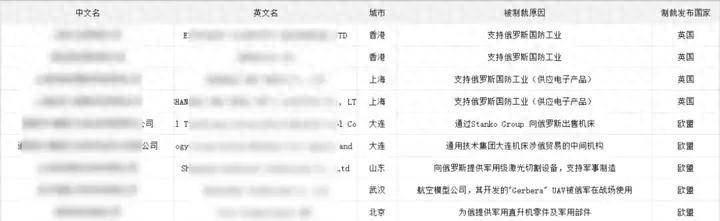
欧洲的制裁再次来袭,这一次我们根本不慌,欧洲的雕虫小技
Sou Hu Cai Jing· 2025-05-27 13:55
Group 1 - The EU has imposed over 2000 sanctions on Russia by April 2025, including sanctions on Chinese companies, indicating a systematic use of "secondary sanctions" to pressure third-party countries [1] - The sanctions against Chinese companies are based on allegations of "indirect support for Russian military," but no concrete evidence has been provided [2] - The EU's actions reflect a double standard, as many countries, including the US and Europe, continue to engage in business with Russia while targeting Chinese firms [2][4] Group 2 - Europe's reluctance to fully align with China stems from concerns over China's growing strength and potential dominance in various sectors, which could disadvantage Europe [4] - The current geopolitical landscape suggests that Europe may prefer US leadership over a rising China, as it allows Europe to maintain some level of influence in manufacturing and technology [4] - The EU's strategy may involve balancing its relationship with the US while cautiously engaging with China, especially in sectors like AI and renewable energy [13]