
芯片国产化替代

Search documents
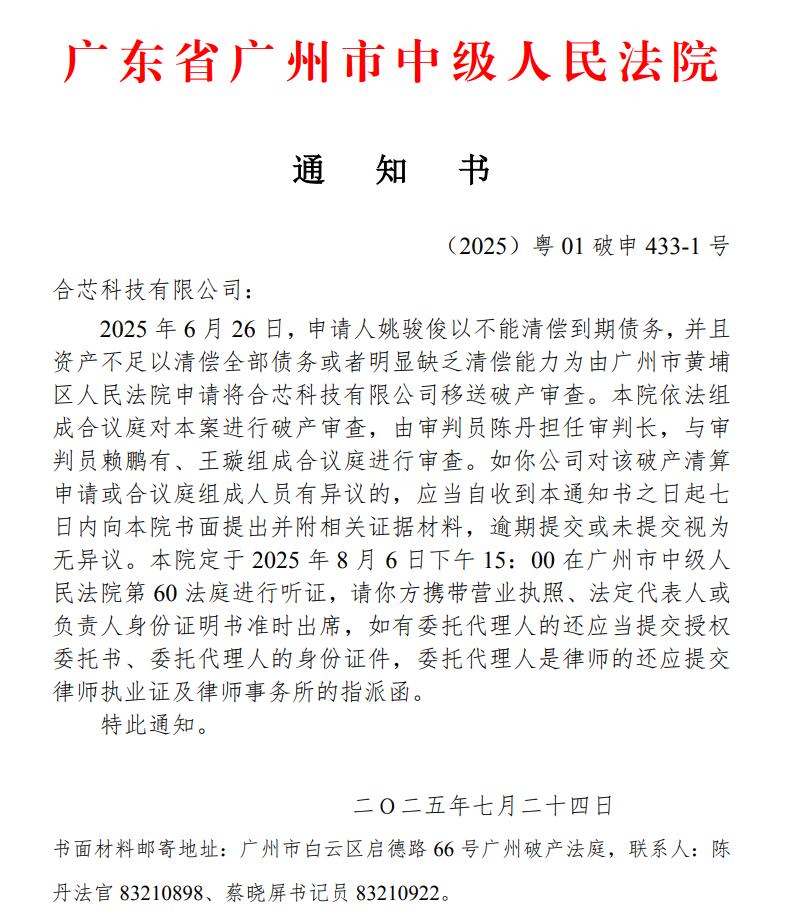
估值60亿,国产CPU公司被申请破产审查
3 6 Ke· 2025-08-07 11:21
Core Viewpoint - The news highlights the bankruptcy examination of He Xin Technology, a once-prominent domestic server CPU company, due to financial crises and inability to pay debts, marking a significant downturn in its trajectory from a valuation of 6 billion yuan in 2023 to its current struggles [1][3][4]. Company Overview - He Xin Technology was established in 2014 and was recognized as the only domestic company focused on high-end server CPU development based on the open-source RISC instruction set architecture [3][5]. - The company gained market attention during the domestic "IOE" (IBM, Oracle, EMC) replacement wave, achieving a valuation of 6 billion yuan in 2023, positioning itself as a "quasi-unicorn" [3][5][8]. Financial Crisis - By mid-2024, He Xin Technology faced severe financial issues, including employee salary disputes and the disappearance of key executives, leading to halted operations [3][9]. - Reports indicated that the company had delayed employee salaries for six months, affecting over 500 employees, and had multiple labor dispute cases filed against it [9][11]. Investment and Valuation - The company completed four rounds of financing from 2020 to the end of 2023, attracting state-owned capital from Guangzhou and Suzhou [7][8]. - The latest valuation of 6 billion yuan was based on the successful prototype verification of its second-generation server chip HX-C2000 in November 2023 [8][12]. Market Challenges - The decline of He Xin Technology is attributed to its reliance on the IBM Power architecture, which has become less competitive in the market due to its closed ecosystem and high adaptation costs [17][18]. - Despite the rising demand for domestic chip alternatives, He Xin Technology's lack of commercial viability and inability to innovate has led to its current predicament [18]. Future Prospects - The company announced a shift towards the open-source RISC-V architecture in 2023, but this initiative has not progressed beyond theoretical discussions, lacking substantial R&D investment [18]. - He Xin Technology's financial reports indicated a net loss exceeding 200 million yuan in 2023, with overdue commercial bills in 2024, leaving the company in a precarious position without new financing [18].

【机构调研记录】西部证券调研瑞德智能
Zheng Quan Zhi Xing· 2025-07-31 00:09
Core Viewpoint - West Securities conducted a survey on the listed company Ruide Intelligent, which is expected to achieve significant revenue growth in the automotive electronics sector in 2024, with a projected revenue of 99.82 million yuan, representing a year-on-year increase of 503.21% [1] Group 1: Company Performance - In 2024, Ruide Intelligent is anticipated to achieve a revenue of 99.82 million yuan, marking a substantial year-on-year growth of 503.21% [1] - The company has successfully mass-produced smart controllers for balance bikes and scooters, gaining market recognition [1] - The company’s R&D investment for 2024 is projected to reach 82.82 million yuan, reflecting a year-on-year increase of 9.01% [1] Group 2: Market Strategy - Ruide Intelligent has established dual bases in South China and East China, and is expanding its global market presence with a focus on Vietnam [1] - The company currently operates four R&D and production bases located in Shunde, Anhui, Shaoxing, and Dong Nai, Vietnam [1] - The establishment of the Vietnam production base aims to mitigate potential risks arising from tariff policies [1] Group 3: Supply Chain and Resource Management - The company has achieved a high level of domestic chip procurement, with most chips being replaced by domestic alternatives [1] - The custom chip "Ruide Chip" has been successfully applied to smart controller products [1] - Inventory growth in the first quarter was attributed to pre-holiday stockpiling by customers and proactive reserves due to rising raw material prices [1]

艾恩半导体试补芯片产业“关键拼图” 破局离子注入机国产化替代
Jing Ji Guan Cha Wang· 2025-06-05 12:51
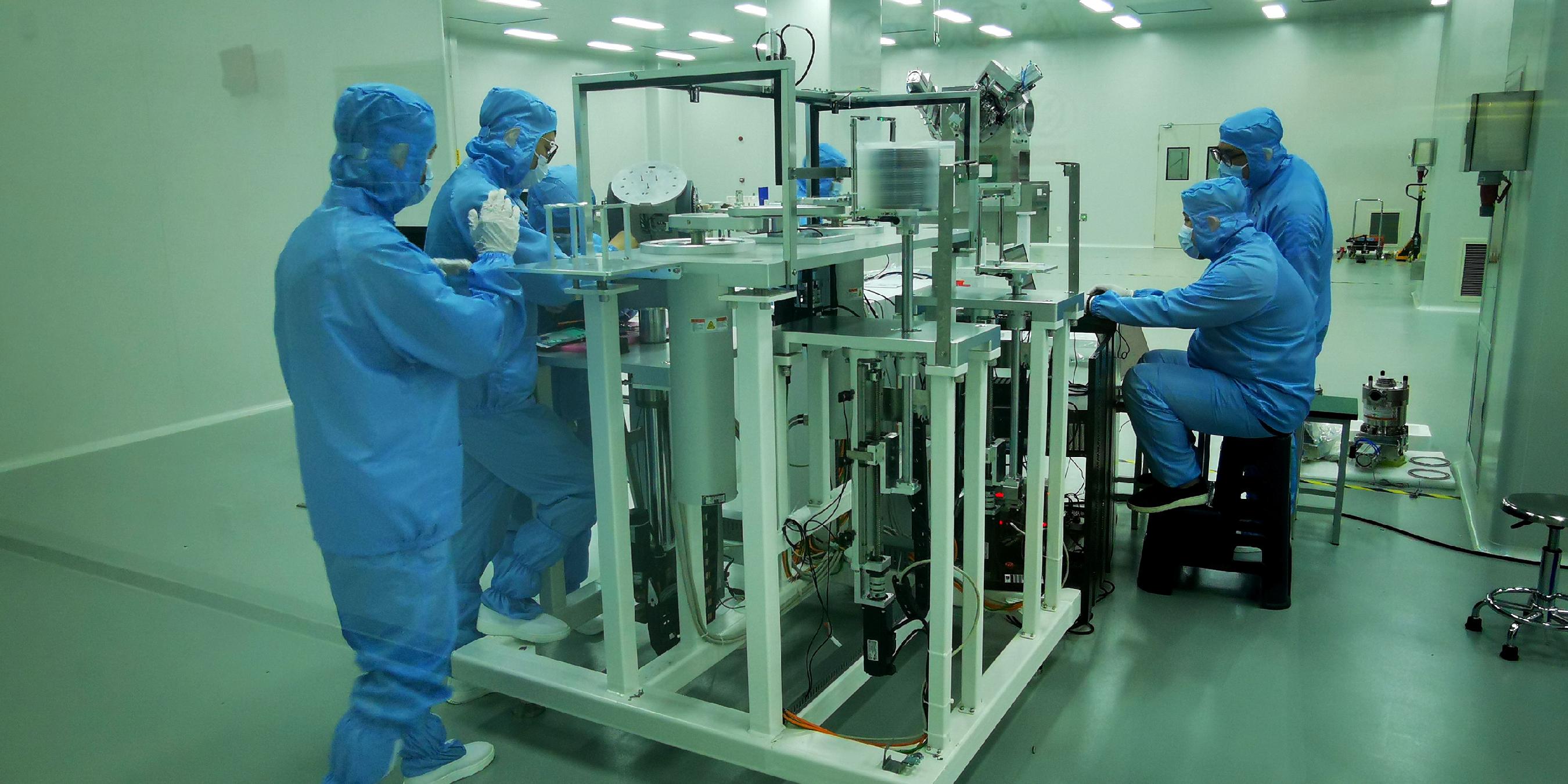
Core Viewpoint - The article discusses the efforts of Jinan Ain Semiconductor Technology Co., Ltd. to develop ion implanters, a critical equipment in semiconductor manufacturing, aiming to catch up with international standards and enhance China's semiconductor industry [2][3][4]. Company Overview - Jinan Ain Semiconductor was founded by Zhong Xinhua, who has 20 years of experience in ion implanter research and development [2][4]. - The company relocated its operations from Guangzhou to Jinan, Shandong, to consolidate resources for its production [2][18]. - The first silicon-based medium current ion implanter is in the final installation and debugging stage, expected to be completed by June [3][18]. Industry Context - Ion implanters are considered one of the four key pieces of equipment in chip manufacturing, alongside photolithography, etching, and deposition machines [2][4]. - Currently, four foreign companies dominate over 90% of the global ion implanter market, while domestic production in China is less than 10% [2][13]. - The market for ion implanters in China is projected to grow from 2.473 billion yuan in 2018 to 12.126 billion yuan by 2024, with a compound annual growth rate of 30.34% [9]. Technological Challenges - The transition from laboratory technology to industrialization involves overcoming significant barriers, including funding, market access, supply chain management, and technology iteration [3][8]. - The manufacturing of ion implanters requires precise control over parameters such as dosage, depth, and angle, making it a highly complex process [5][6]. Funding and Investment - Initial funding challenges were significant, with the high cost of components and the need for substantial investment to develop the technology [10][11]. - Ain Semiconductor received angel investment from Lushin Venture Capital, which recognized the potential of the technology and supported the company's early-stage financing [11][17]. Market Outlook - The semiconductor equipment market in China is expected to grow rapidly, with a projected 35% increase in sales in 2024, leading the global market [17]. - The company aims to achieve full coverage of all ion implanter models within three years, targeting performance that meets international standards [18].
论大势 理细节 辨风向——2025上海车展的汽车供应链面面观
Zhong Guo Qi Che Bao Wang· 2025-05-08 02:45
Group 1: Industry Trends - The 2025 Shanghai Auto Show showcased a significant increase in the exhibition area for automotive technology and supply chain, expanding from 30,000 square meters two years ago to approximately 100,000 square meters, accounting for one-third of the entire exhibition [2] - Chinese automotive supply chain companies are increasingly confident in showcasing their technological research and product applications, reflecting a shift in the industry landscape [2] - The successful hosting of the Shanghai Auto Show indicates that the trend of Chinese automotive companies "going global" remains strong despite global trade tensions and tariff issues [2][3] Group 2: Global Expansion and Support - Bosch, as the world's largest automotive parts supplier, supports Chinese automotive companies in their global expansion efforts, emphasizing the importance of collaboration despite international uncertainties [3] - Faurecia's CEO highlighted their capability to assist Chinese automakers in entering new markets, particularly in South America, by leveraging their local market knowledge and production capabilities [4] - The focus on "going global" was a recurring theme among executives of domestic brands at the Shanghai Auto Show, indicating a strong intent to expand internationally [3] Group 3: AI Integration in Automotive - The integration of artificial intelligence (AI) across the automotive supply chain was prominently featured, with Bosch announcing advancements in AI-assisted driving technologies [5] - Nullmax showcased its self-developed MaxDrive solution, which adapts to various vehicle models and market needs, demonstrating the flexibility of AI technologies in automotive applications [5] - Multiple companies, including Bosch and Huayang Group, introduced AI-driven cockpit solutions aimed at enhancing user experience and personalization in vehicles [6][7] Group 4: Safety and Connectivity - The Ministry of Industry and Information Technology emphasized the importance of safety in the development of intelligent connected vehicles, leading to a renewed focus on vehicle connectivity solutions [8][10] - Companies like ZTE are developing advanced communication chips and solutions that enhance vehicle safety and connectivity, ensuring compliance with high safety standards [10][14] - The concept of "vehicle-road-cloud integration" was highlighted as essential for the future of intelligent driving, moving beyond single-vehicle intelligence [10] Group 5: Technological Innovations - The introduction of lightweight materials, such as HRC's "super carbon cabin," demonstrates significant advancements in vehicle design, achieving a 30% weight reduction compared to traditional materials [11] - Faurecia's iConF electronic fuse product simplifies wiring and enhances vehicle safety through predictive maintenance and active energy management [11] - The trend towards domestic chip development was evident, with companies like Black Sesame and ZTE showcasing new chip platforms designed for various levels of autonomous driving [13][14]
