AI家电

Search documents
AI家电,摆脱噱头?
虎嗅APP· 2025-03-24 23:55
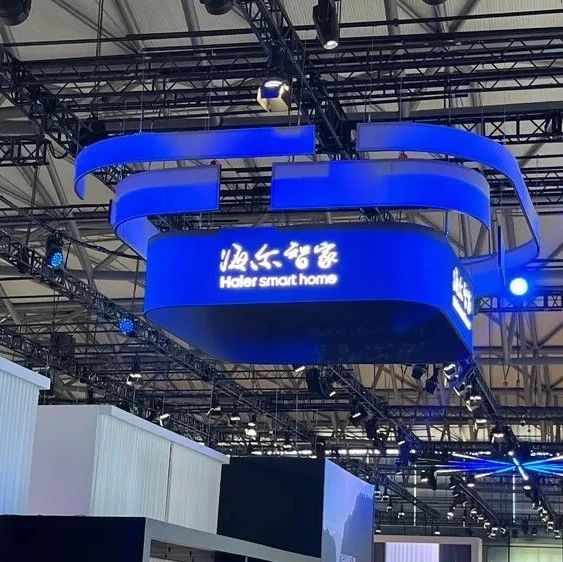
Core Viewpoint - The article discusses the transformation of the home appliance industry towards AI integration, highlighting the shift from mere marketing gimmicks to practical applications of AI technology in products [4][8]. Group 1: AI Integration in Home Appliances - The current trend in "AI home appliances" can be summarized with two keywords: "scenario-based" and "non-intrusive" [4][5]. - Scenario-based AI applications allow appliances to monitor cooking states and provide real-time feedback, such as reminding users when to stir or adjust heat levels [4][11]. - Non-intrusive applications enable devices to operate independently without user intervention, such as smart locks that detect unusual activity and alert users [5][6]. Group 2: Innovations from Major Companies - Haier's "AI Eye" technology, showcased at the AWE 2025, integrates voice and visual recognition across various appliances, enhancing user experience by automating tasks like washing and cooking [10][11]. - Hisense's AI system covers air conditioning, laundry, and cooking, with innovations like adaptive sound and light adjustments based on user presence [17][19]. - Startups like MOVA are focusing on solving specific pain points, such as noise reduction in cleaning devices and intelligent floor cleaning solutions [20][22]. Group 3: Embodied Intelligence in Home Appliances - The concept of embodied intelligence is emerging in home appliances, with companies like Fotile showcasing robotic arms for cooking tasks [22][25]. - Haier is also exploring robotic arms for laundry, demonstrating potential for automation in household chores [26][30]. - The advancements in robotic technology indicate a future where embodied intelligence could become commonplace in home environments [31].

2025年中国AI家电行业发展白皮书 | 36氪研究院
36氪· 2025-03-19 13:07
Group 1 - The core viewpoint of the article emphasizes the transformative impact of AI large models, particularly DeepSeek, on the home appliance industry, enabling a shift towards intelligent and proactive services in smart home devices [1][15][24]. - The evolution of AI home appliances is categorized into three main stages: the voice interaction era ("hearing"), the perception decision era ("seeing"), and the autonomous action era ("doing"). The industry is currently in the second stage, characterized by significant breakthroughs in AI visual technology [2][16][27]. - The current "seeing" stage is marked by three revolutions in user experience, technology restructuring, and scene evolution, leading to a shift from passive response to proactive service [4][17][35]. Group 2 - User experience has evolved from operating appliances to having needs met seamlessly, driven by advancements in spatial, temporal, and emotional dimensions of interaction [5][36][39]. - Technological upgrades in AI appliances involve the integration of multimodal perception, cloud-edge collaboration, and adaptive optimization, enhancing autonomous decision-making capabilities [5][41][45]. - Scene evolution is facilitated by AI technology, enabling data intelligence and deep collaboration among devices, transitioning from isolated operation to interconnected smart scene ecosystems [5][48][49]. Group 3 - Haier Smart Home exemplifies the integration of AI technology, particularly through its "AI Eye," which enhances appliance functionality and creates a new standard for smart homes [6][58]. - The "AI Eye" technology allows appliances to possess proactive observational capabilities, enabling them to recognize user needs and environmental conditions, thus transitioning from passive to active service [7][59]. - Haier's comprehensive smart home solutions, such as the "1+3+5+N" model, illustrate the interconnectedness of various appliances, allowing for seamless collaboration across different home scenarios [5][50][60]. Group 4 - Future AI home appliances are expected to achieve full-scene autonomous collaboration and ubiquitous intelligence, reshaping lifestyles through a highly coordinated smart ecosystem [8][18]. - The integration of household robots is anticipated to enhance the capabilities of AI appliances, enabling them to perform complex tasks autonomously and redefine household management [8][32][33].