
消费者信心指数

Search documents
关税和经济衰退担忧下,美国人正在“报复性储蓄”?
第一财经· 2025-06-30 15:42
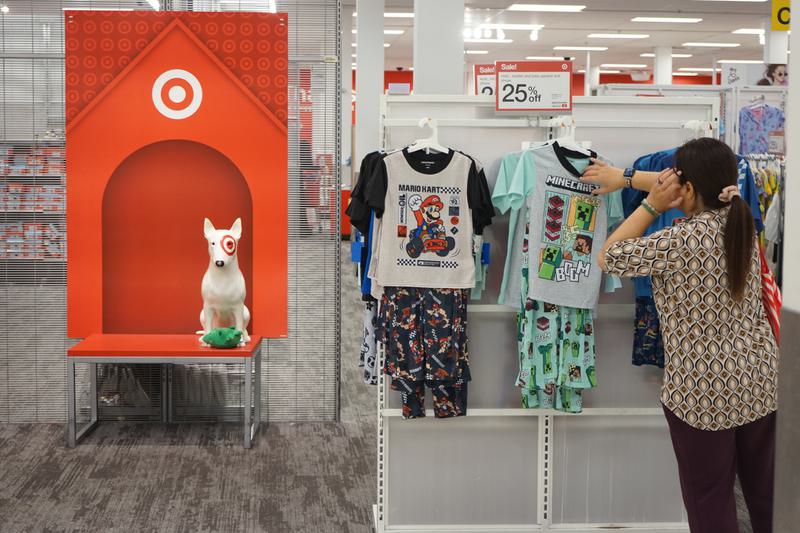
Core Viewpoint - The article discusses the emerging trend of "revenge savings" among American consumers, who are increasingly prioritizing savings over spending due to concerns about tariffs, inflation, job security, and market volatility [1][2]. Group 1: Consumer Behavior and Savings Trends - A recent survey by Vanguard indicates that 71% of Americans plan to adjust their savings strategies this summer, focusing on emergency savings and flexibility [1]. - The personal savings rate in the U.S. has increased from 3.5% in December of the previous year to 4.5% in May [1][4]. - In 2024, Americans are reportedly allocating a significant portion of their wages into 401(k) accounts, with the average contribution rate reaching a record high of 9.5% in Q1 2025 [11]. Group 2: Economic Concerns and Consumer Sentiment - Economic uncertainty stemming from tariff negotiations is causing consumers to reduce spending and increase savings [2][4]. - The consumer confidence index from the Conference Board dropped from 98.4 in May to 93.0 in June, indicating a decline in consumer sentiment regarding the economy [7][8]. - Concerns about tariffs remain the primary worry for consumers, followed by inflation, with nearly 70% of respondents anticipating a recession within the next 12 months [8][10]. Group 3: Impact of Tariffs and Inflation - The uncertainty surrounding tariffs is expected to exert pressure on economic activity, making businesses hesitant to invest or hire [4]. - A decline in consumer spending was noted in May, with a 0.1% decrease following a 0.2% increase in April, attributed to the waning effects of preemptive purchases made to avoid tariffs [5][6]. - The article highlights that many consumers are shifting from "revenge spending" post-pandemic to "revenge savings," as they seek to build cash reserves for potential future expenses [6][10].


关税和经济衰退担忧下,美国人正在“报复性储蓄”?
Di Yi Cai Jing· 2025-06-30 14:07
Group 1 - The core trend among American consumers is shifting from "revenge spending" to "revenge saving," indicating a reduction in spending to rebuild savings [1][6] - A recent survey by Vanguard shows that 71% of Americans plan to adjust their savings strategies this summer, prioritizing emergency savings and flexibility [1][6] - The personal savings rate in the U.S. has increased from 3.5% in December last year to 4.5% in May this year, reflecting a growing trend towards saving [1][3] Group 2 - Concerns over tariffs, inflation, job security, and market volatility are driving consumers to cut spending and increase savings [1][9] - The consumer confidence index from the Conference Board dropped significantly, indicating heightened anxiety among consumers regarding the economic outlook [7][8] - A Santander Bank survey revealed that 45% of Americans have increased their emergency savings, with 53% expressing greater concern about inflation compared to earlier in the year [6][9] Group 3 - The trend of "revenge saving" is also reflected in the increased contributions to 401(k) plans, with Fidelity reporting a record high savings rate of 9.5% in Q1 2025 [12] - Nearly half of the participants in a Vanguard study have raised their savings rates, indicating a shift towards more cautious financial behavior [12] - Economic uncertainty, including potential job losses related to government spending cuts, is prompting consumers to accumulate cash for unexpected costs [10][11]
美国_消费者信心远低于预期;通胀预期再度下降
2025-06-30 01:02
24 June 2025 | 10:51AM EDT USA: Consumer Confidence Well Below Expectations; Inflation Expectations Decline Again BOTTOM LINE: The consumer confidence index decreased in June, well below expectations for an increase. The labor differential declined in June to the lowest level since March 2021, and the survey's measure of short-term inflation expectations declined. US MAP: Consumer confidence -6 (3, -2) KEY NUMBERS: Consumer confidence 93.0 for June vs. GS 100.6, median forecast 99.8, prior revised 98.4 MAIN ...
财经网站Forexlive评美国6月密歇根大学消费者信心指数:市场情绪已从4月至5月的低点反弹,但仍远低于2024年底的水平。市场对该报告的反应微乎其微。
news flash· 2025-06-27 14:12
财经网站Forexlive评美国6月密歇根大学消费者信心指数:市场情绪已从4月至5月的低点反弹,但仍远 低于2024年底的水平。市场对该报告的反应微乎其微。 ...
美国6月密歇根大学消费者信心指数终值 60.7,预期60.5,前值60.5。
news flash· 2025-06-27 14:04
美国6月密歇根大学消费者信心指数终值 60.7,预期60.5,前值60.5。 ...
6月27日电,密歇根大学6月份消费者信心指数报60.7,预期为60.5。
news flash· 2025-06-27 14:04
智通财经6月27日电,密歇根大学6月份消费者信心指数报60.7,预期为60.5。 ...
美国6月密歇根大学消费者信心指数终值、一年期通胀率预期终值将于十分钟后公布。
news flash· 2025-06-27 13:54
Group 1 - The final value of the University of Michigan's Consumer Confidence Index for June is set to be released shortly [1] - The final value of the one-year inflation expectations will also be published in ten minutes [1]
继续下调,美国一季度经济环比萎缩0.5%
Sou Hu Cai Jing· 2025-06-27 09:29
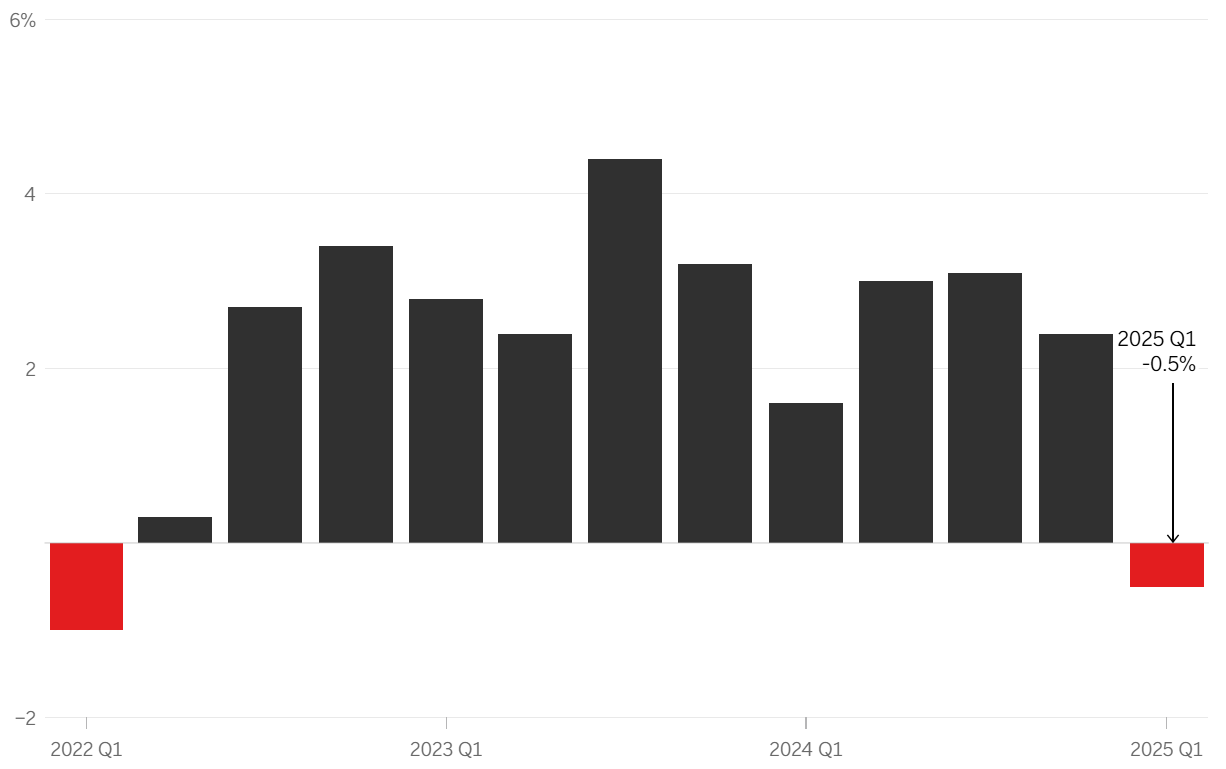
美国各季度经济增长率美联社 据美联社报道,当地时间6月26日,美国商务部报告称,由于美国总统特朗普的贸易战扰乱商业活动,美国国内生产总值(GDP)在今年一季度环比按年率 计算萎缩0.5%,较该部门前两次公布的估值明显下调。 分析认为,造成经济萎缩的重要原因,是美国企业和家庭赶在关税上涨前大幅增加进口,从而造成国内生产销售减少。美商务部4月初次估值预计第一季度 经济将萎缩0.3%,5月将该数据修正为萎缩0.2%。经济学家们曾预测,商务部的第三次也是最后一次估算值将不会有任何改变。 美商务部数据显示,今年一季度美国GDP出现下滑,扭转了2024年最后一个季度2.4%的增长,标志着该国经济三年来首次出现萎缩。其中,美国进口增长 37.9%,为2020年以来最快增速,拖累GDP下降近4.7个百分点。 同时,美国一季度消费者支出也急剧放缓,仅增长0.5%,低于去年第四季度4%的增速,较美商务部此前预期大幅下调。占美国经济总量约70%的个人消费 支出对一季度GDP的贡献也下调至约0.3个百分点。 衡量美国经济潜在实力的一个GDP分项数据以1.9%的年率增长。这一数字低于2024年第四季度的2.9%,也低于商务部此前预估的 ...
6月27日电,欧元区6月消费者信心指数为负15.3,预估为负15.3。
news flash· 2025-06-27 09:02
智通财经6月27日电,欧元区6月消费者信心指数为负15.3,预估为负15.3。 ...
欧元区6月消费者信心指数终值 -15.3,预期-15.3,前值-15.3。
news flash· 2025-06-27 09:01
欧元区6月消费者信心指数终值 -15.3,预期-15.3,前值-15.3。 ...